Baghdad Burning
Girl Blog from Iraq… let’s talk war, politics and occupation.

Baghdad Burning
Girl Blog from Iraq… let’s talk war, politics and occupation.
Sunday, August 17, 2003
The Beginning…
So this is the beginning for me, I guess. I never thought I’d start my own weblog… All I could think, every time I wanted to start one was “but who will read it?” I guess I’ve got nothing to lose… but I’m warning you- expect a lot of complaining and ranting. I looked for a ‘rantlog’ but this is the best Google came up with.
A little bit about myself: I’m female, Iraqi and 24. I survived the war. That’s all you need to know. It’s all that matters these days anyway.
Riverbend
– posted by river @ 7:36 PM
Waking Up
Waking up anywhere in Iraq these days is a trial. It happens in one of two ways: either slowly, or with a jolt. The slow process works like this: you’re hanging in a place on the edge of consciousness, mentally grabbing at the fading fragments of a dream… something creeps up around, all over you- like a fog. A warm heavy fog. It’s the heat… 120 F on the cooler nights. Your eyes flutter open and they search the dark in dismay- the electricity has gone off. The ceiling fan is slowing down and you are now fully awake. Trying to sleep in the stifling heat is about as productive as trying to wish the ceiling fan into motion with your brain. Impossible.
The other way to wake up, is to be jolted into reality with the sound of a gun-shot, explosion or yelling. You sit up, horrified and panicked, any dream or nightmare shattered to oblivion. What can it be? A burglar? A gang of looters? An attack? A bomb? Or maybe it’s just an American midnight raid?
– posted by river @ 8:02 PM
Monday, August 18, 2003
Another Day…
Normal day today. We were up at early morning, did the usual ‘around the house things’, you know- check if the water tank is full, try to determine when the electricity will be off, checked if there was enough cooking gas…
You know what really bugs me about posting on the internet, chat rooms or message boards? The first reaction (usually from Americans) is “You’re lying, you’re not Iraqi”. Why am I not Iraqi, well because a. I have internet access (Iraqis have no internet), b. I know how to use the internet (Iraqis don’t know what computers are) and c. Iraqis don’t know how to speak English (I must be a Liberal). All that shouldn’t bother me, but it does. I see the troops in the streets and think, “So that’s what they thought of us before they occupied us… that may be what they think of us now.” How is it that we’re seen as another Afghanistan?
The best part of the last two days was watching tv yesterday- the latest news from our rotating presidential council: Jordan is trying to get Washington to hand Ahmad Al-Chalabi over to authorities in Amman!! That was great to watch… you know what? He’s my favorite out of the whole interim government hand-picked by Bremer. If Bremer has learned anything about the Iraqi people he’s been attempting to govern these last few months, he would hand Chalabi over to Jordanian authorities with a red ribbon around his neck (as a sign of good will). I haven’t seen anyone who likes the rat (and his buddy Qambar is even worse).
For those who don’t know, the interim governing council chosen by Bremer to ‘represent’ the Iraqi people couldn’t decide which of the power-hungry freaks should rule Iraq, soooooo… Bremer decided that 3 people would govern (as temporary presidents) until the Americans could set up elections. The three people were Al-Hakim (as a representative of the Supreme Council for the Islamic Revolution), Bahr Al-Uloom (another Shi’ite cleric) and Adnan Al-Pachichi. Naturally, the other members of the governing council objected… why should Iraq only have 3 presidents?! And the number became nine. Each of the nine (including Adnan Al-Pachichi, Ahmad Al-Chalabi, Al-Hakim and various others) get to ‘rule’ for a month. You know, Iraq just needs more instability- all we need is a new president each month… anyway, our current “Flavor of the Month” is Ibraheim Al-Jaffari who is the head of the infamous Al-Daawa Party (responsible for various bombings in Iraq before and during the Saddam era). I’ll talk more about him later…
The funny thing is that the 9 get to govern Iraq alphabetically (according to the Arabic alphabet). The only reason for this seems to be that Bremer found them all equally ingratiating, dishonest and incompetent so he was hard-pressed to make a decision. The way it will work is that each one will have their chance at governing Iraq, and at the end of the nine month period, Bremer will decide which one of them best represents American assets in the region and he will become “The Chosen One”. They’ll set up some fake elections and “The Chosen One” will magically be rewarded with… Iraq. I just hope Adnan Al-Pachichi makes it long enough to get his chance on the occupation throne- he looks ready to fall over any minute.
email me: riverbend@popmail.com
– posted by river @ 9:12 PM
Tuesday, August 19, 2003
Tired.
How is it possible to wake up tired? It feels like I’ve been struggling in my sleep… struggling with nightmares, struggling with fears… struggling to listen for gunshots or tanks. I’m just so tired today. It’s not the sort of ‘tired’ where I want to sleep- it’s the sort of tired where I just want to completely shut down… put myself on standby, if you will. I think everyone feels that way lately.
Today a child was killed in Anbar, a governorate north-west of Baghdad. His name was Omar Jassim and he was no more than 10 years old, maybe 11. Does anyone hear of that? Does it matter anymore? Do they show that on Fox News or CNN? He was killed during an American raid- no one knows why. His family are devastated- nothing was taken from the house because nothing was found in the house. It was just one of those raids. People are terrified of the raids. You never know what will happen- who might be shot, who might react wrong- what exactly the wrong reaction might be… Things are getting stolen too- gold, watches, money (dollars)… That’s not to say ALL the troops steal- that’s unfair. It’s like saying all of Iraq was out there looting. But it really is difficult having to worry about looters, murderers, gangs, militias and now American troops. I know, I know- someone is saying, “You ungrateful Iraqis! They are doing this for YOU… the raids are for YOU!” But the truth is, the raids only accomplish one thing: they act as a constant reminder that we are under occupation, we are not independent, we are not free, we are not liberated. We are no longer safe in our own homes- everything now belongs to someone else.
I can’t see the future at this point, or maybe I don’t choose to see it. Maybe we’re just blocking it out like a bad memory or premonition. Eventually it will creep up on you, though. We’re living, this moment, the future we were afraid to contemplate 6 months ago. It’s like trying to find your way out of a nightmare. I just wish they would take the oil and go…
email me: riverbend@popmail.com
– posted by river @ 3:50 PM
Unbelievable…
The UN building explosion is horrible… terrifying and saddening. No one can believe it has happened… no one understands why it was chosen. For God’s sake these people are supposed to be here to help.
I’m so angry and frustrated. Nothing is moving forward- there is NO progress and this is just an example. The media is claiming Al-Qaeda. God damn, we never HAD Al-Qaeda before this occupation… fundamentalists kept their heads down. Now they are EVERYWHERE- they ‘represent’ the Iraqi people on Bremer’s puppet council…
You know what? Something like this could never happen to the Ministry of Oil. The Ministry of Oil is being guarded 24/7 by tanks and troops. It has been guarded ever since the fall of Baghdad and will continue under Bremer’s watchful eye until every last drop of oil is gone. Why couldn’t they have put a tank infront of the UN building? Why? Why? Why? We know the Pentagon’s planning has been horrid up until now, but you’d think they would have seen this one coming from a mile away…
– posted by river @ 9:14 PM
Wednesday, August 20, 2003
Dazed
Sergio de Mello’s death is catastrophic. We are all a little bit dazed. He was, during these last few months, the best thing that seems to have happened to Iraq. In spite of the fact that the UN was futile in stopping the war, seeing someone like de Mello gave people some sort of weak hope. It gave you the feeling that, no, the Americans couldn’t run amuck in Baghdad without the watchful of eye of the international community.
Bremer is trying to link it to ‘resistance’ and Al-Qaeda… this is a new type of attack. *This* is terrorism, Mr.Bush… not the attack of occupying forces- that’s resistance. Attacking humanitarian organizations you could not, or would not, protect. A type of terrorism Iraqis hadn’t seen until this occupation- we never had people bombing the UN or embassies, no matter how difficult things got. The UNSCOM were definitely unloved here, but they were protected. America, as an occupying power, is responsible for the safety and security of what is left of this country. They are responsible for the safety and security of any international humanitarian organizations inside of the country to help the people. They have been shirking their duties horribly… but you would think someone like Sergio de Mello could have gotten better.
Somehow I’m terrified. If someone like de Mello couldn’t, or simply wasn’t, protected- what’s going to happen to the millions of people needing protection in Iraq? How could this have been allowed to happen?
Some news channel was just saying that when Bremer got the news, he broke down and cried… I don’t know why. It certainly wasn’t his loss… it was Iraq’s.
– posted by river @ 1:32 PM
Thursday, August 21, 2003
Emails
Wow. Dozens of emails were the result of being on Salam’s blog. I was astounded. I guess I never thought so many people would end up reading the blog. It has made me appreciative and nervous all at the same time.
Most of the emails moved me to… gratitude. Thank you for understanding… no, thank you for even *trying* to understand. Other emails, on the other hand, were full of criticism, cynicism and anger. You really don’t have to read my blog if you don’t want to and you certainly don’t have to email me telling me how much you hate it. It’s great to get questions and differing opinions- but please be intelligent about it, and above all, creative- if I want to hear what Fox News has to say, I’ll watch it.
And keep one thing in mind- tanks and guns can break my bones, but emails can be deleted.
– posted by river @ 3:13 PM
My New Talent
Suffering from a bout of insomnia last night, I found myself in front of the television, channel-surfing. I was looking for the usual- an interesting interview with one of the council, some fresh news, a miracle… Promptly at 2 am, the electricity went off and I was plunged into the pitch black hell better-known as “an August night with no electricity in Iraq”. So I sat there, in the dark, trying to remember where I had left the candle and matches. After 5 minutes of chagrined meditation, I decided I would ‘feel’ my way up the stairs and out onto the roof. Step by hesitant step, I stumbled out into the corridor and up the stairs, stubbing a toe on the last step (which wasn’t supposed to be there).
(For those of you who don’t know, people sleep up on the roof in some of the safer areas because when the electricity goes off, the houses get so hot, it feels like you are cooking gently inside of an oven. The roof isn’t much better, but at least there’s a semblance of wind.)
Out on the roof, the heat was palpitating off of everything in waves. The strange thing is that if you stand in the center, you can feel it emanating from the walls and ground toward you from all directions. I stood there trying to determine whether it was only our area, or the whole city, that had sunk into darkness.
A few moments later, my younger brother (we’ll call him E.) joined me- disheveled, disgruntled and half-asleep. We stood leaning on the low wall enclosing the roof watching the street below. I could see the tip of Abu Maan’s cigarette glowing in the yard next door. I pointed to it with the words, “Abu Maan can’t sleep either…” E. grunted with the words, “It’s probably Maan”. I stood staring at him like he was half-wild- or maybe talking in his sleep. Maan is only 13… how is he smoking? How can he be smoking?
“He’s only 13.” I stated.
“Is anyone only 13 anymore?” he asked.
I mulled the reality of this remark over. No, no one is 13 anymore. No one is 24 anymore… everyone is 85 and I think I might be 105. I was too tired to speak and, in spite of his open eyes, I suspected E. was asleep. The silence was shattered a few moments later by the sound of bullets in the distance. It was just loud enough to get your attention, but too far away to be the source of any real anxiety. I tried to determine where they were coming from…
E: How far do you think that is?
Me: I don’t know… ‘bout a kilometer?
E: Yeah, about.
Me: Not American bullets-
E: No, it’s probably from a…
Me: Klashnikov.
E (impressed): You’re getting good at this.
No- I’m getting great at it. I can tell you if it’s ‘them’ or ‘us’. I can tell you how far away it is. I can tell you if it’s a pistol or machine-gun, tank or armored vehicle, Apache or Chinook… I can determine the distance and maybe even the target. That’s my new talent. It’s something I’ve gotten so good at, I frighten myself. What’s worse is that almost everyone seems to have acquired this new talent… young and old. And it’s not something that anyone will appreciate on a resume…
I keep wondering… will an airplane ever sound the same again?
– posted by river @ 3:15 PM
Al-Chalabi… No Strings Attached!
So I just saw Al-Chalabi on tv. He was interviewed by a prominent reporter for Al-Arabiya. I missed it last night and this morning. But my cousin, who has a generator, kindly recorded it for me (she knows Al-Chalabi is one of the few ‘politicians’ that can make me laugh).
What can I say? He is incredible in interviews- almost as good as Bush (comically infuriating). I can see why the Pentagon adopted him- he would be fun to train, a pet monkey of sorts…
Anyway, the interview started out more or less reasonably- he was shining all over (I could swear there was lip-gloss). He really doesn’t know how to talk. I think Bremer should forbid him from giving interviews from now until elections- and if they decide to make him president, someone can just write his speeches for him. But he really is an embarrassment to the CIA at this point.
The most amusing part of the interview was when they showed one of his former bodyguards (who he denied knowing with a vengeance worthy of an Oscar). The ex-bodyguard was complaining how when the INC first came into Baghdad, and began recruiting people, they seemed reasonable enough. Suddenly, they had overtaken the “Sayd Club”, a recreational club (not exclusive to the past regime) and turned the INC into a militia.
They were hijacking cars in the middle of Baghdad during April, May and June, claiming that the cars they were ‘confiscating’ at gunpoint were ‘looted’ (hence, property of Al-Chalabi?). The cars were kept in the ‘headquarters’ and smuggled out of Iraq and to the Kurdish territory. The nicer ones were split amongst the ‘members’ of the INC. Someone or another who wasn’t getting a piece of the action complained to the CPA and Al-Chalabi & Co. were given a collective slap on the wrist and told not to do it again.
After this was brought up, Ahmad Al-Chalabi was just charming- he promptly sneered and told the reporter that it was all LIES! LIES! LIES! And just how much had they paid that witness!? Then he continued to insult the reporter, telling him that they had stooped to a new low (Al-Chalabi’s specialty) or in7i6a6 (in Arabish)! The reporter asked him about Jordanian allegations and the Jordanian parliament wanting to bring him to justice… he said that it was all LIES! And the Jordanian parliament was a disgrace to the people, etc. He wasn’t a crook, he wasn’t a thief, he wasn’t a puppet. The Iraqis and Jordanians are collectively deranged and ridiculous…
In my opinion, the reporter was asking the wrong questions. He should have asked him how he spent the INC funds given to him by the CIA (certainly not on his wardrobe).
The whole interview brought to mind the Associated Press report from August 11 (by Mark Fritz). Especially the first line:
Iraq is swimming in oil, but anybody who thinks that such natural wealth translates into a fat and happy middle class is in for a crude awakening.
…well naturally- we’ll have to pay off Ahmad Al-Chalabi’s debtors first- can’t really expect anything to be left for the people, can we?
– posted by river @ 4:58 PM
Friday, August 22, 2003
Setting the Record Straight
I’m going to set the record straight, once and for all.
I don’t hate Americans, contrary to what many people seem to believe. Not because I love Americans, but simply because I don’t hate Americans, like I don’t hate the French, Canadians, Brits, Saudis, Jordanians, Micronesians, etc. It’s that simple. I was brought up, like millions of Iraqis, to have pride in my own culture and nationality. At the same time, like millions of Iraqis, I was also brought up to respect other cultures, nations and religions. Iraqi people are inquisitive, by nature, and accepting of different values- as long as you do not try to impose those values and beliefs upon them.
Although I hate the American military presence in Iraq in its current form, I don’t even hate the American troops… or wait, sometimes I do:
– I hated them all through the bombing. Every single day and night we had to sit in terror of the next bomb, the next plane, the next explosion. I hated them when I saw the expression of terror, and remembrance, on the faces of my family and friends, as we sat in the dark, praying for our lives, the lives of our loved ones and the survival of Iraq.
– I hated them on April 11- a cool, gray day: the day our family friend lost her husband, her son and toddler daughter when a tank hit the family car as they were trying to evacuate the house in Al-A’adhamiya district- an area that saw heavy fighting.
– I hated them on June 3 when our car was pulled over for some strange reason in the middle of Baghdad and we (3 women, a man and a child) were made to get out and stand in a row, while our handbags were rummaged, the men were frisked and the car was thoroughly checked by angry, brisk soldiers. I don’t think I’ll ever be able to put into words the humiliation of being searched.
– I hated them for two hours on July 13. As we were leaving Baghdad, we were detained with dozens of other cars at a checkpoint in the sweltering, dizzying heat.
– I hated them the night my cousin’s house was raided- a man with a wife, daughter and two young girls. He was pushed out of the house with his hands behind his head while his wife and screaming daughters were made to wait in the kitchen as around 20 troops systematically searched the house, emptying closets, rummaging underwear drawers and overturning toy boxes.
– I hated them on April 28 when they shot and killed over a dozen kids and teenagers in Falloojeh- a place west of Baghdad. The American troops had taken over a local school (one of the only schools) and the kids and parents went to stand in front of the school in a peaceful demonstration. Some kids started throwing rocks at the troops, and the troops opened fire on the crowd. That incident was the beginning of bloodshed in Falloojeh.
On the other hand…
– I feel terrible seeing the troops standing in this merciless sun- wearing heavy clothes… looking longingly into the air-conditioned interiors of our cars. After all, in the end this is Baghdad, we’re Iraqi- we’ve seen this heat before.
– I feel bad seeing them stand around, drinking what can only be lukewarm water after hours in the sun- too afraid to accept any proffered ice water from ‘strange Iraqis’.
– I feel pity watching their confused, frightened expressions as some outraged, jobless, father of five shouts at them in a language they can’t even begin to understand.
– I get hopeless, seeing them pointing their guns and tanks at everyone because, in their eyes, anyone could be a ‘terrorist’ and almost everyone is an angry, frustrated Iraqi.
– I feel sympathy seeing them sitting bored and listless on top of their tanks and in their cars- wishing they were somewhere else.
So now you know. Mixed feelings in a messed up world.
I talk about “American troops” because those are the only ones I’ve come into contact with- no British soldiers, no Italians, no Spaniards… I don’t know- maybe they feel the same towards the British in the south.
Someone wrote that I was naïve and probably spoiled, etc. and that “not one single American soldier deserves to die for you”. I completely agree. No one deserves to die for me or for anyone else.
This war started out a war on WMD. When those were not found, and proof was flimsy at best, it turned suddenly into a “War against Terrorism”. When links couldn’t be made to Al-Qaeda or Osama Bin Laden (besides on Fox and in Bush’s head), it turned into a “Liberation”. Call it whatever you want- to me it’s an occupation.
My suggestion? Bring in UN peace-keeping forces and pull out the American troops. Let the people decide who they want to represent them. Let the governing council be composed of Iraqis who were suffering the blockade and wars *inside* of Iraq. People are angry and frustrated and the American troops are the ones who are going to have to bear the brunt of that anger simply because the American administration is running the show, and making the mistakes.
It always saddens me to see that the majority of them are so young. Just as it isn’t fair that I have to spend my 24th year suffering this whole situation, it doesn’t seem fair that they have to spend their 19th, 20th, etc. suffering it either. In the end, we have something in common- we’re all the victims of decisions made by the Bush administration.
On the other hand… they’ll be back home, safe, in a month, or two or three or six… and we’ll be here having to cope with the mess of a homeland we have now.
– posted by river @ 7:51 PM
Emails
I’m having a few problems with my mailbox, so could everyone please send emails to riverbend@velocall.com until further notice? Thanks…
Also, I’m probably going to have a ‘comments’ box starting tomorrow… so everyone can see everyone else’s comments.
– posted by river @ 11:06 PM
Saturday, August 23, 2003
We’ve Only Just Begun…
Females can no longer leave their homes alone. Each time I go out, E. and either a father, uncle or cousin has to accompany me. It feels like we’ve gone back 50 years ever since the beginning of the occupation. A woman, or girl, out alone, risks anything from insults to abduction. An outing has to be arranged at least an hour beforehand. I state that I need to buy something or have to visit someone. Two males have to be procured (preferably large) and ‘safety arrangements’ must be made in this total state of lawlessness. And always the question: “But do you have to go out and buy it? Can’t I get it for you?” No you can’t, because the kilo of eggplant I absolutely have to select with my own hands is just an excuse to see the light of day and walk down a street. The situation is incredibly frustrating to females who work or go to college.
Before the war, around 50% of the college students were females, and over 50% of the working force was composed of women. Not so anymore. We are seeing an increase of fundamentalism in Iraq which is terrifying.
For example, before the war, I would estimate (roughly) that about 55% of females in Baghdad wore a hijab- or headscarf. Hijabs do not signify fundamentalism. That is far from the case- although I, myself, don’t wear one, I have family and friends who do. The point is that, before, it didn’t really matter. It was *my* business whether I wore one or not- not the business of some fundamentalist on the street.
For those who don’t know (and I have discovered they are many more than I thought), a hijab only covers the hair and neck. The whole face shows and some women even wear it Grace Kelley style with a few locks of hair coming out of the front. A ‘burqa’ on the other hand, like the ones worn in Afghanistan, covers the whole head- hair, face and all.
I am female and Muslim. Before the occupation, I more or less dressed the way I wanted to. I lived in jeans and cotton pants and comfortable shirts. Now, I don’t dare leave the house in pants. A long skirt and loose shirt (preferably with long sleeves) has become necessary. A girl wearing jeans risks being attacked, abducted or insulted by fundamentalists who have been… liberated!
Fathers and mothers are keeping their daughters stashed safe at home. That’s why you see so few females in the streets (especially after 4 pm). Others are making their daughters, wives and sisters wear a hijab. Not to oppress them, but to protect them.
I lost my job for a similar reason. I’ll explain the whole depressing affair in another post. Girls are being made to quit college and school. My 14-year-old cousin (a straight-A student) is going to have to repeat the year because her parents decided to keep her home ever since the occupation. Why? Because the Supreme Council of the Islamic Revolution in Iraq overtook an office next to her school and opened up a special ‘bureau’.
Men in black turbans (M.I.B.T.s as opposed to M.I.B.s) and dubious, shady figures dressed in black, head to foot, stand around the gates of the bureau in clusters, scanning the girls and teachers entering the secondary school. The dark, frowning figures stand ogling, leering and sometimes jeering at the ones not wearing a hijab or whose skirts aren’t long enough. In some areas, girls risk being attacked with acid if their clothes aren’t ‘proper’.
The Supreme Council for the Islamic Revolution in Iraq (SCIRI- but I prefer ‘SCAREY’) was established in 1982 in Tehran. Its main goal is to import the concept of the “Islamic Revolution” from Iran to Iraq. In other words, they believe that Iraq should be a theocracy led by Shi’a Mullahs. Abdul Aziz Al-Hakim, the deputy leader of SCIRI, is a part of the nine-member rotating presidency and will soon have a go at ruling Iraq.
The SCIRI would like to give the impression that they have the full support of all Shi’a Muslims in Iraq. The truth is that many Shi’a Muslims are terrified of them and of the consequences of having them as a ruling power. Al-Hakim was responsible for torturing and executing Iraqi POWs in Iran all through the Iran-Iraq war and after. Should SCIRI govern Iraq, I imagine the first step would be to open the borders with Iran and unite the two countries. Bush can then stop referring to the two countries as a part of his infamous ‘Axis of Evil’ and can just begin calling us the ‘Big Lump of Evil and Bad North Korea’ (which seems more in accord with his limited linguistic abilities).
Ever since entering Iraq, Al-Hakim has been blackmailing the CPA in Baghdad with his ‘major Shi’a following’. He entered Iraq escorted by ‘Jaysh Badir’ or ‘Badir’s Army’. This ‘army’ is composed of thousands of Iraqi extremists led by Iranian extremists and trained in Iran. All through the war, they were lurking on the border, waiting for a chance to slip inside. In Baghdad, and the south, they have been a source of terror and anxiety to Sunnis, Shi’a and Christians alike. They, and some of their followers, were responsible for a large portion of the looting and the burning (you’d think they were going to get reconstruction contracts…). They were also responsible for hundreds of religious and political abductions and assassinations.
The whole situation is alarming beyond any description I can give. Christians have become the victims of extremism also. Some of them are being threatened, others are being attacked. A few wannabe Mullahs came out with a ‘fatwa’, or decree, in June that declared all females should wear the hijab and if they didn’t, they could be subject to ‘punishment’. Another group claiming to be a part of the ‘Hawza Al Ilmia’ decreed that not a single girl over the age of 14 could remain unmarried- even if it meant that some members of the Hawza would have to have two, three or four wives. This decree included females of other religions. In the south, female UN and Red Cross aides received death threats if they didn’t wear the hijab. This isn’t done in the name of God- it’s done in the name of power. It tells people- the world- that “Look- we have power, we have influence.”
Liquor stores are being attacked and bombed. The owner usually gets a ‘threat’ in the form of a fatwa claiming that if they didn’t shut down the store permanently, there would be consequences. The consequences are usually either a fire, or a bomb. Similar threats have been made to hair-dressers in some areas in Baghdad. It’s frightening and appalling, but true.
Don’t blame it on Islam. Every religion has its extremists. In times of chaos and disorder, those extremists flourish. Iraq is full of moderate Muslims who simply believe in ‘live and let live’. We get along with each other- Sunnis and Shi’a, Muslims and Christians and Jews and Sabi’a. We intermarry, we mix and mingle, we live. We build our churches and mosques in the same areas, our children go to the same schools… it was never an issue.
Someone asked me if, through elections, the Iraqi people might vote for an Islamic state. Six months ago, I would have firmly said, “No.” Now, I’m not so sure. There’s been an overwhelming return to fundamentalism. People are turning to religion for several reasons.
The first and most prominent reason is fear. Fear of war, fear of death and fear of a fate worse than death (and yes, there are fates worse than death). If I didn’t have something to believe in during this past war, I know I would have lost my mind. If there hadn’t been a God to pray to, to make promises to, to bargain with, to thank- I wouldn’t have made it through.
Encroaching western values and beliefs have also played a prominent role in pushing Iraqis to embrace Islam. Just as there are ignorant people in the Western world (and there are plenty- I have the emails to prove it… don’t make me embarrass you), there are ignorant people in the Middle East. In Muslims and Arabs, Westerners see suicide bombers, terrorists, ignorance and camels. In Americans, Brits, etc. some Iraqis see depravity, prostitution, ignorance, domination, junkies and ruthlessness. The best way people can find to protect themselves, and their loved ones, against this assumed threat is religion.
Finally, you have more direct reasons. 65% of all Iraqis are currently unemployed for one reason or another. There are people who have families to feed. When I say ‘families’ I don’t mean a wife and 2 kids… I mean around 16 or 17 people. Islamic parties supported by Iran, like Al-Daawa and SCIRI, are currently recruiting followers by offering ‘wages’ to jobless men (an ex-soldier in the army, for example) in trade of ‘support’. This support could mean anything- vote when the elections come around, bomb a specific shop, ‘confiscate’, abduct, hijack cars (only if you work for Al-Chalabi…).
So concerning the anxiety over terror and fundamentalism- I would like to quote the Carpenters- worry? “We’ve only just begun… we’ve only just begun…”
– posted by river @ 6:20 PM
Sunday, August 24, 2003
About Riverbend
A lot of you have been asking about my background and the reason why my English is good. I am Iraqi- born in Iraq to Iraqi parents, but was raised abroad for several years as a child. I came back in my early teens and continued studying in English in Baghdad- reading any book I could get my hands on. Most of my friends are of different ethnicities, religions and nationalities. I am bilingual. There are thousands in Iraq like me- kids of diplomats, students, ex-patriots, etc.
As to my connection with Western culture… you wouldn’t believe how many young Iraqi people know so much about American/British/French pop culture. They know all about Arnold Schwarzenegger, Brad Pitt, Whitney Houston, McDonalds, and M.I.B.s… Iraqi tv stations were constantly showing bad copies of the latest Hollywood movies. (If it’s any consolation, the Marines lived up to the Rambo/ Terminator reputation which preceded them.)
But no matter what- I shall remain anonymous. I wouldn’t feel free to write otherwise. I think Salam and Gee are incredibly brave… who knows, maybe one day I will be too. You know me as Riverbend, you share a very small part of my daily reality- I hope that will suffice.
– posted by river @ 11:33 PM
Will Work for Food…
Over 65% of the Iraqi population is unemployed. The reason for this is because Bremer made some horrible decisions. The first major decision he made was to dissolve the Iraqi army. That may make sense in Washington, but here, we were left speechless. Now there are over 400,000 trained, armed men with families that need to be fed. Where are they supposed to go? What are they supposed to do for a living? I don’t know. They certainly don’t know.
They roam the streets looking for work, looking for an answer. You can see perplexity and anger in their stance, their walk, their whole demeanor. Their eyes shift from face to face, looking for a clue. Who is to answer for this mess? Who do you think?
Bremer also dissolved the Ministry of Information and the Ministry of Defense. No matter what the excuses, these ministries were full of ordinary people with ordinary jobs- accountants, janitors, secretaries, engineers, journalists, technicians, operators… these people are now jobless. Companies have been asked to ‘cut down’ their staff. It no longer has anything to do with politics. The company my uncle works in as an engineer was asked by the CPA to get rid of 680 of the 1,500+ employees- engineers, designers, contractors, mechanics, technicians and the administration were all involved.
Other companies, firms, bureaus, factories and shops shut down as a result of the looting and damage done in the post-war chaos- thousands of other workers lost their jobs. Where to go? What to do?
It isn’t any easier for employed people… the standard $50 being given out in various ministries and hospitals is not nearly enough to support a single person, let alone a family. But at least it is work. At least it is a reason to wake up every morning and accomplish something.
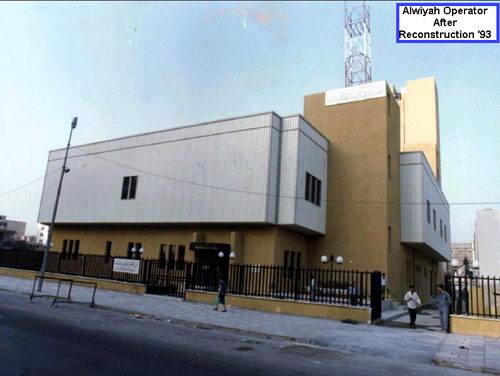
Someone asked why the thousands of Iraqi men roaming the streets don’t go out and get work. For weeks, after the occupation, men would line up daily by the thousands outside of the ‘Alwiyah Club’ filling out papers, begging for work. But there is no work. Men were reluctant to apply to the Iraqi police force because they weren’t given weapons! The Iraqi police were expected to roam and guard the hellish cities without weapons… to stop looters, abductors, and murderers with the sheer force of an application to their warped sense of morality.
The story of how I lost my job isn’t unique. It has actually become very common- despondently, depressingly, unbearably common. It goes like this…
I’m a computer science graduate. Before the war, I was working in an Iraqi database/software company located in Baghdad as a programmer/network administrator (yes, yes… a geek). Every day, I would climb three flights of stairs, enter the little office I shared with one female colleague and two males, start up my PC and spend hours staring at little numbers and letters rolling across the screen. It was tedious, it was back-breaking, it was geeky and it was… wonderful.
When I needed a break, I’d go visit my favorite sites on the internet, bother my colleagues or rant about ‘impossible bosses’ and ‘improbable deadlines’.
I loved my job- I was *good* at my job. I came and went to work on my own. At 8 am I’d walk in lugging a backpack filled with enough CDs, floppies, notebooks, chewed-on pens, paperclips and screwdrivers to make Bill Gates proud. I made as much money as my two male colleagues and got an equal amount of respect from the manager (that was because he was clueless when it came to any type of programming and anyone who could do it was worthy of respect… a girl, no less- you get the picture).
What I’m trying to say is that no matter *what* anyone heard, females in Iraq were a lot better off than females in other parts of the Arab world (and some parts of the Western world- we had equal salaries!). We made up over 50% of the working force. We were doctors, lawyers, nurses, teachers, professors, deans, architects, programmers, and more. We came and went as we pleased. We wore what we wanted (within the boundaries of the social restrictions of a conservative society).
During the first week of June, I heard my company was back in business. It took several hours, seemingly thousands of family meetings, but I finally convinced everyone that it was necessary for my sanity to go back to work. They agreed that I would visit the company (with my two male bodyguards) and ask them if they had any work I could possibly take home and submit later on, or through the internet.
One fine day in mid-June, I packed my big bag of geeky wonders, put on my long skirt and shirt, tied back my hair and left the house with a mixture of anticipation and apprehension.
We had to park the car about 100 meters away from the door of the company because the major road in front of it was cracked and broken with the weight of the American tanks as they entered Baghdad. I half-ran, half-plodded up to the door of the company, my heart throbbing in anticipation of seeing friends, colleagues, secretaries… just generally something familiar again in the strange new nightmare we were living.
The moment I walked through the door, I noticed it. Everything looked shabbier somehow- sadder. The maroon carpet lining the hallways was dingy, scuffed and spoke of the burden of a thousand rushing feet. The windows we had so diligently taped prior to the war were cracked in some places and broken in others… dirty all over. The lights were shattered, desks overturned, doors kicked in, and clocks torn from the walls.
I stood a moment, hesitantly, in the door. There were strange new faces- fewer of the old ones. Everyone was standing around, looking at everyone else. The faces were sad and lethargic and exhausted. And I was one of the only females. I weaved through the strange mess and made my way upstairs, pausing for a moment on the second floor where management was located, to listen to the rising male voices. The director had died of a stroke during the second week of the war and suddenly, we had our own little ‘power vacuum’. At least 20 different men thought they were qualified to be boss. Some thought they qualified because of experience, some because of rank and some because they were being backed by differing political parties (SCIRI, Al-Daawa, INC).
I continued upstairs, chilled to the bone, in spite of the muggy heat of the building which hadn’t seen electricity for at least 2 months. My little room wasn’t much better off than the rest of the building. The desks were gone, papers all over the place… but A. was there! I couldn’t believe it- a familiar, welcoming face. He looked at me for a moment, without really seeing me, then his eyes opened wide and disbelief took over the initial vague expression. He congratulated me on being alive, asked about my family and told me that he wasn’t coming back after today. Things had changed. I should go home and stay safe. He was quitting- going to find work abroad. Nothing to do here anymore. I told him about my plan to work at home and submit projects… he shook his head sadly.
I stood staring at the mess for a few moments longer, trying to sort out the mess in my head, my heart being torn to pieces. My cousin and E. were downstairs waiting for me- there was nothing more to do, except ask how I could maybe help? A. and I left the room and started making our way downstairs. We paused on the second floor and stopped to talk to one of the former department directors. I asked him when they thought things would be functioning, he wouldn’t look at me. His eyes stayed glued to A.’s face as he told him that females weren’t welcome right now- especially females who ‘couldn’t be protected’. He finally turned to me and told me, in so many words, to go home because ‘they’ refused to be responsible for what might happen to me.
Ok. Fine. Your loss. I turned my back, walked down the stairs and went to find E. and my cousin. Suddenly, the faces didn’t look strange- they were the same faces of before, mostly, but there was a hostility I couldn’t believe. What was I doing here? E. and the cousin were looking grim, I must have been looking broken, because they rushed me out of the first place I had ever worked and to the car. I cried bitterly all the way home- cried for my job, cried for my future and cried for the torn streets, damaged buildings and crumbling people.
I’m one of the lucky ones… I’m not important. I’m not vital. Over a month ago, a prominent electrical engineer (one of the smartest females in the country) named Henna Aziz was assassinated in front of her family- two daughters and her husband. She was threatened by some fundamentalists from Badir’s Army and told to stay at home because she was a woman, she shouldn’t be in charge. She refused- the country needed her expertise to get things functioning- she was brilliant. She would not and could not stay at home. They came to her house one evening: men with machine-guns, broke in and opened fire. She lost her life- she wasn’t the first, she won’t be the last.
– posted by river @ 11:36 PM
Tuesday, August 26, 2003
Let’s Play Musical Chairs…
The nine-member rotating presidency is a failure at first sight. It’s also a failure at second, third, fourth… and ninth sight. The members of the rotating presidency, composed of 4 Shi’a Muslims, 2 Sunni Muslims and 2 Kurds, were selected on a basis of ethnicity and religion.
It is a way of further dividing the Iraqi population. It is adding confusion to chaos and disorder. Just the concept of an ethnically and religiously selected council to run the country is repulsive. Are people supposed to take sides according to their ethnicity or religion? How, nine months down the line, are they going to select one president… or will we always have 9 presidents to govern the country? Does every faction of the Iraqi population need a separate representative? If they do, then why weren’t the Christians represented? Why weren’t the Turkomen represented? Would two more members to add to the nine really have made that big a difference?
The nine dancing puppets- excuse me, rotating presidents- were exclusively selected from the “Governing Council”, an interim council chosen by the CPA. The first thing the 25-member Governing Council did to alienate itself from the people was the fatal decision to make April 9 the new Iraqi National Day. People were incredulous when Bahr Ul Iloom (one of the nine puppets), read out the announcement.
April 9, 2003 was a nightmare beyond anyone’s power to describe. Baghdad was up in smoke that day- explosions everywhere, American troops crawling all over the city, fires, looting, fighting, and killing. Civilians were being evacuated from one area to the other, houses were being shot at by tanks, cars were being burned by Apache helicopters… Baghdad was full of death and destruction on April 9. Seeing tanks in your city, under any circumstance, is perturbing. Seeing foreign tanks in your capital is devastating.
But back to rotating presidents… Insiders say that all 9 members of the council hate each other. Meetings sometimes end in shouting, name-calling and insults. The one thing they do agree on is that Bremer is God. His word is Scripture.
It was decided that each one of them would get a chance to govern their adoring Iraqi population a month. After several arguments and, I imagine, threats, ultimatums and tantrums, it was decided that each one of the members would get their turn in alphabetical order (the Arabic alphabet).
So here is the cast of the most elaborate puppet show Iraq has ever seen (in order of appearance).
The Puppet: Ibraheim Al-Jaffari
56-year-old head of the Islamic Daawa party who was living in Iran and London.
The Al-Daawa Islamic Party debuted in 1958 as the most prominent Shi’a political movement. Al-Daawa ‘activists’ learned their techniques from an extremist Iranian group known as ‘Fida’yeen El-Islam’ and were distinctive for their use of explosives to make political statements. Universities, schools and recreational centers were often targets.
Ibraheim Al-Jaffari makes me uncomfortable. He isn’t very direct or coherent. He speaks in a suspiciously low voice and has a shifty gaze that never seems to settle on the camera.
The Puppet: Ahmad Al-Chalabi
This guy is a real peach. He is the head of the Iraqi National Congress and heavily backed by the Pentagon. He was a banker who embezzled millions from the Petra Bank in Jordan. My favorite part of his life story is how he escaped from Jordan in the trunk of a car… a modern-day Cleopatra, if you will. When asked if he thinks the war on Iraq was justified, even if WMD aren’t found, he immediately (and rather huffily) replies, “Of course- *I* wouldn’t be sitting here in Iraq if it weren’t for the war…” As if he’s God’s gift to humanity. He’s actually America’s gift to the Iraqi people- the crowning glory of the war, chaos and occupation: the looter of all looters.
The Puppet: Iyad Allawi
A former Iraqi intelligence officer, and former Ba’ath member, who was sent to London on a scholarship from the former Ba’athist government. Rumor has it that when the scholarship ran out, he denounced his Ba’ath membership and formed the Iraqi National Accord. He has been living in London ever since 1971.
The Puppet: Jalal Talabani
Head of the Patriotic Union of Kurdistan (PUK). The PUK controls the southeastern part of the autonomous Kurdish area in the north. Scintillating rumor on the street: before he became a ‘leader’, he had a nightclub in Turkey where he was running an illegitimate… umm… we’ll call it an ‘escort service’. The truth is that he is the rival of Massoud Berazani, the other leader in the autonomous Kurdish region and their rivalry would often lead to bloodshed between their supporters. His famous quote: “Politics is a whore”.
The Puppet: Abdul Aziz Al-Hakim
Deputy leader of SCIRI (Supreme Council of the Islamic Revolution in Iraq). He has been in Iran for decades and is the commander of ‘Badir’s Army’ or what is also known as the Badir Brigade- responsible for a lot of the post-war chaos. The frightening thing is that there are rumors of negotiations between SCIRI and the CPA about allowing the Brigade to be in charge of ‘security’ in some regions.
The Puppet: Adnan Al-Pachichi
A Sunni Arab who is- brace yourself- 81 years old (some say it’s 84). He was foreign minister for 2 years in the ‘60s. My grandfather remembers him *vaguely*. I’m sorry, but he just looks too weary to be running Iraq. It will be amazing if he makes it to elections. He has been outside of Iraq ever since the late ‘60s and seems to know as little about modern Iraq as the Iraqis know about him.
The Puppet: Mohsen Abdul Hamid
The secretary of the Islamic Party- a Sunni fundamentalist Islamic group (a branch of the Islamic Brotherhood). Yet another fundamentalist group, but this one was chosen to keep the Sunni fundamentalists quiet.
The Puppet: Mohammed Bahr Ul Iloom
Otherwise known as ‘Mohammed Bahr Ul- who???’ Very few people seem to have heard of him. He is a Shi’a Muslim cleric who fled Iraq in 1991. He was in exile in London. He is also in his 80s and his only political qualification seems to be the fact that he fled and considered himself in exile. He promptly squelched any chance he had at gaining popularity by being the one selected to declare April 9 the Iraqi National Day.
The Puppet: Massoud Berezani
The head of the Kurdistan Democratic Party and rival of Jalal Talabani. He was backed by the US in north Iraq. His conflicts with Talabani have resulted in the deaths of thousands of Kurds in bloody battles and assassinations and the exile of others. To see them sitting at the same table, staring adoringly at ‘Father Bremer’, you would think they had always been the best of friends- it’s a fascinating lesson in politics. A question poses itself: if they couldn’t control a few provinces in the north, how do they expect to be able to govern all of Iraq?
The two Kurdish leaders also control an armed militia known as ‘Bayshmarga’. The Bayshmarga are multitalented. They act as bodyguards, and smugglers. They were caught smuggling cars, currency and artifacts. These last two days there have been clashes between them and the Turkomen in Kirkuk.
The most infuriating thing is hearing Bremer talk about how the members of the rotating presidency represent the Iraqi people. In reality, they represent the CPA and Bremer. They are America’s Puppets (some of them are Iran’s). They do not govern Iraq or Iraqis in any way- they are merely very highly paid translators: Bremer gives the orders and they translate them to an incredulous public. The majority of them were trained using American tax dollars, and now they are being ‘kept’ by the CPA using Iraqi oil money.
It’s a bad start to democracy, being occupied and having your government and potential leaders selected for you by the occupying powers… On the other hand, could we really expect more from a country whose president was ‘appointed’ by the Supreme Court?
– posted by river @ 9:33 PM
National Day
For me, April 9 was a blur of faces distorted with fear, horror and tears. All over Baghdad you could hear shelling, explosions, clashes, fighter planes, the dreaded Apaches and the horrifying tanks heaving down streets and highways. Whether you loved Saddam or hated him, Baghdad tore you to pieces. Baghdad was burning. Baghdad was exploding… Baghdad was falling. April 9 is the American Occupation Day. I can understand why Bush was celebrating- I can’t understand how anyone who values independence would celebrate it.
April 9, I woke to the sound of a huge explosion at around 6 am, only 2 hours after I had fallen into a fitful sleep. I was sitting up stiff in bed, even before I had my eyes open. The room was warm, but I sat in bed, still in my jeans of the night before, my teeth chattering, clutching at the covers, groping my consciousness for sanity.
We had been sleeping in our clothes for the last few nights with pockets stuffed with identification papers and money because we kept expecting the house to come crumbling down around us… we wanted to be out the door as soon as it was necessary.
I listened to the noise that had become as common as crickets in the summer- the constant drone of helicopters, and fighter planes… explosions and shelling.
We spent the early hours of that morning watching eachother silently and solemnly- the only human voice in our midst was coming from the radio, crackling and fading. It told us what we already knew- what we had been dreading for what felt like an eternity- the American tanks were in Baghdad. There had been some resistance, but the tanks were all over Baghdad.
And that was the start of ‘National Day’…
April 9 was a day of harried neighbors banging on the door, faces so contorted with anxiety they were almost beyond recognition. “Do we leave? Do we evacuate?! They sound so close…”
It was a day of shocked, horrified relatives, with dilated pupils and trembling lips, dragging duffel bags, spouses and terrified children needing shelter. All of us needing comfort that no one could give.
It was the day we sat at home, bags packed, fully dressed, listening for the tanks or the missile that would send us flying out of the house and into the streets. We sat calculating the risks of traveling from one end of Baghdad to the other or staying in our area and waiting for the inevitable.
It was the day I had to have ‘the talk’ with my mother. The day she sat me down in front of her and began giving me ‘instructions’- just in case.
“In case of what, mom?”
“In case something happens to us…”
“Like what, like maybe we get separated?”
“Fine, ok. Yes. Separated, for example… you know where the money is, you know where the papers are…”
Yes, I know. But it won’t matter if anything happens to you, or dad, or E.
It was a day of stray dogs howling in the streets with fear, flocks of birds flying chaotically in the sky- trying to escape the horrible noises and smoke.
It was a day of charred bodies in blackened vehicles.
It was a grayish-yellow day that burns red in my memory… a day that easily rises to the surface when I contemplate the most horrible days of my life.
That was the ‘National Day’ for me. From most accounts, it was the same for millions of others.
Maybe come April 9, 2004, Bremer and the Governing Council can join Bush in the White House to celebrate the fall of Baghdad… because we certainly won’t be celebrating it here.
– posted by river @ 9:41 PM
Thursday, August 28, 2003
The Opposite Direction
The Scene: Family Living Room
The Mood: Gloomy
We were sitting around- two families… ours and my uncle’s. Adults were sitting neatly on couches and us ‘kids’ sprawled out on the cool ‘kashi’ (tiles) on the floor, watching tv. Everyone was feeling depressed because we had just seen Nada Domani (head of the Red Cross in Iraq) telling the world they had decided to pull out some of their personnel and send them to Jordan because they were expecting attacks.
I am praying that whoever tipped them off was very wrong. Who would attack the Red Cross? Everyone needs the Red Cross… The Red Cross isn’t simply administering aid in the form of medication or food, they are acting as mediators between the POWS and detainees and the CPA. Before the Red Cross got involved, the families of the detainees knew nothing about them. During raids or at checkpoints, people would be detained (mainly men and boys) and they would simply disappear. Relatives of the detainees would stand for hours in front of the hotels where there were American security authorities begging for some information- some clue- as to where they could find a father, an uncle, a son…
What will we do without the Red Cross?
So we were sitting there, trying to figure out what was happening, what was becoming of the whole situation, when I suddenly muted the tv- I heard a voice calling E.’s name from outside. E. immediately got up, picked up the loaded gun and stuck it in his jeans in the back. We went to the kitchen to see what/who it was. E. opened the screen door and stepped outside while I stuck my face to the glass, trying to see out into the dark.
It was our neighbor- R. All I could see was his head, looking at us over the wall that separated our gardens. “Are you watching Al-Jazeera??? You should watch it!” And his head disappeared once more behind the wall. That’s it? That’s all? You don’t call out a person’s name, at night- in post-war Iraq, to tell them to watch Al-Jazeera… someone remind me to raise the wall.
On Al-Jazeera was the program “Al-Itijah Al-Mu3akis”, or “The Opposite Direction”. For non-Arabs, it’s a program that takes up political and social issues important in the Middle East and has two guests attacking the issues from opposite directions. The viewers get to comment by phone, and email and there’s also a vote as to which speaker they think is doing better.
The surprise wasn’t the issue which was us, Iraq, as usual. The surprise was one of the guest speakers- Intifadh Qambar- second man after Ahmad Al-Chalabi and spokesman for the INC! The moment Qambar’s hard, sly face appeared on the screen, the gloomy living room lit up with hoots, howls, clapping and whistling. He brings mirth to many Iraqis.
Only an Arab can fully appreciate Qambar. I guess, since he’s spokesman, he’s supposed to be the ‘diplomat’ of the INC. He was there to represent the rotating presidents and the Governing Council. He was their downfall- Ahmad Al-Chalabi should kill himself.
He sat stiff, in a suit that was a shade of brown similar to that of caked, dry mustard. He wore a white shirt, a black, yellow-striped tie and fluorescent yellow handkerchief with charming black spots. His hair was greased back with something or another to show a broad, furrowed brow over tiny, hard eyes. He did not look like he was on some political talk show- he looked like he was being persecuted.
He sat for over an hour, taking a verbal beating from just about everyone who called (including Iraqis)- being called a thief, a traitor, an Americanized thug, a murderer and some other terms almost as colorful as his tie. His ‘defense’ of the council was worse than the actual accusations being thrown at him. He more or less said that the whole war was justified, the sanctions were justified, America was justified and what did it matter how many people died during the sanctions? What did it matter how many people were dying now? Saddam was gone- the council was here- that was all that mattered. And all this in a shrill, ugly voice. After he finishes something he imagines particularly clever, he ends up looking smug and haughty.
The other guest speaker (editor of Al-Quds Al-Arabi newspaper) was astounded, to say the least. He just looked at him like he couldn’t believe this guy was being sent to represent the new government. If this was the ‘smooth talker’ of the group, we are in a lot of trouble.
Qambar has no political or cultural scruples. He stoops to vulgarity when he can find no legitimate argument. During one debate on Abu Dhabi tv, he was arguing with another politician named Wamidh Nadhmi. Now, Wamidh Nadhmi is an old respected man who is neither Baathist nor loyalist. In fact, he used to speak against Saddam and the whole government long before the war. He was against the war as a way of regime change and against the occupation- that was the whole argument. So after an hour of futilely arguing that the Americans were right and everyone was wrong, Qambar started getting insulting. Wamidh kept his cool but told Qambar that Ahmad Al-Chalabi was a crook and any group being led by someone so infamous was bound to be a failure… suddenly Qambar jumped up and *attacked* Wamidh on tv! I’m serious- he attacked the man. The poor presenter, Jassim Al-Azzawi, found himself caught in the middle of a scuffle being fought over his head and as he tried to separate them, he kept screaming “What is this?! Gentlemen… what is this?!” So you can see why we enjoy Qambar (almost as much as Al-Chalabi).
So what are the options? The options to people like that are Iraqis who were living with the people, inside of Iraq. Iraqis who were *not* affiliated with Saddam, but also not affiliated with the CIA. Bush was wrong when he said, “You are either with us or against us.” The world isn’t in black and white- there are plenty of people who were against this war, but also against Saddam. They aren’t being given a chance. Their voices aren’t heard because they weren’t in Washington or London or Teheran.
There are intelligent, cultured people- professors, historians, linguists, lawyers, doctors, engineers in Iraq who can contribute to running the country. They understand the Iraqi mentality after over a decade of sanctions and three different wars- they know what the people want to hear and what needs to be done… they are competent. They aren’t acceptable to the CPA because it can’t be sure of their ‘loyalty’ to America. The Puppet Council is perfect because they were brought in on American tanks, they were installed using American force- they can be rooted out if- or when- it becomes necessary…
There’s a famous Arabic saying: “Al ba3*lu bayn al 7ameer raka9*” which basically means- “A camel in the midst of donkeys is a fast runner”. It is said to describe someone who is considered ‘the best of a bad bunch’. If Qambar and Chalabi are the camels of the INC (perhaps of the whole council), I wonder what the donkeys are like…
– posted by river @ 1:48 AM
The Promise and the Threat
The Myth: Iraqis, prior to occupation, lived in little beige tents set up on the sides of little dirt roads all over Baghdad. The men and boys would ride to school on their camels, donkeys and goats. These schools were larger versions of the home units and for every 100 students, there was one turban-wearing teacher who taught the boys rudimentary math (to count the flock) and reading. Girls and women sat at home, in black burkas, making bread and taking care of 10-12 children.
The Truth: Iraqis lived in houses with running water and electricity. Thousands of them own computers. Millions own VCRs and VCDs. Iraq has sophisticated bridges, recreational centers, clubs, restaurants, shops, universities, schools, etc. Iraqis love fast cars (especially German cars) and the Tigris is full of little motor boats that are used for everything from fishing to water-skiing.
I guess what I’m trying to say is that most people choose to ignore the little prefix ‘re’ in the words ‘rebuild’ and ‘reconstruct’. For your information, ‘re’ is of Latin origin and generally means ‘again’ or ‘anew’.
In other words- there was something there in the first place. We have hundreds of bridges. We have one of the most sophisticated network of highways in the region: you can get from Busrah, in the south, to Mosul, in the north, without once having to travel upon those little, dusty, dirt roads they show you on Fox News. We had a communications system so advanced, it took the Coalition of the Willing 3 rounds of bombing, on 3 separate nights, to damage the Ma’moun Communications Tower and silence our telephones.
Yesterday, I read how it was going to take up to $90 billion to rebuild Iraq. Bremer was shooting out numbers about how much it was going to cost to replace buildings and bridges and electricity, etc.
Listen to this little anecdote. One of my cousins works in a prominent engineering company in Baghdad- we’ll call the company H. This company is well-known for designing and building bridges all over Iraq. My cousin, a structural engineer, is a bridge freak. He spends hours talking about pillars and trusses and steel structures to anyone who’ll listen.
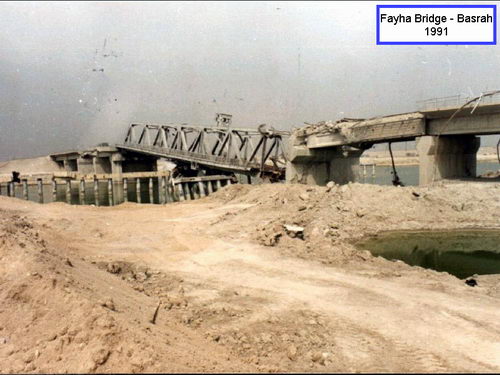
As May was drawing to a close, his manager told him that someone from the CPA wanted the company to estimate the building costs of replacing the New Diyala Bridge on the South East end of Baghdad. He got his team together, they went out and assessed the damage, decided it wasn’t too extensive, but it would be costly. They did the necessary tests and analyses (mumblings about soil composition and water depth, expansion joints and girders) and came up with a number they tentatively put forward- $300,000. This included new plans and designs, raw materials (quite cheap in Iraq), labor, contractors, travel expenses, etc.
Let’s pretend my cousin is a dolt. Let’s pretend he hasn’t been working with bridges for over 17 years. Let’s pretend he didn’t work on replacing at least 20 of the 133 bridges damaged during the first Gulf War. Let’s pretend he’s wrong and the cost of rebuilding this bridge is four times the number they estimated- let’s pretend it will actually cost $1,200,000. Let’s just use our imagination.
A week later, the New Diyala Bridge contract was given to an American company. This particular company estimated the cost of rebuilding the bridge would be around- brace yourselves- $50,000,000 !!
Something you should know about Iraq: we have over 130,000 engineers. More than half of these engineers are structural engineers and architects. Thousands of them were trained outside of Iraq in Germany, Japan, America, Britain and other countries. Thousands of others worked with some of the foreign companies that built various bridges, buildings and highways in Iraq. The majority of them are more than proficient- some of them are brilliant.
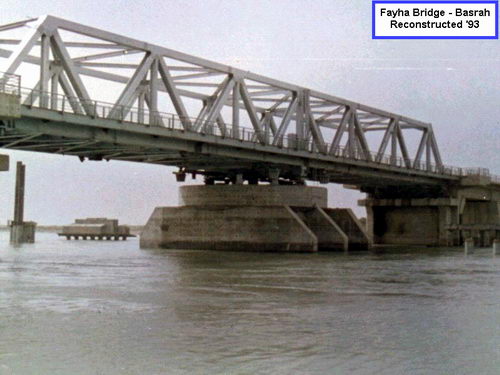
Iraqi engineers had to rebuild Iraq after the first Gulf War in 1991 when the ‘Coalition of the Willing’ was composed of over 30 countries actively participating in bombing Baghdad beyond recognition. They had to cope with rebuilding bridges and buildings that were originally built by foreign companies, they had to get around a lack of raw materials that we used to import from abroad, they had to work around a vicious blockade designed to damage whatever infrastructure was left after the war… they truly had to rebuild Iraq. And everything had to be made sturdy, because, well, we were always under the threat of war.
Over a hundred of the 133 bridges were rebuilt, hundreds of buildings and factories were replaced, communications towers were rebuilt, new bridges were added, electrical power grids were replaced… things were functioning. Everything wasn’t perfect- but we were working on it.
And Iraqis aren’t easy to please. Buildings cannot just be made functionary. They have to have artistic touches- a carved pillar, an intricately designed dome, something unique… not necessarily classy or subtle, but different. You can see it all over Baghdad- fashionable homes with plate glass windows, next to classic old ‘Baghdadi’ buildings, gaudy restaurants standing next to classy little cafes… mosques with domes so colorful and detailed they look like glamorous Faberge eggs… all done by Iraqis.
My favorite reconstruction project was the Mu’alaq Bridge over the Tigris. It is a suspended bridge that was designed and built by a British company. In 1991 it was bombed and everyone just about gave up on ever being able to cross it again. By 1994, it was up again, exactly as it was- without British companies, with Iraqi expertise. One of the art schools decided that although it wasn’t the most sophisticated bridge in the world, it was going to be the most glamorous. On the day it was opened to the public, it was covered with hundreds of painted flowers in the most outrageous colors- all over the pillars, the bridge itself, the walkways along the sides of the bridge. People came from all over Baghdad just to stand upon it and look down into the Tigris.
So instead of bringing in thousands of foreign companies that are going to want billions of dollars, why aren’t the Iraqi engineers, electricians and laborers being taken advantage of? Thousands of people who have no work would love to be able to rebuild Iraq… no one is being given a chance.
The reconstruction of Iraq is held above our heads like a promise and a threat. People roll their eyes at reconstruction because they know (Iraqis are wily) that these dubious reconstruction projects are going to plunge the country into a national debt only comparable to that of America. A few already rich contractors are going to get richer, Iraqi workers are going to be given a pittance and the unemployed Iraqi public can stand on the sidelines and look at the glamorous buildings being built by foreign companies.
I always say this war is about oil. It is. But it is also about huge corporations that are going to make billions off of reconstructing what was damaged during this war. Can you say Haliburton? (Which, by the way, got the very first contracts to replace the damaged oil infrastructure and put out ‘oil fires’ way back in April).
Well, of course it’s going to take uncountable billions to rebuild Iraq, Mr. Bremer, if the contracts are all given to foreign companies! Or perhaps the numbers are this frightening because Ahmad Al-Chalabi is the one doing the books- he *is* the math expert, after all.
– posted by river @ 6:46 PM
Friday, August 29, 2003
Chaos
“[Iraq] is not a country in chaos and Baghdad is not a city in chaos.” – Paul Bremer
Where is this guy living? Is he even in the same time zone??? I’m incredulous… maybe he’s from some alternate universe where shooting, looting, tanks, rape, abductions, and assassinations aren’t considered chaos, but it’s chaos in *my* world.
Ever since the occupation there have been 400 females abducted in Baghdad alone and that is only the number of recorded abductions. Most families don’t go to the Americans to tell about an abduction because they know it’s useless. The male members of the family take it upon themselves to search for the abducted female and get revenge if they find the abductors. What else is there to do? I know if I were abducted I’d much rather my family organize themselves and look for me personally than go to the CPA.
By BBC’s accounts there are 70 cars a day being hijacked in Baghdad alone…
And now we’ve just had some shocking news- Mohammed Baqir Al-Hakim was assassinated in the holy city of Najaf! Mohammed Baqir Al-Hakim was the head of SCIRI (Supreme Council of the Islamic Revolution in Iraq). They don’t know who was behind it, but many believe it is one of the other Shi’a religious factions. There has been some tension between Al-Sadir’s followers and Al-Hakim’s followers. Another cleric, Al-Sistani, also had some interesting things to say against Al-Hakim…
What most people choose to forget is the fact that the Shi’a in the south lost hundreds of thousands of lives to the war against Iran- fighting the very regime that is backing SCIRI now- the Islamic Revolution in Teheran. Al-Hakim does have a strong backing from many Shi’a fundamentalists sympathetic with Iran, true enough, but he also has people who hate him (and Badir’s Brigade) with a vengeance.
I hated this guy for what he represented- a puppet and a supporter of a fundamentalist Islamic government, but this wasn’t the way to deal with it. This is going to result in more bloodshed and fighting. He is the second Shi’a cleric to be assassinated in Najaf- the first was Al-Kho’i who also came from Teheran (back in April).
– posted by river @ 6:40 PM
Saturday, August 30, 2003
Position Open
Everyone is still discussing the death of Al-Hakim. Al-Hakim isn’t particularly popular with moderate Shi’a. One of my cousins, and his wife, are Shi’a and when he heard the news, he just shrugged his shoulders and said he didn’t like him much anyway- power-hungry clerics (of any religion) make people nervous, I guess. No one I know personally seems very traumatized with his death, but everyone is horrified with the number of casualties. 126 people dead and over 300 wounded- some of them dying.
They’re saying on the news that they’ve caught the assassins who set up the bomb- supposedly some branch of Al-Qaeda currently functioning from Iraq (they too were ‘liberated’).
A political analyst in Iraq says that there’s a chance some of Al-Hakim’s followers were actually involved in the bombing. That *would* explain how 700 kg of explosives found their way through his literal army (Badir’s Brigade) and next to his black SUV. The analyst said that there were many prominent members of SCIRI who had turned against Al-Hakim ever since his return from Iran. It seems that upon his return ‘home’ he decided to change the game plan and some of his followers didn’t like the new arrangements- namely, his brother on the council. On the other hand, it is hard to believe that any Islamic group would engineer such a vicious attack at one of the holiest religious sites in Iraq- the shrine of Imam Ali.
An interesting development on the much-shaken puppet council- Bahr Ul Iloom has suspended his membership in the council. The elderly cleric claimed, in an interview, that America was doing such a bad job of keeping the Iraqi people secure, he didn’t want to be a part of the council anymore. I wonder if he’s going to return to London. That makes a council of only 8 members now… we need a new nominee otherwise we will have four months of the year without leadership. Maybe if Bush doesn’t get re-elected, Bremer will give the position to him. Love to have him in Baghdad…
– posted by river @ 11:43 PM
Road Trip
My brother, E., was out at 8 am this morning getting gasoline for the car. He came home at 12 pm in a particularly foul mood. He had waited in line of angry, hostile Iraqis for 3 hours. Gasoline lines drive people crazy because, prior to the war, the price of gasoline in Iraq was ridiculously low. A liter of gasoline (unleaded) cost around 20 Iraqi Dinars when one US dollar equaled 2,000 Iraqi dinars. In other words, 1 liter of gasoline cost one cent! A liter of bottled water cost more than gasoline. Not only does it cost more now, but it isn’t easy to get. I think they’re importing gasoline from Saudi Arabia and Turkey.
We (a cousin, his wife, my mom and I) dragged E. out of the house at 12:30 to go visit my aunt on the other end of the city. We heard the usual instructions before we left- stop at checkpoints, return before dark and if anyone wants the car, give them the keys- don’t argue, don’t fight it.
The moment I had a foot out the door, the heat almost forced me back inside. Our sun, at noon, isn’t a heavenly body- it’s a physical assault. I could swear that at noon, in Iraq, the sun shuts out the rest of the world from its glory and concentrates its energies on us. Everything looks like it’s traveling on waves of heat- even the date palms look limp with the exhaustion of survival.
We climbed into a battered, old, white 1984 Volkswagen- people are avoiding using ‘nice’ cars that might tempt hijackers (‘nice’ is anything made after 1990). I mentally debated putting on sun glasses but decided against it- no need to attract any undue attention. I said a little prayer to keep us safe as I rummaged around in my bag, checking for my ‘weapon’. I can’t stand carrying a pistol so I carry around a big, red, switchblade hunting knife- you don’t want to mess with Riverbend…
Being out in the streets is like being caught in a tornado. You have to be alert and ready for anything every moment. I sat in the backseat, squinting into the sun, trying to determine if a particular face was that of a looter, or abductor or just another angry countryman. I craned my neck looking at the blue SUV, trying to remember if it had been behind us for the last kilometer or longer. I held my breath nervously every time the cousin slowed down the car because of traffic, willing the cars in front of us to get a move on.
I caught site of two men fighting. A crowd was beginning to gather and a few people were caught in the middle, trying to separate them. My cousin clucked angrily and started mumbling about ignorant people and how all we needed, on top of occupation, was hostility. E. told us not to keep staring and anxiously felt for the pistol under his seat.
The ride that took 20 minutes pre-war Iraq, took 45 minutes today. There were major roads completely cut off by tanks. Angry troops stood cutting off access to the roads around the palaces (which were once Saddam’s but are now America’s palaces). The cousin and E. debated alternative routes at every checkpoint or roadblock. I stayed silent because I don’t even know the city anymore. Now, areas are identified as “the one with the crater where the missile exploded”, or “the street with the ravaged houses”, or “the little house next to that one where that family was killed”.
The looting and killing of today has changed from the looting and killing in April. In April, it was quite random. Criminals were working alone. Now they’re more organized than the CPA (Coalition Provisional Authority) and the troops combined. No one works alone anymore- they’ve created gangs and armed militias. They pull up to houses in minivans and SUVs, armed with machineguns and sometimes grenades. They barge into the house and demand money and gold. If they don’t find enough, they abduct a child or female and ask for ransom. Sometimes the whole family is killed- sometimes only the male members of the family are killed.
For a while, the men in certain areas began arranging ‘lookouts’. They would gather, every 6 or 7 guys, in a street, armed with Klashnikovs, and watch out for the whole area. They would stop strange cars and ask them what family they were there to visit. Hundreds of looters were caught that way- we actually felt safe for a brief period. Then the American armored cars started patrolling the safer residential areas, ordering the men off the streets- telling them that if they were seen carrying a weapon, they would be treated as criminals.
Most of the gangs, at least the ones in Baghdad, originate from slums on the outskirts of the city. ‘Al-Sadir City’ is a huge, notorious slum with a population of around 1.5 million. The whole place is terrifying. If you lose a car or a person, you will most likely find them there. Every alley is controlled by a different gang and weapons are sold in the streets… they’ll even try out that machinegun you have your eye on, if you pay enough. Americans don’t bother raiding the houses in areas like that… raids are exclusively for decent people who can’t shoot back or attack. Raids are for the poor people in Ramadi, Ba’aquba and Mosul.
By the time we got to my aunt’s house, every muscle in my body was aching. My eyes were burning with the heat and the strain. E.’s brow was furrowed with the scenes we had left behind us on the street and the cousin’s hands were shaking almost imperceptibly- knuckles still white with tension. My mother said a prayer of gratitude for our safe arrival and the cousin’s wife, T., swore she wasn’t going to leave my aunt’s house for another three days and if we planned to go home today, we could do so without her because God needed to look out for other people today, not just us…
– posted by river @ 11:45 PM
Sunday, August 31, 2003
Made Me Laugh…
One of the readers of the blog (you know who you are) led me to this page and I’ve been laughing at it for the last 5 minutes- I am forever grateful! To access the page, type “Weapons of mass destruction” in the google.com search and click the “I’m Feeling Lucky” bar. Read the standard-looking error page CAREFULLY!
– posted by river @ 12:01 AM
Monday, September 01, 2003
Blog Fights…
Sorry to disappoint, but it’s not going to be much of a blog fight because I agree with most of what you say, Salam, though not all of it.
Al-Hakim’s assassination is very significant, you’re right. It will be used as an excuse for vendettas, faction fighting and more violence between Shi’a and Shi’a and Sunnis and Shi’a. Already his followers are swearing to avenge his death and I shudder to think of the next group of victims. It is extremely frightening to think of what the consequences of this will be.
People are blaming America because a. America is responsible for the security of this country- when you dissolve the army and pull down the police force, *you* become responsible and, b. there is a sense that the CPA is furthering the divide between Iraqis by encouraging, and emphasizing, religious, factional and ethnic differences. I know more about the different factions after this war than I ever knew and it’s the same thing with everyone else. This heightened awareness is the result of labeling people as either ‘Arab Sunni’ or ‘Shi’a Turkoman’, or ‘Assyrian Christian’… you *have* to belong somewhere now- you can’t just be a Kurd or Christian or Muslim or simply an *Iraqi*.
People believe that the ancient “divide and conquer” is being employed. Instead of having Iraqis, Shi’a and Sunnis and Christians, united in a struggle (peaceful or otherwise) against occupation, it’s easier to have Iraqis fighting each other. The resulting sentiment will be that occupation forces are not only desirable, but that they are vital for ‘keeping the peace’. I’m not blaming Americans, specifically- it’s the oldest trick in the book. The British attempted it before them (factional differences), and the Ottomans practiced it for hundreds of years (ethnical differences).
And no, people- don’t bother writing that email telling me to ‘stop blaming America’ and why can’t ‘…you mozlem freaks get your act together and stop killin’ eachother…’ Every society has its extremists and every nation has its potential for civil war. When there’s no law and order, people will do strange and horrible things.
You don’t know how hard I pray that we, as a people, are above religious differences. I seriously hope that this was done, as they are claiming, by Al-Qaeda or some outside forces because it will be horribly disappointing to see that after hundreds of years of putting religious differences aside, various groups of thugs and fanatics will be able to reap the benefits of even more chaos and killing.
– posted by river @ 11:37 PM
Puppet of the Month
Today, September 1, 2003, is an important day. Ahmad Al-Chalabi has finally achieved the epitome of his political aspirations. All the years of embezzlement, conniving, and scheming have paid off: he is the current rotating president. He has officially begun his ‘presidential term’.
To be quite honest, I’ve been waiting for this. I watch all his interviews and read any article I can get, in an attempt to comprehend what hidden charms, or buried astuteness, made the Pentagon decide to so diligently push him forth as a potential leader. If I didn’t know any better, I’d say he was some sort of elaborate, inside joke in Washington: “We’re blighted with Bush- you deserve no better.”
So I sat around waiting for an interview on Al-Jazeera. They said it would be on at 6:05 Baghdad time- I began watching at 6:00. I had to wait, impatiently, a full 20 minutes before he made his appearance, but it was worth it. He sat, wearing a black suit, striped shirt and black tie. He was polished, and smug.
The interview, like most of his interviews, began well. He showed appropriate solemnity when asked about his views on the assassination of Al-Hakim. The smug look vanished from his face momentarily. When the reporter asked him who he thought was behind the assassination, he shrewdly narrowed it down to: extremists, loyalists, terrorists, Ba’athists and people from neighboring countries.
The Governing Council, though, was a touchy subject. When asked about just how much power the Governing Council actually had, he immediately began foaming and spluttering- claiming they had all the power to govern Iraq. So the wily reporter asked about the American presence in Iraq- how long would it take for them to leave? Al-Chalabi instantaneously stated that the American presence in Iraq was completely in the hands of the Iraqis, like himself, and that Bremer had told them that if they wanted the Americans out, they would be out tomorrow!
When asked if he would nominate himself for “president” come elections, he denied having any political ambition and claimed he was there “to help the Iraqi people” (like he helped the Jordanian people?!).
He blamed the neighboring countries for any terrorism going on in Iraq. He said they should ‘close all the borders’ because the Iraqi army couldn’t currently secure its own border (apparently someone forgot to send him the memo about dissolving the army). I wish the reporter had posed the following question: Mr. Chalabi, if the neighboring countries close their borders, how will you make your stunning, historical flight in the trunk of a car when it becomes necessary?
I was a bit disappointed with it all. For the last week, I was anticipating some sort of… I don’t know- elaborate inauguration ceremony? No, not really… maybe more of a festivity, worthy of the solemn occasion, marking his ascent to power. A circus-themed gala, perhaps, where Bremer can play the ring-master and Chalabi can jump through red, white and blue hoops to mark this historical day. Qambar can serve the cocktails…
– posted by river @ 11:40 PM
Wednesday, September 03, 2003
Have You Forgotten?
September 11 was a tragedy. Not because 3,000 Americans died… but because 3,000 humans died. I was reading about the recorded telephone conversations of victims and their families on September 11. I thought it was… awful, and perfectly timed. Just when people are starting to question the results and incentives behind this occupation, they are immediately bombarded with reminders of September 11. Never mind Iraq had nothing to do with it.
I get emails constantly reminding me of the tragedy of September 11 and telling me how the “Arabs” brought all of this upon themselves. Never mind it was originally blamed on Afghanistan (who, for your information, aren’t Arabs).
I am constantly reminded of the 3,000 Americans who died that day… and asked to put behind me the 8,000 worthless Iraqis we lost to missiles, tanks and guns.
People marvel that we’re not out in the streets, decking the monstrous, khaki tanks with roses and jasmine. They wonder why we don’t crown the hard, ugly helmets of the troops with wreaths of laurel. They question why we mourn our dead instead of gratefully offering them as sacrifices to the Gods of Democracy and Liberty. They wonder why we’re bitter.
But, I *haven’t* forgotten…
I remember February 13, 1991. I remember the missiles dropped on Al-Amriyah shelter- a civilian bomb shelter in a populated, residential area in Baghdad. Bombs so sophisticated, that the first one drilled through to the heart of the shelter and the second one exploded inside. The shelter was full of women and children- boys over the age of 15 weren’t allowed. I remember watching images of horrified people clinging to the fence circling the shelter, crying, screaming, begging to know what had happened to a daughter, a mother, a son, a family that had been seeking protection within the shelter’s walls.
I remember watching them drag out bodies so charred, you couldn’t tell they were human. I remember frantic people, running from corpse to corpse, trying to identify a loved-one… I remember seeing Iraqi aid workers, cleaning out the shelter, fainting with the unbearable scenes inside. I remember the whole area reeked with the smell of burnt flesh for weeks and weeks after.
I remember visiting the shelter, years later, to pay my respects to the 400+ people who died a horrible death during the small hours of the morning and seeing the ghostly outlines of humans plastered on the walls and ceilings.
I remember a family friend who lost his wife, his five-year-old daughter, his two-year-old son and his mind on February 13.
I remember the day the Pentagon, after making various excuses, claimed it had been a ‘mistake’.
I remember 13 years of sanctions, backed firmly by the US and UK, in the name of WMD nobody ever found. Sanctions so rigid, we had basic necessities, like medicine, on waiting lists for months and months, before they were refused. I remember chemicals like chlorine, necessary for water purification, being scrutinized and delayed at the expense of millions of people.
I remember having to ask aid workers, and visiting activists, to ‘please bring a book’ because publishing companies refused to sell scientific books and journals to Iraq. I remember having to ‘share’ books with other students in college, in an attempt to make the most of the limited resources.
I remember wasted, little bodies in huge hospital beds- dying of hunger and of disease; diseases that could easily be treated with medications that were ‘forbidden’. I remember parents with drawn faces peering anxiously into doctors’ eyes, searching for a miracle.
I remember the depleted uranium. How many have heard of depleted uranium? Those are household words to Iraqi people. The depleted uranium weapons used in 1991 (and possibly this time too) have resulted in a damaged environment and an astronomical rise in the cancer rate in Iraq. I remember seeing babies born with a single eye, 3 legs or no face- a result of DU poisoning.
I remember dozens of dead in the ‘no fly zones’, bombed by British and American planes claiming to ‘protect’ the north and south of Iraq. I remember the mother, living on the outskirts of Mosul, who lost her husband and 5 kids when an American plane bombed the father and his sons in the middle of a field of peaceful, grazing sheep.
And we are to believe that this is all being done for the sake of the people.
“Have you forgotten how it felt that day
To see your homeland under fire
And her people blown away?”
No… we haven’t forgotten- the tanks are still here to remind us.
A friend of E.’s, who lives in Amiriyah, was telling us about an American soldier he had been talking to in the area. E’s friend pointed to the shelter and told him of the atrocity committed in 1991. The soldier turned with the words, “Don’t blame me- I was only 9!” And I was only 11.
American long-term memory is exclusive to American traumas. The rest of the world should simply ‘put the past behind’, ‘move forward’, ‘be pragmatic’ and ‘get over it’.
Someone asked me whether it was true that the ‘Iraqi people were dancing in the streets of Baghdad’ when the World Trade Center fell. Of course it’s not true. I was watching the tv screen in disbelief- looking at the reactions of the horrified people. I wasn’t dancing because the terrified faces on the screen, could have been the same faces in front of the Amiriyah shelter on February 13… it’s strange how horror obliterates ethnic differences- all faces look the same when they are witnessing the death of loved ones.
– posted by river @ 6:08 PM
The New Cabinet
Two days ago, the Governing Council declared that the new Iraqi Cabinet had been selected. The composition of the Iraqi cabinet is identical to that of the Governing Council: 13 Shi’a Muslims, 5 Sunni Muslims, 5 Kurds, 1 Christian, and 1 Turkoman.
After a long, tedious speech given this morning by Ibraheim Al-Jaffari, the ministers were ‘sworn in’. Correct me if I’m wrong, isn’t there supposed to be a constitution the ministers should swear to uphold? Apparently not.
Only 16 of the ministers were sworn in today because 9 of them couldn’t be there for ‘technical reasons’ (i.e. they’re still outside of the country). I don’t know how the ministries are going to function when the majority of the ‘ministers’ were living abroad for most of their lives. There’s going to be an American ‘advisor’ for each of the ministries, which is supposed to help. I hope the American advisors are better than the ones Bush stocks the White House with…
Some points of interest…
– Ahmad Al-Chalabi, Jalal Talabani, and Ibraheim Al-Jaffari were swearing in the ministers.
– There is one female minister- Nisreen Mustafa Bawari. After she was sworn in, she started shaking the hands of Al-Chalabi, Talabani and Al-Jaffari, like her male counterparts. Al-Jaffari refused to shake her hand because Al-Da’awa consider it a ‘sin’ to touch a female who isn’t a direct relation.
– Mohammed Jassim Khudhair (Minister of Expatriates and Immigration) wasn’t wearing a tie. Many Muslim fundamentalists (like the ones in Iran) don’t wear ties because they believe that along with the head, and arms, there’s symbolism of a ‘cross’ and a cross symbolizes Christianity and… well, you get the picture.
– The Minister of Oil is… Ibraheim Mohammed Bahr Ul-Iloom- the son of Mohammed Bahr Ul-Iloom of the Governing Council (the one who suspended his membership in the 9-member rotating presidency). Can anyone say nepotism? Brilliance must run in the family…
– posted by river @ 6:30 PM
Saturday, September 06, 2003
Bad, Bad, Bad Day…
Bad #1: Mosque shooting.
Bad #2: No water.
Bad #3: Rumsfeld.
Today in Al-Sha’ab area, a highly populated area of Baghdad, armed men pulled up to a mosque during morning prayer and opened fire on the people. It was horrific and chilling. Someone said 3 people died, but someone else said it was more… no one knows who they are or where they’re from, but it’s said that they were using semiautomatic machineguns (not a part of the army arsenal, as far as I know). And these were just ordinary people. It’s incomprehensible and nightmarish… if you are no longer safe in a shrine or a mosque, where *are* you safe?
No running water all day today. Horrible. Usually there are at least a few hours of running water, today there’s none. E. went out and asked if there was perhaps a pipe broken? The neighbors have no idea. Everyone is annoyed beyond reason.
A word of advice: never take water for granted. Every time you wash your hands in cold, clean, clear water- say a prayer of thanks to whatever deity you revere. Every time you drink fresh, odorless water- say the same prayer. Never throw out the clean water remaining in your glass- water a plant, give it to the cat, throw it out into the garden… whatever. Never take it for granted.
Luckily, yesterday I filled all the water bottles. We have dozens of water bottles, both glass and plastic. Every time there’s even a semblance of running water, we put something under the faucet to catch the precious drops. We fill bottles, pots, thermoses, buckets- anything that will hold water. Some days are better than others.
The problem is this: when the electricity is off, the municipal water pumps don’t work- the water pressure is so low, the water won’t go up the faucet. When there *is* electricity, everyone starts up their own, personal, water pumps to fill the water tanks on the roof and the water pressure drops again.
Washing clothes is a trial. Automatic washers are obsolete- useless. The best washers to use are those little ‘National’ washers. They look like small garbage bins. You fill them with water and detergent and throw the clothes in. The clothes rotate and swish for about 10 minutes (there has to be electricity). We pull them out, rinse them in clean water and wring out the excess water. The excess water goes back into the washer. After the washing is done, the dirty soap water is used to wash the tiled driveway.
Washing dishes is another problem. We try to limit the use of dishes to what is absolutely necessary. Most of the water we store in buckets and tubs is used to wash people. We wash using the old-fashioned way- a smallish tub full of water, a ladle, a loofah, soap and shampoo. The problem is that because of the heat, everyone wants to wash at least twice a day. The best time to wash is right before going to bed because for a few heavenly minutes after you wash, you feel cool enough to try to sleep. I have forgotten the delights of a shower…
Before the war, many people dug wells in their gardens. These wells don’t look like your traditional well- a circular, stone wall with a bucket hanging in the middle. They are merely small, unpretentious holes in the ground to which mechanical pumps are attached. They provide a more or less decent water supply. The water has to be boiled or chlorinated to be used for drinking.
To make matters worse, Rumsfeld is in Iraq. It’s awful to see him strutting all over the place. I hate the hard, smug look that seems plastered on his face… some people just have cruel features. The reaction to seeing him on tv differs from the reaction to seeing Bremer or one of the puppets. The latter are greeted with jeers and scorn. Seeing Rumsfeld is something else- there’s resentment and disgust. It feels like he’s here to add insult to injury… you know, just in case anyone forgets we’re an occupied country.
And now he’s going to go back to America and give a speech about how he doesn’t know what anyone is talking about when they say ‘chaos’ (*he* was safe in the middle of all his bodyguards)… how electricity and water are functioning (after all, his air-conditioner was working *fine*)… how the people are gloriously happy and traffic is frequently at a stand-still because the Iraqis are dancing in the streets… how the ‘armed forces’ are cheerful and *grateful* to be on this heroic, historical mission… how kids wave at him, troops cheer him, dogs wag their tails in welcome and doves hover above his head…
To hell with him.
And no. I’m not whining- I’m ranting. You can’t see me right now, but I’m shaking my fist at the computer screen, shaking my fist at the television, and heaping colorful, bilingual insults on Rumsfeld’s head (hope the doves crap on him)… I’m angry.
– posted by river @ 12:07 AM
Sunday, September 07, 2003
This Just In…
I just heard some interesting news! Apparently as Rumsfeld’s plane was leaving Baghdad Airport to take him to Kuwait, missiles were fired at his plane and they missed! Hoping to hear more about it- but I just had to share.
The puppet-master met with Bremer and the puppets but the picture wasn’t complete- Bush wasn’t there.
I *love* Donald Rumsfeld’s latest comment on Iraq… “…It’s like Chicago.”
Wow. This guy is funny.
You know what? I agree with him- he just didn’t finish the statement properly. What he actually should have said was, “It’s like Chicago… during the 1920s, when Al Capone was running it: gangs, militias, fighting, looting, vendettas, dubious business dealings and shady figures in dark corners.”
Except instead of Al Capone, we have Al-Jaffari, Al-Chalabi, Al-Hakim and L. Paul Bremer.
There were several attacks on the American forces today. The most prominent ones were in Baquba and Mosul and a couple of hours ago, there were two in Baghdad. We haven’t seen the Baghdad ones on tv, but we heard a dull explosion and one of the neighbors told E. about an armored car burned.
Another comment: of the dozens of emails I got sympathizing with my feelings towards Rumsfeld, the *only* one I got defending him had a few choice sentences in it I thought I would share…
Basically it tells me that Rumsfeld is a heroic and very compassionate man and then continues to say that we ungrateful Iraqis should be ashamed of ourselves, etc. It also claims that I must be a Ba’athist because, of course, who else *except* a Ba’athist would be against this noble war?! (Sad, sad, *old* arguement.)
Another fun line:
“You should be thanking your lucky stars that Rumsfeld, and not Saddam, was in the Pentagon when your asshole buddies flew into it. Otherwise you and your whole family would be radioactive dust right now.”
Apparently, I should be grateful Little Dougie, as I am fond of calling him, wasn’t in the Pentagon either, because he finishes his compassionate email with the following:
“If it were up to me I would have vaporized you ten minutes after the Trade center attacks.”
The whole thing cheered me up because it simply confirmed my suspicions of Rumsfeld and his followers. His emails, compared to more intelligent emails, work to remind me of the diversity of blog readers. I am honored that people like Little Dougie take time off of watching Fox News to check out my blog. Thank you Little Dougie, *you* have made my day!
On the other hand, it could have been Rumsfeld personally emailing me… either way, I’m flattered- keep reading the blog!
– posted by river @ 3:33 AM
Monday, September 08, 2003
Under the Palm Leaves
The water was off and on again today. We filled all the bottles and containers. The water pressure was really low and evidently, our super-low garden faucet is one of the only ones in the area dribbling water at intervals. The neighbors have all sent buckets, pots and messages of love and gratitude… perhaps I have found a job.
The sun was just beginning to set and the sky was a combination of blue, orange and gray. I was standing, in the warm, dry grass, waiting for a pot to fill with water, when I heard someone knocking the garden gate. It was Ihsan, our ten-year-old neighbor across the street. He was holding freshly made ‘khubz’ (something like whole-wheat pita bread) and squinting across the street at his next-door-neighbor’s house.
Ihsan: They found Abu Ra’ad…
Me: What?! Did they? Is he…
Ihsan: He’s dead. Ra’ad and his sisters are at my house.
I looked at the house across the street and saw that three cars were lined up in front of it, as if in a funeral procession. Ihsan followed my gaze and shook his head solemnly, “They didn’t bring him home- they’ll bury him tomorrow at dawn.” He handed me the bread and turned to run back home. As he darted away to cross the street, he lost a flip-flop. He squealed as his foot hit the hot asphalt and hopped around on one leg like some bizarre stork.
I continued watching the late Abu Ra’ad’s beige, stucco house with sadness and relief. The once green creeper all along the sides was yellow and decaying. The curtains were drawn on dusty windows and the whole house looked almost abandoned. The only signs of life were the shiny tiles of the driveway, washed daily by well-meaning neighbors.
They had finally found Abu Ra’ad.
Abu Ra’ad (meaning ‘father of Ra’ad’) was a lawyer with his own private practice… if it could be called that. It was an office in a crowded, mercantile area in Baghdad large enough for three desks: one secretary and a partner.
On April 10, in the middle of the chaos, Abu Ra’ad left his house, his wife and three children to go check on his parents, whom he had lost contact with a week earlier. At 10 am, he got into an old Toyota, said a prayer and headed out to seek his family. He never came back.
For 3 days, Umm Ra’ad (mother of ‘Ra’ad’) thought he was held up at his parents’ house for some reason. Perhaps her husband had found his family hurt? Maybe he had found a parent dead- after all, his father was very sick and old… Maybe the fighting was so heavy, he couldn’t make it out of their area? The possibilities were endless. Finally, one of the other neighbors delivered a note to Umm Ra’ad’s brother asking him to please visit Abu Ra’ad’s family and find out if he was okay. After a long day, Umm Ra’ad’s brother visited her home, grim- Abu Ra’ad wasn’t at his parents’ home. He never made it and no one knew where he was.
For 7 days, everyone thought he was being detained by the Americans. We heard that hundreds of civilians were taken prisoner simply for being in the wrong place at the wrong time. Abu Ra’ad’s younger brother, and his brother-in-law, visited authorities every day. They went to the various hotels, they visited the two or three remaining hospitals, and went over endless lists of detainees and POWs in search of Abu Ra’ad.
By the end of April, his family had resigned themselves to Abu Ra’ad’s death. His 35-year-old wife was wearing black from head-to-toe in anticipation of the news she knew she was bound, sooner or later, to receive.
I remember visiting her for the first time in early May. It was an awkward visit because we wanted to hold out hope, yet we knew there was none to give. She sat, very small and dark, on a couch in the living room, shredding tissues listlessly and listening vaguely to the words of commiseration and sympathy that, obviously, brought little or no comfort. Her 3 children, aged 1, 4 and 10 sat near her, unbearably quiet and calm. They sat gauging the situation by their mother’s expression. She knew he was dead, but she couldn’t bring herself to cry.
And still, they didn’t give up the search. They traced his route from his home to Al-Jami’a Quarter, where his parents lived, pausing at every burnt vehicle to examine it and asking the people in the surrounding areas whether they had seen a white 1985 Toyota being driven by a 40-year-old man? Maybe it had been fired at by a tank? Maybe it was hit by an Apache? People were sympathetic, but helpless. No white Toyota- a blue Kia with 6 passengers, a red Volkswagen with a mother, father and two kids… but no white Toyota. Every single time, they were referred to the makeshift graves along the main roads and highways. The temporary graves, for several weeks, lined the main roads of Baghdad.
As the tanks and Apaches invaded the city, they shot left and right at any vehicle in their path. The areas that got it worst were Al-Dawra and Al-A’adhamia. People in residential areas didn’t know what to do with the corpses in the burnt vehicles that had come from other parts of the city. They were the corpses of people and families who were trying to get away from the heavy fighting in their own areas, some of them had been officially evacuated.
The corpses sat decomposing in the heat, beyond identification. Some people tried asking the troops to help deal with them, but the reaction was mainly, “That’s not my job.” Of course not, how silly… your job is to burn the cars, we bury the corpses.
Finally, the people began to bury the corpses along the roadside- near the burnt vehicles so that family members looking for the car would find their loved ones not very far off.
For several weeks, you could see little piles of dirt all over Baghdad, and along the highways leading outside of the city, marked with bricks, or stones, or signs and, always, with palm leaves. The drying, wilting palm leaves were buried, standing up, to mark the graves. Some of the graves had little cardboard placards stuck carefully under a pile of stones to help family members: Adult male, adult female, 2 children in black Mercedes. Adult male, small boy in a white pick-up.
Sometimes the graves were marked by the license plate of the car the victims were in. But most of them were marked with the palm leaves.
For several weeks, there would be people stooping, all along the way, trying to decide if they knew, or recognized, any of the dead. That’s what Abu Ra’ad’s family did, all through May, June, July and August.
Finally, 3 days ago, an old man in his Abu Ra’ad’s parents’ neighborhood told them how the roads were blocked to their area for a couple of days, and people coming from the other end of the city had had to detour. There were several burnt cars in an area on the suburbs, in their own makeshift graveyard. They should look there; maybe they would find their son.
They finally found him, this morning, in an area outside his expected course. One of the several burnt cars, dragged into a dusty field, was a white 1985 Toyota with the skeleton of a car-seat in the back. Not far off were the graves. They located the ‘adult male in the white Toyota’ and with the help of some sympathetic men in the neighborhood, unearthed Abu Ra’ad for identification.
We went to give our condolences to Umm Ra’ad. The children were at Ihsan’s house and she was surrounded by relatives and family members, grieving. Kerosene lamps and candles were lit in the darkened living room; they threw light all over the drawn, grief-stricken faces. She was finally crying.
Tomorrow, at dawn, he will be exhumed by his family and officially buried in the over-crowded family graveyard, under one of the dozens of palm trees, in the place reserved for his father.
– posted by river @ 1:54 AM
Tuesday, September 09, 2003
Friends, Americans, Countrymen…
I heard/read Bush’s speech yesterday. I can’t watch him for more than a minute at a time- I hate him that much. He makes me sick. He stands there, squinting his eyes and pursing his lips, going on and on with such blatant lies. And he looks just plain stupid.
I listened for as long as I could tolerate his inane features and grating voice, then turned off the television. Then turned it back on. Then turned the channel. Then turned it back. Then almost threw a cushion at the screen. Then thought better and decided he wasn’t worth it. Is it possible that someone like that is practically running the world? Is it possible he might see another term in the White House? God forbid…
His whole speech was just an idiotic repetition of what he’s been saying ever since Afghanistan, “Give me more money, give me more power- I’m doing this for you. Bechtel and Halliburton have nothing to do with it.” Doesn’t he ever get tired of saying the same words? Don’t people ever get tired of hearing them?
The one thing I agreed with was this: there are terrorists in Iraq. It’s true. Ever since the occupation, they’ve been here by the hundreds and thousands. They are seeping in from neighboring countries through the borders the ‘Coalition of the Willing’ could not protect and would not let the Iraqi army protect. Some of them are even a part of the Governing Council now. Al-Daawa Party is responsible for some of the most terrible bombings in Iraq and other countries in the region.
Yes. I blame America for that. We never had Al-Qaeda or even links to Al-Qaeda. Ansar Al-Islam are supposed to be linked to Al-Qaeda, but they were functioning in the northern territory with the two Kurdish leaders’ knowledge and blessings.
Then there’s this:
“The attacks you have heard and read about in the last few weeks have occurred predominantly in the central region of Iraq, between Baghdad and Tikrit — Saddam Hussein’s former stronghold. The north of Iraq is generally stable and is moving forward with reconstruction and self-government. The same trends are evident in the south, despite recent attacks by terrorist groups.”
Is he serious? Only yesterday an American armored vehicle was burned in front of the University of Mosul in the north. There have been an increasing number of attacks on British troops in the south- we hear about them everyday. As for Baghdad… it has become a common occurrence. Baghdad Airport is constantly under missile attack and we hear of similar attacks all over Baghdad… or maybe the person who gave him that little fact is the same one who told him where to find the WMD…
“Since the end of major combat operations, we have conducted raids seizing many caches of enemy weapons and massive amounts of ammunition, and we have captured or killed hundreds of Saddam loyalists and terrorists.”
Yes, we know all about the ‘raids’. I wish I had statistics on the raids. The ‘loyalists and terrorists’ must include Mohammed Al-Kubeisi of Jihad Quarter in Baghdad who was 11. He went outside on the second floor balcony of his house to see what the commotion was all about in their garden. The commotion was an American raid. Mohammed was shot on the spot. I remember another little terrorist who was killed four days ago in Baquba, a province north-east of Baghdad. This terrorist was 10… no one knows why or how he was shot by one of the troops while they were raiding his family’s house. They found no weapons, they found no Ba’athists, they found no WMD. I hope America feels safer now.
On top of it all, the borders between Iraq and Iran have been given to Badir’s Brigade to guard. Badir’s Brigade. Unbelievable. I thought the borders needed guarding to prevent armed militias like Badir’s Brigade from entering the country. We have a proverb in Arabic: “Emin il bezooneh lahmeh” which means “Entrust a cat with meat.” Yes, give the Iranian borders to Badir’s Brigade. Right on.
Just a couple of days ago, two female school principals were ‘executed’ by Badir’s Brigade in Al-Belidiyat area in Baghdad. They were warned to resign their posts so that a ‘sympathetic’ principal could replace them. They ignored the threat, they were shot. It’s that simple these days. Of course, that’s not terrorism because the targets are Iraqi people. Terrorism is when the Coalition of the Willing are targeted.
Everyone is asking, ‘What should be done?’. Pull out the American troops. Take them home. Bring in UN peace-keeping troops under the Security Council- not led by America.
Let real Iraqis be involved in governing Iraq. Let Iraqis who actually have *families* living in Iraq be involved in governing their country. Let Iraqis who have something to lose govern the country. They aren’t being given a chance. As long as any Iraqi isn’t affiliated with one of the political groups on the Governing Council, no one bothers to listen.
We have thousands of competent, intelligent, innovative people who are eager to move forward but it’s impossible under these circumstances. There’s no security, there’s no work and there’s no incentive. AND THERE’S NO ONE WHO WILL LISTEN. If you’re not a part of the CPA or one of Ahmad Al-Chalabi’s thugs, then you’re worthless. You can’t be trusted.
I read Bush’s speech… just like I’ve read/heard what feels like a thousand different speeches these last few months. Empty words, meaningless phrases.
The abridged version of the speech…
“Friends, Americans, Countrymen, lend me your ears… lend me your sons and daughters, lend me your tax dollars… so we can wage war in the name of American national security (people worldwide are willing to die for it)… so I can cover up my incompetence in failing to protect you… so I can add to the Bush and Cheney family coffers at your expense and the expense of the Iraqi people. I don’t know what I’m doing, but if you spend enough money, you’ll want to believe that I do.”
– posted by river @ 10:43 PM
Friday, September 12, 2003
Turning Tables…
I’ve been following TurningTables ever since someone pointed it out to me two weeks ago. ‘Moja’ somehow puts a human face on the troops in Iraq. I read his blogs and look at the troops and wonder, could that be him? It’s strange to read stories from the ‘other side’…
I’m glad he’s going to be able to go home, safely.
– posted by river @ 6:05 PM
Lately…
I haven’t been writing these last few days because I simply haven’t felt inspired. There’s so much happening on a country-wide scale and so little happening personally. Everything feels chaotic. Seeing what we’re supposed to be living on television, differs drastically from actually living it. The moment you hear about something terrible happening somewhere, you let it sink in, then ‘take stock’ and try to figure out who you have living there and how you can contact them.
Three days ago there was a huge explosion in Arbil (one of the northern Kurdish areas). They say it was a suicide bomber in a car in front of the American intelligence headquarters. The number of casualties varied from news network to news network, but one thing is sure- a child in a house across from the headquarters was killed. Horrible.
There was also an attack on Mosul Hotel in central Mosul where American troops are staying. This was yesterday and no one is giving the number of casualties.
There were attacks on troops in Ramadi and Falloojeh yesterday. In fact, in Khaldiah (an area between Ramadi and Falloojeh) they say there was actual fighting and gunfire lasted over an hour and a half.
In Falloojeh, the police were shot at by American troops this morning. I’m not sure how many died but the whole ‘accident’ was atrocious. They say up to 7 Iraqi policemen were killed in some ‘mistake’ made by the troops. This is going to be horrible for Falloojeh- there’s already so much bitterness against the Americans there because of the shooting incidents in April and May.
There’s still some fighting in Kirkuk (the Turkomen dominated area). The reason is because the Bayshmarga (Kurdish militia) have been assigned to that area. There has always been a sort of hostility between Turkomen and Kurds and having the Bayshmarga running the show isn’t making things any better. Turkey wants to send in ‘peace-keeping’ troops to help secure Kirkuk, but the Kurds are refusing adamantly.
And then there’s Baghdad. What is there to say about Baghdad? Baghdad is a mess. In Zayunah, an elegant area in east Baghdad, there was gang fighting yesterday. People were being shot in the streets, caught between gang crossfire. The scene was frightening and terrible.
We see Iraqi police every once in a while, but their numbers are ridiculous compared to the situation. They wear light blue shirts, dark pants and these black arm badges with IP written on them and the flag. They get to carry around these little 7 mm Berettas that look tiny in their hands. And the guns are always drawn- they try to guide traffic waving a gun, try to stop cars waving a gun, try to stop fights waving a gun- it’s the best means of communication these days- a tank works even better (but you can’t wave it around).
In another area, a 12-year-old boy was shot in his garden while playing. The Americans say he was caught in the crossfire between them and someone else. His mother was almost tearing her hair out and his father was beating the ground and moaning. He looked ready to kill.
People talk about the future and how five years from now, ten years from now, fifty years from now things are going to be better. Some people no longer have a ‘future’. The parents of that boy no longer care about the future of Iraq or the future of America or anything else. They buried their ‘future’ last night. I’m sure the future means as much to them as it does to the parents of the soldiers dying in Iraq on a daily basis.
When Bush ‘brought the war to the terrorists’, he failed to mention he wouldn’t be fighting it in some distant mountains or barren deserts: the frontline is our homes… the ‘collateral damage’ are our friends and families.
– posted by river @ 6:16 PM
A Modern-Day Fairy Tale
Someone asked me why I didn’t write anything yesterday mentioning September 11. I’ll be perfectly honest- I had forgotten about it until around 2 pm. I woke up to no electricity, washed up and went into the kitchen to help out with breakfast.
I found my mother struggling with the gas cylinder, trying to roll it around on the ground in front of the stove. The cylinder was almost empty and the bright blue flames were orange at the tips, threatening to go out any minute. I stood nervously in the doorway of the kitchen- gas cylinders make me very nervous. After the war, when there wasn’t enough cooking gas to go around, people who sell the gas began mixing kerosene with the cooking gas which resulted in some horrific explosions. Every time we change cylinders, I have a crazy urge to run out of the kitchen and wait to see if it explodes.
My mother looked at me helplessly as the flames began dying away. “E. will have to go see if they’re selling cooking gas at the station.”
“But E. was up until 4 am yesterday…” I remonstrated.
“Ok then- you guys don’t need to drink tea or coffee.”
And that was the beginning of a series of difficulties: almost no water, relatives who dropped by for a lunch that couldn’t be cooked and a wasp’s nest that was terrorizing anyone who ventured into the garden.
By 2 pm, the electricity was back on and I was sitting in front of the tv watching one of the Arabic stations. Suddenly, they showed American troops standing solemnly in a 9/11 Memorial Service being held in… Tikrit (where Saddam was born)!!
I sat watching, confused. I assume it was done in that specific place so some oblivious person can, five years down the line, hold it up as testimony to the world that this whole war was, indeed, about terror and Osama bin Laden and 9/11 and WMD. It was done in that particular place so that someone, a week from now, can write to me and say, “Of course there was a link between Osama and Saddam and that’s why we attacked you. The proof is this: the 9/11 Memorial Service was held in Tikrit.”
This famous ‘missing link’ between Iraq and the war on terror is like, how I imagine, a fairy might look- small, flighty, almost transparent and… nonexistent. Shortly after 9/11, this fairy was caught by the Pentagon and stashed in a cage for all the world to see.
Almost like the Emperor’s new clothes, anyone who could not see this enigmatic creature was accused of being an Enemy of Freedom, a Saddam sympathizer or- horror of horrors!- unpatriotic. They were promptly indicted and burned at the metaphorical stake.
So most people chose to see the fairy. Some people, in fact, really thought they *could* see it. Everyone certainly tried. Unfortunately, the fairy soon began growing smaller and paler under the burning scrutiny of millions of curious eyes.
So what did they decide to do? Bush, Rumsfeld and the rest made a critical decision: the fairy must be protected by a great wall. Plans were drawn up, the toughest bricks were selected and contractors from Fox News, CNN and others were assigned. And with every fresh news story, a brick was laid, until the wall was so high and strong, it became a fortress… and everyone forgot what lay behind it… which was the alleged fairy… who may, or may not have, existed. But it no longer mattered anymore, anyway- the wall itself was there…
And the fairy? The fairy dug an escape tunnel to Iran… or perhaps Syria… or maybe North Korea. Time will tell- she will be caught again.
– posted by river @ 6:22 PM
Tuesday, September 16, 2003
Girl Power and Post-War Iraq
I’ve been a bit sick these last few days. I seem to have come down with something similar to the flu that has left me red-eyed, runny-nosed and feverish. I didn’t actually realize I was sick until the electricity went off the day before yesterday: there was a collective groan as the heat instantly settled down upon us like a wool blanket and all I could say was, “What heat?!”
The family looked at me like maybe I was crazy- or feverish- and it finally hit me why the room took to dancing around before my eyes every few minutes… why the sunlight made me wince and squint in pain, rather like a bat.
So I spent yesterday on a couch in the living room, surrounded by tissues and Flu-Out (a favorite Iraqi flu medication). I watched tv whenever it was available and even managed to drag myself to the computer two or three times. The screen would move in waves in front of my bleary eyes so I’d give up trying to make sense of the dancing letters after a few minutes.
At night I focused enough to watch “For Females Only”, a weekly program on Al-Jazeera. It left me feeling enraged and depressed. The subject was, as usual, Iraq. The program was hosting three Iraqi females: Dr. Shatha Jaffar, Yanar Mohammed and Iman Abdul Jabar.
Yanar Mohammed is an architect who has been living in Canada ever since 1993, as far as I know. She is the founder of the “Organization of Women’s Freedom in Iraq” which was based in Canada until a couple of months ago. Dr. Shatha Jaffar I haven’t heard of. I think she left Iraq at the age of 15 (she is now in her 40s) and is also heading some sort of Iraqi women’s movement, although the caption under her name said, “Women’s Rights Activist”. Iman Abdul Jabar was apparently representative of some sort of Islamic women’s movement and was, as far as I could tell, living in Iraq the whole time.
Iman and Yanar both had a distinctive advantage over Shatha because they were both actually living in Iraq. The discussion was regarding how much women’s rights in Iraq had been affected after the occupation- how females were being abducted, raped and forced into a certain form of dress or action.
Yanar claimed that women’s equality couldn’t be achieved except through a secular government because an Islamic government would definitely hurt women’s rights. I don’t necessarily agree with that. If there were an Islamic government based purely on the teachings of Islam, women would be ensured of certain nonnegotiable rights like inheritance, the right to an education, the right to work and earn money, the right to marry according to her will and the right to divorce her husband. Of course, there would be limitations in the way females dress and other restrictions.
Islamic government doesn’t work because the people running the show usually implement certain laws and rules that have nothing to do with Islam and more to do with certain chauvinistic ideas in the name of Islam- like in Iran and Saudi Arabia.
Iman Abdul Jabar was taking Rumsfeld’s attitude to the situation- see no evil, hear no evil, speak no evil. She claimed that she knew nothing about any extremists belonging to Al-Sadr and Al-Hakim coming into schools during the exams, pulling ‘safirat’ (girls without hijab) out of tests and threatening that they wouldn’t be allowed to come to school anymore if they didn’t wear a hijab. She says she has heard nothing of all the signs and banners hanging all over colleges and universities in Baghdad condemning females who didn’t wear what is considered the traditional Islamic dress. I say ‘considered’ because there is nothing specifying exactly what is Islamic dress. Some people feel that a hijab is more than enough, while others claim that a burka or pushi are necessary…
Shatha was full of self-righteous blabbering. She instantly lost any point she was trying to make by claiming that girls in Iraq were largely ignorant and illiterate due to the last 30 years. She said that Iraqis began pulling their daughters out of school because non-Ba’athists weren’t allowed an education.
Strangely enough, I wasn’t a Ba’athist and I got accepted into one of the best colleges in the country based solely on my grades in my final year of high school. None of my friends were Ba’athists and they ended up pharmacists, doctors, dentists, translators and lawyers… I must have been living somewhere else.
Every time Shatha was onscreen, I threw used tissues at her. She feeds into the usual pre-war/post-occupation propaganda that if you weren’t a Ba’athist, you weren’t allowed to learn. After 35 years that would mean that the only literate, sophisticated and educated people in Iraq are Ba’athists.
Something you probably don’t know about Iraq: We have 18 public universities and over 10 private universities, plus 28 technical schools and workshops. The difference between private and public colleges is that the public colleges and universities (like Baghdad University) are free, without tuition. The private colleges ask for a yearly tuition which is a pittance compared to colleges abroad. Public colleges are preferred because they are considered more educationally sound.
Arab students come from all over the region to study in our colleges and universities because they are the best. Europeans interested in learning about Islamic culture and religion come to study in the Islamic colleges. Our medical students make the brightest doctors and our engineers are the most creative…
In 6th year secondary school (12th grade), Iraqi students are made to take a standardized test known as the Bakaloriah. The students are assigned 9-digit numbers and taken to a different school with random examination supervisors to watch over the testing process. For ‘science students’ the subjects required for examination are math, physics, English, Arabic, chemistry, Islam (for Muslim students only), French (for students taking French), and biology. For non-science students, the subjects are Arabic, English, history, geography, Islam (for Muslims), math, and economics – I think.
As soon as we get our averages, we fill out forms that go to the Ministry of Higher Education. In these forms, you list the colleges and universities you would like to end up in, the first being the one you want most. I recall nothing on the form asking me if I was a Ba’athist or loyalist, but maybe I filled out the wrong form…
Anyway, according to the student’s average, and the averages of the people applying to other colleges, the student is ‘placed’. You don’t even meet the dean or department head until after classes have begun. Ironically, the illiterate females Shatha mentions have higher averages than the males. A guy can get into an engineering college with a 92% while for females, the average is around 96% because the competition between females is so high.
What Shatha doesn’t mention is that in engineering, science and medical colleges over half of the students in various departments are females- literate females, by the way. Our male and female graduates are some of the best in the region and many public universities arrange for scholarships and fellowships in Europe and America. But Shatha wouldn’t know that…or I must be wrong. Either way, excuse me please, I am after all, illiterate and unlearned.
Iman Abdul Jabar brought up a good point- she said that during the examinations in June and July, the people who were working in the mosques were protecting many of the local schools in Baghdad- which is very true. She doesn’t, however, mention that those people aren’t likely interested in running for president or any other political position in the country- the people currently mixing religion and politics are Al-Hakim and SCIRI who were terrorizing girls and Al-Sadr and his thugs (who met with Powell this time around and was promised a marvelous political career).
Yanar was outraged during the whole conference. She is currently in Baghdad and they say that there have been attempts made on her life. She read my mind when she said that the story of police in Baghdad was a farce- they weren’t nearly enough and the Americans were doing nothing about the security of the people. She said that the theory of females contributing to post-war Iraq politically or socially was a joke. How are females supposed to be out there helping to build society or even make a decent contribution when they suddenly seem to be a #1 target? She talked about a “Women’s Conference” arranged by the CPA where she wasn’t allowed to enter because the ‘women representatives of Iraqi females’ were all selected by the feminist extraordinaire L. Paul Bremer.
More and more females are being made to quit work or school or college. I spent last month trying to talk a neighbor’s mother into letting her 19-year-old daughter take her retests in a leading pharmaceutical college. Her mother was adamant and demanded to know what she was supposed to do with her daughter’s college degree if anything happened to her daughter, “Hang it on her tombstone with the consolation that my daughter died for a pharmaceutical degree??? She can sit this year out.”
The worst part of the whole show was when they showed a mortician in Baghdad claiming he hardly ever saw any rape victims! What rape victim is going to go, in our current situation, file a complaint? Who do you complain to? Besides that, women are too ashamed to make rape public, and why bother when you just *know* the person will never be caught- when no one is going to bother to look for the aggressor?
They showed a girl who was around 15 talking about how she was abducted. She went out one morning to buy groceries with a brother who looked around 5 or 6. Suddenly, a red Volkswagen screeched to a stop in front of her. She was pulled inside of the car and the headscarf on her head was used to tie up her mouth. They took her and her little brother to a mud hut far away from A’adhamiya (the area she lives in). She was kept in the hut for 4 days and systematically beaten and questioned- how much money do your parents have? Do you have any valuables in your home? She wasn’t allowed to sleep… the only sleep anyone got was her little brother while she held him in her arms. They gave them no food for four days.
Finally, one of the abductors took pity on her. He told her that the rest of the tattooed gang were going to leave somewhere and he would leave the door of the hut open. She should meet him behind a little ‘kushuk’, or shop, made of straw, down the street. She left the hut with her little brother as soon as the coast was clear. She left the door unlocked because inside the same hut were 15 other girls abducted from a secondary school in Zayoona- a nice residential area in Baghdad where many Christians choose to settle. The man dropped her and her brother off near a hospital far away from her house.
The interview with the girl ended when the reporter asked her if she was still scared… the girl looked incredulous at the question and said, “Of course I’m still scared.” The reporter then asked if she was going to go back to school that year… the girl shook her head ‘no’ as her eyes welled up with tears and the screen faded back to the show.
I spent last night tossing, turning and wondering if they ever found the 15 girls from Zayoona and praying for the sanity of their families…
– posted by river @ 6:25 PM
Thursday, September 18, 2003
Bushmail
Feeling much better today… but the thing that cheered me up the most was some ‘fanmail’ from George W. ‘hisself’ so I thought I would share it with y’all …
(Thank you Bob Fredrick– you know how to make a girl smile)
***
Dear Iraqi Person,
Could y’all please stop killin’ each other? The folks over here are startin’ to
git madder than a feller in a canoe what done forgot his paddle! Wuts worse,
the more y’all keep tellin’ folks on that com-putter thing-a-ma-bob wuts goin’
on down there, the more they don’t pay no attention to my TV reporter guys on
Fox to tell ’em wut they need to know! Next thing ya know, I’ll be out on my
butt come next eleckshun an’ Daddy’ll hafta start me another oil company so I
can look like I’m an important guy who is reely smart!
At the last meetin’ I got to go to with Daddy & all his friends, Mr. Ashcroft
said wut we need to do is git Iraq some of them “Patriot Act” freedoms so we can
start lockin’ more people up, but Mr. Powell told him to “keep it in his pants”
wut ever that means. Daddy & Mr. Cheney wuz laughin’ an’ havin a good ole time
cuz they just read some kind of profit paper fer Mr. Cheney’s company that he
ain’t sposed to work for anymore . uh.Halyberton or sumptin like that..Then they
wuz about to go inta whut we’re gonna do in Iraq, but Mr. Cheney reminded Daddy
that it was my bed time, so I had to leave.
So, if ya’ll could do me a favor, please stop all that killin’ and when ya see
camera or reporter guys, just smile and tell’em just how much yer lives have
gotten better since us ‘mericans came and liverated ya’ll! Keep it up and Daddy
tells me after I’m re-elektid, we can liverate Iran & Syria next! Ain’t that
cool!
Yer Bestest Buddy,
George W. Bush,
Pres. Of Texas & ‘Merica
(Note: All spelling errors are original to the soon-to-be-unemployed chimp that
wrote them.)
– posted by river @ 12:10 AM
Friday, September 19, 2003
Terrorists…
The weather has ‘broken’ these last few days. It’s still intolerably hot, but there’s a wind. It’s a heavy, dusty wind more reminiscent of a gust from a blow-dryer than an actual breeze. But it is none-the-less a wind, and we are properly grateful.
The electrical situation is bizarre. For every 6 hours of electricity, three hours of darkness. I wish they would give us electricity all night and cut it off during the day. During the day it’s hotter, but at least you can keep busy with something like housework or a book. At night the darkness brings along all the fears, the doubts and… the mosquitoes. All the sounds are amplified. It’s strange how when you can see, you can’t hear so many things… or maybe you just stop listening.
Everyone is worried about raids lately. We hear about them from friends and relatives, we watch them on tv, outraged, and try to guess where the next set of raids are going to occur.
Anything can happen. Some raids are no more than seemingly standard weapons checks. Three or four troops knock on the door and march in. One of them keeps an eye of the ‘family’ while the rest take a look around the house. They check bedrooms, kitchens, bathrooms and gardens. They look under beds, behind curtains, inside closets and cupboards. All you have to do is stifle your feelings of humiliation, anger and resentment at having foreign troops from an occupying army search your home.
Some raids are, quite simply, raids. The door is broken down in the middle of the night, troops swarm in by the dozens. Families are marched outside, hands behind their backs and bags upon their heads. Fathers and sons are pushed down on to the ground, a booted foot on their head or back.
Other raids go horribly wrong. We constantly hear about families who are raided in the small hours of the morning. The father, or son, picks up a weapon- thinking they are being attacked by looters- and all hell breaks loose. Family members are shot, others are detained and often women and children are left behind wailing.
I first witnessed a raid back in May. The heat was just starting to become unbearable and we were spending the whole night without electricity. I remember lying in my bed, falling in and out of a light sleep. We still weren’t sleeping on the roof because the whole night you could hear gunshots and machinegun fire not very far away- the looters still hadn’t organized themselves into gangs and mafias.
At around 3 am, I distinctly heard the sound of helicopters hovering not far above the area. I ran out of the room and into the kitchen and found E. pressing his face to the kitchen window, trying to get a glimpse of the black sky.
“What’s going on?!” I asked, running to stand next to him.
“I don’t know… a raid? But it’s not an ordinary raid… there are helicopters and cars, I think…”
I stopped focusing on the helicopters long enough to listen to the cars. No, not cars- big, heavy vehicles that made a humming, whining sound. E. and I looked at one another, speechless- tanks?! E. turned on his heel and ran upstairs, taking the steps two at a time. I followed him clumsily, feeling for the banister all the way up, my mind a jumble of thoughts and conjectures.
Out on the roof, the sky was black streaked with light. Helicopters were hovering above, circling the area. E. was leaning over the railing, trying to see into the street below. I approached tentatively and he turned back to me, “It’s a raid… on Abu A.’s house!” He pointed three houses down the road.
Abu A. was an old, respected army general who had retired in the mid ’80s. He lived a quiet life in his two-storey house on our street. All I knew about him was that he had four kids- two daughters and two sons. The daughters were both married. One of them was living in London with her husband and the other one was somewhere in Baghdad. The one in Baghdad had a 3-year-old son we’ll call L. I know this because, without fail, ever since L. was six months old, Abu A. would proudly parade him up and down our street in a blue and white striped stroller.
It was a scene I came to expect every Friday evening: the tall, worn, old man pushing the small blue stroller holding the round, pink, drooling L.
I had never talked to Abu A. until last year. I was watering the little patch of grass in front of the wall around our garden and trying not to stare at the tall old man walking alongside the tottering toddler. Everything my mother had taught me about how impolite it was to ogle people ran around in my brain. I turned my back to the twosome as they came down the street and casually drowned the flowers growing on the edge of the plot of grass.
Suddenly, a voice asked, “Can we wash ourselves?” I turned around, stupefied. Abu A. and L. stood there, smeared with enough chocolate to qualify for a detergent commercial. I handed over the hose, almost drenching them in the process, and watched as the old man washed L.’s sticky, little fingers and wiped clean the pursed lips while saying, “His mother can’t see him like this!”
And after handing back the hose, they were off on their way, once again… I watched them go down the remainder of the street to Abu A.’s home- stopping every few steps so L. could look down at some insect that had caught his attention.
That was last year… or maybe 9 months ago… or maybe a 100 years ago. Tonight, the armored cars were pulling up to Abu A.’s house, the helicopters were circling above, and the whole area was suddenly a mess of noise and lights.
E. and I went back downstairs. My mother stood anxiously by the open kitchen door, looking out at my father who was standing at the gate. E. and I ran outside to join him and watch the scene unfolding only 3 houses away. There was shouting and screaming- the deep, angry tones of the troops mixed with the shriller voices of the family and neighbors- the whole symphony boding of calamity and fear.
“What are they doing? Who are they taking?!” I asked no one in particular, gripping the warm, iron gate and searching the street for some clue. The area was awash with the glaring white of headlights and spotlights and dozens of troops stood in front of the house, weapons pointed- tense and ready. It wasn’t long before they started coming out: first it was his son, the 20-year-old translation student. His hands were behind his back and he was gripped by two troops, one on either side. His head kept twisting back anxiously as they marched him out of the house, barefoot. Next, Umm A., Abu A.’s wife, was brought out, sobbing, begging them not to hurt anyone, pleading for an answer… I couldn’t hear what she was saying, but I saw her looking left and right in confusion and I said the words instead of her, “What’s going on? Why are they doing this?! Who are they here for?”
Abu A. was out next. He stood tall and erect, looking around him in anger. His voice resonated in the street, above all the other sounds. He was barking out questions- demanding answers from the troops, and the bystanders. His oldest son A. followed behind with some more escorts. The last family member out of the house was Reem, A.’s wife of only 4 months. She was being led firmly out into the street by two troops, one gripping each thin arm.
I’ll never forget that scene. She stood, 22 years old, shivering in the warm, black night. The sleeveless nightgown that hung just below her knees exposed trembling limbs- you got the sense that the troops were holding her by the arms because if they let go for just a moment, she would fall senseless to the ground. I couldn’t see her face because her head was bent and her hair fell down around it. It was the first time I had seen her hair… under normal circumstances, she wore a hijab.
That moment I wanted to cry… to scream… to throw something at the chaos down the street. I could feel Reem’s humiliation as she stood there, head hanging with shame- exposed to the world, in the middle of the night.
One of the neighbors, closer to the scene, moved forward timidly and tried to communicate with one of the soldiers. The soldier immediately pointed his gun at the man and yelled at him to keep back. The man held up an ‘abaya’, a black cloak-like garment some females choose to wear, and pointed at the shivering girl. The soldier nodded curtly and told him to, “Move back!”. “Please,” came the tentative reply, “Cover her…” He gently put the abaya on the ground and went back to stand at his gate. The soldier looking unsure, walked over, picked it up and awkwardly put it on the girl’s shoulders.
I gripped at the gate as my knees weakened, crying… trying to make sense of the mess. I could see many of the neighbors, standing around, looking on in dismay. Abu A.’s neighbor, Abu Ali, was trying to communicate with one of the troops. He was waving his arm at Umm A. and Reem, and pointing to his own house, obviously trying to allow them to take the women inside his home. The troop waved over another soldier who, apparently, was a translator. During raids, a translator hovers in the background inconspicuously- they don’t bring him forward right away to communicate with terrified people because they are hoping someone will accidentally say something vital, in Arabic, thinking the troops won’t understand, like, “Honey, did you bury the nuclear bomb in the garden like I told you?!”
Finally, Umm A. and Reem were allowed inside of Abu Ali’s house, escorted by troops. Reem walked automatically, as if dazed, while Umm A. was hectic. She stood her ground, begging to know what was going to happen… wondering where they were taking her husband and boys… Abu Ali urged her inside.
The house was ransacked… searched thoroughly for no one knows what- vases were broken, tables overturned, clothes emptied from closets…
By 6 am the last cars had pulled out. The area was once more calm and quiet. I didn’t sleep that night, that day or the night after. Every time I closed my eyes, I saw Abu A. and his grandson L. and Reem… I saw Umm A., crying with terror, begging for an explanation.
Abu A. hasn’t come back yet. The Red Cross facilitates communication between him and his family… L. no longer walks down our street on Fridays, covered in chocolate, and I’m wondering how old he will be before he ever sees his grandfather again…
– posted by river @ 2:09 AM
Sunday, September 21, 2003
Akila…
There was an attempt yesterday on Akila Al-Hashimi’s life. We heard about yesterday morning and have been listening for news ever since. She lives in Jihad Quarter and was leaving for work yesterday when two pick-up trucks with armed men cut off her car and opened fire on her and her ‘bodyguards’- her brothers. Neighbors heard the commotion, armed themselves and went out to see what it was. The neighbors and the gang began shooting at eachother.
Akila was taken to Al-Yarmuk hospital where her stomach was operated upon and then shipped off in an American army ambulance to no one knows where, but people say it was probably the hospital they have set up in Baghdad Airport. They say she was wounded in the foot, the shoulder and the stomach- her condition is critical, but stable.
It’s depressing because she was actually one of the decent members on the council. She was living in Iraq and worked extensively in foreign affairs in the past. It’s also depressing because of what it signifies- that no female is safe, no matter how high up she is…
Everyone has their own conjectures on who it could have been. Ahmad Al-Chalabi, of course, right off, before they even started investigations said, “It was Saddam and his loyalists!”- he’s beginning to sound like a broken record… but no one listens to him anyway. The FBI in Iraq who examined the site said they had no idea yet who it could be. Why would it be Ba’athists if Akila herself was once a Ba’athist and handled relations with international organizations in the Ministry of Foreign Affairs before the occupation? Choosing her was one of the smartest thing the CPA did since they got here. It was through her contacts and extensive knowledge of current Iraqi foreign affairs that Al-Chalabi and Al-Pachichi were received at the UN as ‘representatives’ of the Iraqi people. She was recently chosen as one of three from the Governing Council, along with Al-Pachichi, to work as a sort of political buffer between the Governing Council and the new cabinet of ministers.
But there has been bitterness towards her by some of the more extreme members of the Governing Council- not only is she female, wears no hijab and was the first actual ‘foreign representative’ of the new government, but she was also a prominent part of the former government. The technique used sounds like the same used with those school principals who were killed and the same used with that brilliant female electrician who was assassinated… I wonder if Akila got a ‘warning letter’. She should have had better protection. If they are not going to protect one of only 3 female members of the Governing Council, then who are they going to protect? Who is deemed worthy of protection?
Yeah, Baghdad is real safe when armed men can ride around in SUVs and pick-ups throwing grenades and opening fire on the Governing Council, of all people.
I really hope they find whoever did this, and I hope the punishment is severe.
– posted by river @ 2:07 PM
Wednesday, September 24, 2003
For Sale: Iraq
For Sale: A fertile, wealthy country with a population of around 25 million… plus around 150,000 foreign troops, and a handful of puppets. Conditions of sale: should be either an American or British corporation (forget it if you’re French)… preferably affiliated with Halliburton. Please contact one of the members of the Governing Council in Baghdad, Iraq for more information.
To hear of the first of the economic reforms announced by Kamil Al-Gaylani, the new Iraqi Finance Minister, you’d think Iraq was a Utopia and the economy was perfect only lacking in… foreign investment. As the BBC so wonderfully summarized it: the sale of all state industries except for oil and other natural resources. Basically, that means the privatization of water, electricity, communications, transportation, health… The BBC calls it a ‘surprise’… why were we not surprised?
After all, the Puppets have been bought- why not buy the stage too? Iraq is being sold- piece by piece. People are outraged. The companies are going to start buying chunks of Iraq. Or, rather, they’re going to start buying the chunks the Governing Council and CPA don’t reward to the ‘Supporters of Freedom’.
The irony of the situation is that the oil industry, the one industry that is *not* going to be sold out, is actually being run by foreigners anyway.
The whole neighborhood knows about S. who lives exactly two streets away. He’s what is called a ‘merchant’ or ‘tajir’. He likes to call himself a ‘businessman’. For the last six years, S. has worked with the Ministry of Oil, importing spare parts for oil tankers under the surveillance and guidelines of the “Food for Oil Program”. In early March, all contracts were put ‘on hold’ in expectation of the war. Thousands of contracts with international companies were either cancelled or postponed.
S. was in a frenzy: he had a shipment of engines coming in from a certain country and they were ‘waiting on the border’. Everywhere he went, he chain-smoked one cigarette after another and talked of ‘letters of credit’, ‘comm. numbers’, and nasty truck drivers who were getting impatient.
After the war, the CPA decided that certain contracts would be approved. The contracts that had priority over the rest were the contracts that were going to get the oil pumping again. S. was lucky- his engines were going to find their way through… hopefully.
Unfortunately, every time he tried to get the go-ahead to bring in the engines, he was sent from person to person until he found himself, and his engines, tangled up in a bureaucratic mess in-between the CPA, the Ministry of Oil and the UNOPS. By the time things were somewhat sorted out, and he was communicating directly with the Ministry of Oil, he was given a ‘tip’. He was told that he shouldn’t bother doing anything if he wasn’t known to KBR. If KBR didn’t approve of him, or recommend him, he needn’t bother with anything.
For a week, the whole neighborhood was discussing the KBR. Who were they? What did they do? We all had our own speculations… E. said it was probably some sort of committee like the CPA, but in charge of the contracts or reconstruction of the oil infrastructure. I expected it was probably another company- but where was it from? Was it Russian? Was it French? It didn’t matter so long as it wasn’t Halliburton or Bechtel. It was a fresh new name or, at least, a fresh new set of initials. Well, it was ‘fresh’ for a whole half-hour until curiosity got the better of me and I looked it up on the internet.
KBR stands for Kellogg, Brown and Root, a subsidiary of… guess who?!… Halliburton. They handle ‘construction and engineering services for the energy community’, amongst other things. Apparently, KBR is famous for more than just its reconstruction efforts. In 1997, KBR was sued $6 million dollars for overcharging the American army on sheets of plywood! You can read something about the whole sordid affair here.
They are currently located in the ‘Conference Palace’. The Conference Palace is a series of large conference rooms, located in front of the Rashid Hotel and was reserved in the past for major international conferences. It is now the headquarters of KBR, or so they say. So foreign companies can’t completely own the oil industry, but they can run it… just like they’ll never own Iraq, but they can run the Governing Council.
Someone sent me an email a couple of weeks back praising Halliburton and Bechtel to the skies. The argument was that we should consider ourselves ‘lucky’ to have such prestigious corporations running the oil industry and heading the reconstruction efforts because a. they are efficient, and b. they employ the ‘locals’.
Ok. Fine. I’ll pretend I never read that article that said it would take at least two years to get the electricity back to pre-war levels. I’ll pretend that it hasn’t been 5 months since the ‘end of the war’ and the very efficient companies are terrified of beginning work because the security situation is so messed up.
As for employing the locals… things are becoming a little bit clearer. Major reconstruction contracts are being given to the huge companies, like Bechtel and Halliburton, for millions of dollars. These companies, in turn, employ the Iraqis in the following way: they first ask for bids on specific projects. The Iraqi company with the lowest bid is selected to do the work. The Iraqi company gets *exactly* what it bid from the huge conglomerate, which is usually only a fraction of the original contract price. Hence, projects that should cost $1,000,000 end up costing $50,000,000.
Now, call me naïve, or daft, or whatever you want, but wouldn’t it be a. more economical and b. more profitable to the Iraqis to hand the work over directly to experienced Iraqi companies? Why not work directly with one of the 87 companies and factories that once worked under the ‘Iraqi Military Council’ and made everything from missiles to electrical components? Why not work directly with one of the 158 factories and companies under the former Ministry of Industry and Minerals that produced everything from candy to steel girders? Why not work with the bridge, housing and building companies under the Ministry of Housing that have been heading the reconstruction efforts ever since 1991?
Some of the best engineers, scientists, architects and technicians are currently out of work because their companies have nothing to do and there are no funds to keep them functioning. The employees get together a couple of days a week and spend several hours brooding over ‘istikans’ of lukewarm tea and ‘finjans’ of Turkish coffee. Instead of spending the endless billions on multinational companies, why not spend only millions on importing spare parts and renovating factories and plants?
My father has a friend with a wife and 3 children who is currently working for an Italian internet company. He communicates online with his ‘boss’ who sits thousands of kilometers away, in Rome, safe and sure that there are people who need to feed their families doing the work in Baghdad. This friend, and a crew of male techies, work 10 hours a day, 6 days a week. They travel all over Baghdad, setting up networks. They travel in a beat-up SUV armed with cables, wires, pliers, network cards, installation CDs, and a Klashnikov for… you know… technical emergencies.
Each of the 20 guys who work with this company get $100/month. A hundred dollars for 260 hours a month comes to… $0.38/hour. My 16-year-old babysitter used to get more. The Italian company, like many other foreign companies, seems to think that $100 is appropriate for the present situation. One wonders the price of the original contract the Italian company got… how many countless millions are being spent so 20 guys can make $100/month to set up networks?
John Snow, US Treasury Secretary, claimed that the reforms were the “proposals, ideas, and concepts of the Governing Council” with no pressure from the American administration. If that’s true, then Bush can pull out the troops any time he wants because he’ll be leaving behind a Governing Council that is obviously more solicitous of Halliburton and Co. than he and Cheney can ever hope to be…
– posted by river @ 3:41 AM
Saturday, September 27, 2003
Freedom of the Press
Apparently our leader of the moment, Al-Chalabi, isn’t pleased with the two leading news networks in the region. I can’t really blame him… he has had some of his worst interviews on Al-Arabia and Al-Jazeera. He always ends up looking smug like he’s just done something evil, or conniving like he’s planning something evil. When is he going to learn that there is no network in this wide world that has the technology or capacity to make him look good?
A few days ago, Intifadh Qambar, Ahmad Al-Chalabi’s sidekick, was on-screen, shifty-eyed and stuttering, claiming that the two major Arab news networks, Al-Arabia and Al-Jazeera, were ‘encouraging terrorism’. It gives me chills to hear someone like Qambar talk about terrorism. He sits behind the microphones looking like a would-be mafia king in his pin-striped suits, slicked-back hair and arrogant smile. He seems to have forgotten that the INC, a few months back, were a constant source of terror on the streets of Baghdad while they were ‘confiscating’ cars at gunpoint.
The allegations are purportedly based on the fact that the two news networks have been showing ‘masked men in black’ as resistors to occupation. This, apparently, promotes terrorism. The truth is that Al-Jazeera and Al-Arabia have been black-listed since May, when the first attacks against the troops started getting some real publicity. They were also covering some of the not-so-successful raids that had been carried out by the troops, and the indignant families or victims who suffered them.
Back in May, though, there was no Governing Council and the CPA evidently realized that expelling, or banning, the two major Arabic news networks would look less than diplomatic. They were ‘warned’. Their reporters were yelled at, detained, barred from press conferences, expelled from news sites, and sometimes beaten. The Governing Council have fewer scruples about looking good.
Our media frenzy began in April. Almost immediately after the occupation, political parties began sprouting up everywhere. There were the standard parties that everyone knew- Al-Daawa, SCIRI, INC and PUK- and there were the not-so-famous ones that suddenly found the political vacuum too tempting to pass up. Suddenly, they were all over Baghdad. They scoped out the best areas and took over schools, shops, mosques, recreational clubs, houses and bureaus. The ones who were ahead of the game got to the printing presses, set up headquarters, and instantly began churning out semi-political newspapers that discussed everything from the ‘liberation’ to Jennifer Lopez’s engagement ring.
We would purchase several papers at a time, awed by the sudden torrent of newsprint. Some of them were silly, some of them were amusing and some of them were serious, polished, and constructive; all of them were pushing a specific political agenda. It was confusing and difficult, at first, to decide which newspapers could be taken seriously and which ones were vying for the coveted position of the best scandal paper in Iraq. Regardless of their productivity, their crossword puzzle or their horoscopes, they all ended up either on the floor or on the coffee table, under platters of hot rice, flat bread and ‘marga’.
I don’t know if it’s done in other parts of the Arab world, but when Iraqis don’t feel like gathering around a dinner table, they have a cozier meal on the coffee table in the living room or gathered in a circle on the floor. The table, or ground, is spread with newspapers to keep it clean and the food is set up sort of like an open buffet.
During July and August, when it was particularly hot, we ate on the floor. Houses and apartments in Iraq are rarely ever carpeted during the summer. At the first signs of heat, people roll up their Persian rugs and carpeting and store them away in mothballs for at least 5 months. So before lunch or dinner, we mop the tile floor in the living room with cold, clean water, let it dry and set up the newspapers on the ground. The floor is hard, but cool and somehow the food tastes better and the conversation is lighter.
As plates and forks clash and arms cross to pass a particular food, I keep my eye on the papers. It has become a habit to scan the bold headings under the platters for something interesting. I remember reading the details of UN resolution 1483 for the first time while absently serving rice and ‘bamia’- an okra dish loved by all Iraqis irrespective of religion or ethnicity. It’s funny how although we get most of our information from the internet, the television or the radio, I still associate the smell of a newspaper with… news. When all is said and done, there are just some things you’re not going to get anywhere but an Iraqi newspaper (like the fact that SARS came from a comet that hit Earth a couple of years ago- I’ll wager no one has read *that*).
This media free-for-all lasted for about two months. Then, some newspapers were ‘warned’ that some of their political content was unacceptable- especially when discussing occupation forces. One or two papers were actually shut down, while others were made to retract some of what they had written. The news channels followed suit. The CPA came out with a list of things that weren’t to be discussed- including the number of casualties, the number of attacks on the Coalition and other specifics. And we all began giving each other knowing looks- it’s only ‘freedom of the press’ when you have good things to say… Iraqis know all about *that*.
Then the Governing Council came along and they weren’t at all comfortable with the media. They have their own channel where we hear long-winded descriptions of the wonderful things they are doing for us and how appropriately grateful we should be, but that apparently isn’t enough.
So now, Al-Jazeera and Al-Arabia are suspended for two weeks from covering the official press conferences held by the CPA and the Puppet Council… which is really no loss- they are becoming predictable. The real news is happening around us.
– posted by river @ 2:58 AM
Worried in Baghdad…
Aqila Al-Hashimi was buried today in the holy city of Najaf, in the south. Her funeral procession was astounding. Rumor has it that she was supposed to be made Iraq’s ambassadress to the UN. There are still no leads to her attackers’ identities… somehow people seem to think that Al-Chalabi and gang are behind this attack just like they suspect he might have been behind the Jordanian Embassy attack. Al-Chalabi claims it’s Saddam, which is the easy thing to do- pretend that the only figures vying for power are the Governing Council, currently headed by Al-Chalabi, and Saddam and ignore the fundamentalists and any inter-Council hostilities, rivalries and bitterness between members.
What is particularly disturbing is that the UN is pulling out some of its staff for security reasons… they pulled out a third tonight and others will be leaving in the next few days. Things are getting more and more frightening. My heart sinks every time the UN pulls out because that was how we used to gauge the political situation in the past: the UN is pulling out- we’re getting bombed.
Someone brought this to my attention… it’s an interesting piece on some of the companies facilitating the whole shady contract affair in Iraq. The original piece is published by The Guardian Unlimited and discusses contracts, the Bush administration and how Salem Al-Chalabi, Ahmad Al-Chalabi’s nephew fits into the whole situation- Friends of the family.
There’s a shorter, equally good version of the same on Joshua Marshall’s site that is worth reading- Talking Points Memo.
– posted by river @ 3:00 AM
Monday, September 29, 2003
Sheikhs and Tribes…
A few people pointed out an article to me titled “Iraqi Family Ties Complicate American Efforts for Change”, by John Tierney. You need to be registered in New York Times to read it, but since registration is free, the articles are sometimes worth the hassle. I could comment for days on the article but I’ll have to make it as brief as possible, and I’ll also have to make it in two parts. Today I’ll blog about tribes and sheikhs and tomorrow I’ll blog about cousins and veils.
Iraqi family ties are complicating things for Americans- true. But not for the reasons Tierney states. He simplifies the whole situation incredibly by stating that because Iraqis tend to marry cousins, they’ll be less likely to turn each other in to American forces for all sorts of reasons that all lead back to nepotism.
First and foremost, in Baghdad, Mosul, Basrah, Kirkuk and various other large cities in Iraq, marrying cousins is out of style, and not very popular, when you have other choices. Most people who get into college end up marrying someone from college or someone they meet at work.
In other areas, cousins marry each other for the simple reason that many smaller cities and provinces are dominated by 4 or 5 huge ‘tribes’ or ‘clans’. So, naturally, everyone who isn’t a parent, grandparent, brother, sister, aunt or uncle is a ‘cousin’. These tribes are led by one or more Sheikhs.
When people hear the word ‘tribe’ or ‘sheikh’, they instantly imagine, I’m sure, Bedouins on camels and scenes from Lawrence of Arabia. Many modern-day Sheikhs in Iraq have college degrees. Many have lived abroad and own property in London, Beirut and various other glamorous capitals… they ride around in Mercedes’ and live in sprawling villas fully furnished with Victorian furniture, Persian carpets, oil paintings, and air conditioners. Some of them have British, German or American wives. A Sheikh is respected highly both by his clan members and by the members of other clans or tribes. He is usually considered the wisest or most influential member of the family. He is often also the wealthiest.
Sheikhs also have many duties. The modern Sheikh acts as a sort of family judge for the larger family disputes. He may have to give verdicts on anything from a land dispute to a marital spat. His word isn’t necessarily law, but any family member who decides to go against it is considered on his own, i.e. without the support and influence of the tribe. They are also responsible for the well-being of many of the poorer members of the tribe who come to them for help. We had relatively few orphans in orphanages in Iraq because the tribe takes in children without parents and they are often under the care of the sheikh’s direct family. The sheikh’s wife is sort of the ‘First Lady’ of the family and has a lot of influence with family members.
Shortly after the occupation, Jay Garner began meeting with the prominent members of Iraqi society- businessmen, religious leaders, academicians and sheikhs. The sheikhs were important because each sheikh basically had influence over hundreds, if not thousands, of ‘family’. The prominent sheikhs from all over Iraq were brought together in a huge conference of sorts. They sat gathered, staring at the representative of the occupation forces who, I think, was British and sat speaking in broken, awkward Arabic. He told the sheikhs that Garner and friends really needed their help to build a democratic Iraq. They were powerful, influential people- they could contribute a lot to society.
A few of the sheikhs were bitter. One of the most prominent had lost 18 family members with one blow when the American forces dropped a cluster bomb on his home, outside of Baghdad, and killed women, children, and grandchildren all gathered together in fear. The only survivor of that massacre was a two-year-old boy who had to have his foot amputated.
Another sheikh was the head of a family in Basrah who lost 8 people to a missile that fell on their home, while they slept. The scenes of the house were beyond horrid- a mess of broken furniture, crumbling walls and severed arms and legs.
Almost every single sheikh had his own woeful story to tell. They were angry and annoyed. And these weren’t people who loved Saddam. Many of them hated the former regime because in a fit of socialism, during the eighties, a law was established that allowed thousands of acres of land to be confiscated from wealthy landowners and sheikhs and divided out between poor farmers. They resented the fact that land they had owned for several generations was being given out to nobody farmers who would no longer be willing to harvest their fields.
So they came to the meeting, wary but willing to listen. Many of them rose to speak. They told the representative right away that the Americans and British were occupiers- that was undeniable, but they were willing to help if it would move the country forward. Their one stipulation was the following: that they be given a timetable that gave a general idea of when the occupation forces would pull out of Iraq.
They told the representative that they couldn’t go back to their ‘3shayir’, or tribes, asking them to ‘please cooperate with the Americans although they killed your families, raided your homes, and detained your sons’ without some promise that, should security prevail, there would be prompt elections and a withdrawal of occupation forces.
Some of them also wanted to contribute politically. They had influence, power and connections… they wanted to be useful in some way. The representative frowned, fumbled and told them that there was no way he was going to promise a withdrawal of occupation forces. They would be in Iraq ‘as long as they were needed’… that might be two years, that might be five years and it might be ten years. There were going to be no promises… there certainly was no ‘timetable’ and the sheikhs had no say in what was going on- they could simply consent.
The whole group, in a storm of indignation and helplessness, rose to leave the meeting. They left the representative looking frustrated and foolish, frowning at the diminishing mass in front of him. When asked to comment on how the meeting went, he smiled, waved a hand and replied, “No comment.” When one of the prominent sheikhs was asked how the meeting went, he angrily said that it wasn’t a conference- they had gathered up the sheikhs to ‘give them orders’ without a willingness to listen to the other side of the story or even to compromise… the representative thought he was talking to his own private army- not the pillars of tribal society in Iraq.
Apparently, the sheikhs were blacklisted because, of late, their houses are being targeted. They are raided in the middle of the night with armored cars, troops and helicopters. The sheikh and his immediate family members are pushed to the ground with a booted foot and held there at gunpoint. The house is searched and often looted and the sheikh and his sons are dragged off with hands behind their backs and bags covering their heads. The whole family is left outraged and incredulous: the most respected member of the tribe is being imprisoned for no particular reason except that they may need him for questioning. In many cases, the sheikh is returned a few days later with an ‘apology’, only to be raided and detained once more!
I would think that publicly humiliating and detaining respected members of society like sheikhs and religious leaders would contribute more to throttling democracy than ‘cousins marrying cousins’. Many of the attacks against the occupying forces are acts of revenge for assaulted family members, or people who were killed during raids, demonstrations or checkpoints. But the author fails to mention that, of course.
He also fails to mention that because many of the provinces are in fact governed by the sheikhs of large tribes, they are much safer than Baghdad and parts of the south. Baghdad is an eclectic mix of Iraqis from all over the country and sheikhs have little influence over members outside of their family. In smaller provinces or towns, on the other hand, looting and abduction are rare because the criminal will have a virtual army to answer to- not a confused, and often careless, occupying army and some frightened Iraqi police.
Iraq is not some backward country overrun by ignorant land sheikhs or oil princes. People have a deep respect for wisdom and ‘origin’. People can trace their families back for hundreds of years and the need to ‘belong’ to a specific family or tribe and have a sheikh doesn’t hinder education, modernization, democracy or culture. Arabs and Kurds in the region have strong tribal ties and it is considered an honor to have a strong family backing- even if you don’t care about tribal law or have strayed far from family influence.
I’m an example of a modern-day, Iraqi female who is a part of a tribe- I’ve never met our sheikh- I’ve never needed to… I have a university degree, I had a job and I have a family who would sacrifice a lot to protect me… and none of this hinders me from having ambition or a sense of obligation towards law and order. I also want democracy, security, and a civil, healthy society… right along with the strong family bonds I’m accustomed to as an Iraqi.
Who knows? Maybe I’ll start a tribal blog and become a virtual sheikh myself…
– posted by river @ 11:36 PM
Wednesday, October 01, 2003
Current Reading…
I’m reading a great book by Danny Schechter called “Embedded: Weapons of Mass Deception” which can be found on MediaChannel.org. The book is fantastic… it discusses the media deception that went on before the war and is still occurring today. Some chapters leave me awed with thoughts like, “Were they actually doing that?! How could they have done that?!” Other chapters leave me angry, “Didn’t the world know *that*?!”… the whole book leaves me relieved: the world is finally waking up.
Another site I’m checking out lately is a site by “Malcom Lagauche”, a journalist/author who writes about Iraq, amongst other things. His site is called Lagauche is Right. One post that got my attention was his September 25 post about that atrocious toy that was being sold in America- the “Forward Command Post” which shows an Iraqi home, complete with bloodstains, crumbling walls, no family members (they were probably detained) and a triumphant American soldier…
I can imagine a child receiving the huge package for Christmas or a Birthday and opening it up with glee… seeing the chaos, the havoc, the destruction and feeling… what? Pride? Victory? Elation? And they say it’s Al-Jazeera that promotes violence. Sure.
– posted by river @ 11:03 PM
Cousins and Veils…
This is some further commentary on John Tierney’s article “Iraq Family Ties Complicate American Efforts for Change”, printed in the New York Times.
(BTW, thanks to “jd” for the following tip- for people who don’t wish to register with New York Times, the username/password mediajunkie/mediajunkie can be used to access articles.)
“A key purpose of veiling is to prevent outsiders from competing with a woman’s cousins for marriage,” Dr. Kurtz said. “Attack veiling, and you are attacking the core of the Middle Eastern social system.”
Thank you Stanley Kurtz, anthropologist at the Hoover Institution.
He took hundreds of years of wearing the veil for religious reasons and relegated it all to the oppression of females by their male cousins. Wow- human nature is that simple.
I can see the image now- my cousins roaming the opening of our cave, holding clubs and keeping a wary eye on the female members of their clan… and us cowed, frightened females all gathered in groups, murmuring behind our veils…
I have a question: why is Dr. Kurtz using the word ‘veil’ in relation to Iraq? Very, very few females wore veils or burqas prior to the occupation. Note that I say ‘veil’ or ‘burqa’. If Dr. Kurtz meant the general ‘hijab’ or headscarf worn on the hair by millions of Muslim females instead of an actual ‘veil’ then he should have been more specific. While a ‘veil’ in Saudi Arabia or Afghanistan is quite common, in Iraq it speaks of extremism. It is uncommon because the majority of moderate Muslim clerics believe it is unnecessary.
A ‘veil’ is a piece of cloth that covers the whole face and head. It is called a ‘veil’ in English and called a ‘burgu3’ (burqa), ‘khimar’, or ‘pushi’ in Iraq. The khimar or burqa either covers the whole face, or covers it all with the exception of the eyes.
The standard ‘hijab’ or ‘rabta’ is a simple headscarf that covers the hair and neck, and can be worn in a variety of ways. The majority of ‘covered’ females in Iraq wear a simple hijab. Some fashionable females wear a turban-like head cover and something with a high collar that generally serves the same purpose. The hijab can be any color. Some women prefer white, others black and I have friends who own every color and design imaginable and look so good, it almost seems more like a fashion statement than a religious one.
The ‘abaya’, on the other hand, is a long, cloak-like garment and is more traditional, than it is religious. Although designs vary, the abaya is similar in style to the standard graduation robe- long, wide and flowing. Some abayas are designed to cover the head, and others are made only to wear on the shoulders. Men, as well as women, wear abayas. The feminine abayas are often black and may have some sort of design on them. Male abayas are plain, with perhaps some simple embroidery along the edges and are brown, black, gray, beige or khaki. Abayas are often worn in Iraq, although the younger generations don’t like them- I haven’t worn one yet.
The hijab can be worn with ordinary clothing- skirts, shirts and pants as long as they are ‘appropriate’. The skirt should be somewhat long, the shirt a little bit loose and the sleeves should be below the elbows and, if worn with pants, a bit long. The purpose of the hijab is to protect females from sexual harassment. It acts as a sort of safeguard against ogling and uninvited attention.
Muslim females do not wear a hijab or veil because their male cousins *make* them wear it. They wear it for religious reasons. I personally don’t wear a hijab or headscarf, but I know many females who do- in Baghdad, in Mosul, in Najaf, in Kerbela, in Falloojeh… in Jordan, in Syria, in Lebanon, in Saudi Arabia… and *none* of these females wear a headscarf because their *cousins* make them wear it. They wear the headscarf out of a conviction that it is the correct thing to do and out of the comfort and security it gives them. Cousins have nothing to do with it and Dr. Kurtz’s very simplistic explanation is an insult.
Dr. Kurtz would have better said, “Attack the headscarf or the hijab and you are attacking the core of the Middle Eastern social system because the majority of the Middle East is Muslim and the headscarf is considered a required part of Islam by a huge number of Muslims.” Attacking the hijab would be the equivalent of attacking a Christian’s right to wear a cross, or a Jew’s right to wear a yarmulke…
– posted by river @ 11:04 PM
Sunday, October 05, 2003
Riots…
There were riots in Baghdad today… the group was a combination of expelled soldiers and jobless people. They say the mob started getting loud and moving forward, crowding the troops standing in front of the building they receive wages from so one of the American troops started firing into the air… a few people started throwing rocks… all hell broke loose. They say two people were killed- one was shot by the troops in the head and another was beaten on the head with a nightstick and was unconscious for several hours before he died. The riots were near Al-Muthana airport near Mansur- an upscale area in the center of Baghdad…
About “Forward Command Post”… for those of you who claim that it doesn’t exist- there’s plenty of information if you Google it. For those of you who corrected me- thank you- apparently, it doesn’t represent an “Iraqi home”, it just represents some war-torn home anywhere in the world…
– posted by river @ 1:07 AM
First Day of School…
Today was the first day of the new academic year. Well, it was actually on October 1, but most students didn’t bother going on Wednesday. University students have decided they are not going to start classes until next week.
Yesterday, I went with my cousin, his wife and my brother, E., to shop for school supplies for his two daughters- a pretty 10-year-old and a loud 7-year-old. Every year his wife, S., takes the girls to pick out their own pencils, notebooks and backpacks but ever since the war, she hasn’t let them step outside of the house- unless it is to go visit a relative.
So we packed into the car and headed off for a shopping area in the middle of Baghdad. We don’t have shopping malls or huge shopping centers in Iraq. We have shops, big and small, up and down commercial streets and located on corners of residential blocks. School supplies are sold at ‘makatib’ or stationary shops that sell everything from toys to desk sets.
We pulled up in front of a little stationary shop and all got down. It felt a bit ridiculous- four grown people all out shopping for Barbie notebooks and strawberry-scented erasers… but I knew it was necessary. E. and the cousin loitered outside of the shop while we went inside to make our purchases.
I have missed stationary shops… the row upon row of colored copybooks, the assorted cans of pencils, pens, and markers are the best part of any school year. I used to anticipate shopping for school supplies well before the start of the school year. The long, unsharpened pencils with no bite marks, multi-colored pens, and clean erasers somehow held the promise of achievements to come…
.
My cousin’s wife, S., was in a hurry. She had left her daughters at our house with my parents and was sure that the little one was going to talk them to death. She went to pick out the pencils and crayons while I got to choose the copybooks. In the end, I went with a few Senafir (Smurfs) copybooks, some Barbie notebooks for the older one and was hard-pressed to choose between Winnie the Pooh and Lion King for the younger. I went with Winnie the Pooh in the end.
The erasers were all in a big, clear fishbowl. S. wanted to go with some generic pink ones that looked like pieces of gum and smelled like tires, but I argued that kids don’t take care of their school supplies if they’re ugly and she should just let me choose- they all cost the same anyway. I rummaged around in the fishbowl, pulled out one colored eraser after the other and tried to decide which ones would look the best with the copybooks I had chosen.
The shop assistant looked exasperated when I started smelling them and S. hissed that they all smelled the same anyway. No, they DON’T all smell the same- they all *taste* the same (and don’t shake your head- we’ve all tasted an eraser at some point or another). In the end, we went with some strawberry-shaped erasers that, oddly enough, smelled like peaches… S. said I was confusing the kids but I reminded her that they had never tasted strawberries anyway (they only grow in the northern region in Iraq and rarely reach Baghdad)… her kids wouldn’t know the difference.
At home, we found the girls waiting impatiently. There were mixed feelings- their summer vacation had started at the end of June this year and since they had been cooped up at home the whole summer, the last couple of months didn’t count as a summer vacation to them. On the other hand, they were going to get to see their friends, and leave the confines of their house on a daily basis… I would gladly trade places.
They greeted us at the door, reaching for the bags their mother was carrying. The older one was appropriately pleased with everything I had chosen… the younger one was another story. Apparently, she had outgrown Winnie Dabdoob (Winnie the Pooh, in Arabic) and wanted a Barbie copybook instead… I tried to divert her with the ‘pretty horse with a plait and a bow…’ but she loudly proclaimed that he was a ‘7mar benefseji’ (purple donkey) and if I liked donkeys so much, I could keep the copybook… so from now on I’m going to jot things down for my blog in a little notebook with a purple donkey and a bear gracing its cover.
My cousin and S. made arrangements on how the kids would get to school and back. They agreed that my cousin would walk them to school (which was two blocks away) and wait around to see when school would be out and what sort of security arrangements the administration had made.
This morning, at 8:30, they headed out to the school, the girls dressed in their uniforms, new pencils and deceptive erasers ready for use… my cousin, pistol at his waist, clutching each girl firmly by the hand, reached the school just as other parents and kids were getting there- school normally starts no later than 8 am, but today was an exception.
The school was full of people… but many of the classrooms were practically empty- the desks were gone… the chairs were gone… but, the blackboards were still there and they would have to do. The good news was that the windows that had shattered when a site behind the school was bombed, had been replaced. The parents agreed that any child who could, would bring two pieces of chalk a week, until the school could sort out the situation with the Ministry of Education. An architect with 3 kids in the school volunteered to provide white paint for walls at a reasonably low price.
We’ve heard of a few schools that are being renovated in Baghdad by the UNICEF and the UNESCO, but it’s a slow process and there’s a lot of damage. Some schools suffered from the bombing, others from the looting and quite a few from the ‘political parties’ that set up camp at various schools all over Baghdad.
The curriculums aren’t going to be changed drastically and the students will be using the same books but teachers have been asked not to teach specific topics in the history and geography books.
My cousin met with the teachers and with other fathers and everyone decided that the best option would be to have the kids bring in small chairs or stools to sit on while the teachers gave classes. The fathers were agreeing amongst themselves to take shifts ‘guarding’ the school during the day… lucky for my cousin, the school is in a residential area and the majority of the students’ parents live nearby- the whole area keeps an eye on the kids. Very few of them will be walking to and from school, at this point.
I remember watching them every year- I’d be off to my university or work just as the kids started leaving for school. The majority were on foot, early morning, wearing their uniforms. The uniforms are usually a navy-blue smock and white shirt for the girls, and navy-blue or gray pants and a white shirt for the boys. Many parents prefer uniforms because they are more economical and the financial backgrounds of the children are far less conspicuous when everyone is in navy-blue and white.
They always looked crisp and clean in the morning- shirts pressed, hair tidy, faces clean and backpacks where they should be- on the back. By 2 o’clock, the majority of them are straggling home after school in little groups, backpacks being dragged on the sidewalks, shirts half yanked out of pants, sweaters tied around their wastes or around their heads and white socks a dingy gray and bunching around little ankles.
This year will be different… S. says she doesn’t know how she’s going to spend the day without the girls ‘in front of her eyes’… “It felt like they took my lungs with them- I couldn’t breathe until they got home…”
– posted by river @ 1:09 AM
Thursday, October 09, 2003
Check out Justin Alexander’s blog from Baghdad. Justin works for a nonprofit organization called Jubilee Iraq which is dedicated to cancelling Iraqi debt. My favorite post is “Have You Seen the Planning Minister?”
– posted by river @ 9:04 PM
Jewelry and Raids…
Yesterday afternoon we went to visit a relative who had recently come home from London. He wasn’t a political refugee there, nor was he a double-agent… or anything glamorous… just a man who had decided to live his life in England. He came to visit every year, usually during December. He was in a state of… shock at what he saw around him. Every few minutes he would get up in disbelief, trailing off in mid-sentence, to stand in the window- looking out at the garden like he could perhaps see beyond the garden wall and into the streets of Baghdad.
“We watch it on television over there… but it’s nothing like *this*…” And I knew what he meant. Seeing it on the various networks covering the war is nothing like living in its midst. Watching the 7 o’clock news and hearing about ‘a car bomb in Baghdad’ is nothing like standing in the street, wary of the moving vehicles, wondering if one of them is going to burst into a flying ball of flames and shrapnel. Seeing the checkpoints on Al-Jazeera, CNN or BBC is nothing like driving solemnly up to them, easing the car to a stop and praying that the soldier on the other side doesn’t think you look decidedly suspicious… or that his gun doesn’t accidentally go off.
The relative had some interesting gossip on a few of our new ‘elite’, “Oh *him*?! He had shares in a club in London… didn’t know he was into politics.” And, “Oh hiiiiiiiiiiiiiim… his house *was* a club- smashing parties!” When we asked him why in the world he had moved up his trip to October when it would have been better to wait a couple of months for security reasons, he dismissed us with a wave of the hand, “I saw the nine-member presidential council… maybe I’ll run for president.”
We took my aunt and her daughter home with us, after the brief family gathering. E. was in a big hurry to get us home before it darkened. Luckily, our relative’s house wasn’t all that far from our own and we made it to our area just as the sun was setting over some distant palms. The tension during the brief journey eased up somewhat as we turned into the main road that led to our street, and then we all tensed up again.
There, pulled up to the side of the road, with one armored car in front and one behind, was a huge, beige-green tank. My aunt moaned and clutched at her handbag possessively, “Is this a checkpoint? What are they searching for? Are they going to check us?” She was carrying all of her gold jewelry in the black, leather bag which, every time she reached inside to rummage for something, I imagined would swallow her up into its depths.
Iraqi people don’t own gold because they are either spectacularly wealthy, or they have recently been on a looting spree… Gold is a part of our culture and the roll it plays in ‘family savings’ has increased since 1990 when the Iraqi Dinar (which was $3) began fluctuating crazily. People began converting their money to gold- earrings, bracelets, necklaces- because the value of gold didn’t change. People pulled their money out of banks before the war, and bought gold instead. Women here call gold “zeeneh ou 7*azeeneh (khazeeneh)” which means, “ornaments and savings”. Gold can be shown off and worn, but in times of economical trouble, a few pieces can be sold to tide the family over.
Many troops claimed that they took gold from houses because they couldn’t believe people like *that* could own gold… what they don’t know is that when two Iraqis get married- regardless of religion- the man often gives the woman a ‘mahar’ or dowry, composed of gold jewelry. When a couple has a child, the gifts are often little gold trinkets that the parents can sell or keep… this was especially popular before the blockade.
“They might be checking houses…” E. said. We traveled the last kilometer home in a thoughtful silence, each lost in their own worries. I was worried about the computer. In areas where they claimed to have gotten a ‘tip’, the computers were often confiscated for checking, never to be seen again. I practiced various phrases in my head, “Take the money, gold and gun, leave the computer…”
At home, my mother was anxiously clearing up the kitchen. We told her about the tank ‘parked’ on the main road, “I know,” she said, rubbing at a stubborn stain on the counter, “It’s been there for the last hour… they might check the area tonight.” My aunt went into a tirade against raids, troops, and looting, then calmed down and decided that she wouldn’t hide her gold tonight: her daughter and I would wear it. I stood there with my mouth hanging open- who is to stop anyone from taking it off of us? Was she crazy? No, she wasn’t crazy. We would wear the necklaces, tucking them in under our shirts and the rest would go into our pockets. There would be ‘abayas’ or robes on standby- if they decided to check the house, we would throw on the abayas and leave the house calmly, waiting for the raid to end.
My mother had hidden our not-particularly-impressive valuables in a few ingenious places. It was a game for days, during May, when the raids began and we started hearing tales of the ‘confiscation’ of valuables like gold and dollars during the raids. Everyone started thinking up creative hiding places to hide the money and jewelry. Neighbors and relatives would trade tips on the best hiding places and the ones that were checked right away… the guns were a little bit more difficult. They were necessary for protection against gangs and armed militias. People were allowed to have one pistol and one rifle. If the troops walk into your home, armed to the eyeballs, guns pointed and tense with fear, and find an extra rifle or gun, it is considered ‘terrorism’ and the family may find itself on the evening news as a potential terrorist cell.
We went on with our usual evening activities- well, almost. My aunt wanted to bathe, but was worried they’d suddenly decide to raid us while she was in the bathroom. In the end, she decided that she would bathe, but that E. would have to stand on the roof, diligently watching the road, and the moment an armored car or tank found itself on our street, he’d have to give the warning so my aunt would have time to dress. My cousin and I joined him on the roof and debated the degree of ‘fun’ it would be to run downstairs screaming “Raid! Raid!”, and pound on the bathroom door. After a few minutes, we regretfully decided we were all too mature for that.
The electricity went out during dinner, which was composed of not-too-sweet watermelon, salty cheese, khubz, cucumber and yoghurt salad and tomatoes. In the pitch dark, while waiting for a candle, I accidentally poked a finger in the cucumber and yoghurt salad (well, ok, a few fingers). I held up my hand, waiting for the light so I could find some tissues. E. walked in with a kerosene lamp and as my eyes adjusted to the light, I saw the box of tissues next my cousin. I pointed to them and as she reached out to hand me a few, the picture of us suddenly made me want to laugh and cry all at once.
Here we were, 10 p.m., no electricity and all fully clothed because no one wanted to be caught in a raid in their pajamas. I haven’t worn pajamas for the last… 6 months. Tonight though, my cousin and I looked particularly funny. She was reaching out to hand me tissues and her fingers flashed… the gold ring on her thumb was glittering under the rays of kerosene light. Her hair was piled up in a falling mass on top of her head and the necklaces glinted as she moved on the faded blue t-shirt with the words, “Smile at ME!”, in purple.
I didn’t look much better- I sat in cargo pants and an old shirt, feet bare on the cool tiles, with three necklaces, two rings and a bracelet that kept getting caught on my shirt and in my hair. I told everyone that we looked like maids who were playing dress-up with the mistress’s jewelry… E. said we actually looked like gypsies ready to make off with the mistress’s jewelry. The ‘mistress’ called out that we could laugh all we wanted but since the jewelry was everything she had saved since 1965, we had better be careful.
We went to sleep early… except no one slept. E. kept checking for cars or tanks and I sat listening to the night and trying to sleep around the jewelry, thinking of all the pictures I had seen of Elizabeth Taylor and Marilyn Monroe sleeping in diamonds and emeralds. At 3 am, I decided I wasn’t Elizabeth Taylor, took off the rings and bracelet and stuffed them in my pillowcase.
The morning eventually came, with no tanks- only some distant shots in the background and something that sounded vaguely like an explosion. E. said that they weren’t even on the main road anymore… apparently they had left during the night. I returned the jewelry, relieved, but my cousin kept it on, deciding she had grown accustomed to seeing a ‘wealthy-looking reflection’ in the mirror.
– posted by river @ 9:07 PM
Monday, October 13, 2003
Palms and Punishment…
Everyone has been wondering about the trees being cut down in Dhuluaya area. Dhuluaya is an area near Sammara, north of Baghdad. It’s an area popular for its wonderful date palms, citrus trees and grape vines. The majority of the people who live in the area are simple landowners who have been making a living off of the orchards they’ve been cultivating for decades.
Orchards in many areas in Iraq- especially central Iraq- are almost like oases in the desert. From kilometers away, you can see the vivid green of proud date palms shimmering through the waves of heat and smoke, reaching for a sky rarely overcast. Just seeing the orchards brings a sort of peace.
There are over 500 different kinds of palm trees in Iraq. They vary in type from short, stocky trees with a shock of haphazard, green fronds… to long, slim trees with a collection of leaves that seem almost symmetrical in their perfection. A palm tree is known as a ‘nakhla’ and never fails to bring a sense of satisfaction and admiration. They are the pride and joy of Iraqi farmers and landowners. A garden isn’t complete if there isn’t a palm tree gracing it. We locate houses by giving the area, the street and then, “Well, it’s the fourth- no, wait… the fifth house on the left… or was it the right? Oh never mind- it’s the house on the street with the tallest palm tree.”
The palm trees, besides being lovely, are highly useful. In the winter months, they act as ‘resorts’ for the exotic birds that flock to Iraq. We often see various species of birds roosting between the leaves, picking on the sweet dates and taunting the small boys below who can’t reach the nests. In the summer months, the ‘female palms’ provide hundreds of dates for immediate consumption, storage, or processing.
In Iraq, there are over 300 different types of dates- each with its own name, texture and flavor. Some are dark brown, and soft, while others are bright yellow, crunchy and have a certain ‘tang’ that is particular to dates. It’s very difficult to hate dates- if you don’t like one type, you are bound to like another. Dates are also used to produce ‘dibiss’, a dark, smooth, date syrup. This dibiss is eaten in some areas with rice, and in others it is used as a syrup with bread and butter. Often it is used as a main source of sugar in Iraqi sweets.
Iraqi ‘khal’ or vinegar is also produced from dates… it is dark and tangy and mixed with olive oil, makes the perfect seasoning to a fresh cucumber and tomato salad. Iraqi ‘areg’, a drink with very high alcoholic content, is often made with dates. In the summer, families trade baskets and trays of dates- allowing neighbors and friends to sample the fruit growing on their palms with the enthusiasm of proud parents showing off a child’s latest accomplishment…
Every bit of a palm is an investment. The fronds and leaves are dried and used to make beautiful, pale-yellow baskets, brooms, mats, bags, hats, wall hangings and even used for roofing. The fronds are often composed of thick, heavy wood at their ends and are used to make lovely, seemingly-delicate furniture- similar to the bamboo chairs and tables of the Far East. The low-quality dates and the date pits are used as animal feed for cows and sheep. Some of the date pits are the source of a sort of ‘date oil’ that can be used for cooking. The palm itself, should it be cut down, is used as firewood, or for building.
My favorite use for date pits is… beads. Each pit is smoothed and polished by hand, pierced in its center and made into necklaces, belts and rosaries. The finished product is rough, yet graceful, and wholly unique.
Palm trees are often planted alongside citrus trees in orchards for more than just decoration or economy. Palm trees tower above all other trees and provide shade for citrus trees, which whither under the Iraqi sun. Depending on the type, it takes some palm trees an average of 5 – 10 years to reach their final height (some never actually stop growing), and it takes an average of 5 -7 years for most palms to bear fruit.
The death of a palm tree is taken very seriously. Farmers consider it devastating and take the loss very personally. Each tree is so unique, it feels like a member of the family… I remember watching scenes from the war a couple of days after the bombing began- one image that stuck in my mind was that of a palm tree broken in half, the majestic fronds wilting and dragging on the ground. The sight affected me almost as much as the corpses.
Historically, palm trees have represented the rugged, stoic beauty of Iraq and its people. They are a reminder that no matter how difficult the circumstances, there is hope for life and productivity. The palm trees in the orchards have always stood lofty and resolute- oblivious of heat, political strife or war… until today.
One of the most famous streets in Baghdad is ‘shari3 il mattar’ or ‘The Airport Street’. It is actually two streets- one leading to Baghdad Airport and the other leading from it, into Baghdad. The streets are very simple and plain. Their magnificence lay in the palm trees growing on either side, and in the isle separating them. Entering Baghdad from the airport, and seeing the palm trees enclosing you from both sides, is a reminder that you have entered the country of 30 million palms.
Soon after the occupation, many of the palms on these streets were hacked down by troops for ‘security reasons’. We watched, horrified, as they were chopped down and dragged away to be laid side by side in mass graves overflowing with brown and wilting green. Although these trees were beautiful, no one considered them their livelihood. Unlike the trees Patrick Cockburn describes in Dhuluaya.
Several orchards in Dhuluaya are being cut down… except it’s not only Dhuluaya… it’s also Ba’aquba, the outskirts of Baghdad and several other areas. The trees are bulldozed and trampled beneath heavy machinery. We see the residents and keepers of these orchards begging the troops to spare the trees, holding up crushed branches, leaves and fruit- not yet ripe- from the ground littered with a green massacre. The faces of the farmers are crushed and amazed at the atrocity. I remember one wrinkled face holding up 4 oranges from the ground, still green (our citrus fruit ripens in the winter) and screaming at the camera- “Is this freedom? Is this democracy?!” And his son, who was about 10, stood there with tears of rage streaming down his cheeks and quietly said, “We want 5 troops dead for each tree they cut down… five troops.” A “terrorist”, perhaps? Or a terrorized child who had to watch his family’s future hacked down in the name of democracy and freedom?
Patrick Cockburn says that Dhuluaya is a Sunni area- which is true. Sunnis dominate Dhuluaya. What he doesn’t mention is that the Khazraji tribe, whose orchards were assaulted, are a prominent Shi’a tribe in Iraq.
For those not interested in reading the article, the first line summarizes it perfectly, “US soldiers driving bulldozers, with jazz blaring from loudspeakers, have uprooted ancient groves of date palms as well as orange and lemon trees in central Iraq as part of a new policy of collective punishment of farmers who do not give information about guerrillas attacking US troops.”
…which reminds me of another line from an article brought to my attention yesterday…
“A dozen years after Saddam Hussein ordered the vast marshes of southeastern Iraq drained, transforming idyllic wetlands into a barren moonscape to eliminate a hiding place for Shiite Muslim political opponents…”
Déjà vu, perhaps? Or maybe the orchards differ from the marshlands in that Saddam wasn’t playing jazz when he dried up the marshlands…
– posted by river @ 1:40 AM
Baghdad Hotel…
Baghdad Hotel was bombed today on Al-Sa’adun street, which is a mercantile area in Baghdad. Al-Sa’adun area is one of the oldest areas in Baghdad. The street is lined with pharmacies, optometrists, photographers, old hotels, doctors, labs, restaurants, etc.
The Baghdad Hotel is known to be ‘home’ the CIA and some prominent members from the Governing Council. No one is sure about the number of casualties yet- some say its in the range of 15 dead, and 40 wounded… while other reports say 8 dead and 40 wounded.
There were other bombings in Baghdad- one in Salhiya, one in Karrada (near the two-storey bridge).
– posted by river @ 1:47 AM
Tuesday, October 14, 2003
‘Shadow Government’
Why is no one covering this: Parallel Government Finds Support?! I don’t read about it anywhere except on Al-Jazeera- we only hear about on our Arab media networks… It’s a big deal because Moqtada Al-Sadr has A LOT of support with fundamentalist Shi’a Muslims.
Moqtada Al-Sadr is one of the more powerful Shi’a clerics currently in the south. He has a huge backing and his followers are very angry that he wasn’t included in the power grab. For the last few months he has been building an armed militia known as the “Imam Mahdi’s Army”. The majority of this militia are young, and very angry. I think they were meant to be a sort of antidote to “Badr’s Brigade”- SCIRI’s armed militia.
We’ve been hearing all sorts of strange things about the happenings in Najaf. One report said that Al-Sadr’s followers have been abducting some prominent Shi’a sheikhs that aren’t supporting him. One thing is certain- a couple of nights ago, the Spanish troops in Najaf went to detain Al-Sadr and disarm his militia (many were guarding his house) and hundreds of supporters flocked about his house, pushing the troops back and threatening that things would get very ugly if Al-Sadr was detained… the Spanish troops had to pull out of the area.
Very recently, Al-Sadr announced a ‘hikoomet dhill’ or ‘shadow government’ as a parallel government to the one selected in Baghdad by Bremer. The Shadow Government includes 13 different ministries (including an information ministry)…
Al-Sadr announced the following:
“…I have formed a government made up of several ministries, including ministries of justice, finance, information, interior, foreign affairs, endowments and the promotion of virtue and prevention of vice”
So what if this new ‘shadow government’ has orders or laws that differ with the Governing Council? What happens when the hundreds of thousands (some say millions) of Sadr supporters decide that Al-Sadr’s word is law?
– posted by river @ 12:03 PM
Saturday, October 18, 2003
Evening Tea and Turkish Troops…
In the evening, most Iraqi families gather together for ‘evening tea’. It’s hardly as formal as it sounds… No matter how busy the day, everyone sits around in the living room, waiting for tea.
Iraqi tea isn’t a simple matter of teacups and teabags. If you serve ‘teabag tea’ to an Iraqi, you risk scorn and disdain- a teabag is an insult to tea connoisseurs. It speaks of a complete lack of appreciation for the valuable beverage.
The exact process of making tea differs from family to family, but, in general, it is a three-stage process. First, a kettle of water is put on the burner to boil. Next, the boiling water and a certain amount of tealeaves are combined in a separate teapot and put on a low burner just until the tealeaves rise to the top and threaten to ‘boil over’. Finally, the teapot is set on top of the tea kettle on a low burner and allowed to ‘yihder’ or settle.
There are hundreds of different types of tea available on the market. The best types are from Ceylon. Tea is so important in Iraq, that it makes up a substantial part of the rations we’ve been getting ever since the sanctions were imposed upon the country. People drink tea with breakfast, they drink tea at midday, they drink tea in the evening and often drink tea with dinner.
Our tea in Iraq is special because it is flavored with cardamom and served in ‘istikans’. Istikans are little glasses shaped like the number ‘8’, but open at the top, and flat at the bottom. They are made of thin glass and sit in little glass saucers- or porcelain saucers with intricate designs drawn on them. The color of the tea has to be just right- clear, yet strong- preferably a deep reddish-brown color.
So we sit, during the evenings, gathered around the small coffee table which has seen conversations on blockade, war strategies, bombings, and politics, with a tray of tea and something simple to eat- like biscuits or bread and cheese. One of us pours the tea, adding the sugar- 2 spoons for dad and I, 3 for E. and one for mom.
Before the conversation officially begins, you can hear the gentle music of small, steel teaspoons clinking against the istikan, or teacup, as the tea is stirred. Unlike the typical family conversation around the world, “How was your day, dear?” doesn’t get a typical answer in Iraq. Depending on who is being asked, the answer varies from stories of abductions and hijackings, to demonstrations, to empty gas cylinders and burned out water pumps.
The topic of the moment is “Turkish troops”. We discuss Turkish troops at breakfast, we discuss them as we get ready for lunch, we discuss them with neighbors as we communicate over the walls separating our homes. E. says it’s the same at topic at gas stations, shops and street corners.
The discussion isn’t actually about Turkish troops, per se: it revolves more around the Puppets and their ability, or lack thereof, to convince the CPA what a bad idea introducing Turkish troops into Iraq would be. Iraqis of different ethnicities all have different opinions of late, but this is one thing we all seem to be agreeing upon- Turkish troops will only make the situation worse.
There are all sorts of reasons why people don’t like the idea of Turkish troops in the region. First, there’s a lot of animosity between the Kurds and Turks; thousands of Kurds faced constant persecution while on Turkish territory- many of them were driven into Iraq. Ever since the beginning of the war, there have been several clashes between Kurdish militias and Turkish troops in northern Iraq.
Second, everyone knows that Turkey has certain interests in the region- namely, Kirkuk and Mosul. Turkey has been overly eager to send in troops ever since the ‘end’ of the war in April.
Third, Shi’a are adamant about not allowing Turkish troops into Iraq because Turks are predominantly Sunni and the thought of an aggressive Sunni army makes the majority of Shi’a nervous.
One faction of Christian society in Iraq, Armenian-Iraqis, are dead set against having Turkish troops in Iraq. They speak of Turkish occupation, bloodshed, executions and being driven into Iraq. Armenian-Iraqis are horrified with the thought of having Turkish troops inside of Iraq.
Then there are all of the historical reasons. For almost 400 years, Iraq was ruled by the Ottoman Empire…. The Ottoman Rule in Iraq ended in 1918, with the start of the British occupation. Iraqis haven’t forgotten that during World War I, hundreds of thousands of Iraqis were forced to fight and die for the Ottoman Empire.
Then there’s the little issue of all the problems between Iraq and Turkey. Iraqis still haven’t forgotten the infamous Ataturk Dam on the Furat (Euphrates), the fourth largest dam in the world. We had to watch the Euphrates diminish in front of our very eyes year after year, until in many areas, it seemed like nothing more than a stream. In a country that is largely composed of desert land, ebbing the flow of a river that many people depend on for survival is an atrocity.
People here don’t understand why there’s so much insistence to bring in a Turkish army anyway. What good can it possibly do? America is emphasizing how important it will be to have ‘Muslim troops’ in the region- but what difference will it make? If Turkish troops enter under the supervision of an occupation army, they will be occupation troops- religion isn’t going to make a difference.
It’s like this: imagine America being invaded and occupied by, say, North Korea. (Note: I only say ‘North Korea’ because of the cultural differences between the US and North Korea, and the animosity…. I, unlike Chalabi, am not privileged to information on WMD, etc.) Imagine Korean troops invading homes, detaining people and filling the streets with tanks and guns. Then imagine North Korea deciding it ‘needed help’ and bringing in?. Mexico. And you ask, “But why Mexico?!” and the answer is, “Well, Mexicans will understand you better because the majority of Americans are Christian, and the majority of Mexicans are Christian- you’ll all get along famously.”
The Puppet Council is completely opposed to a Turkish presence inside of the country; America is insistent that there should be one…. we’re all just watching from the sidelines, waiting to see just how much real respect the CPA has for the Puppet Council.
– posted by river @ 2:49 AM
New Links
I’ve updated my links on the right. I’ve added MediaChannel.org, which is the site Danny Schechter blogs on (he’s the executive editor of the site). The site tackles some fantastic media issues- especially related to the war and occupation.
The other site is Juan Cole’s *Informed Comment*. Juan Cole is a professor of history at the University of Michigan, author and translator. His site has some great commentary on Iraq. He tackles political, social and religious issues in the region with style and objectivity. His latest post is on the fighting between the troops and some followers of a Shi’a cleric in the south… things are looking frightening in Karbala and Najaf- people all over are worried.
– posted by river @ 2:49 AM
Tuesday, October 21, 2003
Demonstrations in Baghdad…
Thousands were demonstrating today- I think near the Ministry of Oil (though someone said it was somewhere else). There were even women demonstarting because a female has been detained for refusing to have her bag checked by the troops… The troops began firing into the air and fighting suddenly broke out between the mob and some troops… we still don’t know what’s happening.
– posted by river @ 3:05 PM
Civilization…
I heard some more details about the demonstration today… The whole situation was outrageous and people are still talking about it.
Ever since the occupation, employees of the Ministry of Oil are being searched by troops- and lately, dogs. The employees have been fed up… the ministry itself is a virtual fortress now with concrete, barbed wire and troops. The employees stand around for hours at a time, waiting to be checked and let inside. Iraqis have gotten accustomed to the ‘security checks’. The checks are worse on the females than they are on the males because we have to watch our handbags rummaged through and sometimes personal items pulled out and examined while dozens of people stand by, watching.
Today, one of the women who work at the ministry, Amal, objected when the troops brought forward a dog to sniff her bag. She was carrying a Quran inside of it and to even handle a Quran, a Muslim has to be ‘clean’ or under ‘widhu’. ‘Widhu’ is the process of cleansing oneself for prayer or to read from the Quran. We simply wash the face, neck, arms up to the elbows and feet with clean water and say a few brief ‘prayers’. Muslims carry around small Qurans for protection and we’ve been doing it more often since the war- it gives many people a sense of security. It doesn’t not mean the person is a ‘fundamentalist’ or ‘extremist’.
As soon as Amal protested about letting the dog sniff her bag because of the Quran inside, the soldier grabbed the Quran, threw it out of the bag and proceeded to check it. The lady was horrified and the dozens of employees who were waiting to be checked moved forward in a rage at having the Quran thrown to the ground. Amal was put in hand-cuffs and taken away and the raging mob was greeted with the butts of rifles.
The Iraqi Police arrived to try to intervene, and found the mob had increased in number because it had turned from a security check into a demonstration. One of the stations showed police officers tearing off their “IP” badge- a black arm badge to identify them as Iraqi Police and shouting at the camera, “We don’t want the badge- we signed up to help the people, not see our Quran thrown to the ground…”
Some journalists say that journalists’ cameras were confiscated by the troops…
This is horrible. It made my blood boil just hearing about it- I can’t imagine what the people who were witnessing it felt. You do not touch the Quran. Why is it so hard to understand that some things are sacred to people?!
How would the troops feel if Iraqis began flinging around Holy Bibles or Torahs and burning crosses?! They would be horrified and angry because you do not touch a person’s faith…
But that’s where the difference is: the majority of Iraqis have a deep respect for other cultures and religions… and that’s what civilization is. It’s not mobile phones, computers, skyscrapers and McDonalds; It’s having enough security in your own faith and culture to allow people the sanctity of theirs…
– posted by river @ 3:05 PM
Saturday, October 25, 2003
Madrid Conference…
So the Madrid Conference is over. Half of the people here weren’t really aware it was going on anyway. No one seems to bother with stuff like that anymore because we have more pressing affairs to attend to. I, personally, spent the last 4 days cleaning out the pantry in preparation for Ramadhan. I’d pop into the living room every once in a while to catch a glimpse of the conference and what was going on in it.
Always, there was Aznar’s big teeth and Palacio’s big hair. What struck me in particular was how lavish the whole conference looked. I wonder how much was spent on it… how many schools it could have renovated… how many clinics it could have provided with medication… But that’s not reconstruction, of course- clinics and schools are luxuries what’s really important is making sure the CPA, Governing Council and ministerial cabinet are all housed comfortably in the palaces and hotels they call home.
The most embarrassing part of the conference was watching Muwafaq Al-Ruba’i grovel for international funds for the reconstruction effort. He batted his lashes, spoke softly and kept dragging ‘the Iraqi people’ into his speeches- as if the Iraqi people would actually ever see the uncountable billions that somehow enter the country and are spent before you can say ‘reconstruction’.
I must be sounding ungrateful, what with the $33 billion dollars being agreed upon, but the idea of being financially indebted to America, the IMF and the World Bank somehow has the appeal of selling ones soul to the devil. It sounds like, in conclusion, more debt upon debt. It’s not that I want everything to be donated to the country, but I think that our oil revenues should be able to cover a substantial part of rebuilding Iraq. I also think that many of the countries have every right to ask for their money ‘back’ at some point in the future… I’m sure the Japanese could use their $5 billion for something useful at home. One good thing is that the money is going to be under UN supervision.
Christian Aid have done a fascinating report on some ‘missing billions’. Apparently, there are $4 billion that have gone up in smoke and Bremer & Co. can only account for $1 billion. The report does some explaining on how the CPA spends the money and what committees are gone through. The PDF report asks the CPA to give a ‘transparent account’ of how the billions were spent.But that’s ridiculous- I mean, who can keep track of $4 billion dollars… I’m sure Ahmad Al-Chalabi can tell you first-hand that all those zeros are difficult to manage.
And what is $4 billion anyway?! First off, there are all those snazzy suits being worn by our governing council- I haven’t yet seen Al-Chalabi in the same suit twice… the silk ties, Rolex watches and leather shoes. (I can tell you that canary yellow ties are the rage in men’s fashion because just about every minister/ council member has worn one by now)
There are rumors that each new minister makes around $40,000 a month. For $40,000, you can build a large house in an elegant area in Baghdad. For $40,000, you can build, and fully furnish, a school. For $40,000, you can stock up a storage room in a hospital. For $40 K, you can feed 80 Iraqi families for a month *lavishly*. (Or you could buy 400 used Sony Play Stations- as my younger cousin calculated)
And then you have the extra expenses of the Governing Council- meals and abode, of course. The majority don’t live in houses because they have homes and families abroad. They live in various hotels like Baghdad Hotel, Al-Rashid, and Palestine Hotel… some of them reside in palaces. One minister, they say, even sends for his staff to meet at the hotel because he refuses to visit the ministry itself. Employees at the ministry know him as ‘il shabah’ or ‘the phantom’ because no one beyond his deputy ministers has ever seen him in the flesh.
There’s also the little matter of the Interim Government jetting about, all over the world… traveling from one place to the next. Every time one of the Puppets is rotated, they make it their immediate business to leave the country. It’s ironic how the Iraqi people hear about the majority of the major decisions (like selling off the country) through foreign media networks and sometimes through a voice-over, translating to Arabic. To see them shaking hands and kissing feet, you’d think our immediate concerns are Iraq’s diplomatic affairs outside of the country and not the mess *inside* of it.
Then you have the food and beverages necessary to keep our interim government alive. There used to be $5,000 lunches (which the International Herald Tribune claim were reduced). Now $5,000 lunches may seem like no big deal for 25 people in New York or Paris… but $200 per person is… beyond belief in Baghdad. Pre-war, the best meal in Iraq wouldn’t cost you more than $30 per person (and there were only a handful of people who could afford a meal like that). Even now, restaurant food is quite cheap, albeit a bit risky.
A friend of an uncle, who is privy to certain purchases made by the CPA and Governing Council, says that millions each month are spent on… water. Yes. Apparently our Iraqi Council and interim government deems the water we drink not worthy of their thirst. I can understand worries about the quality of the water, but even the troops drink and eat off of vendors in the streets.
So when people here heard about the Madrid conference… well, it’s hardly going to make a difference to the average Iraqi. People are very worried about the fact that the Food-for-Oil program ends next month. Some say that the ‘husseh’ or ration that makes up a substantial part of the average Iraqi diet will probably be continued until January. People will literally starve without rations. Already the ration has been reduced and the quality of the what remains of it is just terrible.
I wanted to write up a paper and send it off to Madrid suggesting a “Ransom Fund”. I’d like to suggest opening up a special fund for the families who have people abducted. It is becoming incredibly common to hear about a man, woman or child being abducted and ransom as high as $250,000 being asked. The standard price is $25,000, but for wealthy families, $250,000 is not uncommon. Wealthy Christian families have been particularly vulnerable to abductions of late. One man had to sell his home and car to pay his son’s ransom because his money was all tied up in various projects.
And who are behind these abductions… common criminals, sometimes… other times they are Al-Sadr’s goons or SCIRI’s thugs. The SCIRIs are often politically motivated in their abductions and the money is said to go to supporting ‘Badr’s Brigade”, the SCIRI militia. More and more lately, the CPA has been complaining of the militia- but what did they expect? Giving them power in the first place was wrong, wrong, wrong. It’s safe to say that no matter HOW much they promise otherwise, an armed extremist is going to mean trouble. A militia of armed extremists is going to mean chaos- especially when you allow them to enforce ‘security’ in volatile areas.
Al-Sadr has been making waves in the south and Baghdad. He is frightening and I don’t think his influence should be underestimated. He easily has over a million followers (some say it’s up to 4 million) and they practically revere him. It’s not him personally that makes him so important with his followers, it’s the fact that he is the son of a famous Shi’a cleric who was assassinated in 1999. While the majority of the middle and upper class Iraqis want a secular government, Al-Sadr seems to resonate with the impoverished, currently jobless men in the south and in some of Baghdad’s slums.
Currently, the CPA believe he was responsible for Al-Kho’i’s assassination back in April. Others suspect that he might have been responsible for Al-Hakim’s death a couple of months ago… detaining him is going to be a major problem because his followers will make sure to wreak havoc… judging from the last few months, they’ll just strike up a deal with him.
– posted by river @ 9:45 PM
Monday, October 27, 2003
Red Cross Bombing…
Horrible news. There was an explosion in front of the Red Cross this morning… just terrible. Some say it was an ambulance but others who saw the scene claim that the ambulance had a car right behind it that stopped suddenly for ‘car trouble’ and then exploded. Nada Domani, the head of the Red Cross in Iraq said that they might have to reduce their staff even further at this point… There were a series of other explosions all over Baghdad this morning and a couple last night… we still don’t know everything that has been attacked. I’ll post more later…
– posted by river @ 1:45 PM
Wednesday, October 29, 2003
The Red Cross and Terrorism
The Red Cross have started pulling out their personnel. A friend of mine who works with the Red Crescent said that they were going to try to pull out most of their personnel, while trying to continue with what they’re doing- humanitarian assistance. When I heard Nada Domani, the head of the ICRC in Iraq, say that they’d begin pulling out their personnel on Tuesday, I wished I could yell out, “Don’t abandon us Nada!” But I realize that their first priority is to ensure the safety of their employees.
The Red Cross is especially important at this point because they are the ‘link’ that is connecting the families of the detainees and the military. When someone suddenly disappears, people go to the Red Cross and after a few grueling days, the missing person can often be tracked down at one of the prison camps or prisons.
The easy and na�ve thing to do would be to blame the whole situation on fundamentalists/extremists/terrorists/loyalists/ba’athists/foreigners which many people, apparently, think are one and the same. Another trend in western media is to blame the whole of them on the ‘Sunni triangle’ and ‘neighboring countries’.
There are *several* groups orchestrating the attacks against the various targets. The first and most obvious indicator is the method of attack, while the second indicator is the variety of the targets.
The techniques being used in the attacks range from primitive, to professional. We hear that some of the explosive devices being used are home-made and uncomplicated, obviously made by amateurs. We know for a fact that there are high-tech attacks against Coalition headquarters- like at the Baghdad International Airport and some of the palaces where high-ranking army personnel are located. On some of these places, like the airport, missiles are being used which is an indicator that the source of the attack is a highly trained group.
One of my uncles lives in one of the areas closer to the airport, which is on the outskirts of Baghdad. During June, we spent a couple of weeks with him. Almost every night, we would wake up to a colossal explosion that seems to be coming from the direction of the airport and less than a minute later, the helicopters would begin hovering overhead. Another example of a high-tech attack, was the attack on Rasheed Hotel a few days ago, where Wolfowitz was shocked and awed out of a meeting. (I don’t understand why the CPA is trying very hard to pretend the attack had nothing to do with his presence there).
The majority associate such attacks with resistance and many people believe that they are being carried out by people with access and knowledge of advanced military equipment- perhaps Iraqis who were a part of the Guard or former members of the Iraqi army. Now, while some may certainly be labeled as Ba’athists, or loyalists, they aren’t fundamentalists. We do, after all, have hundreds of thousands of disgruntled former military personnel and soldiers who were made to sit at home without retirement, a pension or any form of compensation. The relatively few who were promised a monthly ‘retirement wage’, complain that they aren’t getting the money. (I can never emphasize enough the mistake of dissolving the army� was anyone thinking when they came up with that decision?!)
New resistance groups are popping up every day. The techniques are becoming more sophisticated and we even hear of ‘menshoorat’ being passed around. Menshoorat are underground ‘fliers’.
The suicide bombings, on the other hand, are more often attributed to fundamentalist groups. To say that these groups are fighting to bring back the former regime is ridiculous: People chose to ignore the fact that the majority of fundamentalists were completely against the former regime because members of Al Qaeda, Ansar Al Islam, Al Da’awa and other political fundamentalist groups were prone to detention, exile and in some cases, execution.
These groups are both Sunni and Shi’a fundamentalist groups (as the attacks on the British and Polish troops in the southern region have proven). Al Qaeda claimed responsibility for the attack on Baghdad Hotel a couple of weeks ago, while in the south, people swear that one of Al Hakim’s personal bodyguards helped to conspire with his assassination (which would explain how a car full of explosives made it through his personal army of bodyguards and into the parking area where his own car was).
The irony is hearing about the ‘War on Terrorism’ on CNN and then tuning in to the CPA channel to see the Al-Da’awa people sitting there, polished and suited, Puppet Knights of the Round Table. To see Al-Jaffari, you almost forget that they had a reputation for terrorism over the decades, here in Iraq. They were one of the first political/religious groups to use bombings in Iraq to get their political message across to the people.
Their most famous debacle was one that occurred in 1980. One of the most prominent universities in Iraq, Mustansiriya University, was hosting a major, international conference on economics for various international youth groups. Tariq Aziz, who was then the Minister of Foreign Affairs in Iraq, was visiting the conference during the opening. Suddenly, in the middle of thousands of students from over 70 international and Iraqi youth organizations, two bombs exploded, killing 2 students and injuring dozens. The next day, while a demonstration of outraged students was following the funeral procession to a local graveyard, two more bombs were thrown in their midst, killing two high school students. Al-Da’awa later claimed responsibility.
Later that same year, in an attempt to assassinate the president of the University of Technology in Baghdad, they instead killed one of the university custodians who stood in their way.
In the ’70s, members of Al Da’awa used to throw ‘acid’ in the faces of ‘safirat’ or females who don’t wear the ‘hijab’, both in certain parts of Baghdad, and in certain areas in the south of Iraq. Shi’a clerics who didn’t agree with their violent message, were often assassinated or assaulted.
The fact that they are currently one of the leading political parties involved with the “New Iraq” sends a wonderful message to ‘terrorist organizations’: Bombing works, terror works. People here are terrified we’ll end up another Afghanistan� that these fundamentalist groups the CPA is currently flirting with are Iraq’s Taliban.
Finally, there are all those strange, mystery attacks that no one understands and even the most extreme members of society can’t condone or legitimatize. One such attack includes the attack on the UN headquarters. No one claimed responsibility for that. Another such attack was the bombing of the Jordanian Embassy in Baghdad� the Red Cross, the police stations… Many people believe that Al-Chalabi and his party are responsible for such incidents. Some of his guards are trained terrorists…
Al Chalabi arrived in April with a militia of Free Iraqi Fighters who, after several weeks of car hijacking, a few abductions, and some even say assassinations, suddenly disappeared� his 600+ thugs were supposedly ‘interpreters’. I have very limited information on them, but someone said they were trained in Hungary? Today, people think they are acting as a sort of secret militia responsible for many of the assassinations and explosions all over Baghdad.
I’ll blog about Ramadhan tomorrow� there’s so much to tell.
– posted by river @ 9:31 PM
Riverbend and Multiple Personalities…
No, I do not have Multiple Personality Disorder. Many of you have pointed out a fake “Baghdad Burning” site at riverSbend.blogspot.com (notice the ‘S’). It is not being run by me in parallel to my own site- I knew it existed for some time now (a friend pointed it out to me in late September). Apparently, someone was so angry at my site, they decided to make an identical site named “Baghdad Burning” being written by, supposedly, me. The contents are almost completely opposite to what I write- and most of the posts are just copied and pasted from different sources (mostly USA government sources).
When I first noticed it, the first post was on September 11, I think. It was about American troops and Iraqi women falling in love with each other, etc. etc. Apparently, someone pointed out the fact that while the fake BB site began in September, my site began in August. Soooooooo, our fraud backdated his posts and created some hollow, silly archives dating back to July. Anyone who uses Blogger knows how easy that is.
I wrote to Blogger, telling them about the site and how the person was pretending to be me, they said that if I wanted to make an official complaint, I had to mail in (by snail-mail) a letter complaining that someone was stealing the contents of my site. Besides my identity, the only thing the fraud has stolen is the line I use, “I’ll meet you ’round the bend my friend, where hearts can heal and souls can mend” And yes, this is MY line- it’s a line from a poem I wrote for a friend? perhaps one day I’ll post the complete poem.
A great guy named Brian has been following this fraud carefully. Check out the site http://suzerainty.blogspot.com for details. Another blogger has more information on the culprit, check out: http://www.gorenfeld.net/john/blog.html Thank you both of you.
Now, while I am very flattered there are people out there taking so much trouble to prove me wrong, I am rather annoyed that it wasn’t all done with better style. I mean, the guy who runs the fake site is retired, for God’s sake- he has all the time in the world to make me look bad. I think it only fair to demand he should have put in a little more effort. Furthermore, I don’t like the way many words are misspelled and that the grammar is just atrocious in an apparent attempt to make it look more “Iraqi”- or maybe that’s just the way this person actually writes.
My favorite post is the first one, supposedly written on July 6:
“Time to Blog!
We finally returned to my Baghdad. The evening walks along the river are much refreshing. We were living with relatives near Erbul for the better part of five months. al-Jazeera kept us informed regarding the war. I gasped and held my breath not believing as we watched Baghdad burning.”
The Real Riverbend’s Comment: Huh? Erbul? Where is that? Somewhere between Kirkuk and Erbil?! Give me a break. Another part I loved was one of the posts describing how the dear ‘girl’ got a tour of Baghdad Airport (which no one is allowed near): please don’t miss that one- the blogger might change it. I can’t decide which is worse- the dry stuff copied and pasted directly from governmental sites, or when Troy gets lyrical and writes how ‘walks along the river are much refreshing’.
The writer of the fake riverSbend site is someone named Troy who is ex-military, retired, and a GOP Team Leader (?):
El Solerito Troy,
Artist, HAM, Korean War, Reg. Army & USAF Retired, MOPH L38342 Unit 1849, Phi Theta Kappa, RNC 146441197-D186, GOP Team Leader, NRA 040959746
One thing our friend Troy didn’t take into consideration while writing the blog was the following: Even if you backdate your archives, the month you originally started with won’t contain the faked archives. If you check out the September archives for the fake riverSbend blog, you’ll see that the list of archives on the left only dates back to September- which is when the blog originally started!!
Finally, thank you, dear Troy- the fake riverSbend- for trying to imitate Baghdad Burning- I am flattered. However, 1. You make a horrible 24-year-old girl from ‘Erbul’, 2. When you copy and paste stuff from articles and sites, try to make sure the date *you* post them on isn’t before the original date the material was posted, and 3. Find a hobby- get a cat, grow a garden, play chess, golf- i.e. Get a life.
Drop Troy a line- he obviously has lots of time to correspond- he has several email addresses, this is one of them: buleria@enesaca.net
Brian over at suzerainty.blogspot.com has several more.
– posted by river @ 9:31 PM
Friday, October 31, 2003
Ramadhan…
Ramadhan is the 9th month in the Islamic year (which also has 12 months, but only has around 358 days). Ramadhan is considered one of the holiest months of the Islamic year- in my opinion, it is the most interesting. We spend the whole of Ramadhan fasting, every day, from the first rays of light at dawn, until the sun sets. In other words, we can neither eat, nor drink, nor smoke, nor chew gum until it is time to ‘break the fast’ during the evening.
Ramadhan is the month during which the angel Gabriel first visited our Prophet, with the message of Islam and the Quran. That is why it is celebrated by Muslims all over the world. The exact date of the momentous occasion can’t be calculated exactly, but it is believed that ‘Laylet il Qadir’ (the night the Prophet was first visited by Gabriel) is towards the end of Ramadhan (many believe that it falls on the 27th night).
Ramadhan is a festive month, in many ways. It’s like the last two weeks of December- a little bit hectic, but important, all the same. It’s that month where you get to see all the family you never you knew you had- the intolerable cousins, the favorite aunt, the grandparents, nieces, nephews, uncles and even the great-uncle you thought had died last year. The whole month is sort of a ‘family month’.
The fasting works like this: at the break of dawn, we simply stop eating and drinking. This lasts through the whole day until ‘al maghrib’ or dusk. Fasting is considered one of the ‘arkan’ of Islam, which means it is required of all Muslims. There are certain exceptions- people who are ill aren’t required to fast during Ramadhan, and people who are traveling. If the fasting affects a person’s health in any way (i.e. if the person is diabetic, or pregnant, etc.), they are excused from fasting.
Of course, the ‘moral fasting’ comes with the physical fasting. In other words, a person can break their fast without using food. Gossiping, fighting, lying, cheating, angry words and more have to be avoided during Ramadhan, otherwise your fast, or ‘siyam’ is considered useless. Prayer and Quran reading are also stepped-up during the whole of the month because it is believed to be a ‘blessed month’.
Someone might ask, but why fast? What is the point of denying yourself food and drink for over half a day? Fasting is supposed to teach tolerance, patience, and hunger. Yes, hunger. The average person forgets what it’s like to be hungry… and I don’t mean the, wow-I-could-really-use-a-burger-and-some-fries type of hunger. I mean the hunger you feel when you haven’t had anything to eat or drink for over 12 hours and your stomach feels ready to cave in and your head feels like exploding because you didn’t get that zap of caffeine you need to function.
The point of being hungry is to help you appreciate food more. It helps you realize that food and water shouldn’t be taken for granted, especially when there are people who feel like this every day regardless of it being a holy month or otherwise. Many doctors also believe fasting is healthy, as it often lowers blood pressure and keeps people from smoking or drinking. I currently have an uncle who swears he’s going to give up smoking this Ramadhan (like he gave it up last Ramadhan- and the one before).
We begin preparing for the ‘futtoor’, or the meal with which we break our fast, over an hour before its time. Traditionally, most people break their fast on a date, and then proceed to whatever is on the menu. Often, people begin the meal with some sort of soup because it warms the stomach without shocking it after all those hours without food. The most popular Ramadhan soup is lentil soup, or ‘addess’. It is a pale, yellow soup that is both light and flavorful. There are dozens of different ways to make it, but I enjoy it with a squeeze of lime and ‘khubz’.
After the soup, comes a whole procession of often traditional foods… maybe I should post the recipes. There’s so much food because the ‘futtoor’ is more of a daily celebration than it is an ordinary meal. During previous years, we would spend almost every day breaking our fast with various family or friends. This year is different because the security situation doesn’t allow for traipsing around Baghdad or other provinces on a daily basis. It’s also not the same because, under normal circumstances, our ‘futtoor’ gatherings often last well into the night, sometimes past 12 am, before the group breaks up to go home.
The neighbors are often a big part of the month. If they’re not dropping by to sample futtoor, then they’re sending over a plate of something for you to sample. We also get together to agree who will be sending food over to the local mosque to feed the mosque keepers and the Imam, and to arrange who will be sending what to the more destitute families in the neighborhood. Ramadhan is the time of year when we put aside neighborhood differences (like the fact that Abu K.’s dog howls at anyone who goes down the street), and combine culinary skills and a general feeling of empathy.
The most active part of the whole day is the quarter of an hour directly before breaking the fast… the whole family is often in a flurry of action, with someone setting the table, someone carrying the food, someone giving orders about where to put everything… and everyone impatient with hunger. The last five minutes before you hear the call for prayer signifying the end of the fast are always the most difficult.
Every second of those last five minutes passes with the heaviness of an hour… you can literally see every one strain to hear the sound of the call for prayer echoing through the Baghdad streets. And then it is finally time for futtoor… and we begin to eat with relish. The platter of rice that seemed ridiculously small 15 minutes ago, is now ‘too much’ and no one eats as much as they had hoped they were going to eat- everyone is exhausted with simply contemplating the food, the choices and the possibilities.
After futtoor, the smokers fall upon their cigarettes with an enthusiasm only other smokers can appreciate. We watch them taking puff after puff with a contentment that even screaming kids, and loud televisions cannot taint.
The rest of the night is spent in eating snacks and sweets, like baqlawa saturated in syrup, and warm kunaffa (a cheese sweet). Everyone moves somewhat slower and the general mood is one of contentment and joviality (no one can get up the energy to be angry after a large meal). .. the only thing that can thoroughly ruin a futtoor is an air strike (like in 1998) or an electricity cut.
Tomorrow we’re expecting to break our fast with an uncle’s family and one of our neighbors (who are Christian). Christians don’t fast during Ramadhan, but they do often join us while breaking the fast and many refuse to eat and drink in places like college and school (where eating is allowed) out of solidarity and respect.
And now you’ll excuse me… they’ve just warmed the kunaffa drenched in a sugar syrup and if I don’t hurry, there’ll be nothing left for Riverbend…
– posted by river @ 12:20 AM
Link…
Remember “Malcom Lagauche”… the author whose site was shut down after he got too many hits? You can now find him here: Lagauche is Right
– posted by river @ 12:25 AM
Wednesday, November 05, 2003
Between a Hammer and an Anvil…
I haven’t written these last few days for several reasons. I could barely get an internet connection and when I did connect, it was very slow. I gave up yesterday. I’ve also been a bit tired with Ramadhan. It’s not the fasting that makes me tired, but the preparing for breaking the fast in the evening. There’s always so much to do. After we’ve eaten, I’m just to exhausted to do anything besides sit around with the family, drinking tea, abusing the smokers and discussing the usual topics families discuss while gathered together these days- the occupation and politics.
Even the kids are involved with the news and current situation, but in a smaller way. My cousin’s younger daughter is infatuated with one of the anchors on Al-Arabia. Every time he’s on tv, the usually loud 7-year-old stands, bedazzled, in front of the television, absorbing every word of the dry, detached commentary. Her mother, who can be impressively conniving, is tricking the poor kid into being good simply by saying things like, “But what would that nice man on Al-Arabia say if he saw you didn’t eat your potatoes?!”
So many things have been happening this last week. The various UN organizations began pulling out their volunteers and employees. The Red Cross is currently doing the same. Someone asked me why Iraqis seemed to have so much faith in UN organizations. It’s not that we have unrealistic views about the capabilities of the UN or humanitarian organizations; it’s simply that when organizations begin to pull out their people, you know things are going downhill. While being threatened with war, we used to watch the UN people very carefully and when they’d start packing up and leaving in helicopters, we’d know things are going to get difficult.
People started going back to work today. Saturday, Sunday and Monday everyone was basically stuck at home because of the fliers going around talking about 3 days of resistance. Some say the fliers have no definite threat- just a vague order for people to stay at home for three days in protest of the occupation, others claim that there’s an underlying ‘warning’ in the words.
Baghdad was eerily quiet, besides the occasional explosion (yesterday near the CPA headquarters and tonight within the ‘Green Zone’). Everything seemed to be at a stand-still- relatively few cars in the streets, hardly any children in the schools and even government employees deciding to remain safe in their homes. Colleges were also practically empty, although the students started going back today. There are troops just about every where- check points, road blocks and soldiers waving the cars back, back, back, “Take another road…”
My cousin and his wife spent the last two days with us. They had kept the girls home from school just to be on the safe side. My cousin’s wife was more relieved than I had seen her since the academic year began. She’d just as soon have the girls under her watchful eye than at school and this is a perfect excuse for her. The other day she was debating the sanity of keeping them at home the whole year and tutoring them. We told her she was crazy because our educational system doesn’t allow for that in elementary school. Unless there’s a great reason, the child is required to actually be at the school. I told her they would lose a year, and considering her older daughter is an excellent student, it would be a shame. She doesn’t seem to care- all she wants is to sense that they are safe. I think many parents had to have that debate this year. Young girls, especially, have been prone to kidnappings and abductions.
I don’t envy parents during this crisis.
Unviersities are facing their own set of problems. We heard there was some sort of student demonstration because the situation in the universities isn’t much better than on the street. Students complain of being made to miss classes because of the long lines while cars and people are being checked before being allowed to enter the university. There are also complaints that the deans and presidents of certain universities are so concerned with their physical safety, they refuse to see students, hear complaints or tour the facilities to find out about certain problems. University faculty complain of everything from receiving death threats from students for giving bad grades, to bad attendance by students due to the security situation.
The latest today is that missiles were fired inside of the Green Zone (the press says it could be mortar). We heard the explosions which were LOUD, but I think the majority have gotten used to hearing them. Even the kids hardly flinch any more. The moment we hear explosions, there’s a rush to get to the roof and try to determine the general direction of the smoke (there is usually smoke). Then there’s a rush to check the news, if there’s electricity. If it’s in a residential area, we immediately think of all our relatives and acquaintances in the area and wonder if everyone is alright, how close it was to a specific home/person/shop/school. Almost everyone has relatives living all over Baghdad- there’s always someone to worry about. We then try to contact someone from the bombed area and if there’s no telephone, we try to contact someone who might have extra information. The process has become too familiar.
There have also been a number of assassinations these last few days. The ones that are making headlines are the judges. Yesterday, a judge was kidnapped and killed in Najaf. Today, a judge was killed outside of his home in Mosul and another judge was shot twice in the head in his car in Kirkuk. It seems, these days, that judges in Iraq are caught ‘bayn il mattraqa wil sindan’, as one Arab reporter said, which means ‘between a hammer and an anvil’. This is because while the judge in Najaf was killed by loyalists, it seems, the one in Kirkuk was killed by American troops who said he got caught in ‘cross fire’. The one in Mosul is still a mystery.
These last few days have been particularly difficult. There’s a strain on everybody. People are tense and worried. They’re worried about their children, worried about their jobs or lack of employment, worried about the security situation, worried about jumpy troops. The attacks are becoming more sophisticated and the troops are becoming more brutal in some areas… It’s like we graduate from one phase to another. Everyone is so tired.
– posted by river @ 2:15 AM
Is Something Burning?!
Due to the overwhelming number of requests that I post some Iraqi Ramadhan recipes, I’m going to start posting recipes on this page: Is Something Burning?!. I’m still trying it out and I think I’ll change the links to link to recipe pages (especially Middle Eastern food). We’ll see how it goes. I’d love to hear some feedback if anyone tries the recipes.
– posted by river @ 2:19 AM
Sunday, November 09, 2003
Galub Memdeshen…
These last few days have been a bit tiring- a few visitors (relatives) and a couple of friends who we haven’t seen since July. It’s ridiculous- we live in the same city but it feels like we’re all worlds apart. Everyone is so consumed with their own set of trials and tribulations these days- the son that lost a job, the daughter that lost a husband… the problems feel endless and everyone has their own story to tell. As my mother constantly says, “Kul wahid yihtajleh galub memdeshen”, or “every person [you listen to] requires an brand new heart”. This is usually said when anticipating a sad, frustrating story. Every story begins with a deep *sigh* and ends with an “Allah kareem”.
Our latest visitor has left us more than perturbed. A friend of E. passed by, a junior in the electrical engineering department at Baghdad University. He sat, for an hour, describing an incident that occurred last week at the university which we had heard about, but didn’t know the details. It has been the biggest problem yet in Baghdad University.
Just some information on Baghdad University: Baghdad University was established in the ‘30s, I think. It is Iraq’s oldest, contemporary university and its most famous. It started out small and kept on expanding until it became one of the largest universities in the region. There are 6 different campuses spread all over Baghdad and I’m not sure just how many colleges there are. The main campus is the one located in the leafy, elegant area of Jadriya, in the center of Baghdad. The colleges of engineering, science, political science, physical education, and women’s education are all located on the Jadriya campus, as is the university president’s office.
The Jadriya campus was designed in 1961 by Walter Adolph Gropius, a German who emigrated to America in 1937. The campus is huge, and beautiful. The buildings are sprawling and punctuated with little gardens planted with palms and other trees and grass. There are also several dormitories that provide living quarters for out-of-town students, and in the physical education college, there are football fields, basketball courts and a pool.
My favorite feature on the Jadriya campus is the arc framing the entrance. The arcs, which look like a pale, elongated rainbow that doesn’t quite meet in the middle, symbolize Arabic architecture. The opening in the middle of the arcs symbolizes open minds, allowing for the entrance of knowledge. Or that’s what they say it symbolizes. The whole campus is a wonderful contrast of green trees, and beige buildings swarming with busy students. Even during difficult times, it was an oasis.
Up until the early 1990s, the majority of the teaching staff had gotten their post-graduate degrees from abroad. The College of Medicine leaned towards an English curriculum because most of the doctors were graduates of British medical schools, the College of Engineering leaned towards an American curriculum because the majority of the professors and teachers were graduates of American colleges. The College of Science was a combination of American/British-taught teachers and professors, and most of the syllabuses were in English.
After 1991, the university began deteriorating, like all other universities. Chemicals weren’t purchased for the science labs because many of the basic experimental materials were ‘banned’ according to the sanctions resolution. The physics labs suffered the same fate. Engineering departments complained of a lack of equipment and books. Because curriculums were American or British, the books also originated from these countries. Major publishing houses refused to sell books to Iraqi universities because their governments considered it illegal (apparently, you can make WMD using a calculus book…). We had to wait until someone brought a copy of the necessary book in, by chance, and make dozens of photocopies of it, which would be sold in little ‘makatib’ or bookshops all over Baghdad.
Many of the professors started emigrating after 1991 because the economic situation was so bad, they could barely afford to support themselves, let alone their families. They started leaving to places like Jordan, Yemen, Libya, Syria and the Emirates, hoping to find a decent position in a university or research center. The ones who remained were highly appreciated… we still talk of the mathematician from MIT, or the programmer from Berkeley.
In spite of all this, Baghdad University remained one of the best universities in the region. It was well-known throughout the Arab world and its graduates were welcome almost anywhere. It’s reputation, more or less, remained in tact. About 90% of the college applicants always put Baghdad University at the top of their application form. It accepts the highest grades because, as a total, it accepts only around 10,000 students a year and every year, 75,000 students graduate from Iraqi high schools and apply for college. So, in addition to some of the best teachers in Iraq, they also get the smartest students.
The University was looted heavily during the days immediately after April 9. Some campuses were worse off than others. The Jadriya campus was looted, the first few days, but because American troops were posted nearby, the looting was lighter than in other places. Many professors quit working after the occupation, while others were fired. The ones remaining in the university got together and had a ‘democratic’ vote, choosing specific staff to head the departments, colleges and they even chose a university president.
The problem was that many of the professors were former Ba’athists… some of the best teachers were Ba’athists (we had over 6 million). Sami Mudhafar, who was chosen as university president, was respected, competent and… anti-Ba’athist. A few weeks into the occupation, Chalabi started insisting on the implementation of his ‘de-Ba’athification plan. The first place it began in was the universities. Any Ba’athists, with administrative positions, were asked to step down and hand over the reigns. The next step the CPA insisted upon, was that any Ba’athists professors should be made to quit. That was too much. Sami Mudhafar realized that making all the ex-Ba’athist teachers and employees quit would mean that he’d have too big a shortage of academicians to continue classes. Things were already tough before the war, this would make things impossible. So, he refused. He told the representative for the Ministry of Higher Education that it was a mistake and he couldn’t be responsible for the result of an action like that…
Sami Mudhafar was promptly changed. He was asked to resign his post and the Minister of Higher Education, appointed by the Governing Council, chose someone else to fill his post. The Jadriya campus was in an uproar. Students and teachers protested, holding signs that said things like, “The Minister of Higher Education was appointed- Sami was elected.” And it was a good point: one of the first buds of democracy was promptly squelched by a minister appointed by the CPA and the Puppet Council.
The problems started after that. It seemed like every day brought a new story of some minor dissent or some major disagreement between the staff, the students and the new administration- and sometimes, even the American troops at the university got involved.
Before the troops pulled out of the Jadriya campus, they assigned ‘campus security’, which some say were trained by the soldiers. The campus security are a bunch of men between the ages of 20 and 40 (the majority, they say, are in their twenties). Students have been annoyed because the campus security seem to be there not so much to ensure safety, but to watch the students. Almost every day, there has been a new skirmish with the campus security, and any time someone tried to take the matter to higher authorities, they had to go through even more security to make an official complaint.
A few days ago, one of the students got into an argument with one of the security members over a parking space. The student apparently pulled in to a ‘reserved’ parking spot and was rushing off to class when one of the security members asked him to remove his car. The computer engineering student argued, the campus security guy yelled, angry words were spoken, another security guard joined in- and suddenly the three were fighting. Friends of the student joined in the scuffle, and the security people suddenly pulled out knives… more students joined in- everyone was enraged- and the security people asked for back up. The back up came in the form of several security guys in two pick-up truck. They pulled up to the road leading to the department of computer and electrical engineering, pulled out their Klashnikovs and opened fire on the department building!
Students began dropping to the ground, windows were broken, chunks of beige plaster were dropping from the balconies and teachers rushed to herd students out of classes and into the corridors (to avoid windows). One of the students got into his car, and went to get the dean of the college and some Iraqi Police. A few minutes later, the police pulled up yelled and yelled at the security people to stop shooting. The security people then turned and began shooting in the direction of the police. The police pulled out their guns and began firing threatening shots to get the campus security to stop. The dean came along- a small, earnest man, pale and bewildered, wondering what the problem was and was instantly greeted by terrified students, angry security guards and the IP.
The students went home that day, enraged and disoriented, unable to continue classes. Luckily, injuries were minor. A few scrapes from the knives, a few bruises, and some mental scars, probably, but nothing else. Since that day, they have been on a strike- demanding an official apology from the campus security and a limit to their power, i.e. they shouldn’t get to fire at a bunch of students over a parking space…
Today (well, yesterday, technically- it’s almost dawn here) there were some more explosions in the city center… not sure where it’s coming from but someone said it was near the Green Zone again. Nothing on the internet about it.
But, other than irate security guards, explosions in the capital, bombing in Tikrit, strikes in Nassriya over the security situation, a few assassinations, some abductions, car bombs, frightened humanitarian organizations, and exhausted people- everything is just rosy… *sigh*… Allah Kareem.
– posted by river @ 5:06 AM
Food…
I updated the Is Something Burning?! page and have added it to my sidebar –>
– posted by river @ 5:27 AM
Thursday, November 13, 2003
Iraqi Governing Council…
I have to post this fast. The electrical situation has been hellish today. There’s no schedule… in our area the electricity is on 30 minutes for every two hours of no electricity. People suspect it’s a sort of punishment for what happened in Nassiryah this morning and the bombings in Baghdad this last week. There were also some huge explosions today- the troops got hit by mortars, I think, and retaliated by bombing something.
Also, Mohammed Bahr Ul Iloom was shot at today. Bahr Ul Iloom is one of the Shia clerics (a ‘rotating president’) and the father of the Minister of Oil. He was unharmed, it seems, but his driver is wounded. While I’m sure Bahr Ul Iloom would love to blame it on loyalists, Ba’athists and Al-Qaeda, the shots actually came from American troops- it was a ‘mistake’. Oops.
Bremer is currently in Washington, explaining why the Governing Council are completely useless. The Washington Post article on the diminishing popularity of the Governing Council came as no surprise:
“The United States is deeply frustrated with its hand-picked council members because they have spent more time on their own political or economic interests than in planning for Iraq’s political future, especially selecting a committee to write a new constitution, the officials added.”
I think it’s safe to say that when you put a bunch of power-hungry people together on a single council (some who have been at war with each other), they’re going to try to promote their own interests. They are going to push forward their party members, militias and relatives in an attempt to root themselves in Iraq’s future.
“Bremer noted that at least half the council is out of the country at any given time and that at some meetings, only four or five members showed up.”
Of course they’re outside of the country- many of them don’t have ties in it. They have to visit their families and businesses in Europe and North America. For some of them, it sometimes seems like the “Governing Council” is something of an interesting hobby- a nice little diversion in the monthly routine: golf on Saturdays, a movie with the family in London on Fridays, a massage at the spa on Tuesdays, and, oh yes- nation-building for 5 minutes with Bremer on the Xth of each month.
People here never see them. Most live in guarded compounds and one never knows what country they are currently in. For example, Chalabi is presently missing. I haven’t seen him on the news for… I don’t know how long. If anyone has seen him, please send an email- I’m dying to know what he’s up to.
I can imagine Bremer preparing for a meeting with the pioneers of Iraqi democracy, the pillars of liberty… the Iraqi Puppet Council. He strides in with his chic suit, flowing hair and polished shoes (the yellow nation-building boots are only for press conferences and photo shoots in Iraqi provinces). He is all anticipation and eagerness: today will be the day. *This* meeting will be the productive meeting which will make headlines.
He strides into the lavish room, Italian heels clicking on the marble floor- there will be 25 faces today. Twenty-five pairs of adoring eyes will follow him around the room. Twenty-five pairs of eager ears will strain to hear his words of wisdom. Twenty-five faces will light up with… but where are the 25? He stops in the middle of the room, heart sinking, ire rising in leaps and bounds. Why are there only 5 unsure faces? Did he have the schedule wrong? Was this the wrong conference room?!
And Bremer roars and rages- where are the Puppets? Where are the marionettes?! How dare they miss yet another meeting! But they all have their reasons, Mr.Bremer: Talbani is suffering from indigestion after an ample meal last night; Iyad Allawi is scheduled for a pedicure in Switzerland this afternoon; Al-Hakim is jetting around making covert threats to the Gulf countries, and Chalabi says he’s not attending meetings anymore, he’s left the country and will be back when it’s time for the elections…
People have been expecting this for some time now. There’s a complete and total lack of communication between the Council members and the people- they are as inaccessible as Bremer or Bush. Their speeches are often in English and hardly ever to the Iraqi public. We hear about new decisions and political and economical maneuverings through the voice-overs of translators while the Council members are simpering at some meeting thousands of miles away.
We need *real* Iraqis- and while many may argue that the Council members are actually real Iraqis, it is important to keep in mind that fine, old adage: not everyone born in a stable is a horse. We need people who aren’t just tied to Iraq by some hazy, political ambition. We need people who have histories inside of the country that the population can relate to. People who don’t have to be hidden behind cement barriers, barbed wire and an army.
Their failure has nothing to do with attacks on troops or terrorism. It has to do with the fact that many of them are only recommendable because they were apparently very good at running away from a difficult situation- and running into the right arms. Another problem is the fact that decent, intelligent people with political ambition refuse to be a part of this fiasco because everyone senses that the Governing Council cannot do anything on its own. Bremer is the head and he’s only the tip of the iceberg- he represents Washington.
A national conference is a good idea, but it will fail as miserably as the Puppet Council, unless… there’s a timetable. The occupation forces need to set a definite date saying, “We’re going to begin pulling out on *this* month, next year- let’s get organized before that.” A timetable is vital to any progress, if any is going to be made. Only then, will things begin to move forward.
Prominent, popular politicians and public figures don’t want to be tied to American apron strings- this includes lawyers, political scientists, writers, and other well-known people. Not because they are American apron-strings per se, but because this is an occupation (by American admission, no less). No matter how much CNN and the rest try to dress it up as a liberation, the tanks, the troops, the raids, the shootings (accidental or otherwise), and the Puppet Council all scream occupation. If it were French, it’d get the same resistance… just as if it were a Saudi, Egyptian or Iranian occupation.
It is also vital that all interested political parties be allowed to be a part of the national conference. Any political conferences in the past have been limited to American-approved political and religious parties which have left a large number of political groups outside of the circle- groups that have more popular support. Furthermore, the conference can’t be run and organized by occupation forces (troops and the CPA). If there’s one thing Iraqis are good at- it’s organizing conferences. Why should vital political decisions critical to Iraq’s independence be made under the watchful eyeball of an American Lieutenant or General? Everyone wants a democratic Iraq, but that just isn’t going to happen if people constantly associate the government with occupation.
Why should any Iraqi government have to be christened and blessed by Bremer? He wasn’t Iraqi, last time I checked…
Juan Cole and Joshua Marshall both have some interesting things to say on the subject (they both give some good links too).
– posted by river @ 2:35 AM
Sunday, November 16, 2003
Update…
These last few days have been tense- gunshots, helicopters, and explosions. A couple of days ago, we counted around 23 explosions. My cousin, his wife and their two daughters were at our house when the commotion began. A few explosions were so loud, the windows began to rattle with each impact and I had flashbacks of March and April.
The kids reacted differently- the older one, ran to sit beside her mother, as far away from the living-room window as possible. She once confided to me that the glass terrified her; four of the windows at her grandparents’ home cracked during the ‘shock and awe’ phase of the bombing and she still remembers the incident. The younger one was silent and stoic. You can hardly tell she’s scared except that if you sit particularly close, you can hear her grinding her little teeth, which is what she does when she’s frightened. It drives my cousin crazy because the kid loses herself in a sort of trance when she does that and it’s all we can do to keep her mind off of whatever she’s brooding about. At one point she asked, “Is it war again?” No, it isn’t war, dear… the helicopters, tanks, missiles, rattling windows and explosions aren’t war- they are ‘protection’: they are Operation Iron Hammer, not to be confused with war.
When it got particularly heavy, and the helicopters began hovering above, E. wanted to go out to the roof and see what was happening and what exactly was being bombed. My mother declared NO ONE would go up to the roof- the helicopters were flying low and the troops haven’t been too discriminating lately when it came to civilians- especially the ones in helicopters and tanks.
At one point, the helicopters got so loud, it felt like they were going to land on the roof. E. was restless, pacing between the house and garden, trying to catch a glimpse of the commotion. We found out later an old Republican Guard facility had been bombed- though no one understands why: who would use *that* as a meeting place?! Other areas were bombed and one of the areas was evacuated- although some people preferred staying in their homes.
The 14th of July Bridge was closed again. The 14th of July Bridge is also known as the “Mu’alaq Bridge”, or the suspended bridge. It’s the bridge I described in one of my earlier posts. The bridge was closed to civilians during the war (after the 9th of April, I think) and was re-opened about two weeks ago. I haven’t been on the bridge since late March. I dread having to cross it again because it was the scene of many horrible deaths- many civilian cars were burned on that bridge. A friend of ours lost his wife and dog on that bridge when a tank fired at his SUV in April. It was 5 days before he was allowed to remove her corpse from the burnt vehicle and give her a proper burial.
I heard about the new ‘acceleration to transfer power’ to the GC. I’m not sure how it’s going to work. Chalabi gave his speech in English today with Talbani on his right and Pachachi peering over his shoulder on the left. I read Juan Cole’s blog and he describes a report given by ABC, which didn’t sound like the speech. From the speech, I gathered that by June, the GC would nominate and elect a ‘sovereign government’. But, again, who elected the GC? Someone asked Talabani, I think, whether the same GC members would actually be in the ‘elected’ government, the answer was “Yes, if our parties still want us as their representatives”. I’ll have to look into it more. I’m still not sure what this means. There’s still some confusion here as to how this whole new government will be chosen by June…
– posted by river @ 5:21 AM
Some Links…
People have been asking about the casualties in Iraq. Check out this report: Continuing Collateral Damage: The health and environmental costs of war on Iraq.
As for the deaths of troops in Iraq, the best page that summarizes these is Today in Iraq– I know nothing about the page beyond the fact that it gives a daily summary of the main newsworthy events and gives links, brief commentary and occasional rants. It is worth checking daily.
I updated the recipes page.
Danny Schechter has a new page called “Dissectorville”.
– posted by river @ 5:50 AM
Tuesday, November 18, 2003
Difficult Days…
They’ve been bombing houses in Tikrit and other areas! Unbelievable… I’m so angry it makes me want to break something!!!! What the hell is going on?! What do the Americans think Tikrit is?! Some sort of city of monsters or beasts? The people there are simple people. Most of them make a living off of their land and their livestock- the rest are teachers, professors and merchants- they have lives and families… Tikrit is nothing more than a bunch of low buildings and a palace that was as inaccessible to the Tikritis as it was to everyone else!
People in Al Awja suffered as much as anyone, if not more- they weren’t all related to Saddam and even those who were, suffered under his direct relatives. Granted, his bodyguards and others close to him were from Tikrit, but they aren’t currently in Tikrit- the majority have struck up deals with the CPA and are bargaining for their safety and the safety of their families with information. The people currently in Tikrit are just ordinary people whose homes and children are as precious to them as American homes and children are precious to Americans! This is contemptible and everyone thinks so- Sunnis and Shi’a alike are shaking their heads incredulously.
And NO- I’m not Tikriti- I’m not even from the ‘triangle’- but I know simple, decent people who ARE from there and just the thought that this is being done is so outrageous it makes me want to scream. How can that ass of a president say things are getting better in Iraq when his troops have stooped to destroying homes?! Is that a sign that things are getting better? When you destroy someone’s home and detain their family, why would they want to go on with life? Why wouldn’t they want to lob a bomb at some 19-year-old soldier from Missouri?!
The troops were pushing women and children shivering with fear out the door in the middle of the night. What do you think these children think to themselves- being dragged out of their homes, having their possessions and houses damaged and burned?! Who do you think is creating the ‘terrorists’?!! Do you think these kids think to themselves, “Oh well- we learned our lesson. That’s that. Yay troops!” It’s like a vicious, moronic circle and people are outraged…
The troops are claiming that the attacks originate from these areas- the people in the areas claim the attacks are coming from somewhere else… I really am frightened of what this is going to turn into. People seem to think that Iraq is broken into zones and areas- ethnically and religiously divided. That’s just not true- the majority of people have relatives all over Iraq. My relatives extend from Mosul, all the way down to Basrah- we all feel for each other and it makes decent people crazy to see this happening.
There have also been a string of raids all over Baghdad, but especially in Al-A’adhamiya. They’ve detained dozens of people with the excuse that they own more than one weapon. Who owns less than two weapons? Everyone has at least one Klashnikov and a couple of guns. Every male in the house is usually armed and sometimes the females are too. It’s not because we love turning our homes into arsenals, but because the situation was so dangerous (and in some areas still is) that no one wants to take any risks. Imagine the scene: a blue mini-van pulls up… 10 dirty, long-haired men clamber out with Klashnikovs, pistols and grenades and demand all the gold and the kids (for ransom). Now imagine trying to face them all with a single handgun… if Baghdad were SECURE people would give up their weapons. I hate having weapons in the house.
I’m so tired. These last few days have been a strain on every single nerve in my body. The electricity has been out for the last three days and while the weather is pleasant, it really is depressing.
No one knows why the electricity is out- there are murmurings of storms and damage to generators and sabotage and punishment… no one knows exactly what’s going on. There are explosions everywhere. Yesterday it was especially heavy. Today there was a huge explosion that felt like it was nearby but we can’t really tell. How do you define a war? This sure as hell feels like war to me… no electricity, water at a trickle, planes, helicopters and explosions.
We didn’t send the kids to school today. My cousin’s wife spent last night talking about horrible premonitions and it didn’t take much to convince my cousin that they would be better off at home.
It’s hard for adults without electricity, but it’s a torment for the kids. They refuse to leave the little pool of light provided by the kerosene lamps. We watch them nervously as they flit from candlelight to lamplight, trying to avoid the dark as much as possible. I have flashes of the children knocking down a candle, hot, burning wax, flames… I asked the 7-year-old the other night if she was afraid of ‘monsters’ when she shied away from a dark room. She looked at me like I was crazy- monsters are for losers who don’t need to fear war, abductions and explosions.
We (5 houses in the neighborhood) all chipped in and bought a generator immediately after the war. What we do now is 2 houses get enough electricity for some neon lights, a television, a refrigerator and a freezer. We asked them to ‘save our electricity up’ and give us a couple of hours after futtoor and that’s how I’m typing now. But my time is almost up and I’m afraid if the electricity goes off suddenly, it’ll damage my computer.
E. and I hang out on the roof after futtoor and only duck inside when the helicopters begin hovering above. We watch the main street from the roof. One of the merchants has a little generator and he sets up chairs outside of his shop, in front of a small black and white tv. The guys in the neighborhood all stream towards the lights like ants towards a sticky spot. They sit around drinking tea, and chatting.
You really can’t appreciate light until you look down upon a blackened city and your eyes are automatically drawn to the pinpoints of brightness provided by generators… it looks like the heavens have fallen and the stars are wandering the streets of Baghdad, lost and alone.
I have to go now. Hope the electricity is back tomorrow, at least.
– posted by river @ 10:52 PM
Saturday, November 22, 2003
Thank You…
A very special thanks to three people. The first is Frank Tobin who got Blogger to upgrade my blog so that the advertisements are gone and I can do a lot of things I couldn’t do before. The second person is Jeff Reed who has registered riverbendblog.com – Riverbend is a dot com now! The third person is Diana over at Letter from Gotham for… well, she knows why!
BTW, I’ve updated Is Something Burning…
– posted by river @ 12:50 AM
Donkeys and Guerillas…
Ok, todays blog is going to look like something straight out of The Onion.
Donkeys Could Be the Missing Link?
Baghdad, Iraq- At around a quarter past 7 this morning, residents in downtown Baghdad awoke to the sound of explosions. Many inhabitants claimed that they assumed the sounds were the result of Operation Iron Hammer- the latest military tactic designed to send a message to Iraqi insurgents.
Upon turning on their televisions, Baghdadis realized that two prominent hotels and the Ministry of Oil had recently been attacked. The two hotels assailed with missiles were the Sheraton and Palestine Hotel, both situated in a busy, commercial locale in the Iraqi capital. The hotels are home to the reporters and journalists of many major news networks, including the CNN, as well as foreign contractors. While there seem to be no casualties in either of the hotels, or the Ministry, witnesses confirmed there were injuries.
The assailants? Donkeys. Yes, donkeys were found in various locations in Baghdad, leading colorful carts with missile launchers and missiles camouflaged with hay. The donkeys, looking guilty and morose, were promptly taken into custody for questioning and were not available for a statement.
“He looks just like the purple donkey in Winnie Dab-Doob!” gasped one, young Baghdad resident, related to the reporter, in reference to one of the terrorists.
The First Real Link
Could this be the first real tie to Al-Qaeda? After months of trying to connect Iraq to terrorist activities, this latest attack could prove to be the Pentagon’s ‘missing link’ . After all, donkeys and mules are very widely used in Afghanistan to travel through the rocky, mountainous region- their presence in Baghdad is highly suspicious. It is, as yet, unclear whether the donkeys are foreign guerillas who crossed into Iraq from one of the neighboring countries, or are actually a part of a local Al-Qaeda cell.
Baghdad residents are wondering: could these culprits be the first donkeys sent to Guantanamo?
By Riverbend, Baghdad Burning
It’s true… it’s all we’ve been talking about all day.
– posted by river @ 12:56 AM
Tuesday, November 25, 2003
Eid Mubarek…
The last few days I’ve had to give up the keyboard and blog for something less glamorous- the bucket and mop.
It started about 3 days ago. I was out on the driveway, struggling with the garden hose and trying to cunningly arrange it to give a maximum trickle of water. My mother was standing at the door, chatting lightly with Umm Maha, from across the street- a stocky, healthy woman in her late forties.
Umm Maha had made us ‘kilaycha’- a special Eid desert (and the recipe is a bit too complicated to post). Kilaycha are like… not exactly cookies or bars but something like dry, sweet dumplings. They are, basically, a sort of baked dough filled with either nuts, sesame seeds and sugar, dates or just flat and plain, almost like Christmas cookies- but less brittle and sweet. Every house either makes them or buys them for Eid- they are almost as necessary as lentil soup.
I was vaguely listening to the conversation. They were discussing the blackouts and how they were affecting the water flow in some areas (like ours). My mother was mentioning how she was thawing out the freezer because the intermittent electricity was turning everything to mush and Umm Maha suddenly looked awed, “But isn’t your freezer clean? Haven’t you began with the Eid cleaning?!” I froze as I heard the words and peered around at my mother. She was looking uncomfortable- no we hadn’t started with the ‘Eid cleaning’, but how do you say that to the Martha Stewart of Baghdad?
Yes, Umm Maha is the Martha Stewart of Baghdad- I defy anyone who can show me a neighbor with a cleaner driveway. Her whole house is spotless… rain, shine or cluster bombs. Her kids are always groomed and ironed. Their car, while old and dented, is spotless. She’s always the first one to make the Eid kilaycha. She’s the first one who is out of the door and washing down the house, the car, the driveway and the TREES after an infamous Iraqi dust storm. She’s the neighbor who will know the latest cleaning fads (like using talcum powder to get out oil stains), and the one who’ll be chasing the stray cats away from the garbage bins with (what else?) a broom.
My mother smiled wanly- we all knew Eid was coming up, but no one had the energy or initiative to begin the huge job of making the house spotless before Eid. Eid Il Futtir, as it is called, is the 3 day holiday that comes directly after Ramadhan. In Iraq, we celebrate it by visiting family and friends, and, generally, eating. It’s a celebration of the end of fasting (especially if you were able to fast all month).
Preparations for Eid often begin a week ahead of the holiday. Kids have to have new clothes, pajamas and haircuts. The kitchen has to be stocked with good things to eat for visiting family, friends and neighbors. The family has to be prepared to have guests every minute of the 3 days of Eid. The house has to be spotlessly clean.
It’s traditional for households to begin ‘tandheef il eid’ a few days before Ramadhan ends. On Arafat, or the eve of Eid, many people stay at home to get things organized. It is believed that Eid isn’t complete and the holiday ‘spirit’ won’t enter the home if the house is unclean or messy.
So Martha Stewart, aka Umm Maha, reminded my mother of the coming event a few days ago. That moment, I tried to subtly drop the hose and disappear behind a shrub, knowing my involvement in the cleaning process was going to be extensive. It didn’t help. As soon as Umm Maha left the house, clucking disapprovingly, my mother got into ‘cleaning mode’ and began “Operation Spotless Eid”.
Major General “Riverbend’s Mother” instantly gathered her army of cleaners together and began giving orders. Riverbend would get to do the closets, father would have to attack that pile of ‘valuable’ junk in the driveway, and E. would move around heavy furniture to wipe beneath- dust bunnies must be abolished and dirt must be demolished.
That’s what I’ve been doing the last few days- scrubbing, folding, polishing and flushing. It has been difficult because of the constant blackouts. Vacuuming is next to impossible and most of the clothes have to be washed by hand because the water tank on top of the roof is never full enough.
For some Sunnis, Eid began yesterday (as it did in Jordan and Egypt). For the rest, Eid is tomorrow. For families like mine, with a combination of Sunnis and Shi’a, we follow Saudi Arabia and they have declared Eid to be today- the 25th of November. It bothers me that we didn’t begin Eid ‘together’ this year because that’s what Eid is really about- togetherness.
Mosques are being watched carefully and most people are safely in their homes by 8 pm. We’re not quite sure how our families are going to meet- who will go where? Not everyone has telephone access and many people, in certain areas, are somewhat hesitant to gather together in large groups for fear of being mistaken for ‘terrorists’. It’s a strange sort of Eid this year- with helicopters and tanks… and possibly raids.
To those who began Eid yesterday, and to those who begin it today- Happy Eid, or Eid Mubarek…
– posted by river @ 3:12 PM
Saturday, November 29, 2003
Eid Recap…
And so Eid Al Fittur has come and gone once again. This year was, of course, different from every year. It was more quiet and solemn than usual. The first day we spent at home, welcoming relatives and neighbors who came to say “Eid Mubarek”, and have some tea and kilaycha.
On the second day, we went to visit a couple of family friends and a relative who are in mourning. It seems like so many people are in mourning this Eid. When you visit someone during the holidays who is in mourning, you can’t say “Eid Mubarek” to them because it, in a way, is an insult to wish them joy during their difficult time. Instead, we say “Akhir il ahzan” which basically means, “May this be the last of your sorrows…” The person will often simply nod their head, fight back the tears and attempt to be civil. I hate making these visits because it really seems like a terrible intrusion.
One of our Eid visits was to a close friend of my mother who lives in Al-A’adhamiya. In April, she lost her husband, son and young daughter when a tank fired at their car as they were trying to evacuate their house. We went to visit her on the second day of Eid. I was dreading the visit because the last time I had seen her, she was only this fragment of a person. It was like she was only a whole person with her husband and kids and now she is only 1/4 of a whole. For the first month after their death, she couldn’t eat, sleep or speak. When we saw her in May, she couldn’t or wouldn’t recognize us.
We went to see her at her sister’s house in the same area. She doesn’t live in her old house anymore- she can’t stand how suddenly empty it is. She was speaking and moving around this time, but she isn’t the same person- not even close to the same person. She speaks politely and tries to follow with the conversation but you can tell that her mind is somewhere else and it’s a huge effort to stay focused on what is being said or done.
A part of me knew that being there, sharing Eid with her, was the right thing to do- the proper thing to do. Another part of me felt like we were committing some sort of terrible sin and that it was just unforgivable to be sitting there, talking about rain and explosions when this woman’s life had fallen apart on a black day in April. I couldn’t decide which was worse- to see the agonized look in her eyes during moments of remembrance, or to see the vague, void look of indifference she’d sometimes wear when she disappeared inside of herself.
As we were leaving, I leaned down and hugged her, whispering “Akhir il ahzan…” and as I pulled away, she simply looked at me, shook her head and said, “Of course it’ll be the last of my sorrows- there’s nothing else to mourn because nothing else matters…”
And then there was the last day of Eid…
Bush was in Iraq on the 27th. He made a fleeting visit to Baghdad International Airport. Don’t let the name fool you- Baghdad Airport is about 20 minutes outside of Baghdad. It’s in this empty, desert-like area that no one is allowed to go near. No one knew about it until he was gone and then we were all saying, “Huh? What was that about?!”
Everyone here sees it for what it is- just a lame attempt to try to look good. We actually expected him in Iraq during his Asia tour- he was bound to stop by for a good gloat. I just think the whole thing could have been a little bit less transparent (and I expected it would occur closer to elections).
Seeing him on tv was amusing- so why did he have to sneak into and out of Iraq with such secrecy? Why didn’t he walk the streets of the country he helped ‘liberate’? Why didn’t he at least *hover* above the country he ‘liberated’? He constantly claims the situation is much better now than pre-war, so why isn’t he taking advantage of our excellent security situation?! We all sat there, watching him garble out the usual stream of words and shook our heads… he’s just as much of an ass in Baghdad as he is in Washington.
I am curious about how the troops felt about his presence though… I’m sure the hand-picked group in the airport were elated, but I can’t help but wonder about the troops stuck in Tikrit, Najaf, Falloojeh or Mosul… I imagine they’d much rather be at home.
The most amusing thing about his visit was watching Chalabi and Talabani jumping up and down at the airport, cheering and clapping as Bush made the rounds. Muwafaq Al-Rubai’i, also a member of the Governing Council, was just embarrassing- he was standing on tiptoe and clapping like a 5-year-old watching a circus clown. Later, he gushed about how happy the Iraqis were and how delighted the whole country was going to be, like he would know, almost as inaccessible to Iraqis as Bush himself is.
Bush must be proud today- two more ‘insurgents’ were shot dead in Ba’aquba: two terrorist sisters, one 12 years old and the other 15. They were shot by troops while gathering wood from a field… but nobody bothers to cover that. They are only two Iraqi girls in their teens who were brutally killed by occupation troops- so what? Bush’s covert two-hour visit to Baghdad International Airport is infinitely more important…
Note: To all of you who sent me Eid greetings- thank you. The number of emails was unbelievable. I’ll try to respond soon- be patient- the electrical situation has been a nightmare.
– posted by river @ 5:08 AM
Sunday, November 30, 2003
Two sides to the story…
It has been brought to my attention that there are two different sides of the incident I mentioned in my previous blog- about the 12 and 15 year old girls who were shot in a field while gathering wood. The CPA announced the girls were actually *found* in the field, dead, and were handed over to Iraqi police. Their brother, though, claims that US troops shot them. The first to come out with the story were the AFP (France Press) and Al-Jazeera and several others picked it up afterwards.
This is the modified story on Al-Jazeera.
And a confirmation at News Interactive.
I hope whoever did this is caught and punished *severely*.
– posted by river @ 11:48 PM
Iraq’s Nuclear Mirage…
I can’t believe it- just today I was planning on blogging about Imad Khadduri’s book “Iraq’s Nuclear Mirage”, when I found this article:
Iraqi Scientists: Lied About Nuke Weapons
Imad Khadduri was one of Iraq’s leading nuclear scientists. He’s a cultured, super-smart man who was born into a Catholic family dedicated to the education of its children. His father was a prominent doctor who practiced in Baghdad and was well-known for his medical abilities, as well as his compassion and dedication.
Imad Khadduri studied physics at the University of Michigan, and then continued to study nuclear reactor technology at the University of Birmingham. He later returned to Iraq and became one of the key scientists working on Iraq’s nuclear program.
His book is fantastic. The book takes you through growing up in Baghdad, during the ’50s and ’60s, to the first experiences of studying abroad and adjusting to a foreign culture, to becoming one of the leading weapons scientists in the country, during the ’80s.
“On a brisk autumn evening in 1968, Basil al-Qaisi, a dear friend from high school, sat down next to me while I was playing Backgammon in an open-air café meters away from the Tigris. He had heard that I had returned from the US, where I was studying physics since 1961, via a sojourn in Jordan. Sipping his tea, he dropped a suggestion that changed the course of my life. In his gentle, shyly provocative manner, he asked,’Why don’t you join us at the Nuclear Research Centre? Our friends are already working there, Jafar Dhia Jafar, Nazar Al-Quraishi and others.’
I was thoroughly taken aback. I was not aware that the Russians had built a two Megawatt research reactor at Tuwaitha, 20 kilometers east of Baghdad that went critical a year earlier during November 1967.”
The book gives details of the varying nuclear and ‘secret’ sites that were open to inspections and discusses how the program fell apart after the war in 1991 and what happened to the documents and information gathered by the scientists for over a decade. It also discusses the fakes and the flakes, like Chalabi and Khidhir Hamza, the ‘bomb-maker’ who helped build the WMD case against Iraq with the help of Chalabi and a very vivid imagination.
Imad Khadduri writes about Khidhir Hamza:
“In the mid-nineties, an Iraqi physicist, Khidir Hamza, managed to escape from Iraq and seek tutelage of the CIA. At the end of 1999, he published a book titled “Saddam’s Bomb Maker”. It is worth mentioning that at no point in time did Khidir Hamza get involved in any research work related to the nuclear bomb or the effects of a radioactive accident when we dabbled with such research…”
I found the book particularly fascinating, I guess, because Imad Khadduri is a *real* person. He’s not one of those exiles who have been outside of Iraq for decades (he left in late 1998) and his words are painfully familiar- especially when he discusses family bonds and life in Iraq during the sanctions. He’s very real, and very well-known and respected in Iraq. The author also played a prominent role in rebuilding Iraq after the 1991 war. He was one of the people who helped in restoring the electricity after,
“The power stations’ electrical grids were covered with air dropped special nets embedded with graphite pea-sized pellets that caused extensive electrical shorts bringing the whole electrical distribution over Iraq to a halt and hurling the whole country into darkness… [during the Gulf War]”
The book doesn’t read like a dry, scientific journal… it is an education in nuclear weapons, reactors and Iraqi culture, all at once.
If you want to know all about Iraq’s nuclear program, and its sudden halt in 1991, read the book. If you just want a fascinating, yet true, story- read the book…
Some articles by Imad Khadduri:
The Mirage of Iraq’s Weapons of Mass Destruction
Mobile Lies
I’ll blog tomorrow about how Iraqis felt about WMD… and I’ll also update the recipe page.
– posted by river @ 11:56 PM
Saturday, December 06, 2003
Latest Developments…
Rain! It has been raining… I love the rain. I think most Iraqis love the rain because it is a relative rarity in our dry part of the world. We have only a couple of rainy months during the year and they’re not that rainy… more like drizzly.
The air smells like rain. It’s the most wonderful smell- wet dust. It’s not the first time this year, but it’s been somewhat continuous. Everyone has been praying for lightning because Iraqis love ‘chimeh’ or truffles. Those are those little potato-like veggies that grow like underground mushrooms and taste like wet socks. It is believed that the more lightning during the rainy season, the better/larger/tastier the truffles later on… don’t ask me why.
The topic of the moment is currently Samarra… or ‘Samir-reh’ as we pronounce it. People are really confused about the whole thing. The US military are saying that 54 Iraqis are dead, with several wounded- almost all of them ‘insurgents’, but the Iraqi police claim there are only 8 dead- two of them an elderly Iranian couple who had come on a pilgrimage to a religious site in Samirreh. There were only 8 corpses found after the battle and the police say that not a single one of the corpses was in fida’ieen clothes. So where did the other bodies go? Iraqi forces don’t have them and American forces don’t have them- as far as anyone knows… did they just disappear?
People from the area claim that the American troops had losses too. Most people believe that the big number of dead was thrown out in order to legitimatize the ‘collateral damage’, i.e. the civilians, like the Iranian tourists and the dozens who were injured and had nothing to do with it. If 54 are dead, then the extra 8 innocents who died won’t really matter when one looks at the ‘bigger picture’.
One thing everyone agrees on- there are dozens of wounded. The scenes in the hospital were terrible- so many injured, including some children. The troops are saying that the whole thing occurred outside of the city, but shelled houses, shattered glass and ‘collateral damage’ all contradict that. Other reports confirm that a mosque, a hospital, and houses all came under heavy fire.
The other topic we’ve been discussing is the CPA’s decision to start a militia, to fight the resistance against troops, composed of various militias belonging to the political parties involved with the GC people. Read more about it on Juan Cole.
We’re all worried about that. It basically means that Badir’s Brigade (belonging to the SCIRI) and the Bayshmarga (with Talbani), amongst others, are going to be made legitimate. They are going to be given uniforms and weapons and allowed to basically do what they’ve been doing these last few months- terrorize the citizens- but with a CPA stamp of approval, this time around.
Muqtada Al-Sadr in the south is making some not-so-covert threats about how other militias might be tempted to join the resistance if they aren’t given power, or at least some semblance of it.
This latest militia thing is a definite change from last month when these same militias were being ordered to disarm. My cousin is a wise man. The moment he heard the decision to disarm Badir’s Brigade and the Bayshmarga a few weeks ago, he snorted with laughter and shook his head at my naïve, “FINALLY!”
“They’ll take away their toys for about a week,” he said, shaking his head, “and then put them in some fancy suits, with a badge on their arm, a monthly wage and bigger guns.” Apparently, if you can’t beat ’em, pretend you approve of what they’re doing (and that you *really* can control them…no, *really*).
Salam Pax is blogging once more! He’s blogging in orange because Raed, his co-blogger, blogs in white. For those who don’t know him (is there anyone who doesn’t?!) Salam is the Baghdad Blogger and he was blogging way before the war and he encouraged me, and others, to start a blog- he is daily reading.
Both Salam and Juan Cole mention the fact that the US rejected an Iraqi plan to hold a census by the summer (in order to allow voting) and that the Governing Council were supposedly shocked. I imagine they may have known, but, as we say in Iraqi Arabic “ghelisow” or they turned a blind eye to the whole issue because someone like Chalabi, or even Talbani, is very aware of the minimal support he would get from voters. Who needs a risky vote when you can be appointed?!
Completely Unrelated…
Is Something Burning has been updated.
– posted by river @ 2:23 AM
Friday, December 12, 2003
Kerosene and Gasoline…
The electricity has been terrible lately- it comes in fits and starts. The moment it goes off, we start running around the house unplugging things and flicking off the power switches- you don’t want anything to be turned on when the power comes back either too high or too low. That’s why I’ve been blogging less often. Every time there’s electricity, we remember a long list of things that can only be done in an electrical world… like vacuum. Some say it’s not only Baghdad- the north also seem to be having continuous electricity problems.
The most popular guy in the neighborhood these days Abu Hassen. He lives on our street and he’s going to purchase one of those large generators that will, supposedly, provide electricity to around 20 houses. The problem is that it can’t accommodate any more than 20 houses (probably fewer) and anyone who wants to has to ‘sign up’ for the electricity. When E. went to get us registered for a few amperes, Abu Hassen told him that he already had 30 families who wanted to sign on but he would put us on a waiting list (!).
Since the generators are expensive, Abu Hassen has been hesitant to buy one. E. says he has a nephew who works at one of the electric power stations in Baghdad who convinced him it would be a *great* investment because the power situation promises to be very erratic for a while yet.
The big problem now is that gasoline is hard to come by. This is a very frustrating issue for Iraqis. Gasoline was like water here. In fact, bottled water used to be far more expensive than gasoline and admittedly still is. The lines at the gas stations are long and tedious. E. and my cousin sometimes go to fill up the car and disappear for hours at a time. The gasoline is necessary for running the generators and now they’re going to start rationing it. This will mean that within days, the price of gas is going to go up because people will start selling black market gasoline.
Kerosene is also hard to come by these days. Every time the kerosene man comes banging down our street, representatives from each household instantly run outside and stand impatiently at their gates, some greeting him with an energetic “Hello, habibi!” We need the kerosene for the ‘sopas’ or the kerosene heaters, and the kerosene lamps. The weather is nice during the day, but it gets somewhat chilly during the evening. We light the kerosene heaters in the rooms and watch them carefully so that they don’t start giving out poisonous fumes from burning kerosene. There have been entire families that died in their sleep from CO poisoning from kerosene heaters.
The nicest thing about the heaters is the fact that there’s always a kettle of water on top of them. This accomplishes two things it once: it keeps the air in the room from getting very dry, and it provides a ready kettle of hot water for the tea ritual during the evening. The sopa is also fantastic for heating bread. At night, when there is no hope of electricity, we sit around on the rug, a little distance away from the sopa, and drink sweet tea, with warm bread and some famous Iraqi salted white cheese, while listening to the radio or just talking about family matters, or political matters.
The sun sets quite early these days and, if there’s no electricity, it gets a little bit depressing. E. and I often go out to the roof to enjoy the last few minutes of sun every evening. Sometimes, the electricity will return at night and the lights will flicker on suddenly, leaving us too dazzled for the first few moments to do anything but sit there, allowing our eyes to adjust to the abrupt change.
– posted by river @ 2:21 AM
Meanwhile…
We heard the latest statement from Washington about Germany, France, Russia and Canada not being allowed to have anything to do with the reconstruction. Iraq no longer feels like a country- it feels like war spoils: the winning team gets the pickings. So how is the world supposed to be involved in the reconstruction of Iraq when they are being deliberately excluded?
It’s a decision like this one that brings to light the complete uselessness of the Governing Council. Why is Washington calling the shots on the reconstruction issues? This means that even after a military occupation, we’ll be under an economic occupation for years to come. Why aren’t any of the new ministers or GC members saying anything about this? Somehow, I have a feeling that if they have anything to say, it’ll be in accordance with this latest decision.
There was a demonstration in Baghdad yesterday of about 4,000 people. The parties who are a part of the GC took part in an ‘anti-terror’ protest. The roads were closed for security reasons and helicopters were hovering over head. There were a couple of women’s groups… I recognized some women from Al-Da’awa Al-Islamiya- Al-Jaffari’s party. The Iraqi communist party and SCIRI were also involved. The irony is seeing SCIRI members hold up the “NO TERROR” banners (they could start by not terrorizing the Al-Iraqiya station because the anchorwomen don’t wear hijabs…).
There were other demonstrations in some provinces, and they’ve all been lobbed together with the one in Baghdad. The truth is that some of them were actually anti-occupation demonstrations, like the one in Khaldiya. There were large crowds demonstrating in Khaldiya, demanding the release of boys and men who have been detained for over 3 months in American prison camps.
Today (well, technically, yesterday) there was another large demonstration in Baghdad which was a peaceful anti-occupation demonstration. The demonstrators were mainly university students and teachers who were opposing the raids occurring in some colleges and universities. They were demanding the release of three women who were detained when the Technology University in Baghdad was raided. Their spokesperson, a professor, I think, said that this was going to be the first demonstration in a long series of anti-occupation activism being organized by teachers and students.
There were some loud explosions a while ago… I just read it might have been inside of the ‘Green Zone’.
– posted by river @ 2:22 AM
Tuesday, December 16, 2003
The Latest…
The electricity only returned a couple of hours ago. We’ve been without electricity for almost 72 hours- other areas have it worse. Today we heard the electricity won’t be back to pre-war levels until the middle of next year.
We heard about Saddam’s capture the day before yesterday, around noon. There was no electricity, so we couldn’t watch tv. The first sign we got that something abnormal was occurring was the sound of a Klashnikov in the distance. I remembering pausing in my negotiations with E. over who should fill the kerosene heaters and listening hard to the sounds of shooting. I grabbed the battery-powered radio and started searching the stations, skipping from one to the other. I finally located a station that was broadcasting in Arabic and heard that Saddam may have been caught.
We thought nothing of it at first… another false alarm. It happened on an almost weekly basis. When the sounds of shooting became more frequent, curiosity got the better of E. and he ran to our neighbor’s house where they had a small generator running. Fifteen minutes later, he came back breathless with the words, “They’ve caught Saddam…” Everyone was shocked. We all clamored for the radio once again and tried to find out what was happening. The questions were endless- who? What? When? How?
It was only later in the evening that we saw the pictures on tv and saw the press-conference, etc. By then, Baghdad was a mess of bullets, and men waving flags. Our area and other areas were somewhat quiet, but central Baghdad was a storm of gunfire. The communist party were scary- it’s like they knew beforehand. Immediately, their red flags and banners were up in the air and they were marching up and down the streets and around Firdaws Square. My cousin was caught in the middle of a traffic jam and he says the scenes were frightening.
The bullets are supposed to be an expression of joy… and they probably are- in a desert, far from buildings, streets crawling with vulnerable people and cars. In Baghdad, they mean chaos. People were literally ducking and running, trying to get out of the rain of firepower because what goes up must, eventually, come down.
Yesterday was almost as messy. Most parents kept their kids home. There have been pro-America demonstrations in some areas, and anti-America demonstrations in other areas. At around 6 pm yesterday evening, the chaos began in Amriyah, a residential area in Baghdad. The streets were suddenly filled with anti-American demonstrators, some holding up pictures of Saddam. It lasted until around 11 pm and then the tanks pulled up and things settled down somewhat. Similar occurrences in A’adhamiya in Baghdad, and one or two other areas.
Today there were pro-America demonstrations in Baghdad organized by SCIRI and there were anti-America demonstrations in Tikrit, Falloojeh, Samirreh (where 11 Iraqis were killed- CPA claim they were ‘insurgents’), Baghdad, Imsayab and the biggest one was in Mosul. Thousands of students from the University of Mosul took to the streets with an anti-occupation demonstration and some of the residents joined them… the university president had to shut down the university- it was huge. I was surprised the CNN wasn’t covering it. The troops broke it up by firing above the crowd and bringing in the helicopters. The demonstration in Samirreh had a similar ending, except the firing was *in* the crowd and several people were wounded severely.
The question that everyone seems to be asking is the effect it will have on the resistance/insurgence/attacks. Most people seem to think that Saddam’s capture isn’t going to have a big effect. Saddam’s role was over since April, many of the guerilla groups and resistance parties haven’t been fighting to bring him back to power and I think very few people actually feared that.
Political analysts and professors in Iraq think that Saddam’s capture is going to unite resistance efforts, as one of them put it, “People are now free to fight for their country’s sovereignty and not Saddam.”
The rumors have been endless ever since yesterday- and they all seem to be filtering in from Tikrit. Some of the rumors include people claiming that Saddam was actually caught a week ago, but the whole thing was kept quiet. Another rumor is that some sort of nerve gas was used in a limited sort of way on the area he was hiding in. Another rumor goes on about how he was ‘drugged’- something was added to his food… Others say he’s being interrogated in Qatar… and on and on.
The GC seem equally confused with the commotion. Talabani claims it was a combined effort between the Bayshmarga (the Kurdish militia) and the troops, Chalabi, on the other hand, insisted the whole thing was completely an American effort. It’s hard to tell who has the story right and who’s getting it wrong…
People have differing opinions on where he should be tried and by whom- in Iraq or an international court? Others are wondering about the legitimacy of a court under occupation. The one thing everyone seems to agree upon is that it should be an open court and *everything* should be discussed. The question is, will the US allow that? Won’t it bring forward certain political dealings with America in the ’80s? Only time will tell…
Things are very frightening these days in Baghdad. Going from one area to another is like going from one city to another- the feelings and emotions vary so drastically it feels like only a matter of time before we may see clashes…
– posted by river @ 9:58 PM
Monday, December 22, 2003
Questions and Fears…
Baghdad has been a very tense place these last few days. Yesterday alone we heard around 8 explosions though none of the news channels seem to be covering them. There have also been several demonstrations- some anti-Saddam and some pro-Saddam and several anti-America. The most prominent anti-America demonstrations took place in A’adhamiya and Amiriya, two residential areas in Baghdad.
One demonstration in A’adhamiya included people from all over the city. The demonstrators were demanding the release of hundreds of people who have been detained over the last few weeks (there are thousands of detained Iraqis, overall). Most people imagine detained Iraqis as being bearded, angry men in their 30s or 40s shouting anti-imperialist slogans and whipping their heads about in a livid frenzy. They do not see the women- school teachers, professors and housewives- being herded off to the infamous Abu Ghraib prison. They don’t see the kids- some no more than 13 or 14 years old- who are packed away with bags over their heads, hands secured behind their backs. They don’t see the anxious mothers and children, weeping with fear and consternation, begging in a language foreign to the soldiers to know where their loved ones are being taken.
The Amiriya demonstrations were pro-Saddam demonstrations led by a boys’ high school in the area. Jo Wilding in Baghdad describes the demonstrations in an internet article, and she has another article on some of the detentions:
December 18th- Arresting Children
December 13th- Prisoners
Gasoline is a big problem. A friend of ours quit her job a couple of days ago because her husband can’t afford to wait in long lines for 4 or 5 hours to fill up their battered Volvo so that he can drive her across Baghdad every morning to the clinic she works in. Everyone has been buying black-market gasoline of late, but we’ve been getting leaflets and warnings threatening 7 – 10 years of prison if we buy or sell black-market gasoline. Black-market gas simply means a surly, dirty guy surrounded with yellowish plastic containers selling gas for over 30 times its original price. He, inevitably, has a cigarette dangling out of the side of his mouth and a furtive, hurried look about him.
We’ve been using candles most of the time instead of kerosene lamps because the kerosene man hasn’t been coming around these last few days and we need the kerosene for the heaters. The kids really hate the candles. The other day, the electricity suddenly flashed on at 8 pm after a 6-hour blackout. We were exalted. Everyone jumped for the television at once and a chorus of voices called out, “News! The movie! A song! Cartoons!” After flipping the channels, we settled for a movie.
We sat watching until one of the scenes faded into a darkened room. The camera focused on the couple sitting at a round table, gazing into each others eyes and smiling fondly across two elegant candles. It was a cozy, romantic candle-light dinner. I think the whole family was lost in the scene when suddenly, my cousin’s youngest daughter spoke up, impatiently, “They have no electricity! They’re using the candles…”
It took me about 15 minutes to try to explain to her that they had electricity but actually *chose* to sit in the dark because it was more ‘romantic’. The difficulty of explaining romance to a 7-year-old is nothing compared to the difficulty of explaining the ‘romance’ of a darkened room and candles- especially if the 7-year-old has associated candles to explosions and blackouts her whole life.
These last few days have been truly frightening. The air in Baghdad feels charged in a way that scares me. Everyone can feel the tension and it has been a strain on the nerves. It’s not so much what’s been going on in the streets- riots, shootings, bombings and raids- but it’s the possibility of what may lie ahead. We’ve been keeping the kids home from school, and my cousin’s wife learned that many parents were doing the same- especially the parents who need to drive their kids to school.
We’ve been avoiding discussing the possibilities of this last week’s developments… the rioting and violence. We don’t often talk about the possibility of civil war because conferring about it somehow makes it more of a reality. When we do talk about it, it’s usually done in hushed tones with an overhanging air of consternation. Is it possible? Will it happen?
Sunnis and Shi’a have always lived in harmony in Iraq and we still do, so far. I’m from a family that is about half Shi’a and half Sunni. We have never had problems as the majority of civilized people don’t discriminate between the two. The thing that seems to be triggering a lot of antagonism on all sides is the counterinsurgency militia being cultivated by the CPA and GC which will include Chalabi’s thugs, SCIRI extremists and some Kurdish Bayshmarga.
The popular and incorrect belief seems to be that if you are a Kurd or Shi’a, this step is a positive one. Actually, the majority of moderate Kurds and Shi’a are just as exasperated as Sunnis about this new group of soldiers/spies that is going to be let loose on the population. It’s just going to mean more hostility and suspicion in all directions, and if the new Iraqi force intends to be as indiscriminate with the detentions and raids as the troops, there’s going to be a lot of bloodshed too.
I once said that I hoped, and believed, Iraqis were above the horrors of civil war and the slaughter of innocents, and I’m clinging to that belief with the sheer strength of desperation these days. I remember hearing the stories about Lebanon from people who were actually living there during the fighting and a constant question arose when they talked about the grief and horrors- what led up to it? What were the signs? How did it happen? And most importantly… did anyone see it coming?
– posted by river @ 6:19 AM
Wednesday, December 24, 2003
Filling the Water Tank…
We filled the water tank today. Most Iraqi homes have a water tank or ‘tanki’ on top of the roof. The water pressure was usually high enough to send the ‘municipal water’ to the tank on the roof, and then the water goes from there to either the ‘gizer’ or water heater (another tank heated by electricity, kerosene or coals) or directly to the cold water faucet. Because the water pressure is low these days in our area, the water barely makes it to a couple of faucets on the ground floor.
I realized the water tank was empty at around 10 am when I turned on the faucet in the kitchen and, instead of the sound of gushing, flowing water, the faucet sort of wheezed, spluttered and whined. The faucet and I groaned simultaneously. I called out E’s name and he stumbled downstairs in two sweaters, pajama bottoms and mismatched socks (it’s just so *cold* lately).
“E., the water is GONE! Not a single drop in any of the faucets… we have to fill up the tank.” E. groaned and beat his head gently against the staircase railing, mumbling something under his breath. I didn’t blame him. Filling up the water tank is no fun. It involves at least 3 people, several buckets, a lot of sloshing around in the water and mud and some interesting slips and spills.
E., of course, always gets roof duty. That means he gets to stand on the roof, next to the water tank, receive the pails of water, and dump them into the tank. I get hose duty, which has me standing outside IN THE COLD, filling up pails of cold, cold water from the garden hose while shifting from one foot to the other and trying to keep my thoughts away from the kerosene heater inside of the house. There should also be at least two people (we’ll call them the couriers) to run the buckets from me, wielding the hose, to E. who empties them and sends them back down. This process is repeated around 12 to 15 times, or until either E., the couriers or I have dropped from sheer exhaustion.
The hard part about doing this during the winter is the fact that everyone involved is bound to get wet and cold, but it is necessary to do this chore because otherwise, it may take days and days for the tank to fill up. We have an electric water pump but there isn’t enough electricity to run it long enough to fill the tank.
I took the final bucket upstairs to the roof myself because our courier (a twelve-year-old three houses away) claimed he had a soccer game to attend to. As I neared the water tank, I saw E. leaning against it conversing with a pigeon that seemed oblivious to his presence. We have seemingly millions of pigeons in Baghdad and some people are obsessed with them- E. is not one of those people… I thought he had finally lost it. “What are you talking about?!” I asked, awed.
“I was envying its wings…” he murmured, staring out into the distance.
“Ah… you’d like to fly away…” I nodded sagely.
“No… I just think it’s fantastic he doesn’t have to wait in line 8 hours for gas to get from one place to the next…”
– posted by river @ 3:49 AM
Best Asian Blog…
Check out Flying Chair for nominations on the best Asian blogs. I’ve been a little obsessed with blogs from Pakistan and Iran, personally. I love comparing the similarities and differences in our cultures. Baghdad Burning is nominated for the Best Iraqi Blog on this page. Vote for your favorite.
– posted by river @ 3:57 AM
Friday, December 26, 2003
Christmas in Baghdad…
Explosions and bombing almost all day yesterday and deep into the night. At some points it gets hard to tell who is bombing who? Resistance or Americans? Tanks or mortars? Cluster bombs or IEDs? Nothing on the news… to see the reports on CNN, Abu Dhabi, and Al-Arabia you’d think there was nothing going on in Baghdad beyond the usual thumps and thuds. Yesterday was *very* unusual. Embassies, mines, residential areas and the Green Zone… and the sirens. I hate the sirens. I can stand the explosions, the rattling windows, the slamming doors, the planes, the helicopters… but I feel like my heart is wailing when I hear the sirens.
The explosions haven’t really put anyone in a very festive spirit. The highlight of the last few days, for me, was when we went to our Christian friends’ home to keep them company on Christmas Eve. We live in a neighborhood with a number of Christian families and, under normal circumstances, the area would be quite festive this time of year- little plastic Santas on green lawns, an occasional plastic wreath on a door and some colored, blinking lights on trees.
Our particular friends (Abu Josef’s family) specialized in the lights. Every year, a week before Christmas, they would not only decorate their own plastic tree (evergreens are hard to come by in Iraq), but they would decorate 4 different olive trees in the little garden in front of their home with long strings of red lights. Passing by their house, the scene of the green olive trees with branches tangled in little red lights always brought a smile… you couldn’t help but feel the ‘Christmas spirit’- Christians and Muslims alike.
This year the trees weren’t decorated because, as their father put it, “We don’t want to attract too much attention… and it wouldn’t be right with the electricity shortage.” The tree inside of their house *was* decorated, however, and it was almost sagging with ornaments. The traditional tree ornaments were hanging, but the side of the tree was covered with not-so-traditional Pokemon toys. Their 8-year-old is an avid collector of those little Pokemon finger puppets and the bottom section of the tree was drooping with the weight of the little plastic figures which took Iraq by storm a couple of years ago.
Kids in Iraq also believe in Santa Claus, but people here call him ‘Baba Noel’ which means, “Father Noel”. I asked the children what he looked like and they generally agreed that he was fat, cheerful, decked in red and had white hair. (Their impertinent 11-year-old explains that he’s fat because of the dates, cheerful because of the alcohol and wears red because he’s a communist!) He doesn’t drop into Iraqi homes through the chimney, though, because very few Iraqi homes actually have chimneys. He also doesn’t drop in unexpectedly in the middle of the night because that’s just rude. He acts as more of an inspiration to parents when they are out buying Christmas gifts for the kids; a holiday muse, if you will. The reindeer are a foreign concept here.
The annual ritual around Christmas for many Christians in Baghdad used to be generally hanging out with family and friends on Christmas Eve, exchanging gifts and food (always food- if you’re Iraqi, it’s going to be food) and receiving guests and well-wishers. At 12 am, many would attend a Christmas service at their local church and light candles to greet the Christmas spirit. Christmas day would be like our first day of Eid- eating and drinking, receiving family, friends and neighbors and preparing for the inevitable Christmas party in the evening at either a friend’s house or in one of the various recreational clubs in Baghdad. The most famous for their Christmas parties were the Hindiya club and the Armenian club.
This year, the Christmas service was early and many people didn’t go because they either didn’t have gasoline, or just didn’t feel safe driving around Baghdad in the evening. Many of them also couldn’t join their families because of the security situation. Abu Josef’s family have aunts and uncles in a little village north of Mosul. Every year, the extended relatives come down and stay in their house for a week to celebrate Christmas and New Year. This year they’ve decided to stay in their village because it just isn’t safe to leave their home and head for Baghdad.
At one point during the evening, the house was dark and there was no electricity. We sat, gathered around on the ground, eating date-balls and watching Abu Josef’s dog chew on the lowest branch of the tree. The living room was lit by the warm light radiating from the kerosene heater and a few Christmas candles set on the coffee table. Abu Josef’s phone suddenly rang shrilly and Abu Josef ran to pick it up. It was his brother in Toronto and it was the perfect Christmas gift because it was the first time Abu Josef got an overseas call since the war- we were all amazed. An Iraqi phone conversation goes like this these days:
III= Iraqi Inside Iraq
IOI= Iraqi Outside Iraq
Ring, ring
III: Alloo?
IOI: ALLOO?!
III: ALLOOOO? MINNOOO? (Hello? Who is it?)
IOI: ABU (fill in the blank)??! Shlonkum? (How are you?)
III: Aaaagh! Is it really you?!
(Chorus of family in the background, “Who is it?! Who is it?!”)
IOI: How are… (the voice cracks here with emotion) you?
III: We’re… (the line crackles) …and is doing well.
IOI: I CAN’T HEAR YOU! Doing well? Thank God…
III: Alloo? Alloo…? (speaker turns to speak to someone in the background, “Sshhh… I can’t hear anything!” The family go silent and hold their breaths. )
III: Alloo? Alloo?!
IOI: Alloo? Yes, yes, your voice is back- are you ok?
III: Fine, fine.
IOI: Is my mother ok? My brothers and sisters?
III: All fine… we’re fine, thank God.
IOI: Thank God (the voice cracks again)
III: How are you? (a vague echo with ‘you…you… you…’)
IOI: We’re fine but terribly worried about all of YOU…
III: Don’t worry- we’re doing alright… no electricity or fuel, but we’ll be alright…
IOI: (crackling line… fading voices) … tried and tried to call but… (more crackling line) … and we heard horrible…. (static)
III: Alloo? Alloooooooo? Are you there? (silence on the other end)
III: Alloo? If you can hear me, I can’t hear you… (the hovering relatives all hold their breath)
III: … I still can’t hear you… if you can hear me just know that we’re fine. We’re ok. We’re alive and wondering about your health. Don’t worry… yallah, ma’a al salama… don’t worry. Alloo… Alloo…?
And everyone exhales feeling a bit more relieved and a little bit empty as the phone is returned to the cradle and the momentous event passes.
Although it’s late- Merry Christmas.
– posted by river @ 5:25 PM
Saturday, December 06, 2003
Latest Developments…
Rain! It has been raining… I love the rain. I think most Iraqis love the rain because it is a relative rarity in our dry part of the world. We have only a couple of rainy months during the year and they’re not that rainy… more like drizzly.
The air smells like rain. It’s the most wonderful smell- wet dust. It’s not the first time this year, but it’s been somewhat continuous. Everyone has been praying for lightning because Iraqis love ‘chimeh’ or truffles. Those are those little potato-like veggies that grow like underground mushrooms and taste like wet socks. It is believed that the more lightning during the rainy season, the better/larger/tastier the truffles later on… don’t ask me why.
The topic of the moment is currently Samarra… or ‘Samir-reh’ as we pronounce it. People are really confused about the whole thing. The US military are saying that 54 Iraqis are dead, with several wounded- almost all of them ‘insurgents’, but the Iraqi police claim there are only 8 dead- two of them an elderly Iranian couple who had come on a pilgrimage to a religious site in Samirreh. There were only 8 corpses found after the battle and the police say that not a single one of the corpses was in fida’ieen clothes. So where did the other bodies go? Iraqi forces don’t have them and American forces don’t have them- as far as anyone knows… did they just disappear?
People from the area claim that the American troops had losses too. Most people believe that the big number of dead was thrown out in order to legitimatize the ‘collateral damage’, i.e. the civilians, like the Iranian tourists and the dozens who were injured and had nothing to do with it. If 54 are dead, then the extra 8 innocents who died won’t really matter when one looks at the ‘bigger picture’.
One thing everyone agrees on- there are dozens of wounded. The scenes in the hospital were terrible- so many injured, including some children. The troops are saying that the whole thing occurred outside of the city, but shelled houses, shattered glass and ‘collateral damage’ all contradict that. Other reports confirm that a mosque, a hospital, and houses all came under heavy fire.
The other topic we’ve been discussing is the CPA’s decision to start a militia, to fight the resistance against troops, composed of various militias belonging to the political parties involved with the GC people. Read more about it on Juan Cole.
We’re all worried about that. It basically means that Badir’s Brigade (belonging to the SCIRI) and the Bayshmarga (with Talbani), amongst others, are going to be made legitimate. They are going to be given uniforms and weapons and allowed to basically do what they’ve been doing these last few months- terrorize the citizens- but with a CPA stamp of approval, this time around.
Muqtada Al-Sadr in the south is making some not-so-covert threats about how other militias might be tempted to join the resistance if they aren’t given power, or at least some semblance of it.
This latest militia thing is a definite change from last month when these same militias were being ordered to disarm. My cousin is a wise man. The moment he heard the decision to disarm Badir’s Brigade and the Bayshmarga a few weeks ago, he snorted with laughter and shook his head at my naïve, “FINALLY!”
“They’ll take away their toys for about a week,” he said, shaking his head, “and then put them in some fancy suits, with a badge on their arm, a monthly wage and bigger guns.” Apparently, if you can’t beat ’em, pretend you approve of what they’re doing (and that you *really* can control them…no, *really*).
Salam Pax is blogging once more! He’s blogging in orange because Raed, his co-blogger, blogs in white. For those who don’t know him (is there anyone who doesn’t?!) Salam is the Baghdad Blogger and he was blogging way before the war and he encouraged me, and others, to start a blog- he is daily reading.
Both Salam and Juan Cole mention the fact that the US rejected an Iraqi plan to hold a census by the summer (in order to allow voting) and that the Governing Council were supposedly shocked. I imagine they may have known, but, as we say in Iraqi Arabic “ghelisow” or they turned a blind eye to the whole issue because someone like Chalabi, or even Talbani, is very aware of the minimal support he would get from voters. Who needs a risky vote when you can be appointed?!
Completely Unrelated…
Is Something Burning has been updated.
– posted by river @ 2:23 AM
Friday, December 12, 2003
Kerosene and Gasoline…
The electricity has been terrible lately- it comes in fits and starts. The moment it goes off, we start running around the house unplugging things and flicking off the power switches- you don’t want anything to be turned on when the power comes back either too high or too low. That’s why I’ve been blogging less often. Every time there’s electricity, we remember a long list of things that can only be done in an electrical world… like vacuum. Some say it’s not only Baghdad- the north also seem to be having continuous electricity problems.
The most popular guy in the neighborhood these days Abu Hassen. He lives on our street and he’s going to purchase one of those large generators that will, supposedly, provide electricity to around 20 houses. The problem is that it can’t accommodate any more than 20 houses (probably fewer) and anyone who wants to has to ‘sign up’ for the electricity. When E. went to get us registered for a few amperes, Abu Hassen told him that he already had 30 families who wanted to sign on but he would put us on a waiting list (!).
Since the generators are expensive, Abu Hassen has been hesitant to buy one. E. says he has a nephew who works at one of the electric power stations in Baghdad who convinced him it would be a *great* investment because the power situation promises to be very erratic for a while yet.
The big problem now is that gasoline is hard to come by. This is a very frustrating issue for Iraqis. Gasoline was like water here. In fact, bottled water used to be far more expensive than gasoline and admittedly still is. The lines at the gas stations are long and tedious. E. and my cousin sometimes go to fill up the car and disappear for hours at a time. The gasoline is necessary for running the generators and now they’re going to start rationing it. This will mean that within days, the price of gas is going to go up because people will start selling black market gasoline.
Kerosene is also hard to come by these days. Every time the kerosene man comes banging down our street, representatives from each household instantly run outside and stand impatiently at their gates, some greeting him with an energetic “Hello, habibi!” We need the kerosene for the ‘sopas’ or the kerosene heaters, and the kerosene lamps. The weather is nice during the day, but it gets somewhat chilly during the evening. We light the kerosene heaters in the rooms and watch them carefully so that they don’t start giving out poisonous fumes from burning kerosene. There have been entire families that died in their sleep from CO poisoning from kerosene heaters.
The nicest thing about the heaters is the fact that there’s always a kettle of water on top of them. This accomplishes two things it once: it keeps the air in the room from getting very dry, and it provides a ready kettle of hot water for the tea ritual during the evening. The sopa is also fantastic for heating bread. At night, when there is no hope of electricity, we sit around on the rug, a little distance away from the sopa, and drink sweet tea, with warm bread and some famous Iraqi salted white cheese, while listening to the radio or just talking about family matters, or political matters.
The sun sets quite early these days and, if there’s no electricity, it gets a little bit depressing. E. and I often go out to the roof to enjoy the last few minutes of sun every evening. Sometimes, the electricity will return at night and the lights will flicker on suddenly, leaving us too dazzled for the first few moments to do anything but sit there, allowing our eyes to adjust to the abrupt change.
– posted by river @ 2:21 AM
Meanwhile…
We heard the latest statement from Washington about Germany, France, Russia and Canada not being allowed to have anything to do with the reconstruction. Iraq no longer feels like a country- it feels like war spoils: the winning team gets the pickings. So how is the world supposed to be involved in the reconstruction of Iraq when they are being deliberately excluded?
It’s a decision like this one that brings to light the complete uselessness of the Governing Council. Why is Washington calling the shots on the reconstruction issues? This means that even after a military occupation, we’ll be under an economic occupation for years to come. Why aren’t any of the new ministers or GC members saying anything about this? Somehow, I have a feeling that if they have anything to say, it’ll be in accordance with this latest decision.
There was a demonstration in Baghdad yesterday of about 4,000 people. The parties who are a part of the GC took part in an ‘anti-terror’ protest. The roads were closed for security reasons and helicopters were hovering over head. There were a couple of women’s groups… I recognized some women from Al-Da’awa Al-Islamiya- Al-Jaffari’s party. The Iraqi communist party and SCIRI were also involved. The irony is seeing SCIRI members hold up the “NO TERROR” banners (they could start by not terrorizing the Al-Iraqiya station because the anchorwomen don’t wear hijabs…).
There were other demonstrations in some provinces, and they’ve all been lobbed together with the one in Baghdad. The truth is that some of them were actually anti-occupation demonstrations, like the one in Khaldiya. There were large crowds demonstrating in Khaldiya, demanding the release of boys and men who have been detained for over 3 months in American prison camps.
Today (well, technically, yesterday) there was another large demonstration in Baghdad which was a peaceful anti-occupation demonstration. The demonstrators were mainly university students and teachers who were opposing the raids occurring in some colleges and universities. They were demanding the release of three women who were detained when the Technology University in Baghdad was raided. Their spokesperson, a professor, I think, said that this was going to be the first demonstration in a long series of anti-occupation activism being organized by teachers and students.
There were some loud explosions a while ago… I just read it might have been inside of the ‘Green Zone’.
– posted by river @ 2:22 AM
Tuesday, December 16, 2003
The Latest…
The electricity only returned a couple of hours ago. We’ve been without electricity for almost 72 hours- other areas have it worse. Today we heard the electricity won’t be back to pre-war levels until the middle of next year.
We heard about Saddam’s capture the day before yesterday, around noon. There was no electricity, so we couldn’t watch tv. The first sign we got that something abnormal was occurring was the sound of a Klashnikov in the distance. I remembering pausing in my negotiations with E. over who should fill the kerosene heaters and listening hard to the sounds of shooting. I grabbed the battery-powered radio and started searching the stations, skipping from one to the other. I finally located a station that was broadcasting in Arabic and heard that Saddam may have been caught.
We thought nothing of it at first… another false alarm. It happened on an almost weekly basis. When the sounds of shooting became more frequent, curiosity got the better of E. and he ran to our neighbor’s house where they had a small generator running. Fifteen minutes later, he came back breathless with the words, “They’ve caught Saddam…” Everyone was shocked. We all clamored for the radio once again and tried to find out what was happening. The questions were endless- who? What? When? How?
It was only later in the evening that we saw the pictures on tv and saw the press-conference, etc. By then, Baghdad was a mess of bullets, and men waving flags. Our area and other areas were somewhat quiet, but central Baghdad was a storm of gunfire. The communist party were scary- it’s like they knew beforehand. Immediately, their red flags and banners were up in the air and they were marching up and down the streets and around Firdaws Square. My cousin was caught in the middle of a traffic jam and he says the scenes were frightening.
The bullets are supposed to be an expression of joy… and they probably are- in a desert, far from buildings, streets crawling with vulnerable people and cars. In Baghdad, they mean chaos. People were literally ducking and running, trying to get out of the rain of firepower because what goes up must, eventually, come down.
Yesterday was almost as messy. Most parents kept their kids home. There have been pro-America demonstrations in some areas, and anti-America demonstrations in other areas. At around 6 pm yesterday evening, the chaos began in Amriyah, a residential area in Baghdad. The streets were suddenly filled with anti-American demonstrators, some holding up pictures of Saddam. It lasted until around 11 pm and then the tanks pulled up and things settled down somewhat. Similar occurrences in A’adhamiya in Baghdad, and one or two other areas.
Today there were pro-America demonstrations in Baghdad organized by SCIRI and there were anti-America demonstrations in Tikrit, Falloojeh, Samirreh (where 11 Iraqis were killed- CPA claim they were ‘insurgents’), Baghdad, Imsayab and the biggest one was in Mosul. Thousands of students from the University of Mosul took to the streets with an anti-occupation demonstration and some of the residents joined them… the university president had to shut down the university- it was huge. I was surprised the CNN wasn’t covering it. The troops broke it up by firing above the crowd and bringing in the helicopters. The demonstration in Samirreh had a similar ending, except the firing was *in* the crowd and several people were wounded severely.
The question that everyone seems to be asking is the effect it will have on the resistance/insurgence/attacks. Most people seem to think that Saddam’s capture isn’t going to have a big effect. Saddam’s role was over since April, many of the guerilla groups and resistance parties haven’t been fighting to bring him back to power and I think very few people actually feared that.
Political analysts and professors in Iraq think that Saddam’s capture is going to unite resistance efforts, as one of them put it, “People are now free to fight for their country’s sovereignty and not Saddam.”
The rumors have been endless ever since yesterday- and they all seem to be filtering in from Tikrit. Some of the rumors include people claiming that Saddam was actually caught a week ago, but the whole thing was kept quiet. Another rumor is that some sort of nerve gas was used in a limited sort of way on the area he was hiding in. Another rumor goes on about how he was ‘drugged’- something was added to his food… Others say he’s being interrogated in Qatar… and on and on.
The GC seem equally confused with the commotion. Talabani claims it was a combined effort between the Bayshmarga (the Kurdish militia) and the troops, Chalabi, on the other hand, insisted the whole thing was completely an American effort. It’s hard to tell who has the story right and who’s getting it wrong…
People have differing opinions on where he should be tried and by whom- in Iraq or an international court? Others are wondering about the legitimacy of a court under occupation. The one thing everyone seems to agree upon is that it should be an open court and *everything* should be discussed. The question is, will the US allow that? Won’t it bring forward certain political dealings with America in the ’80s? Only time will tell…
Things are very frightening these days in Baghdad. Going from one area to another is like going from one city to another- the feelings and emotions vary so drastically it feels like only a matter of time before we may see clashes…
– posted by river @ 9:58 PM
Monday, December 22, 2003
Questions and Fears…
Baghdad has been a very tense place these last few days. Yesterday alone we heard around 8 explosions though none of the news channels seem to be covering them. There have also been several demonstrations- some anti-Saddam and some pro-Saddam and several anti-America. The most prominent anti-America demonstrations took place in A’adhamiya and Amiriya, two residential areas in Baghdad.
One demonstration in A’adhamiya included people from all over the city. The demonstrators were demanding the release of hundreds of people who have been detained over the last few weeks (there are thousands of detained Iraqis, overall). Most people imagine detained Iraqis as being bearded, angry men in their 30s or 40s shouting anti-imperialist slogans and whipping their heads about in a livid frenzy. They do not see the women- school teachers, professors and housewives- being herded off to the infamous Abu Ghraib prison. They don’t see the kids- some no more than 13 or 14 years old- who are packed away with bags over their heads, hands secured behind their backs. They don’t see the anxious mothers and children, weeping with fear and consternation, begging in a language foreign to the soldiers to know where their loved ones are being taken.
The Amiriya demonstrations were pro-Saddam demonstrations led by a boys’ high school in the area. Jo Wilding in Baghdad describes the demonstrations in an internet article, and she has another article on some of the detentions:
December 18th- Arresting Children
December 13th- Prisoners
Gasoline is a big problem. A friend of ours quit her job a couple of days ago because her husband can’t afford to wait in long lines for 4 or 5 hours to fill up their battered Volvo so that he can drive her across Baghdad every morning to the clinic she works in. Everyone has been buying black-market gasoline of late, but we’ve been getting leaflets and warnings threatening 7 – 10 years of prison if we buy or sell black-market gasoline. Black-market gas simply means a surly, dirty guy surrounded with yellowish plastic containers selling gas for over 30 times its original price. He, inevitably, has a cigarette dangling out of the side of his mouth and a furtive, hurried look about him.
We’ve been using candles most of the time instead of kerosene lamps because the kerosene man hasn’t been coming around these last few days and we need the kerosene for the heaters. The kids really hate the candles. The other day, the electricity suddenly flashed on at 8 pm after a 6-hour blackout. We were exalted. Everyone jumped for the television at once and a chorus of voices called out, “News! The movie! A song! Cartoons!” After flipping the channels, we settled for a movie.
We sat watching until one of the scenes faded into a darkened room. The camera focused on the couple sitting at a round table, gazing into each others eyes and smiling fondly across two elegant candles. It was a cozy, romantic candle-light dinner. I think the whole family was lost in the scene when suddenly, my cousin’s youngest daughter spoke up, impatiently, “They have no electricity! They’re using the candles…”
It took me about 15 minutes to try to explain to her that they had electricity but actually *chose* to sit in the dark because it was more ‘romantic’. The difficulty of explaining romance to a 7-year-old is nothing compared to the difficulty of explaining the ‘romance’ of a darkened room and candles- especially if the 7-year-old has associated candles to explosions and blackouts her whole life.
These last few days have been truly frightening. The air in Baghdad feels charged in a way that scares me. Everyone can feel the tension and it has been a strain on the nerves. It’s not so much what’s been going on in the streets- riots, shootings, bombings and raids- but it’s the possibility of what may lie ahead. We’ve been keeping the kids home from school, and my cousin’s wife learned that many parents were doing the same- especially the parents who need to drive their kids to school.
We’ve been avoiding discussing the possibilities of this last week’s developments… the rioting and violence. We don’t often talk about the possibility of civil war because conferring about it somehow makes it more of a reality. When we do talk about it, it’s usually done in hushed tones with an overhanging air of consternation. Is it possible? Will it happen?
Sunnis and Shi’a have always lived in harmony in Iraq and we still do, so far. I’m from a family that is about half Shi’a and half Sunni. We have never had problems as the majority of civilized people don’t discriminate between the two. The thing that seems to be triggering a lot of antagonism on all sides is the counterinsurgency militia being cultivated by the CPA and GC which will include Chalabi’s thugs, SCIRI extremists and some Kurdish Bayshmarga.
The popular and incorrect belief seems to be that if you are a Kurd or Shi’a, this step is a positive one. Actually, the majority of moderate Kurds and Shi’a are just as exasperated as Sunnis about this new group of soldiers/spies that is going to be let loose on the population. It’s just going to mean more hostility and suspicion in all directions, and if the new Iraqi force intends to be as indiscriminate with the detentions and raids as the troops, there’s going to be a lot of bloodshed too.
I once said that I hoped, and believed, Iraqis were above the horrors of civil war and the slaughter of innocents, and I’m clinging to that belief with the sheer strength of desperation these days. I remember hearing the stories about Lebanon from people who were actually living there during the fighting and a constant question arose when they talked about the grief and horrors- what led up to it? What were the signs? How did it happen? And most importantly… did anyone see it coming?
– posted by river @ 6:19 AM
Wednesday, December 24, 2003
Filling the Water Tank…
We filled the water tank today. Most Iraqi homes have a water tank or ‘tanki’ on top of the roof. The water pressure was usually high enough to send the ‘municipal water’ to the tank on the roof, and then the water goes from there to either the ‘gizer’ or water heater (another tank heated by electricity, kerosene or coals) or directly to the cold water faucet. Because the water pressure is low these days in our area, the water barely makes it to a couple of faucets on the ground floor.
I realized the water tank was empty at around 10 am when I turned on the faucet in the kitchen and, instead of the sound of gushing, flowing water, the faucet sort of wheezed, spluttered and whined. The faucet and I groaned simultaneously. I called out E’s name and he stumbled downstairs in two sweaters, pajama bottoms and mismatched socks (it’s just so *cold* lately).
“E., the water is GONE! Not a single drop in any of the faucets… we have to fill up the tank.” E. groaned and beat his head gently against the staircase railing, mumbling something under his breath. I didn’t blame him. Filling up the water tank is no fun. It involves at least 3 people, several buckets, a lot of sloshing around in the water and mud and some interesting slips and spills.
E., of course, always gets roof duty. That means he gets to stand on the roof, next to the water tank, receive the pails of water, and dump them into the tank. I get hose duty, which has me standing outside IN THE COLD, filling up pails of cold, cold water from the garden hose while shifting from one foot to the other and trying to keep my thoughts away from the kerosene heater inside of the house. There should also be at least two people (we’ll call them the couriers) to run the buckets from me, wielding the hose, to E. who empties them and sends them back down. This process is repeated around 12 to 15 times, or until either E., the couriers or I have dropped from sheer exhaustion.
The hard part about doing this during the winter is the fact that everyone involved is bound to get wet and cold, but it is necessary to do this chore because otherwise, it may take days and days for the tank to fill up. We have an electric water pump but there isn’t enough electricity to run it long enough to fill the tank.
I took the final bucket upstairs to the roof myself because our courier (a twelve-year-old three houses away) claimed he had a soccer game to attend to. As I neared the water tank, I saw E. leaning against it conversing with a pigeon that seemed oblivious to his presence. We have seemingly millions of pigeons in Baghdad and some people are obsessed with them- E. is not one of those people… I thought he had finally lost it. “What are you talking about?!” I asked, awed.
“I was envying its wings…” he murmured, staring out into the distance.
“Ah… you’d like to fly away…” I nodded sagely.
“No… I just think it’s fantastic he doesn’t have to wait in line 8 hours for gas to get from one place to the next…”
– posted by river @ 3:49 AM
Best Asian Blog…
Check out Flying Chair for nominations on the best Asian blogs. I’ve been a little obsessed with blogs from Pakistan and Iran, personally. I love comparing the similarities and differences in our cultures. Baghdad Burning is nominated for the Best Iraqi Blog on this page. Vote for your favorite.
– posted by river @ 3:57 AM
Friday, December 26, 2003
Christmas in Baghdad…
Explosions and bombing almost all day yesterday and deep into the night. At some points it gets hard to tell who is bombing who? Resistance or Americans? Tanks or mortars? Cluster bombs or IEDs? Nothing on the news… to see the reports on CNN, Abu Dhabi, and Al-Arabia you’d think there was nothing going on in Baghdad beyond the usual thumps and thuds. Yesterday was *very* unusual. Embassies, mines, residential areas and the Green Zone… and the sirens. I hate the sirens. I can stand the explosions, the rattling windows, the slamming doors, the planes, the helicopters… but I feel like my heart is wailing when I hear the sirens.
The explosions haven’t really put anyone in a very festive spirit. The highlight of the last few days, for me, was when we went to our Christian friends’ home to keep them company on Christmas Eve. We live in a neighborhood with a number of Christian families and, under normal circumstances, the area would be quite festive this time of year- little plastic Santas on green lawns, an occasional plastic wreath on a door and some colored, blinking lights on trees.
Our particular friends (Abu Josef’s family) specialized in the lights. Every year, a week before Christmas, they would not only decorate their own plastic tree (evergreens are hard to come by in Iraq), but they would decorate 4 different olive trees in the little garden in front of their home with long strings of red lights. Passing by their house, the scene of the green olive trees with branches tangled in little red lights always brought a smile… you couldn’t help but feel the ‘Christmas spirit’- Christians and Muslims alike.
This year the trees weren’t decorated because, as their father put it, “We don’t want to attract too much attention… and it wouldn’t be right with the electricity shortage.” The tree inside of their house *was* decorated, however, and it was almost sagging with ornaments. The traditional tree ornaments were hanging, but the side of the tree was covered with not-so-traditional Pokemon toys. Their 8-year-old is an avid collector of those little Pokemon finger puppets and the bottom section of the tree was drooping with the weight of the little plastic figures which took Iraq by storm a couple of years ago.
Kids in Iraq also believe in Santa Claus, but people here call him ‘Baba Noel’ which means, “Father Noel”. I asked the children what he looked like and they generally agreed that he was fat, cheerful, decked in red and had white hair. (Their impertinent 11-year-old explains that he’s fat because of the dates, cheerful because of the alcohol and wears red because he’s a communist!) He doesn’t drop into Iraqi homes through the chimney, though, because very few Iraqi homes actually have chimneys. He also doesn’t drop in unexpectedly in the middle of the night because that’s just rude. He acts as more of an inspiration to parents when they are out buying Christmas gifts for the kids; a holiday muse, if you will. The reindeer are a foreign concept here.
The annual ritual around Christmas for many Christians in Baghdad used to be generally hanging out with family and friends on Christmas Eve, exchanging gifts and food (always food- if you’re Iraqi, it’s going to be food) and receiving guests and well-wishers. At 12 am, many would attend a Christmas service at their local church and light candles to greet the Christmas spirit. Christmas day would be like our first day of Eid- eating and drinking, receiving family, friends and neighbors and preparing for the inevitable Christmas party in the evening at either a friend’s house or in one of the various recreational clubs in Baghdad. The most famous for their Christmas parties were the Hindiya club and the Armenian club.
This year, the Christmas service was early and many people didn’t go because they either didn’t have gasoline, or just didn’t feel safe driving around Baghdad in the evening. Many of them also couldn’t join their families because of the security situation. Abu Josef’s family have aunts and uncles in a little village north of Mosul. Every year, the extended relatives come down and stay in their house for a week to celebrate Christmas and New Year. This year they’ve decided to stay in their village because it just isn’t safe to leave their home and head for Baghdad.
At one point during the evening, the house was dark and there was no electricity. We sat, gathered around on the ground, eating date-balls and watching Abu Josef’s dog chew on the lowest branch of the tree. The living room was lit by the warm light radiating from the kerosene heater and a few Christmas candles set on the coffee table. Abu Josef’s phone suddenly rang shrilly and Abu Josef ran to pick it up. It was his brother in Toronto and it was the perfect Christmas gift because it was the first time Abu Josef got an overseas call since the war- we were all amazed. An Iraqi phone conversation goes like this these days:
III= Iraqi Inside Iraq
IOI= Iraqi Outside Iraq
Ring, ring
III: Alloo?
IOI: ALLOO?!
III: ALLOOOO? MINNOOO? (Hello? Who is it?)
IOI: ABU (fill in the blank)??! Shlonkum? (How are you?)
III: Aaaagh! Is it really you?!
(Chorus of family in the background, “Who is it?! Who is it?!”)
IOI: How are… (the voice cracks here with emotion) you?
III: We’re… (the line crackles) …and is doing well.
IOI: I CAN’T HEAR YOU! Doing well? Thank God…
III: Alloo? Alloo…? (speaker turns to speak to someone in the background, “Sshhh… I can’t hear anything!” The family go silent and hold their breaths. )
III: Alloo? Alloo?!
IOI: Alloo? Yes, yes, your voice is back- are you ok?
III: Fine, fine.
IOI: Is my mother ok? My brothers and sisters?
III: All fine… we’re fine, thank God.
IOI: Thank God (the voice cracks again)
III: How are you? (a vague echo with ‘you…you… you…’)
IOI: We’re fine but terribly worried about all of YOU…
III: Don’t worry- we’re doing alright… no electricity or fuel, but we’ll be alright…
IOI: (crackling line… fading voices) … tried and tried to call but… (more crackling line) … and we heard horrible…. (static)
III: Alloo? Alloooooooo? Are you there? (silence on the other end)
III: Alloo? If you can hear me, I can’t hear you… (the hovering relatives all hold their breath)
III: … I still can’t hear you… if you can hear me just know that we’re fine. We’re ok. We’re alive and wondering about your health. Don’t worry… yallah, ma’a al salama… don’t worry. Alloo… Alloo…?
And everyone exhales feeling a bit more relieved and a little bit empty as the phone is returned to the cradle and the momentous event passes.
Although it’s late- Merry Christmas.
– posted by river @ 5:25 PM
Monday, January 05, 2004
Happy New Year…
Technically, I haven’t blogged for a year- not since 2003. We’ve been phone-less for the last few days. The line suddenly went dead on us around 4 days ago and came back only this afternoon.
So this is 2004. Not surprisingly, it feels much like 2003. We spent the transition from last year into this one at my aunt’s house. She dropped by on the 30th and said that since no one was going anywhere this year, we should spend it together at her house. If there’s one advantage to war, then it’s the fact that families somehow find themselves closer together. Every year, we’d all be in a different place: parents at a gathering somewhere and E. and I with our friends… other people would spend it at one of the dozens of restaurants or clubs holding New Year parties.
This year, New Year’s Eve was a virtual family reunion. We decided we’d gather at my aunt’s house but it couldn’t be too big a gathering otherwise we’d be mistaken for a ‘terrorist cell’ – women, children, dishes of food and all.
We got there at around 6 pm and found out that the power had been coming and going all day and that the generator had just enough gasoline for around 3 hours of electricity. We decided we’d save it up for the last two hours of the year which turned out to be a wise decision because the electricity went out at around 8 pm and didn’t come back until noon the next day! We’re lucky we left our house early because E. found out that roadblocks were later set up in several areas that had the people trapped well into the next day.
Almost an hour after we got Aunt K.’s house, a blast shook the whole area. I was preparing to light a bunch of candles set up in the middle of the table, when suddenly a huge ‘BOOM’ shook the room, the windows and the family. E. and I ran outside to see what was happening and we found my aunt’s neighbors standing around at their gates, looking as perplexed as we felt. We later found out that a bomb had exploded near a small fast-food place a few kilometers away. ‘Tea Time’ is a little two-storey restaurant in Harthiya that sells hamburgers and other sandwiches full of fries and mayonnaise.
We sat around from 8 until 11 in the dark, munching on popcorn, trying to remember the latest jokes (most about the Governing Council) and trying to pretend that the candles were festive candles, not necessary candles.
While many people consider 2003 a ‘year’, for us it has felt more like a decade. We started the year preparing for war. While the rest of the world was making a list of resolutions, we were making lists of necessary items for the coming battle. We spent the first two and a half months of 2003 taping windows, securing homes, stocking up on food, water and medication, digging wells and wondering if we would make it through the year.
March brought the war and the horror. The scenes we witnessed made every single day feel more like a week… some days felt like a year. There were days where we lost track of time and began counting not hours and minutes, but explosions. We stopped referring to the date and began saying things like, “The last time we saw my uncle was… the day the Americans bombed that market in Al Shu’la and dozens were killed.”
They say the war ended in April, but it didn’t end in April. April was just the beginning of another set of horrors… watching Baghdad burned and looted by criminals… seeing the carcasses of burnt cars and the corpses of charred humans on the roadside… watching the tanks and Apaches shoot right and left… realizing that it had turned from a war into a full-fledged occupation.
So we sat, the last few hours, thinking about the last few months and making conjectures about the future. In the background you could hear a few explosions, some gunfire, helicopters and planes. I kept thinking something terrible was going to happen and we’d never see the beginning of a new year.
At around 10 pm, they turned on the generator and we gathered around the television to watch the rest of the world celebrate their way into the New Year. The kids fell asleep on the living-room floor, in front of the kerosene heater, before the clock struck 12 and the thuds around us began getting heavier. Immediately after twelve, the sounds of warplanes and explosions got so heavy, we could hardly hear the television. There was nothing on the news, as usual. Al-Iraqiya was showing some lame fading in and out of its motto on a blue background while all hell was breaking loose outside. We found out the next day that a restaurant in A’arassat, a wealthy area in Karrada, had explosives planted in front of it.
What have the first few days of 2004 felt like? Exactly like the last few months of 2003. The last few days have been a series of bombs and explosions. A couple of nights ago they were using cluster bombs to bomb some area. Before the bomb drops, you can hear this horrible screaming sound. We call it ‘the elephant’ because it sounds like an elephant shrieking in anger. I’m not sure what it is or what its purpose is. Someone said it’s supposed to be some sort of warning signal to the troops on the ground to take cover in their tanks before the bomb hits. It’s usually followed by a series of horrific explosions and then the earth shudders.
It’s strange what you can get used to hearing or seeing. The first time is always the worst: the first time you experience cluster bombs, the first time you feel the earth shudder beneath you with the impact of an explosion, the first tanks firing at houses in your neighborhood, the first check-point… the first broken windows, crumbling walls, unhinged doors… the first embassy being bombed, the first restaurant… It’s not that you no longer feel rage or sadness, it just becomes a part of life and you grow to expect it like you expect rain in March and sun in July.
May 2004 be better than 2003.
– posted by river @ 1:12 AM
Thursday, January 08, 2004
Splitting Iraq…
Salam blogged about a subject close to every Iraqi’s heart these last few days- the issue of federalism in Iraq and the Kurdish plan to embrace Kirkuk and parts of Mosul into the autonomous region in the north.
I can sum it up in two words: bad idea. First off, Kirkuk doesn’t have a Kurdish majority as Talabani implies in every statement he makes. The Arabs and Turkomen in Kirkuk make up the majority. After the war and occupation, the KDP (led by Berazani) and PUK (led by Talabani) began paying party members to set up camp in Kirkuk and its outskirts to give the impression that there was a Kurdish majority in the oil-rich area. The weeks of May saw fighting between Kurdish Bayshmarga and Turkomen civilians because in some selected areas, the Turkomen were being attacked and forced to leave their homes and farms.
While Kurds and Turkomen generally get along in Iraq, there is some bitterness between them. Making Kirkuk a part of ‘Kurdistan’, as some are fond of calling it, would result in bloodshed and revolt. The Arabs in Kirkuk would refuse and the Turkomen wouldn’t tolerate it. To understand some of the bitterness between Turkomen and Kurds, one only has to look back at what happened in 1959 in the northern part of Iraq. During that time, the Iraqi communist party had control and was backing Abdul Kareem Qassim, who was president back then.
Many die-hard communists decided that the best way to promote communism in the region would be to attack religious figures, nationalists and socialists- especially in Mosul, a conservative, dominantly Sunni Arab city and Kirkuk. For several weeks in 1959, there were massacres in both areas. During this time, communist Kurds from Suleimaniyah and Arbil were given orders to control the rebellious region. For days, there were assassinations of innocents… people were shot, dragged in the streets, maimed and hung on lampposts as an ‘example’ to those unwilling to support the communist revolution. Naturally, the people in Mosul and Kirkuk never forgot that- anyone over the age of 50 from that region will have at least six woeful stories to tell.
Mosul, on the other hand, is about 90% Sunni Arab, with around 5% Christian Arab and the rest a mix of Kurds, Yezidis, and some other Christian factions. Masslawis (people from Mosul) would *not* take kindly to a Kurdish rule.
Already, we’ve been hearing news of riots, demonstrations and assassinations in Kirkuk ever since Talabani suggested expanding the autonomous region. Turkomen and Arabs in Kirkuk are promising revolt and civil war if the Kurdish plan goes through.
How do I stand? I’m against splitting Iraq into areas that identify themselves ethnically or religiously. It won’t work. It’s almost every Iraqi’s fear that Iraq will be torn into several pieces and the plan for an enlarged Kurdish region is just the first step to an independent Kurdish state or- Kurdistan- as they like to call it.
I believe that Kurds have the right to live equally as well as Arabs and people of other ethnicities- there is no argument to that. I have many Kurdish friends and we get along beautifully. I even have Kurdish relatives (through a cousin’s marriage) and there’s nothing nicer than an ethnically diverse family. In other words, I’m a champion of Kurdish rights.
Do I believe Kurds should have an independent Kurdish state? No. If every ethnic group in Iraq were to call for an independent state, we would have to split the country into more than 5 groups- the autonomous Kurdish region, the Sunni Arab region (including Mosul), the independent state of Kirkuk, the Republic of Baghdad, and the south would have to be split into 3 different states: one for Al-Hakim’s supporters, one for Al-Sadr’s supporters and another for Al-Sistani’s supporters.
What is it that the Kurds can get in an independent ‘Kurdistan’ that they can’t get in a democratic, united Iraq? Some would say that they had complete rights even before the war. There were tens of thousands of Kurds living in Baghdad. In fact, some of Baghdad’s most affluent families prior to the occupation were Kurdish families with several sprawling palaces in Baghdad and other palaces in Suleimaniyah and Arbil. The irony is that some of these wealthy Kurds, much to the scorn of their less fortunate brothers, made their fortunes off of smuggling weapons during the Iran-Iraq war. Now, after the war, the arms smugglers are speaking the loudest against war atrocities (you learn this in occupation: the incredibly rich and powerful suddenly grow consciences like our garden grows weeds). Their kids drove the fastest cars, went to the best schools (there was no law banning Kurds from any school or college) and spent their summers in Switzerland, Germany and England.
Kurds also had a couple of exclusive clubs based in Baghdad, like Nadi Salah Al-Din, where they held weddings, parties and social events and while Arabs were welcome to attend as guests, they weren’t allowed as members. On the other hand, Kurds were allowed as members into any club in Iraq- which is their right, as a minority. A definite advantage Kurds had over Arabs was the fact that they weren’t drafted into the army.
To say that all Kurds want an independent Kurdistan would be a lie. Many Kurds are afraid of expanding the autonomous region because they know it will lead to a lot of bloodshed and strife. The Kurds who’ve always lived in Baghdad, as opposed to those living in the north, are afraid that this step by the ambitious Kurdish leaders will lead to a ‘reaction’ against Kurds outside of the autonomous zone. It’s happening already- many people are bitter against Kurds because they feel that the splitting of Iraq will be at the hands of the Kurdish leaders.
Another thing Kurds seem to be worrying about of late is the fact that ‘there is blood’, as they say, between Berazani and Talabani. For the time being, they are presenting a united front for the CPA and Washington, pretending that they couldn’t get along better if they were brothers. The reality is that before the war, they were constantly wrangling for power in the north with supporters of one attacking the supporters of the other, with innocent people, all the while, falling victim to the power struggle… and that was before oil was involved. Imagine what happens if they get Kirkuk.
We all lived together before- we can live together in the future. Iraqis are proud of their different ethnicities, but in the end, we all identify ourselves as “Iraqi”. Every Iraqi’s nightmare is to wake up one morning and find Iraq split into several parts based on ethnicity and religion. Salam said it best when he said, “There are no lines and none should exist…”
(By the way, Salam, did you hear Muwafaq Al-Rubai’i suggest that he wasn’t satisfied with splitting Iraq into 3 parts? He’s suggesting five… 3ud dai ka7ilheh, 3maha– sorry but that’s just not translatable)
– posted by river @ 4:38 AM
Thursday, January 15, 2004
Darkness and Dust…
The last few days we’ve sort of been on an electricity schedule- for every four hours of no electricity, we get two hours of electricity. It’s not much, but it’s an improvement on one or two hours for every fourteen of darkness.
The last few minutes of electricity, we run around the house switching off lights, and appliances so that nothing is ruined. Sometimes the electricity doesn’t go out immediately- it sort of dims, flashes back on and then stutters to a close. We’re getting less generator time because there’s still a gasoline problem and everyone is being really careful about the type of fuel they’re using because the gas being sold on black market is sometimes mixed with kerosene.
A couple of days ago there was a lot of dust. Iraq is famous for its dust storms. Within a matter of hours, the horizon turns orange and everything looks slightly faded. The stucco houses take on a pale, peach hue and even the people look a little bit dull. It becomes difficult to breathe and it’s almost catastrophic for people with allergies.
We’ve been dusting the last 24 hours because we found everything covered with a light film of dust. The kids spent the day drawing stick figures in the dust on the furniture which drove my mother just a little bit crazy- she rushed about the house wielding a rag and attacking everything with a smooth surface.
Everyone is feeling somewhat depressed these days. The weather isn’t particularly good and the air feels charged with a combination of disappointment and impatience.
People are asking what the reaction is to the claims of the former American treasurer about Bush planning regime-change before September 11. Why is that such a shock to Americans? I haven’t met a single Iraqi who thinks Iraq had ANYTHING to do with September 11. The claims were ridiculous and so blatantly contrived that it was embarrassing to see people actually believed them.
I sometimes wonder how the American people feel. After these last two wars with Afghanistan and Iraq, do the American people feel any safer? We watch the ‘terror alerts’ announced on television- politicians with somber faces and dramatic pauses alerting the population that at any minute, there might be an explosion or an attack. It’s amusing because Iraq has been at the red level for the last 9 months. Why is it a drama when collective America experiences some strain for a couple of weeks during the holiday, but it’s ok for Iraqis to experience five times the strain and apprehension for the next five years? Apparently, we are more tolerant- our blood pressures don’t go up, our hearts don’t palpitate and our kids can’t be traumatized.
We heard about the American embassies being closed and secured all over the world… diplomats being withdrawn from countries or asked to remain locked indoors. Is that part of the ‘war on terror’? Are Americans worldwide any safer? Do they sleep better at night now knowing that they are definitely safe from the fabled Iraqi WMD? We’ve forgotten what it feels like to feel completely safe.
– posted by river @ 5:45 AM
Shari’a and Family Law…
On Wednesday our darling Iraqi Puppet Council decided that secular Iraqi family law would no longer be secular- it is now going to be according to Islamic Shari’a. Shari’a is Islamic law, whether from the Quran or quotes of the Prophet or interpretations of modern Islamic law by clerics and people who have dedicated their lives to studying Islam.
The news has barely been covered by Western or even Arab media and Iraqi media certainly aren’t covering it. It is too much to ask of Al-Iraqiya to debate or cover a topic like this one- it would obviously conflict with the Egyptian soap operas and songs. This latest decision is going to be catastrophic for females- we’re going backwards.
Don’t get me wrong- pure Islamic law according to the Quran and the Prophet gives women certain unalterable, nonnegotiable rights. The problem arises when certain clerics decide to do their own interpretations of these laws (and just about *anyone* can make themselves a cleric these days). The bigger problem is that Shari’a may be drastically different from one cleric to another. There are actually fundamental differences in Shari’a between the different Islamic factions or ‘methahib’. Even in the same methahib, there are dozens of different clerics who may have opposing opinions. This is going to mean more chaos than we already have to deal with. We’ve come to expect chaos in the streets… but chaos in the courts and judicial system too?!
This is completely unfair to women specifically. Under the Iraqi constitution, men and women are equal. Under our past secular family law (which has been in practice since the ’50s) women had unalterable divorce, marriage, inheritance, custody, and alimony rights. All of this is going to change.
I’ll give an example of what this will mean. One infamous practice brought to Iraq by Iranian clerics was the ‘zawaj muta’a’, which when translated by the clerics means ‘temporary marriage’. The actual translation is ‘pleasure marriage’- which is exactly what it is. It works like this: a consenting man and woman go to a cleric who approves of temporary marriage and they agree upon a period of time during which the marriage will last. The man pays the woman a ‘mahar’ or dowry and during the duration of the marriage (which can be anything from an hour, to a week, a month, etc.) the man has full marital rights. Basically, it’s a form of prostitution that often results in illegitimate children and a spread of STDs.
Sunni clerics consider it a sin and many Shi’a clerics also frown upon it… but there are the ones who will tell you it’s ‘halal’ and Shari’a, etc. The same people who approve it or practice it would, of course, rather see their daughters or sisters dead before they allow *them* to practice it- but that’s beyond the point.
Anyway, secular Iraqi family law considers it a form of prostitution and doesn’t consider a ‘pleasure marriage’ a legitimate marriage. In other words, the woman wouldn’t have any legal rights and if she finds herself pregnant- the child, legally, wouldn’t have a father.
So what happens if a married man decides to arrange a pleasure marriage on the side? In the past, his legitimate wife could haul him off to court, and ask for a divorce because the man would be committing adultery under Iraqi family law. That won’t be the case now. Under certain clerics, a pleasure marriage will be considered legal and the woman won’t have a case for divorce. Under other clerics, he’ll be committing adultery- so who gets to judge? The cleric she chooses, or the cleric he chooses?
Another example is in marriage itself. By tribal law and Shari’a, a woman, no matter how old, would have to have her family’s consent to marry a man. By Iraqi law, as long as the woman is over 18, she doesn’t need her family’s consent. She can marry in a court, legally, without her parents. It rarely happened in Iraq, but it *was* possible.
According to Iraqi secular law, a woman has grounds to divorce her husband if he beats her. According to Shari’a, it would be much more difficult to prove abuse.
Other questions pose themselves- Shari’a doesn’t outlaw the marriage of minors (on condition they’ve hit puberty). Iraqi secular law won’t allow minors to marry until the age of at least 16 (I think) for women and the age of 18 for men.
By Iraqi civil law, parents are required to send their children to complete at least primary school. According to Shari’a, a father can make his son or daughter quit school and either work or remain at home. So what happens when and if he decides to do that? Does Shari’a apply or does civil law apply?
There are hundreds of other examples that I can think of and that make me feel outrage. I practice Islam, but do I want an Islamic government? No. I feel that because we have so many different methahib and religions, any religious government is bound to oppress some faction of society. It’s already happening in the south where fundamentalist Shi’a are attacking Christian families and shops.
Juan Cole had something to say about the subject and he referred to an article written in Financial Times appropriately titled, “Iraqi plan for Sharia law ‘a sop to clerics’, say women”. Unfortunately, the writers of the article apparently have no background on secular Iraqi law beyond what the GC members have told them. The fundamentalist GC members claim that civil Iraqi law forced people to go against their doctrine, which isn’t true because a large part of civil law was based on Shari’a or the parts of Shari’a that were agreed upon by all the differing Islamic factions (like the right to divorce) and taking into consideration the different religious groups in Iraq.
Women are outraged… this is going to open new doors for repression in the most advanced country on women’s rights in the Arab world! Men are also against this (although they certainly have the upper-hand in the situation) because it’s going to mean more confusion and conflict all around.
What happens when all the clerics agree that a hijab isn’t ‘preferred’ but necessary? According to this new change in the ‘ahwal shakhsiya’ laws or ‘personal circumstances’ laws, all women will have to cover their heads and according to Shari’a, if a woman’s husband decides that she can’t continue her education or work, she’ll have to remain a house-wife.
Please don’t misunderstand- any oppression to women isn’t a reflection on Islam. It’s a reflection on certain narrow minds, ignorance and the politicization of religion. Islam is a progressive religion and no religion is clearer on the rights of women- it came during a time when women had no rights at all.
During the sanctions and all the instability, we used to hear fantastic stories about certain Arab countries like Saudi Arabia, Kuwait, Oman, and Qatar, to name a few. We heard about their luxurious lifestyles- the high monthly wages, the elegant cars, sprawling homes and malls… and while I always wanted to visit, I never once remember yearning to live there or even feeling envy. When I analyzed my feelings, it always led back to the fact that I cherished the rights I had as an Iraqi Muslim woman. During the hard times, it was always a comfort that I could drive, learn, work for equal pay, dress the way I wanted and practice Islam according to my values and beliefs, without worrying whether I was too devout or not devout enough.
I usually ignore the emails I receive telling me to ’embrace’ my new-found freedom and be happy that the circumstances of all Iraqi women are going to ‘improve drastically’ from what we had before. They quote Bush (which in itself speaks volumes) saying things about how repressed the Iraqi women were and how, now, they are going to be able to live free lives.
The people who write those emails often lob Iraq together with Saudi Arabia, Iran and Afghanistan and I shake my head at their ignorance but think to myself, “Well, they really need to believe their country has the best of intentions- I won’t burst their bubble.” But I’m telling everyone now- if I get any more emails about how free and liberated the Iraqi women are *now* thanks to America, they can expect a very nasty answer.
– posted by river @ 7:55 PM
Tuesday, January 20, 2004
Still Brooding…
My head has been spinning these last few days with decision No. 173 on changing Family Law to Shari’a. I’ve been darkly mulling over the endless possibilities. I’m not the only one- everyone I talk to is shaking their head in dismay. How is this happening? How are we caving in to fundamentalism?
Talabani was saying that the decision wasn’t taken or passed because it didn’t get enough votes by the GC, but all the signs say that the decision was made and might be implemented as soon as they get Bremer’s signature. Nisreen Barwari, the only female minister on the cabinet, was out demonstrating with several of the women’s rights parties a few days ago against the decision. Christopher Allbritton over at Back to Iraq 3.0 has written something on the subject and so has the Washington Post.
The question is, even if the personal status laws aren’t going to be subjected to change now- immediately- what about the future? What does that say about 6 months from now when Bremer’s signature isn’t necessary?
Two days ago, there was a conference on women’s rights in the elegant Nadi Al-Sayd (or Hunting Club) in Baghdad led by the major women’s rights groups and they were condemning decision No. 173 saying that it’ll be a blow to women’s rights in Iraq. The frightening thing was that one of the more secular members of the GC was championing the decision and claiming that it was going to be a ‘great advance’ in the rights of Iraqi women. He didn’t explain how or why, but he condescendingly sat in front of the angry mob of women and gave them a mysterious Mona Lisa smile that, I assume, was supposed to be reassuring.
Seeing some of the GC members give press conferences these days, reminds me of the time I went to watch my cousin’s daughter ‘graduate’ from kindergarten. They had about 20 kids up on this little stage with their teacher, Miss Basma, standing benevolently in their midst. As long as she was on the stage, they all stood correctly; simultaneously reciting a poem they had learned just for the occasion. The moment Miss Basma stepped down, there was a stampede- 20 students rushed for the only microphone on the stage all at once, grappling to see who could reach it first and drown out the other voices with their own.
Now we face a similar situation. Miss Basma- er, I mean Bremer- has been off the stage (in Washington and New York) and there has been a rush to grab the metaphorical microphone. For example, while the decision on family law seems almost definite, Talabani adamantly denies it… other members only reluctantly discuss it.
A couple of weeks ago, when federalism was all the rage with the GC, Talabani made statements on how the decision was almost final: federalism based on ethnicity was just around the corner. The same week, Ibraheim Al-Ja’affari, head of Al-Da’awa Al-Islamiya Party, also made an appearance on either LBC or Al-Arabia, claiming that there was no chance Iraq was going to be split up. Adnan Al-Pachichi then gave a press conference stating that while federalism was an option, it wasn’t going to be immediate or ‘loose’.
There is now talk of it being some sort of a tradeoff or compromise- federalism for the Kurds on the GC, and Shari’a for the Shi’a Islamic groups… It doesn’t matter in the end- the Iraqi people will be the losers.
Meanwhile, there have been huge demonstrations in the south these last few days and in Baghdad, demanding elections. The roads were blocked in Baghdad in the areas around the demonstration and there were helicopters overhead all day. Most of the demonstrators were supporters of Sistani who has made himself a national figure in this mess. He was eerily silent about the occupation in the beginning and now he is probably the most influential challenger of the GC. He fluctuates- one day, he claims that if elections aren’t held there’ll be a fatwa ordering civil disobedience. On another day, he claims that the decision to hold elections should be made by Kofi Annan. The most significant thing he has said so far is that even if elections are held, people from abroad shouldn’t be able to run (i.e. 95% of the GC).
I watched the meeting today between some GC members, Bremer and Kofi Annan on CNN. They didn’t seem to come to any conclusion except that *maybe* Kofi would send a delegation to assess the situation in Iraq. Meanwhile, 100,000 Shi’a and Sunnis demonstrated in Baghdad today (although the Shi’a outnumbered the Sunnis by far on this occasion), holding up pictures of Sistani, Al-Sadr and some others. It wasn’t violent, but it was angry, forceful and frightening. This has been the largest demonstration since the war.
I’m torn on the topic of elections. While I want elections because it’s the ‘democratic’ thing to do, I’m afraid of the outcome. All the signs lead one to believe that elections will lead to a theocracy (which I dread). The current GC is *not* representative of the Iraqi people- neither Sunnis nor Shi’a approve of them… but will elections bring about a more representative group of would-be leaders? Furthermore, what if the Iraqi ‘majority’ *do* want a theocracy like the one in Iran? If the choice boils down to a democracy styled like the one in America or a theocracy styled like the one in Iran, how do you think a Muslim country is going to choose?
For more info on Al-Sistani, check out his site- it’s in Arabic, Farsi, English, French and Urdu… quite impressive. His biography is here: Sistani’s Biography and for those who were *very* interested in temporary marriage, check this out.
– posted by river @ 5:48 AM
Monday, January 26, 2004
The Insomniac…
It’s 4 a.m. as I write this and will probably be 5 a.m. before I post it. Salam was commenting the other day on my weird blogging hour (it was around 5:30 a.m.). I’ve been an insomniac since before the war. My sleeping hours are strange and disconnected- rather like a cat. During the war it was almost impossible to sleep. The nights were full of bombing. We’d stay up, huddled together in a room, listening to the planes and explosions, sometimes venturing outside to search the horizon for signs of burning.
After the war, the looting and pillaging kept everyone up. We’d take turns staying up and listening for prowlers or break-ins. My job was always to make the tea. Guns make me very nervous and I’d stand brewing the tea and eying the gun over the cupboard warily. We’d sit, listening to the radio, the sky… waiting for the creak of the gate that would send everyone into a flurry of action- grab the guns, gather the family.
Now, sleep doesn’t come very easily. I toss and turn in bed as one thought crowds out the other. And thoughts are like chickens- once one of them starts squawking, the whole bunch of them join in. I’ve tried every single technique- counting sheep, reciting the periodic table, counting down from 100… none of it works. I end up more alert than ever.
It’s often the anxiety that keeps one awake, although we’ve learned to live with it. There are moments when I’m busy doing something that needs concentration when I can sort of forget about the past and the future and concentrate on the very immediate present. There are other moments when I’ll be watching something on tv- a movie or song- and I’ll lose myself in the story… but as soon as the commercials begin, so the nagging feeling returns. After a while, the prickly feeling of anxiousness dulls and turns blunt. Have you ever left the house and worried that you didn’t turn off the oven or the iron? That’s what the feeling turns into- except it lasts all day… and night… and week… and month, after month, after month until you don’t notice it except at night.
Sometimes, sleep just seems like a waste of time and electricity. For example, the day before yesterday, our area had no electricity almost the whole day. Friday is our ‘laundry day’ so it was doubly frustrating. We stood around looking at the pile of clothes that needed washing. My mother deliberated washing them by hand but I convinced her it would be a bad idea- the water was cold, the weather was miserable and the clothes wouldn’t even feel clean. We waited all day for the electricity and once or twice, it flashed on for all of 20 minutes. Finally, at 12 p.m., my mother stated, “Tomorrow, if there’s no electricity, we’ll wash them by hand. That’s that.”
I crawled into bed at 1 a.m., tired with waiting and actually looking forward to maybe sleeping… and it began- first the procession of sheep, then the elements… and just as I found my eyelids getting heavy, I felt it- the electricity was on. I could hear the distant whir of the refrigerator as it adjusted itself to the current. I groped on my bedside table and found my clock, brought it close to my face and peered into the very heart of it- 2 a.m.
Two voices began chattering in my head- the one that was counting sheep was slurred and drowsy… it said, “Go to sleep. You need some sleep- who cares about the electricity?” The other voice, alert and anxious, cried out, “Are you serious?! Think of the possibilities- the computer, the television, the washer…!!” The sleepy voice groaned and cursed as I hauled myself out of bed and into the corridor, fumbling for the light switch. I finally found the light and, after several hours of dark, it assaulted me.
I squinted around for a couple of minutes and listened to the silence… except it was no longer silent. E. had beat me to the television and was switching from channel to channel, trying to find something interesting and my mother had already made her way downstairs to load up the washer. The house was alive.
E. was watching a Lebanese ‘reality tv’ show where around 20 young people were gathered to train to become singers and dancers. It focused on their daily routine of… singing and dancing. E. scoffed, “That’s not reality… are we even living in the same universe?!” No. It’s not reality… reality is the washer, clanging away at 2:30 a.m. because you don’t know when there’ll be electricity again… and imaginary sheep that mock you in the dark, night after night.
– posted by river @ 4:59 AM
Saturday, January 31, 2004
The Big Eid…
We’ve been cleaning again these last few days. The ‘Big Eid’ or “Eid Al Kabeer” or “Al Eid Al Adh’ha” is on Sunday and everyone has been hectically taking down curtains for washing, polishing furniture and rearranging sock drawers.
The ‘Big Eid’ is known as the big one because it lasts a day longer than the other Eid, “Eid Al Futtur”. During the Big Eid, Muslims from all over the world go to Mecca in Saudi Arabia and visit ‘Bayt Allah’ or ‘God’s House’ which was built by the Prophet Abraham. Visiting Mecca is one of the five pillars of Islam which include fasting, ‘shahada’ or bearing witness to God and the Prophet, prayer, visiting Mecca (at least once during the lifetime), and ‘Zekat’ or charity.
After visiting Mecca and taking part in certain Islamic rituals, a man becomes a ‘Hajji’ or ‘one who has done the Haj’ and a woman becomes a ‘Hijjiya’. That is why it is quite common to see people in Muslim countries calling an elder ‘Hajji’ or ‘Hijjiya’. It is assumed that by the time a man or woman reaches a certain age, they have gone to visit Mecca and gained the prestigious and respectful title of Hajji or Hijjiya.
The whole Islamic world celebrates this occasion. In Iraq, the festivities include visiting family and friends, lots of good food and money handed out to the younger kids in the family to spend on candy and other things that will ruin the teeth and complexion.
Like the “Eid Al Fittur”, the house has to be very, very clean. For those of you who don’t know her, I blogged about the Martha Stewart of Baghdad a few months ago. She has been emotionally terrorizing the area for the last few days by making daily appearances in her garden and in front of her house, washing down windows, wringing out clothes and keeping a hawkish eye on the front doors of all the neighbors.
Yesterday, our street which normally rings with the cries of children playing street football was eerily silent. I stood at our gate, pondering the sudden disappearance of half a dozen rowdy boys. I caught one of our 9-year-old neighbors dodging from his house to the one across the street. He scampered in what I imagine he must have thought a stealthy fashion… he actually looked like a lizard escaping the scorching sun.
“Haydar!” I called out to him before he had a chance to close the gate behind him. He halted in mid-scurry and turned around. His little shoulders sagged with relief as soon as he saw it was me. I waved him over and he rushed towards me with an expression of consternation, looking over his shoulder.
“What are you hiding from?” I asked sternly. It seemed a more diplomatic question than the one that really flashed in my mind: what have you done?
He pushed up the big glasses he wore and pointed to the dreaded house across the street. “I’m hiding from Umm Maha!” Ahhh, I nodded my head sagely and he rushed on, “Yesterday, she made Mahmud pick up allllllllllllll the litter up and down the street… and today she wanted me to sweep the sidewalks of all the houses…”
“Well, just tell her that you won’t.” I said, not believing I was actually promoting anarchy. He shook his head emphatically as he slipped off the glasses and rubbed the bridge of his nose, “I can’t do that… I can’t. She scares me and…” His voice slipped to a whisper, “… she told Mahmud to take a bath yesterday because she says he smelled like sheep… she scares me.” I secretly agreed with him because, well, she terrifies me a little bit too.
“So is that why you’re all hiding?” I was referring to the little mob we had running our street. On their good days, they would play gently, as little boys tend to do- pushing, shoving, scraping knees and elbows and stubbing toes. On their bad days, they’d end up blocking the road from both ends with broken bricks and tin cans of sand (to represent goal posts) and fighting at the top of shrill voices as to who would get to be Ronaldo or Beckham.
I sympathized with him and he looked up at me for some sort of solution. “Well, next time she catches you, just tell her you’re running some errands for me.” I offered helpfully. He was dubious, but he silently accepted and I allowed him to scurry back across the street.
This morning, I went out to the roof to hang some clothes that had been washed. I saw Umm Maha on her own roof, across the street. She wasn’t hanging clothes, she was hanging out some relatively large rugs that she had washed- by hand of course- just that morning. I balked- no one cleans their rugs until the summer or immediately before putting them away in late spring. You just didn’t do that. First, there was every chance it would rain on them and second, you’d just have to clean them AGAIN before putting them away.
I waved at Umm Maha just as she looked up from her task and she smiled and waved back. “I hope it rains…” I muttered and shook out the shirt I had in my hands, knowing that somehow it wouldn’t. It didn’t dare rain on Umm Maha’s rugs.
Other than the cleaning, nothing feels festive. It’s just normal- electrical outages, explosions and helicopters. Students now have their mid-year holiday and sometimes you can see them in the street although everyone is at home by 7 or 8 pm, which is a contrast to the past when the fun didn’t start until 7 or 8 pm. Anyone who can is spending the holiday in either Syria or Jordan. It’s hard to believe that those two countries have become havens to Iraqis… Baghdad was always the place everyone wanted to be.
– posted by river @ 2:16 AM
A Whole Bunch of Links…
I have a lot of links to share.
There are several new Iraqi bloggers. The first blog to introduce is the Iraqi Agora– a group blog by Iraqis inside and outside of Iraq. It’s basically a blog for Iraqis too lazy to begin their own blog. The truth is that 3 of the contributing bloggers (Salam, Liminal and I) have our own blogs. The guy calling himself ‘Liminal’ is a twenty-something Iraqi living in the US and you’ll have to read his personal blog to learn more about him. Hurria is an Iraqi woman who has lived abroad for a long time and has some fantastic opinions about… everything. Torshe is another Iraqi abroad and is new to blogging but you won’t want to miss him either. You’ll have to be patient with the group blog because we’re still getting it on its feet (and Liminal is doing most of the work). I have two other contributors inside of Iraq interested in blogging on it.
Another Iraqi blog is Iraqi’s Iraqi Spirit by an Iraqi network engineer in his 30s and he warns you that his blog is not meant to be politically correct.
For those of you who want Iraqi music, check it out at this site: www.iraqimusic.com. It has some fantastic classics as well as some of the more modern songs, available as downloadable MP3 files.
This link came from B. from North Ireland and it’s a link to a site he *insisted* I check out. Physicians for Human Rights. They have a special page devoted to Iraq and have apparently done some extensive work in the region. Check out what they have to say about cluster bombs.
– posted by river @ 2:39 AM
Friday, February 13, 2004
Family Crisis…
I haven’t been blogging for several reasons. The main reason is that since the fourth day of Eid of we’ve been coping with a family crisis.
Eid started out normal enough, under the circumstances. The first day consisted of explosions, and a few family members and neighbors, interspersed with bouts electricity. We spent the first two days at home, so thoroughly exhausted with Eid preparations, we didn’t enjoy Eid itself very much.
On the fourth day of Eid, one of my uncles absolutely insisted on a family reunion of sorts at his house. His wife had been slaving over the stove all day and anyone who couldn’t come had better have a good excuse.
And so we went. We packed ourselves off to his house, across Baghdad, at 4 p.m. and he promised dinner would be served promptly at 7 (which is an obscene hour to eat dinner for Iraqis, but everyone wanted to be home early). The house was crowded with uncles and aunts, grandparents, nieces, nephews, and shrieking children (two of whom I didn’t recognize).
Dinner was served at seven. It consisted of ‘timen ala quzi’ or rice and lamb garnished with sultanas, almonds and all sorts of spices, a Lebanese salad, chicken soup and two different kinds of bread. For a brief 30 minutes, we forgot politics and occupation and sat concentrating on the steaming array of food piled before us. Even the children calmed down enough to enjoy the feast. The local generator was humming in the background and we sat enjoying the food and light and feeling that it really was Eid. After all, we were family and gathered together… what could be more Eid-like than that?
After sweet tea and fresh fruit, the family began to disperse. At nine, we sat around with my uncle, his wife, my cousin and her husband and her husband’s parents. The children had fallen into a sort of lethargic stupor in front of the television, watching a children’s song in Arabic with a bunch of crazy rabbits bouncing about on the screen.
The elders soon began the usual discussion- politics. Politics in Iraq isn’t discussed like in any other place. You see, we don’t sit around with lit cigars and cups of tea debating this politician or that one- that’s much too tame and boring. That is left for Brits in wood-paneled studies, surrounded by leather-bound books. No. We have to do it the Iraqi way- mobile expressions, erratic hand signals, and an occasional table- pounding to emphasize a particularly salient point.
The younger generation (E., a couple of cousins, and I) instantly backed out of the conversation. Old/new names were suddenly being dragged into the limelight of the dispute and I, personally, was lost at the Iraqi monarchy. They left me behind during the ’50s and I got up to help clear the tea cups which were beginning to rattle ominously as the conversation got more heated.
My uncle and his daughter’s father-in-law were soon deep into an argument over some conspiracy dealing with the monarchy. I saw a smile hovering on the lips of my cousin as her father-in-law began to light the wrong end of the cigarette. She winked covertly at her husband and he gracefully rose with the words, “Well, dad- should we drop you and mom off at home? It’s getting late and I don’t want to have to drive back alone… L., the children and I are spending the night here tonight.”
And they were off in a matter of minutes. The argument was soon forgotten, adults bundled in coats and cigarettes properly lit. My cousin’s husband, A., hustled his parents outside and into his battered old Brazilian-made Volkswagen. We stayed behind to help clear up the mess- which was considerable. Rice was strewn everywhere, little fingers had made little marks up and down the walls, the tables and across the television screen. Ashtrays had to be emptied, cups washed and children undressed and put to bed.
By the time the initial mess was cleared, it was almost 10 pm. Where was A., my cousin’s husband? He had left over an hour earlier and his parents’ house was only 15 minutes away. My mother suggested that his parents had maybe insisted he step down for a cup of tea or something else to eat… my cousin, L., shook her head emphatically- he wouldn’t do that because he knew she’d worry. His parents didn’t have a working telephone and any delay simply meant additional worry. Her brow puckered and I suddenly felt queasy.
We went over the possibilities- perhaps the road to his parents’ house was blocked and he had to take an alternate route? Maybe they needed to purchase something on the way home? There *must* be a logical, rational reason. A. was a logical, rational, and- above all- careful man. We were supposed to be on our way home by 10:30. In modern-day Iraq, you just don’t stay out longer than that. We couldn’t leave my uncle and his family in the mess they were in. We sat around longer.
My father and uncle couldn’t take it anymore- they got into our car and went to A.’s parents’ house to see what had happened- and drag A. home by his ear if necessary. L. was angry by then, convinced that A. was OK and that he was simply dallying around at his mother’s house. I was dubious, but supported the theory because it seemed like the easiest one to accept.
We sat around quietly for 30 minutes while my father and uncle went to look for A. L. was furiously polishing the coffee table and I sat channel-surfing, trying to find something to take my mind off of the possibilities.
Half an hour later, the men came home- trying not to look grim and worried. A.’s parents were safe at home- had, in fact, been home for over an hour. A. dropped them off at the door, watched them walk inside, honked his horn twice and left. L. went paler than she normally is and sat down dully on the couch. She was suddenly sure he was dead. What could have happened? Where had he gone? Someone mentioned a flat tire but L.’s father said that they hadn’t seen his car along the way…
And so we reviewed the possibilities. He had been detained by Americans. His car had been hijacked. He had been abducted. He had been killed. He had a car accident and his beat-up old vehicle was overturned in some ditch… the possibilities were endless and each one was worse than the one before.
Going home was no longer an option. We sat around in the living room with my uncle’s family, watching the seconds creep by on the clock and willing A. to walk through the door. E. spent the night pacing the driveway and peering out into the dark, silent street. I joined him outdoors a couple of times and he confessed that he was very worried- any disappearance at this time of night couldn’t be good.
We spent the night making conjectures and trying to find logical reasons for A.’s disappearance. In the end, we agreed that if he wasn’t back by 10 a.m., we’d go to the police and the family would start a separate search.
At 8 a.m., I was putting the kettle on in preparation for morning tea. The house was silent but no one was asleep. No one had slept all night. E. was still pacing; my father and uncle were closed up in the living room, trying to decide on a course of action and L. was trying not to cry. Suddenly, just as I lit the stove, the phone rang. It never sounded so shrill. I ran to the living room and found that my uncle had already jumped to answer it and was barking, “Elloo?” L. ran into the room and stood wringing her hands nervously.
It was A.’s best friend and business partner, S. He had heard from A. just a few minutes before… he had been abducted and was being held for a ransom of $15,000. A. and S. are partners and share a small shop in a mercantile neighborhood in Baghdad. They sell everything from Korean electrical ovens to fluorescent light bulbs and make just enough money to support their respective families. We’d be given 3 days to get the money- a place would be agreed upon where we’d give them the money and they’d release A. later on.
We panicked. The whole house broke down. L. fell to the floor crying and shouting that they’ll kill him- she just knew they’d kill him like they were killing others. We tried to calm her down and finally decided to give her a couple of valiums to ease the stress. We sat debating on what to do- go to the police? No way. In some areas, the police were actually working with abductors for a certain amount of money and there was nothing they were willing to do anyway.
We spent the rest of the day rushing to sell gold, collect money and my uncle took a broken L. to the bank to empty the account- they’ve been saving up to build or buy a house. A.’s parents were soon at my uncle’s house and we had a difficult time breaking the news to them. His mother cried and wanted to rush home for her few pieces of gold and his father sat, stunned, chain-smoking and trying to make sense of the situation. S., A.’s friend, came over with money- looking harrowed and tired.
To make a long, terrible story short- we had the money by the middle of the next day. L. had almost lost her wits and the only way the rest of us stayed sane was with the hope that A. would soon be back at home, with us.
The money was handed over on the third day after his abduction. But no A. came back. They told my uncle and S., who had gone with him, that A. would be set free in the next couple of days. My uncle and S. came home almost in tears- like we had sent them on a mission and they had failed us.
I can’t even begin to describe the next couple of days. If it was bad before- it suddenly became worse. We hear about abductions ALL THE TIME… but to actually experience it is something else. It’s like having a part of you torn away. To think that A. might not come back was more horrible than anything we’d experienced so far. Watching his parents deteriorate from one minute to the next and knowing his wife was dying a little bit inside every hour that passed by was so nerve-wracking that I’d run outside every hour to breathe in some fresh air- not the stale stuff inside of the house contaminated with depression, frustration and fear.
On the fifth day after A.’s abduction, we were all sitting in the living room. There was no electricity and L. had fallen into a valium-induced sort of calm. We suddenly heard a feeble clang of the gate- like someone was knocking, but not very hard. E. jumped up, ran to the door and called out, “Who is it?!” A moment later he ran back- it was A… he had come home.
I won’t describe the crying, screaming, shouting, jumping, hobbling (A. was limping) and general chaos that followed A.s entrance. Apparently, his abductors had been watching the house for the last couple of weeks. As soon as A. dropped off his parents, they had followed with two cars and forced him to the side of the road on a secluded street. Four armed men forced him out of the car, put a bag over his head after kicking him around and threw him into a minivan with some more men.
After several hours of abuse and interrogation about his assets (which they seemed to have thought much more than he actually had), they let him make a call to his business partner who was supposed to call his family for the money.
(And if you could have seen him the moment he described this- you’d know ALL about the tenacity of the Iraqi sense of humor- here was A., with a gash on his head, a bluish bruise on the side of his face, a back bruised with kicks and punches, feet bleeding after walking over one kilometer barefoot and he was cracking jokes: “They actually only wanted $5,000,” he said at one point, “but I was outraged- told them I was worth ATLEAST $20,000 – five is just an insult to my personal worth… we agreed on $15,000 in the end…”)
They had kept him in slum on the outskirts of Baghdad where police and troops don’t dare set up camp. He was transferred from one hovel to the next and at each one he says there were abducted people. Some of the abductions were political- some religious and many were for the money. He says the worst part was not being able to see anything around him, but being able to hear the others being beaten… and anticipating another kick or punch from any random direction.
I saw him again yesterday and he still looks haggard and tired. L. says he can’t sleep all night- he keeps waking in the middle of the night with a nightmare or some sort of hallucination- thinking he’s still caught.
And so that’s how we’ve been spending our last few days. It has been a nightmare and I’ve had to examine a lot. Everything has felt so trivial and ridiculous… the blog, the electrical situation, the insomnia, the ‘reconstruction’, the elections, the fictional WMD… politics and politicians… I’ve been wondering about all those families who can’t pay the ransom or the ones whose sons and daughters come home on a stretcher instead of on foot or in a garbage bag, as we heard about one family… and I’ve also realized how grateful we should be just being able to make the transition from one day to the next in a situation like ours…
– posted by river @ 4:16 PM
Sunday, February 15, 2004
Dedicated to the Memory of L.A.S.
So Happy Valentine’s Day… although it’s the 15th. It still feels like the 14th here because I’m not asleep… it’s the extension of yesterday.
Do you know what yesterday marked? It marked the 13th anniversary of the Amiriyah Shelter massacre- February 13, 1991. Can you really call it an ‘anniversary’? Anniversary brings to mind such happy things and yet is there any other word? Please send it along if you know it.
February 12, 1991, marked one of the days of the small Eid or ‘Eid Al-Fitr’. Of course it also marked one of the heaviest days of bombing during the Gulf War. No one was in the mood for celebration. Most families remained at home because there wasn’t even gasoline to travel from one area to the next. The more fortunate areas had bomb shelters and people from all over the neighborhood would get together inside of the shelter during the bombing. That year, they also got together inside of the shelters to celebrate Eid Al-Fitr with their neighbors and friends.
Iraqis don’t go to shelters for safety reasons so much as for social reasons. It’s a great place to be during a bombing. There’s water, electricity and a feeling of serenity and safety that is provided as much by the solid structure as by the congregation of smiling friends and family. Being with a large group of people helps make things easier during war- it’s like courage and stamina travel from one person to the next and increase exponentially with the number of people collected.
So the families in the Amiriyah area decided they’d join up in the shelter to have a nice Eid dinner and then the men and boys over the age of 15 would leave to give the women and children some privacy. Little did they know, leaving them behind, that it would be the last time they would see the wife/daughter/son/fiancé/sister/infant…
I can imagine the scene after the men left at around midnight- women sat around, pouring out steaming istikans of tea, passing out Eid kilaycha and chocolate. Kids would run around the shelter shrieking and laughing like they owned the huge playground under the earth. Teenage girls would sit around gossiping about guys or clothes or music or the latest rumor about Sara or Lina or Fatima. The smells would mingle- tea, baked goods, rice… comfortable smells that made one imagine, for a few seconds, that they were actually at home.
The sirens would begin shrieking- the women and children would pause in the midst of eating or scolding, say a brief prayer in their heart and worry about their loved ones above the ground- the men who refused to remain inside of the shelter in order to make room for their wives and kids.
The bombs fell hard and fast at around 4 a.m. The first smart bomb went through the ventilation, through the first floor of the shelter- leaving a gaping hole- and to the bottom ‘basement’ of the shelter where there were water tanks and propane tanks for heating water and food. The second missile came immediately after and finished off what the first missile missed. The doors of the advanced shelter immediately shut automatically- locking over 400 women and children inside.
It turned from a shelter into an inferno; explosions and fire rose from the lower level up to the level that held the women and children and the water rose with it, boiling and simmering. Those who did not burn to death immediately or die of the impact of the explosions, boiled to death or were steamed in the 900+ º F heat.
We woke in the morning to see the horrors on the news. We watched as the Iraqi rescue workers walked inside of the shelter and came out crying and screaming- dragging out bodies so charred, they didn’t look human. We saw the people in the area- men, women and children- clinging to the fence surrounding the shelter and screaming with terror; calling out name after name… searching for a familiar face in the middle of the horror.
The bodies were laid out one beside the other- all the same size- shrunk with heat and charred beyond recognition. Some were in the fetal position, curled up, as if trying to escape within themselves. Others were stretched out and rigid, like the victims were trying to reach out a hand to save a loved one or reach for safety. Most remained unrecognizable to their families- only the size and fragments of clothing or jewelry indicating the gender and the general age.
Amiriyah itself is an area full of school teachers, college professors, doctors and ordinary employees- a middle-class neighborhood with low houses, friendly people and a growing mercantile population. It was a mélange of Sunnis and Shi’a and Christians- all living together peacefully and happily. After the 13th of February, it became the area everyone avoided. For weeks and weeks the whole area stank of charred flesh and the air was thick and gray with ash. The beige stucco houses were suddenly all covered with black pieces of cloth scrolled with the names of dead loved ones. “Ali Jabbar mourns the loss of his wife, daughter, and two sons…”; “Muna Rahim mourns the loss of her mother, sisters, brothers and son…”
Within days, the streets were shut with black cloth tents set up by the grief-stricken families to receive mourners from all over Iraq who came to weep and ease some of the shock and horror. And it was horrible. Everyone lost someone- or knew someone who lost several people.
My first visit to the shelter came several years after it was bombed. We were in the neighborhood visiting a friend of my mother. She was a retired schoolteacher who quit after the Amiriyah bombing. She had no thoughts of quitting but after schools resumed in April of 1991, she went on the first day to greet her class of 2nd graders. She walked into the classroom and found only 11 of her 23 students. “I thought they had decided not to come…” I remember her saying to my mother in hushed tones, later that year,”… but when I took attendance, they told me the rest of the children had died in the shelter…” She quit soon after that because she claimed her heart had broken that day and she couldn’t look at the children anymore without remembering the tragedy.
I decided to pay my respects to the shelter and the victims. It was October and I asked the retired teacher if the shelter was open (hoping in my heart of hearts she’d say ‘no’). She nodded her head and said that it was indeed open- it was always open. I walked the two short blocks to the shelter and found it in the midst of houses- the only separation being a wide street. There were children playing in the street and we stopped one of them who was kicking around a ball. Is there anyone in the shelter? He nodded his head solemnly- yes the shelter was ‘maskoon’.
Now the word ‘maskoon’ can mean two different things in Arabic. It can mean ‘lived in’ and it can also mean ‘haunted’. My imagination immediately carried me away- could the child mean haunted? I’m not one who believes in ghosts and monsters- the worst monsters are people and if you survive war and bombs, ghosts are a piece of cake… yet something inside of me knew that a place where 400 people had lost their lives so terribly- almost simultaneously- had to be ‘haunted’ somehow by their souls…
We walked inside and the place was dark and cold, even for the warm October weather. The only light filtering in came from the gaping hole in the roof of the shelter where the American missiles had fallen. I wanted to hold my breath- expecting to smell something I didn’t want to… but you can only do that for so long. The air didn’t smell stale at all; it simply smelled sad- like the winds that passed through this place were sorrowful winds. The far corners of the shelter were so dark, it was almost easy to imagine real people crouching in them.
The walls were covered with pictures. Hundreds of pictures of smiling women and children- toothy grins, large, gazelle eyes and the gummy smiles of babies. Face after face after face stared back at us from the dull gray walls and it felt endless and hopeless. I wondered what had happened to their families, or rather their remaining families after the catastrophe. We knew one man who had lost his mind after losing his wife and children inside of the shelter. I wondered how many others had met the same fate… and I wondered how much life was worth after you lost the people most precious to you.
At the far end of the shelter we heard voices. I strained my ears to listen and we searched them out- there were 4 or 5 Japanese tourists and a small, slight woman who was speaking haltingly in English. She was trying to explain how the bomb had fallen and how the people had died. She used elaborate hand gestures and the Japanese tourists nodded their heads, clicked away with their cameras and clucked sympathetically.
“Who is she?” I whispered to my mother’s friend.
“She takes care of the place…” she replied in a low voice.
“Why don’t they bring in someone who can speak fluently- this is frustrating to see…” I whispered back, watching the Japanese men shake hands with the woman before turning to go.
My mother’s friend shook her head sadly, “They tried, but she just refuses to leave. She has been taking care of the place since the rescue teams finished cleaning it out… she lost 8 of her children here.” I was horrified with that fact as the woman approached us. Her face was stern, yet gentle- like that of a school principal or… like that of a mother of 8 children. She shook hands with us and took us around to see the shelter. This is where we were. This is where the missiles came in… this is where the water rose up to… this is where the people stuck to the walls.
Her voice was strong and solid in Arabic. We didn’t know what to answer. She continued to tell us how she had been in the shelter with 8 of her 9 children and how she had left minutes before the missiles hit to get some food and a change of clothes for one of the toddlers. She was in the house when the missiles struck and her first thoughts were, “Thank God the kids are in the shelter…” When she ran back to the shelter from her house across the street, she found it had been struck and the horror had begun. She had watched the corpses dragged out for days and days and refused to believe they were all gone for months after. She hadn’t left the shelter since- it had become her home.
She pointed to the vague ghosts of bodies stuck to the concrete on the walls and ground and the worst one to look at was that of a mother, holding a child to her breast, like she was trying to protect it or save it. “That should have been me…” the woman who lost her children said and we didn’t know what to answer.
It was then that I knew that the place was indeed ‘maskoon’ or haunted… since February 13, 1991 it has been haunted by the living who were cursed with their own survival.
Important Side Note:For those of you with the audacity to write to me claiming it was a legitimate target because “American officials assumed it was for military purposes” just remember Protocol 1 of the 1977 Geneva Conventions, Part IV, Section 1, Chapter III, Article 52: … 3. In case of doubt whether an object which is normally dedicated to civilian purposes, such as a place of worship, a house or other dwelling or a school, is being used to make an effective contribution to military action, it shall be presumed not to be so used. (Like that would matter to you anyway)
– posted by river @ 4:15 AM
Friday, February 20, 2004
Dumb and Dumber…
Ok, I just read this article in the New York Times and I had to share. Actually, someone sent it to me and they seem highly satisfied with it. The title is: Arabs in U.S. Raising Money to Back Bush and it is written by a Leslie Wayne who, apparently, knows very little about geography. I just love when articles like this find their way into the New York Times.
The article basically states that a substantial sum of the money supporting Bush’s presidential campaign is coming from affluent Arab-Americans who support the war on Iraq. The fun part about the article is that it goes on and on about “Arab”-Americans- not Muslim-Americans or even Asian-Americans but specifies Arab-Americans giving you the impression that the article is going to be about people who were originally from Iraq, Saudi Arabia, Syria, Egypt, Libya, Yemen, the United Arab Emirates, Bahrain, Oman, Qatar, Tunisia, Morocco, Palestine, Lebanon… you know- an Arab country where the national language is Arabic and the people are generally known as Arabs.
The article is dumb, but apparently the author thinks that the readers are even dumber. Of the 5 prominent “Arabs” the author gives as examples in the article (supporters of Bush), two are Iranian and the third is a Pakistani! Now this is highly amusing to an Arab because Pakistanis aren’t Arabs and while Iran is our neighbor, Iranians are, generally speaking, not Arabs and I’m sure you can confirm that with Iranian bloggers…
One of the Iranian contributors is a Mr. Mori Hosseini who claims to know all about the region because he was born in Iran and lived there before moving to the US at the tender, prepubescent age of 13. He must be Iran’s Chalabi- keep an eye on him. I predict he’ll either be given contracts to build homes in Iraq or suddenly have important information on Iranian WMD he has been hiding since the age of 13.
I just wish all those prominent Arabs who supported the war- you know, the ones living in Washington and London who attend State dinners and parties at the White House holding silk handkerchiefs in one hand (to wipe away the tears for the ‘homeland’) and cocktails in the other hand- would pack their Louis Vuitton bags, and bring all that money they are contributing to that war-hungry imbecile in the White House to Iraq or Iran or wherever they wish the spread of democracy and help ‘reconstruct’ and ‘develop’ their own countries. One wonders with that $200,000 how many homes Mr.Hosseini could have rebuilt in Bam, for example… but then again, if they don’t bomb Iran into the pre-industrial era, how will Mr.Hosseini get all those huge contracts in the future?
– posted by river @ 1:08 AM
Wednesday, February 25, 2004
Angry Arabs and American Media…
We were all watching Al-Itijah Al-Mu’akis or “The Opposite Direction” on Al-Jazeera. It was pretty good today. We had just cleared the dinner table and were settling down to watch some film when E. turned the channel to Al-Jazeera expecting a news brief. I instantly recognized the man in the lemon yellow shirt with his longish curly hair pulled back in a ponytail- Asa’ad Abu Khalil. I remembered him from an interview he did on Al-Arabiya or Al-Jazeera- I can’t remember which- immediately after the war, slamming Radio Sawa. Tonight, “The Opposite Direction” was hosting Asa’ad Abu Khalil, better known as The Angry Arab, and Ibraheim Al-Ariss, a writer for Al-Hayat newspaper which is based in Lebanon but is funded by some rich Saudi.
The subject was American propaganda in Arab media. Asa’ad Abu Khalil was brilliant. He discussed the effects of American propaganda on current Arab media and the way the current American government was pressuring certain Arab publications and networks into a pro-America stance. Unfortunately, his argument was way above Al-Ariss’s head. Al-Ariss apparently thinks that pro-American propaganda is nothing less than a front-page headline saying, “WE LOVE AMERICA!!!”
Asa’ad Abu Khalil was discussing the more subtle changes taking place in some newspapers- the change in terminology, the fact that some newspapers have stopped covering the news and taken to translating articles directly from New York Times or some other American news outlet. He almost gave Ibraheim Al-Iriss, a reddish, portly man, an apoplectic fit. Poor Ibraheim fell short of pounding the table with his fists and throwing crumpled papers at Abu Khalil, who kept admirably cool. In other words, Asa’ad Abu Khalil ibarid il gallub.
(Iraqi phrase alert: ibarid il gallub, translated to ‘cools the heart’ is basically used to refer to something or someone who eases the mind- and heart- by saying or doing something satisfactory)
I get really tired of the emails deriding Al-Jazeera and Al-Arabiya for their news coverage, telling me they’re too biased towards Arabs, etc. Why is it ok for CNN to be completely biased towards Americans and BBC to be biased towards the British but Al-Jazeera and Al-Arabiya have to objective and unprejudiced and, preferably, pander to American public opinion? They are Arab news networks- they SHOULD be biased towards Arabs. I agree that there is quite a bit of anti-America propaganda in some Arabic media, but there is an equal, if not more potent, amount of anti-Arab, anti-Muslim propaganda in American media. The annoying thing is that your average Arab knows much more about American culture and history than the average American knows about Arabs and Islam.
I wish everyone could see Al-Hurra- the new ‘unbiased’ news network started by the Pentagon and currently being broadcast all over the Arab world. It is the visual equivalent of Sawa- the American radio station which was previously the Voice of America. The news and reports are so completely biased, they only lack George Bush and Condi Rice as anchors. We watch the reports and news briefs and snicker… it is far from subtle. Interestingly enough, Asa’ad Abu Khalil said that Sawa and Al-Hurra are banned inside of America due to some sort of law that doesn’t allow the broadcast of blatant political propaganda or something to that effect. I’d love to know more about that.
A channel like Al-Hurra may be able to convince Egyptians, for example, that everything is going great inside of Iraq, but how are you supposed to convince Iraqis of that? Just because they broadcast it hourly, it doesn’t make it true. I sometimes wonder how Americans would feel if the Saudi government, for example, suddenly decided to start broadcasting an English channel with Islamic propaganda to Americans.
Important note to those of you who are going to email me: The last few days, I have received at least 3 emails saying, “I read your blog and don’t agree with what you say but we have a famous saying in America- I don’t agree with what you say but I’ll die for your right to say it.” Just a note- it’s not your famous American saying, it is French and it is Voltaire’s famous saying:”I do not agree with a word you say, but I will fight to the death for your right to say it.”
– posted by river @ 1:23 AM
Sunday, February 29, 2004
Ashoura…
The tension in the air is almost electric. Everyone feels it. It is the beginning of the Islamic year or Muharam, the first month of the Hijri year. This time of the Hijri year is important because of certain historical events that occurred hundreds of years ago. The Prophet Mohammed’s remaining family were killed, and some captured, in Karbala, in south-east Iraq. It’s a long, sad and involved story.
The Prophet Mohammed’s grandchildren, their children, wives and entourage all came to Iraq because they were encouraged by the people in the region to receive the leadership of the Islamic nation, or Khilafah. Before they could get to Karbala- more near the area of Kouffa- they were surrounded by Yazeed’s army. Yazeed was a distant relative of the Prophet and wanted to become the Khalifa- or leader of the Islamic world. Yazeed was also believed he had a right to be the Khalifah because his father, Ma’awiya, had claimed his right as Khalifah in opposition to the Imam Ali- the Prophet’s cousin and also his son-in-law.
The Khilafah (or caliph-hood) was not hereditary. The Prophet Mohammed, upon his deathbed, ordered that the Khilafah would always be through general agreement of the ‘Sahhaba’ who were a group of select respected, devout and influential people in Mecca. Three Khalifas after the Prophet’s death, when the third Khalifah Othman bin Affan was killed, the problems began.
Anyway, after the Prophet’s family were trapped in Kouffa, they were systematically killed and some taken as prisoner during the first ten days of Muharam. On the tenth day, Imam Al-Hussein, the Prophet’s grandson was killed in the most gruesome way during a battle in Kouffa. He was beheaded and his head was taken to Yazeed.
The people of Kouffa and Karbala have always felt guilty for not helping Al-Hussein and his family and followers- for sending for them and then abandoning them when Yazeed’s army attacked. This guilt is ‘remembered’ every year by doing certain things- like cooking huge pots of steaming porridge for the poor and making special foods for neighbors and family. Sunnis and Shi’a alike do this, usually. My mother makes ‘harrisa’, the porridge, for the whole family every year- it’s the best part of Muharam.
Sometimes people have a ‘qirraya’ at their house. This is often a women’s affair. Women from all over the neighborhood gather at one of the houses and they send for a specialized group of women who sort of sing out the story of the ‘Maqtal’ or the killing of Imam Al-Hussein and his family. I attended one of these qirrayas a few years ago and it was emotional and charged. The qirrayas often end in tears because the story of the ‘Maqtal’ is so terrible, that it is difficult to stay dry-eyed when hearing about it.
This year, another ritual has been added to the ones mentioned above- the ‘Latmiya’. This is done strictly by Shi’a- and not all Shi’a. Many moderate Shi’a frown upon the process of beating oneself with chains because the sight of it is just so… terrible. E. and I watched from the rooftop a couple of days ago as a procession of about 50 black-clad men passed down the main road. It was frightening. They had beards, wore head-to-toe black, with the exception of a green bandanna or piece of cloth tied around the wrist and they held up green and black flags and banners and pictures of Imam Al-Hussein on a green background. They were beating their chests to a certain beat and chanting something incoherent. These processions were banned before and, quite frankly, I wish they could be confined to certain areas now. The sight of so much violence (even if it is towards oneself) is just a little bit unnerving.
On tv, we saw much bigger Latmiyas in the south- especially Karbala where Imam Al-Hussein is buried. The men hold chains and beat their backs with them, sometimes to the point where their clothes tear and their bodies are bloodied. I don’t like the ritual. It doesn’t feel sacred or religious and many Muslims consider it a wrong, since it is considered ‘haram’, or a sin, to disfigure the body. This year, Karbala is going to be especially crowded because, in addition to Iraqis, there are going to be thousands and thousands of Iranians who have somehow gotten into Iraq.
Ashoura, or the tenth day of Muharam, is in a couple of days and everyone is really worried about what might happen on this day. Dozens of buildings all over Baghdad are shrouded in black cloth. It is a depressing and sobering sight. E. was in Baghdad University a few days ago and he says that someone draped black cloth all over the buildings there and even over the department balconies. There were even signs offering ‘Latmiya’ lessons and some of the more religiously bent Shi’a have given orders to the department cafeterias that there will be no music allowed and the only stuff they can play are taped ‘qirrayas’.
The electrical situation is almost stable at around 10 hours of electricity a day at this point. Everything is a little bit frightening right now and I can’t help but wish we could remain without electricity during the day and have it as soon as it gets dark. There have been a string of assassinations these last couple of weeks and some of them are just inexplicable… doctors, teachers, professors, religious figures… Baghdad is quite depressing and all this black cloth isn’t helping any.
– posted by river @ 2:19 AM
Wednesday, March 03, 2004
Ashoura Tragedy…
The explosions in Karbala and Kadhimiya were horrible. We heard the ones in Kadhimiya from a distance. There were a couple of dull thuds and we didn’t know what it was. We found out later on the news and everyone has been horrified ever since. It’s so hard to believe this has happened. The shots on Al-Arabia and the other channels were terrible- body parts everywhere- people burning alive… who could do this? We’ve all been asking each other that… who would have anything to gain from this?
Fingers are being pointed everywhere. Everyone has been afraid that this will be the metaphorical straw that breaks the camels back- except it’s not a straw… it’s more like an iron anchor that is just to heavy to carry. Fortunately, the reactions have been sane, yet sorrowful. Sunnis and Shi’a are sticking together… more now than ever before. It’s like this catastrophe somehow made everyone realize that there are outside forces trying to drive us all apart and cause unrest or ‘fitna’. People are refusing to believe that this was done by Iraqis. It’s impossible. It’s inexcusable and there is nothing that can justify it.
We were extremely worried because we have some relatives who make the annual trip to Karbala every year. They live in an area with no working telephones so E. and my cousin had to go over there and check things out for themselves. We found out that they had decided against going this year because the situation was so unstable. I’m worried now about Salam– he wrote on his blog that he was going to Karbala this year with his family. I hope he’s ok.
I guess we’ve all been expecting some sort of attack or riots or something… this tragedy was still unexpected. You sometimes think that you’ve seen all the violence there is- every single type- and there is nothing that will shock you anymore. This was a shock, and a painful one too. Today was an official day of mourning over the victims who died in Karbala and Kadhimiya. The mosques have been offering prayers for the victims and the mosque sheikhs have been condemning the bombings.
Before Ashoura, there was a lot of talk about civil war. We talk about it like it concerns a different set of people, in another country. I guess that is because none of us can believe that anyone we know could be capable of senseless violence. After this massacre, and after seeing the reactions of Sunnis and Shi’a alike, my faith in the sense and strength of Iraqis has been reaffirmed. It has been like a large family- with many serious differences- reuniting after a terrible tragedy to comfort eachother and support one another.
– posted by river @ 10:10 PM
Saturday, March 06, 2004
Sistani and the Green Zone…
Today was a mess. It feels like half of Baghdad was off-limits. We were trying to get from one end to the other to visit a relative and my cousin kept having to take an alternate route. There’s a huge section cut off to accomodate the “Green Zone” which seems to be expanding. We joke sometimes saying that they’re just going to put a huge wall around Baghdad, kick out the inhabitants and call it the “Green City”. It is incredibly annoying to know that parts of your city are inaccessible in order to accomodate an occupation army.
Another section was cut off because there was some sort of crisis unfolding in or around the Ministry of Health. We later learned that former employees- some fired before the war and others fired during the occupation- had invaded the ministry and were trying to break into the minister’s office. They were demanding work and some channels even mentioned a hostage situation. All we know is that there was a huge, angry mob outside of the ministry and tanks, cars and angry soldiers facing them. They say almost 1,300 employees working with the Ministry of Health have been fired since the end of the war. This includes doctors, nurses, hospital guards, etc.
Today the Iraqi Puppet Council was attempting to sign the Basic Law document which is sort of a prelude to a permanent constitution. I want to read it and see what it’s about. They had everything set up in an elegant conference room- chrome and gray chairs with name tags on them, expensive pens ready for the GC members, a podium, a bunch of little kids ready to sing and a little orchestra to play music. They didn’t sign the long-awaited document. Some of the Shi’a members of the council refused to sign it because, apparently, there had been disagreements to the presidency, women’s rights, federalism and, generally, the constitution- should they ever decide to draft one.
Al-Sistani appears to be running the show, along with Bremer. I don’t know why they don’t just set up an office for him in the Green Zone- it would make things much easier for the GC members. They wouldn’t have to keep running down to Karbala to beg for his approval. It’s unbelievable. Sistani is a respectable cleric. He has millions of followers both inside and outside of Iraq… but when you get down to it, he is Iranian. How is it that an Iranian cleric is moulding the future of Iraq?
His opinion is important in many ways- but he seems to have some sort of invisible veto within the Council. All he has to do is murmur disapproval in the ears of one of his followers and it is immediate dissent with his followers. It is so frustrating. How is Iraq going to be secular and, well, *Iraqi* if we have a cleric of Iranian origin making conditions and rules?!
You can read more about the constitutional mess over at Juan Cole and Back to Iraq.
– posted by river @ 11:53 PM
Friday, March 12, 2004
Spring…
Discussions around the dinner table mainly focus on the Transitional Law these days. I asked a friend to print out the whole thing for me and have been looking it over these last two days. I watched only a part of the ceremony because the electricity went out in the middle of it and I didn’t bother watching a recap of it later on.
The words look good on paper- as words often do. Some parts of it sound hauntingly like our last constitution. The discussions about the Transitional Law all focus on the legitimacy of this document. Basically, an occupying power brought in a group of exiles, declared Iraq ‘liberated’, declared the constitution we’ve been using since the monarchy annulled and set up a group of puppets as a Governing Council. Can these laws be considered legitimate?
Furthermore, just how sincere are these puppets about this new Transitional Law? For example, there’s a lovely clause that reads, “No one may be unlawfully arrested or detained, and no one may be detained by reason of political or religious beliefs.” Will the American troops discontinue the raids and arbitrary detentions (which are still quite common) come June 30? Or is the Transitional Law binding only to Iraqis?
One example of an arbitrary detention we heard about the other day was of a man who was arrested in Tikrit. They raided his home and gathered the 25-year-old man, two brothers and an elderly uncle. They got the usual treatment: a bag on the head, and hands behind their backs. They were taken to a place outside of Tikrit and thrown into a barn-like area with bags on their heads- still tied up. For 3 days, they were kicked and cursed by the troops. In between the kicking and cursing, a hefty soldier would scream questions at them and an interpreter would translate, “Are you part of Al-Qaeda?! Do you know Osama bin Laden?!” On the third day, one of the young men struck up a deal with who he gathered was their ‘head’- the man who gave all the orders. They agreed that one of the soldiers would accompany the man back to the city and wait while he came up with $300/detainee. The rest of the men would be freed a couple of days later.
And it worked. Two days later, his three relatives came walking home after being dropped off on the side of the road. Basically, they paid a ransom for their freedom. Just one of the many stories about life in the ‘New Iraq’- no wonder Chalabi was so jubilant while signing the Transitional Law document. The country is currently like an unguarded bank- especially for those who bear arms.
The general attitude towards the document is a certain weariness. Iraqis are weary of everything ‘transitional’ and ‘temporary’. I guess, after almost a year of instability and strife, we just crave something more definite and substantial.
Spring is in the air- and that means dust storms and a mellow sun for Iraqis. We’re enjoying the weather because by the end of April, summer will be in full swing and the heat will come in almost palpable waves. The mornings are slightly cool and by noon we’ve shed the jackets. We no longer need the ‘sopas’ or kerosene heaters at home- which is a relief to E. who has been designated the job of filling them up and making sure the kerosene tank in the yard is always full (the kerosene man has become a dear friend).
These last few days have brought back memories of the same dates, last year. What were we doing in early March? We were preparing for the war… digging wells, taping up windows, stocking up on candles, matches, kerosene, rice, flour, bandages, and medicine… and what are we doing now? Using them.
– posted by river @ 11:02 PM
Friday, March 19, 2004
Explosions…
The explosion two days ago was a colossal one. Our area isn’t very close to the area that got bombed, but we heard it loud and clear. It was one of several explosions during this last week… but it was the biggest. The moment it happened, E. and I started trying to guess where the noise was coming from. It has become a sort of morbid game.
Al-Jazeera almost instantly began covering the explosion and we found out that E. was right- it was in Karada (I get the direction wrong 90% of the time and E. chauvinistically assures me that a warped sense of direction is quite common to most females). A hotel in the middle of a residential area was bombed and the stories vary in a strange sort of way. People in the area claim they heard the hissing of a rocket and then an explosion. Others say that it was an instant explosion. One news network is claiming that 32 bodies have been taken out of the rubble… another mentioned 17 and the Iraqi police are saying that only 6 were found. Reports on the nationalities of the deceased also vary- the Iraqi police are claiming all the residents of the hotel were Iraqi and the Americans are saying that there were some Americans and Brits among the dead. Who to believe?
Last Saturday and Sunday there were demonstrations in Baghdad. Students weren’t allowed into Baghdad University because the university guards (ironically appointed by the Americans) wouldn’t let anyone in. They are part of Sistani’s gang and since Sistani’s followers have diligently been objecting the TAL document signed by the Puppet Council, the guards decided that college would be closed for a couple of days. The students had to watch the dean of the engineering college beg to be let in, and refused.
I found out about the demonstrations because I was supposed to have a job interview on Saturday and my potential employers called me postponing it until further notice because their guards- avid Sistani fans- had decided to take the day off to join the demonstration objecting the TAL. Sistani’s followers would not be out protesting the transitional law document if they didn’t have explicit directions from him- so
Mustansiryia University (another major university in Baghdad) is full of student protests because the dean of the college of science requested that after the arba’een (40th day after the death of Imam Al-Hussein), the students take down the black flags and pictures of Al-Sadr and Sistani. The more conservative Shi’a students immediately took offence and decided that they wouldn’t attend classes until the dean was fired. In retaliation, Sunni students decided they would organize a *protest* to the strike organized by the Shi’a students…
We also heard that one of the assistant deans of the college of engineering in Baghdad University was assassinated recently. It’s terrible news and the subject has been on my mind a lot lately. I don’t know why no one focuses on this topic in the news. It’s like Iraq is suffering from intellectual hemorrhaging. Professors and scientists are being assassinated right and left- decent intelligent people who are necessary for the future of Iraq. Other scientists are being detained by the Americans and questioned about- of all things- Al-Qaeda.
The stories they tell after being let go are incredible. Most of the scientists are college professors and have dedicated their lives to teaching and research. Many are detained only because they specialize in a certain field, like heredity, for example. One man who was recently let go told about the ridiculous interrogation that lasted 3 days and involved CIA and military police. They showed him picture after picture of his family, confiscated from the family home during a raid, and kept pointing at his two teenage sons and their friends and asking, “Aren’t they a part of Al-Qaeda?!”
And it doesn’t stop with the scientists. Doctors are also being assassinated by some mysterious group. It started during the summer and has been continuing since then. Iraq has some of the finest doctors in the region. Since June, we’ve heard of at least 15 who were killed in cold blood. The stories are similar- a car pulls up to the clinic or office, a group of men in black step down and the doctor is gunned down- sometimes in front of the patients and sometimes all alone, after hours. One doctor was shot brutally in his house, in front of his family. There was a rumor that Badir’s Brigade (the SCIRI militia led by Al-Hakeem) had a list out of 72 doctors that had to be killed for one reason or another. They include Sunni, Shi’a and Christian doctors.
Scientists, professors and doctors who aren’t detained or assassinated all seem to be looking for a way out. It seems like everyone you talk to is keeping their eyes open for a job opportunity outside of the country. It depresses me. When I hear someone talking about how they intend to leave to Dubai or Lebanon or London, I want to beg them to stay… a part of me wants to scream, “But we need you here! You belong here!” Another more rational part of me knows that some of them have no options. Many have lost their jobs and don’t know how to feed their families. Others just can’t stand the constant worrying about their children or spouse. Many of the female doctors and scientists want to leave because it’s no longer safe for women to work like before. For some, the option is becoming a housewife or leaving abroad to look for the security to work.
Whatever the reason, the brains are slowly seeping out of Iraq. It’s no longer a place for learning or studying or working… it’s a place for wealthy contractors looking to get wealthier, extremists, thieves (of all ranks and origins) and troops…
– posted by river @ 10:22 AM
Saturday, March 20, 2004
The War on Terror…
I’m feeling irritable and angry today. It’s exactly a year since the war on Iraq began and it seems to be weighing heavily on everyone.
Last year, on this day, the war started during the early hours of the morning. I wasn’t asleep… I hadn’t slept since Bush’s ultimatum a couple of days before. It wasn’t because I was scared but because I didn’t want to be asleep when the bombs started falling. The tears started falling with the first few thuds. I’m not very prone to tears, but that moment, a year ago today, I felt such sorrow at the sound of those bombs. It was a familiar feeling because it wasn’t, after all, the first time America was bombing us. It didn’t seem fair that it was such a familiar feeling.
I felt horrible that Baghdad was being reduced to rubble. With every explosion, I knew that some vital part of it was going up in flames. It was terrible and I don’t think I’d wish it on my worst enemy. That was the beginning of the ‘liberation’… a liberation from sovereignty, a certain sort of peace, a certain measure of dignity. We’ve been liberated from our jobs, and our streets and the sanctity of our homes… some of us have even been liberated from the members of our family and friends.
A year later and our electricity is intermittent, at best, there constantly seems to be a fuel shortage and the streets aren’t safe. When we walk down those streets, on rare occasions, the faces are haggard and creased with concern… concern over family members under detention, homes raided by Americans, hungry mouths to feed, and family members to keep safe from abduction, rape and death.
And where are we now, a year from the war? Sure- we own satellite dishes and the more prosperous own mobile phones… but where are we *really*? Where are the majority?
We’re trying to fight against the extremism that seems to be upon us like a black wave; we’re wondering, on an hourly basis, how long it will take for some semblance of normality to creep back into our lives; we’re hoping and praying against civil war…
We’re watching with disbelief as American troops roam the streets of our towns and cities and break violently into our homes… we’re watching with anger as the completely useless Puppet Council sits giving out fat contracts to foreigners and getting richer by the day- the same people who cared so little for their country, that they begged Bush and his cronies to wage a war that cost thousands of lives and is certain to cost thousands more.
We’re watching sardonically as an Iranian cleric in the south turns a once secular country into America’s worst nightmare- a carbon copy of Iran. We’re watching as the lies unravel slowly in front of the world- the WMD farce and the Al-Qaeda mockery.
And where are we now? Well, our governmental facilities have been burned to the ground by a combination of ‘liberators’ and ‘Free Iraqi Fighters’; 50% of the working population is jobless and hungry; summer is looming close and our electrical situation is a joke; the streets are dirty and overflowing with sewage; our jails are fuller than ever with thousands of innocent people; we’ve seen more explosions, tanks, fighter planes and troops in the last year than almost a decade of war with Iran brought; our homes are being raided and our cars are stopped in the streets for inspections… journalists are being killed ‘accidentally’ and the seeds of a civil war are being sown by those who find it most useful; the hospitals overflow with patients but are short on just about everything else- medical supplies, medicine and doctors; and all the while, the oil is flowing.
But we’ve learned a lot. We’ve learned that terrorism isn’t actually the act of creating terror. It isn’t the act of killing innocent people and frightening others… no, you see, that’s called a ‘liberation’. It doesn’t matter what you burn or who you kill- if you wear khaki, ride a tank or Apache or fighter plane and drop missiles and bombs, then you’re not a terrorist- you’re a liberator.
The war on terror is a joke… Madrid was proof of that last week… Iraq is proof of that everyday.
I hope someone feels safer, because we certainly don’t.
– posted by river @ 11:02 PM
Saturday, March 27, 2004
Sistanistan…
The telephone wasn’t working these last few days. It will do that every once in a while- disappear coyly. We pick up the receiver and instead of a dial tone, hear nothing but a strange sort of silence laced with static. It almost drove me crazy because I couldn’t connect to the internet. I spent the days hovering anxiously around the telephone, picking it up every few minutes and calling out “Allooo? Allooooooo?” E. asked around and learned that the lines in the whole area were down.
I was in Karrada yesterday- a popular area in central Baghdad. It’s a mercantile district where you can find everything from butchers to ice cream shops. The stores are close together and it’s the ideal area to go looking for something you’re not sure you’ll find. You’ll find it in Karrada- whether it’s a gold bracelet or fuzzy slippers or the complete, unabridged collection of the late Al-Hakeem’s religious lectures on CD.
My uncle is planning a trip to Jordan so we had to buy him some luggage. I had been looking forward to the shopping trip for at least 4 days which is how long it takes to get the routine familial permission these days. First, I have to make a declaration of intent; I have to tell the parents that I intend to go out and purchase something. Then, I have to specify the area where I intend to make the purchase, after which comes locating a free male relative with some extra time on his hands to join me in the adventure. The final step is setting the date and time and getting the final household authorization.
For those of you wondering, YES, it annoys me beyond anything that, at my age, I have to get parental permission to leave the house. It’s a trend that started after the war and doesn’t look like it’s going to abate any time soon. I comfort myself with the thought that it’s not specific to my household or even my gender- all parents seem to be doing it lately… where are you going? To do what? Who is going with you? What time will you be back? Is it absolutely necessary?
If E. and I are half an hour late, we can come home expecting to see one of the parents standing outside, in the driveway, pacing anxiously and peering out into the street every once in a while. I can’t really blame them- with all the abductions, explosions and detentions. On the other hand, if one of the parents are late, E. and I also end up in the driveway, squinting into the night and mumbling about people who never phone to say they’re going to be late.
Karrada was quite crowded with people coming and going. Women, of course, were a startling minority. Karrada used to be full of women- mothers, daughters and wives sometimes alone and sometimes dragging along a weary male. As we got out of the car, my confidence and enthusiasm began to wane. I was one of the few women on the street not wearing a hijab, or head-cover. One, two, three women passed by with the hijab covering their hair… the fourth one had gone a step further and was wearing an abbaya or black cloak… I tugged gently at the sleeves of my shirt which were cuffed almost to my elbows. They slid down once more to my wrists and I was suddenly grateful that I had decided to wear a long denim skirt.
We walked the few meters to the display of suitcases on the sidewalk. The suitcases were mostly new but some were used and a little faded around the edges. I wondered if they had been hijacked from some unfortunate Iraqi who had come from abroad. E. and my cousin stood haggling with the suitcase man. He was showing them a Korean knockoff of Samsonite and swearing it was the original. For those who have never shopped in Iraq- nothing costs as much as the first price they give you. If the man says 10,000 Iraqi Dinars, you can instantly challenge him with, “I’ll buy it for 7,000” and be quite confident that he’ll give in the end with some minor grumbling.
I studied the streets and surrounding shops while I waited. The street was crowded with cars- mostly old ones. Few people dare to drive around in decent vehicles. The traffic flow kept stopping every few minutes and a choir of honking and swearing would instantly start up. Heads would pop out of car windows and eyes would strain to see what could possibly be keeping the long line of cars in front.
There were some strange-looking people in the street- heads covered in turbans, black and white… women shrouded from top to bottom in black cloth… men with long beards and abbayas. I was getting quite a few critical stares- why wasn’t this girl wearing a hijab? The rational person in me was asking the same question- why aren’t you wearing one? Is it too much to ask for you to throw something on top of your head when you leave the house? Everyone else is doing it… most of the women you know are just flinging on a head-cover to avoid those disapproving glares and harsh words. Ever since the war, even some Christian women have been pressured into hiding their hair- especially in the south. And on and on went the rational voice… The stubborn voice- the one that blogs- tried to drown out common sense with, “Blah, blah, blah, blah, blah… we won’t be pressured…”
I focused my attention on the shops around me, staring hard at the displays in the windows. Many of the windows showed posters of the Imam Hussein, Al-Sadr, one or more of the Hakeems and there were so many pictures of Sistani both outside and inside of shops that I decided the area should change its name from Karrada to ‘Sistanistan’.
After almost 10 minutes of selecting and bartering, E. and my cousin had decided on one large black suitcase and a smaller one. E. counted out the money patiently as the suitcase man swore he was being robbed by selling the suitcases for such a meager sum. My cousin went to open the trunk of the car and I helped the suitcase man wrap the luggage in a large plastic bag.
Before we got into the car to go home, E. asked me if there was anything else I wanted to get- did I want to see the shops? A part of me *did* want to take a more thorough look around, but another part of me was both physically and mentally exhausted with the rare outing. I just wanted to get back to the safety of our home where I didn’t have to feel like some sort of strange outcast.
This time of year is the closest we get to spring. April promises to be hot and sticky… I used to constantly yearn to be outside- not just on the roof or in the garden- but on a street or sidewalk with people coming and going around me. That need hits me less and less of late…
– posted by river @ 2:54 PM
Raed in the Middle…
Raed of Where is Raed? has started his own blog! You can check out Raed’s independent views at Raed in the Middle…
– posted by river @ 3:08 PM
Monday, March 29, 2004
Tales from Abu Ghraib…
At precisely 5 p.m., yesterday afternoon, my mother suddenly announced that we were going to go visit a friend of hers who had recently had a minor operation. The friend lived two streets away and in Iraqi culture, it is obligatory to visit a sick or healing friend or relative. I tried to get out of the social call with a variety of tired excuses. It was useless- my mother was adamant.
We left the house at around 5:40, with me holding a box of chocolate and arrived at the friend’s house less than five minutes later. After the initial greetings and words of sympathy and relief, we all filed into the living room. The living room was almost dark; the electricity was out and the drapes were open to let in the fading rays of sun. “The electricity should be back at six…” my mother’s friend said apologetically, “That’s why we haven’t lighted the kerosene lamps.”
Just as we were settling down, a figure sitting at the other end of the living room rose in a hurry. “Where are you going?!” cried out my mother’s friend, Umm Hassen. She then turned to us and made a hasty introduction, “This is M.- she’s a friend of the family… she’s here to see Abu Hassen…” I peered hard across the darkening room to get a better look at the slight figure, but I couldn’t make out her features. I could barely hear her voice as she said, “I really have to be going… it’s getting dark…” Umm Hassen shook her head and firmly declared, “No- you’re staying. Abu Hassen will drive you home later.”
The figure sat down and an awkward silence ensued as Umm Hassen left the living room to bring tea from the kitchen. My mother broke the silence with a question, “Do you live nearby?” She asked the figure. “Not really… I live outside of Baghdad… on the southern edges, but I’m staying with some relatives a few streets away.” I listened to the voice carefully and could tell that the girl was young- no more than 20 or 25… probably less.
Just as Umm Hassen walked into the room with the tea tray, the lights in the house flickered back to life and we all murmured a prayer of thanks. As soon as my eyes adjusted to the glaring yellow lights, I turned to get a better look at Umm Hassen’s guest. I had been right- she was young. She couldn’t have been more than 20. She was wearing a black shawl, thrown carelessly over dark brown hair which was slipping out from under the head cover. She clutched at a black handbag and as the lights came back on, she shrank into herself at the far end of the room.
“Why are you sitting all the way over there?” Scolded Umm Hassen fondly, “Come over here and sit.” She nodded towards a large armchair next to our couch. The girl rose and I noticed for the first time just how slight her figure was- the long skirt and shirt hung off of her thin body like they belonged to someone else. She settled stiffly in the big chair and managed to look even smaller and younger.
“How old are you,M. ?” My mother asked kindly. “Nineteen.” Came the reply. “And are you studying? Which college are you in?” The girl blushed furiously as she explained that she was studying Arabic literature but postponed the year because… “Because she was detained by the Americans.” Umm Hassen finished angrily, shaking her head. “She’s here to see Abu Hassen because her mother and three brothers are still in prison.”
Abu Hassen is lawyer who has taken on very few cases since the end of the war. He explained once that the current Iraqi legal system was like a jungle with no rules, a hundred lions, and thousands of hyenas. No one was sure which laws were applicable and which weren’t; nothing could be done about corrupt judges and police and it was useless taking on criminal cases because if you won, the murderer/thief/looter’s family would surely put you in your grave… or the criminal himself could do it personally after he was let out in a few weeks.
This case was an exception. M. was the daughter of a deceased friend and she had come to Abu Hassen because she didn’t know anyone else who was willing to get involved.
On a cold night in November, M., her mother, and four brothers had been sleeping when their door suddenly came crashing down during the early hours of the morning. The scene that followed was one of chaos and confusion… screaming, shouting, cursing, pushing and pulling followed. The family were all gathered into the living room and the four sons- one of them only 15- were dragged away with bags over their heads. The mother and daughter were questioned- who was the man in the picture hanging on the wall? He was M.’s father who had died 6 years ago of a stroke. You’re lying, they were told- wasn’t he a part of some secret underground resistance cell? M.’s mother was hysterical by then- he was her dead husband and why were they taking away her sons? What had they done? They were supporting the resistance, came the answer through the interpreter.
How were they supporting the resistance, their mother wanted to know? “You are contributing large sums of money to terrorists.” The interpreter explained. The troops had received an anonymous tip that M.’s family were giving funds to support attacks on the troops.
It was useless trying to explain that the family didn’t have any ‘funds’- ever since two of her sons lost their jobs at a factory that had closed down after the war, the family had been living off of the little money they got from a ‘kushuk’ or little shop that sold cigarettes, biscuits and candy to people in the neighborhood. They barely made enough to cover the cost of food! Nothing mattered. The mother and daughter were also taken away, with bags over their heads.
Umm Hassen had been telling the story up until that moment, M. was only nodding her head in agreement and listening raptly, like it was someone else’s story. She continued it from there… M. and her mother were taken to the airport for interrogation. M. remembers being in a room, with a bag over her head and bright lights above. She claimed she could see the shapes of figures through the little holes in the bag. She was made to sit on her knees, in the interrogation room while her mother was kicked and beaten to the ground.
M.’s hands trembled as she held the cup of tea Umm Hassen had given her. Her face was very pale as she said, “I heard my mother begging them to please let me go and not hurt me… she told them she’d do anything- say anything- if they just let me go.” After a couple hours of general abuse, the mother and daughter were divided, each one thrown into a seperate room for questioning. M. was questioned about everything concerning their family life- who came to visit them, who they were related to and when and under what circumstances her father had died. Hours later, the mother and daughter were taken to the infamous Abu Ghraib prison- home to thousands of criminals and innocents alike.
In Abu Ghraib, they were seperated and M. suspected that her mother was taken to another prison outside of Baghdad. A couple of terrible months later- after witnessing several beatings and the rape of a male prisoner by one of the jailors- in mid-January, M. was suddenly set free and taken to her uncle’s home where she found her youngest brother waiting for her. Her uncle, through some lawyers and contacts, had managed to extract M. and her 15-year-old brother from two different prisons. M. also learned that her mother was still in Abu Ghraib but they weren’t sure about her three brothers.
M. and her uncle later learned that a certain neighbor had made the false accusation against her family. The neighbor’s 20-year-old son was still bitter over a fight he had several years ago with one of M.’s brothers. All he had to do was contact a certain translator who worked for the troops and give M.’s address. It was that easy.
Abu Hassen was contacted by M. and her uncle because he was an old family friend and was willing to do the work free of charge. They have been trying to get her brothers and mother out ever since. I was enraged- why don’t they contact the press? Why don’t they contact the Red Cross?! What were they waiting for?! She shook her head sadly and said that they *had* contacted the Red Cross but they were just one case in thousands upon thousands- it would take forever to get to them. As for the press- was I crazy? How could she contact the press and risk the wrath of the American authorities while her mother and brothers were still imprisoned?! There were prisoners who had already gotten up to 15 years of prison for ‘acting against the coallition’… she couldn’t risk that. They would just have to be patient and do a lot of praying.
By the end of her tale, M. was crying silently and my mother and Umm Hassen were hastily wiping away tears. All I could do was repeat, “I’m so sorry… I’m really sorry…” and a lot of other useless words. She shook her head and waved away my words of sympathy, “It’s ok- really- I’m one of the lucky ones… all they did was beat me.”
– posted by river @ 11:35 PM
Sunday, April 04, 2004
Riots, Star Gazing and Cricket Choirs…
There have been demonstrations by Al-Sadr’s followers in Baghdad and Najaf. In Baghdad they are gathered near the Green Zone and the Sheraton hotel by the thousands- a huge angry mob, mostly in black. In Najaf,, they were just outside of the Spanish troops’ camp. The demonstration in Najaf was shot at by the soldiers and they say that at least 14 are dead and dozens are wounded… An Iraqi friend in Diwaniya was telling me that they had to evacuate the CPA building in Najaf because it was under attack. He says there’s talk of Jihad amongst the Shi’a.
Let me make it very clear right now that I am *not* a supporter of Al-Sadr. I do not like clerics who want to turn Iraq into the next Iran or Saudi Arabia or Kuwait… but it makes me really, really angry to see these demonstrations greeted with bullets and tanks by the troops. Why allow demonstrations if you’re going to shoot at the people? The demonstrators were unarmed but angry- Al-Sadr’s newspaper was shut down recently by Bremer and Co. and his deputy is said to have been detained by the Spaniards down south (although the Spanish troops are denying it). His followers are outraged, and believe me- he has a healthy number of followers. His father was practically revered by some of the Shi’a and he apparently has inherited their respect.
Today Bremer also announced the fact that we now have an official ‘Ministry of Defense’. The irony of the situation wasn’t lost on Iraqis- the head of the occupation announcing a “Ministry of Defense”. To defend against what? Occupation? Ha, ha… or maybe it’s to secure the borders from unwelcome foreigners carrying guns and riding tanks? Or perhaps the Ministry of Defense should be more concerned with the extremists coming in from neighboring countries and taking over (but no- Bremer deals with them on the Puppet Council)… so many things to do for a Ministry of Defense.
There’s also a new ‘Mukhaberat’ or “National Iraqi Intelligence Organization” (or something to that effect). The irony is that while the name is new and the head is Ali Abd Ul Ameer Allawi (a relative of the Puppet Council President Ayad Allawi), the faces of the new Mukhaberat promise to be some of the same as the old. They’ve been contacting the old members of the Iraqi Mukhaberat for months and promising them lucrative jobs should they decide to join the new Iraqi intelligence (which, we hope, will be an improvement on American intelligence- I’d hate to have us invade a country on false pretenses).
The weather is quite nice lately (with the exception of dust every once in a while). We spend the electricity-less evenings out in the little garden. We pull out plastic chairs and a little plastic table and sit around gazing at the sky, which is marvelously clear on many nights. E. is thinking of starting a ‘count the stars’ project. He’s going to allot a section of the sky to each member of the family and have them count the number of stars in their designated astral plot. I’m thinking of starting a ‘cricket choir’ with some very talented six-legged pests located under a dried-out rose bush…
In a few days, I’ll have to go up and wash out the roof or ‘sattih’. Last year, we’d sleep on top of the roof on the hot nights without electricity. We lay out thin mattresses on the clean ground and wet some sheets to cover ourselves with. It’s not too bad until around 6 a.m. when the sun rises high in the sky and the flies descend upon the sleepers like… well, like flies.
These last couple of weeks have been somewhat depressing for most people. You know how sometimes you look back at the past year and think to yourself, “What was I doing last year, on this same day?” Well we’ve been playing that game constantly lately. What was I doing last year, this very moment? I was listening for the sirens, listening for the planes and listening to the bombs fall. Now we just listen for the explosions- it’s not the same thing.
I haven’t been sleeping very well either. I’ve been having disturbing dreams lately… Dreams of being stuck under rubble or feeling the earth shudder beneath me as the windows rattle ominously. I know it has to do with the fact that every day we relive a little bit of the war- on television, on the radio, on the internet. I’m seeing some of the images for the very first time because we didn’t have electricity last year during the war and it really is painful. It’s hard to believe that we lived through so much…
– posted by river @ 9:35 PM
Wednesday, April 07, 2004
Teapots and Kettles…
Now it seems we are almost literally reliving the first few days of occupation… I woke up to the sound of explosions and gunfire last night and for one terrible moment I thought someone had warped me back a whole year and we would have to relive this last year of our life over and over again…
We haven’t sent the kids to school for 3 days. The atmosphere is charged and the day before yesterday, Baghdad was quiet and empty, almost… the calm before the storm. The area of A’adhamiya in Baghdad is seeing street fighting: the resistance and Americans are fighting out in the streets and Al-Sadr city was bombed by the troops. They say that dozens were killed and others wounded. They’re bringing them in to hospitals in the center of the city.
Falloojeh has been cut off from the rest of Iraq for the last three days. It’s terrible. They’ve been bombing it constantly and there are dozens dead. Yesterday they said that the only functioning hospital in the city was hit by the Americans and there’s no where to take the wounded except a meager clinic that can hold up to 10 patients at a time. There are over a hundred wounded and dying and there’s nowhere to bury the dead because the Americans control the area surrounding the only graveyard in Falloojeh; the bodies are beginning to decompose in the April heat. The troops won’t let anyone out of Falloojeh and they won’t let anyone into it either- the people are going to go hungry in a matter of days because most of the fresh produce is brought from outside of the city. We’ve been trying to call a friend who lives there for three days and we can’t contact him.
This is supposed to be ‘retaliation’ for what happened last week with the American contractors- if they were indeed contractors. Whoever they were, it was gruesome and wrong… I feel for their families. Was I surprised? Hardly. This is an occupation and for those of you naïve enough to actually believe Chalabi and the Bush administration when they said the troops were going to be ‘greeted with flowers and candy’ then I can only wish that God will, in the future, grant you wisdom.
This is crazy. This is supposed to be punishment for violence but it’s only going to result in more bloodshed on both sides… people are outraged everywhere- Sunnis and Shi’a alike. This constant bombing is only going to make things worse for everyone. Why do Americans think that people in Baghdad or the south or north aren’t going care what happens in Falloojeh or Ramadi or Nassriyah or Najaf? Would Americans in New York disregard bombing and killing in California?
And now Muqtada Al-Sadr’s people are also fighting it out in parts of Baghdad and the south. If the situation weren’t so frightening, it would almost be amusing to see Al-Hakeem and Bahr Ul Iloom describe Al-Sadr as an ‘extremist’ and a ‘threat’. Muqtada Al-Sadr is no better and no worse than several extremists we have sitting on the Governing Council. He’s just as willing to ingratiate himself to Bremer as Al-Hakeem and Bahr Ul Iloom. The only difference is that he wasn’t given the opportunity, so now he’s a revolutionary. Apparently, someone didn’t give Bremer the memo about how when you pander to one extremist, you have to pander to them all. Hearing Abdul Aziz Al-Hakeem and Bahr Ul Iloom claim that Al-Sadr is a threat to security and stability brings about visions of the teapot and the kettle…
Then Bremer makes an appearance on tv and says that armed militias will *not* be a part of the New Iraq… where has that declaration been the last 12 months while Badir’s Brigade has been wreaking havoc all over the country? Why not just solve the problem of Al-Sadr’s armed militia by having them join the police force and army, like the Bayshmarga and Badir’s Brigade?! Al-Sadr’s militia is old news. No one was bothering them while they were terrorizing civilians in the south. They wore badges, carried Klashnikovs and roamed the streets freely… now that they’ve become a threat to the ‘Coalition’, they suddenly become ‘terrorists’ and ‘agitators’.
Now there’s an arrest warrant with his name on it, although the Minister of Justice was on tv claiming he knew nothing about the arrest warrant, etc. He basically said that he was washing his hands of any move against Muqtada Al-Sadr. Don’t get me wrong- I’d love to see Muqtada behind bars, but it will only cause more chaos and rage. It’s much too late for that… he has been cultivating support for too long. It’s like a contest now between the prominent Shi’a clerics. The people are dissatisfied- especially in the south. The clerics who weren’t given due consideration and a position on the Governing Council, are now looking for influence and support through the people. You can either be a good little cleric and get along with Bremer (but have a lot of dissatisfied people *not* supporting you) or you can be a firebrand cleric and rally the masses…
It’s like the first few days of occupation again… it’s a nightmare and everyone is tense. My cousin and his family are staying with us for a few days because his wife hates to be alone at home with the kids. It’s a relief to have them with us. We all sit glued to the television- flipping between Al-Jazeera, Al-Arabia, CNN, BBC and LBC, trying to figure out what is going on. The foreign news channels are hardly showing anything. They punctuate dazzling reportages on football games and family pets with a couple of minutes worth of footage from Iraq showing the same faces running around in a frenzy of bombing and gunfire and then talk about ‘Al-Sadr the firebrand cleric’, not mentioning the attacks by the troops in Ramadi, Falloojeh, Nassriyah, Baghdad, Koufa, etc.
Over the last three days, over 150 Iraqis have been killed by troops all over Iraq and it’s maddening. At times I feel like a caged animal- there’s so much frustration and anger. The only people still raving about ‘liberation’ are the Iraqis affiliated with the Governing Council and the Puppets, and even they are getting impatient with the mess.
Our foreign minister Hoshyar Zibari was being interviewed by some British journalist yesterday, making excuses for Tony Blair and commending him on the war. At one point someone asked him about the current situation in Iraq. He mumbled something about how there were ‘problems’ but it wasn’t a big deal because Iraq was ‘stable’… what Iraq is he living in?
And as I blog this, all the mosques, Sunni and Shi’a alike, are calling for Jihad…
– posted by river @ 3:44 PM
Friday, April 09, 2004
Occupation Day – April 9, 2003
The last few days, I’ve been sorely trying to avoid a trip down memory lane. I flip the channel every time they show shots of Baghdad up in flames, I turn off the radio as they begin to talk about the first few days of occupation, and I quietly leave the room as family members begin, “Remember how…” No, I don’t *want* to remember some of the worst days of my life. I wish there was some way one could selectively delete certain memories as one does files on a computer… however, that’s impossible.
Today, I’m letting my mind wander back to last April quite freely. April 9, 2003 in particular. The day our darling Puppet Council has chosen to represent our ‘National Day’… the day the occupation became not a possibility, but a definite reality.
The day began with heavy bombing. I remember waking up at 5 a.m. to a huge explosion. The hair almost stood on my head. We were all sleeping in the living room because the drapes were heavy and offered some small security against shattering glass. E. instantly jumped up and ran to make sure the Klashnikov was loaded properly and I tried to cover my cousin’s children better with the heavy blankets. The weather was already warm, but the blankets would protect the kids against glass. Their older daughter was, luckily, still sound asleep- lost in a dream or nightmare. The younger one lay in the semi-dark, with eyes wide open. I sensed her trying to read my face for some small reassurance… I smiled tightly, “Go back to sleep…”
After a few more colossal explosions, we all knew sleep would be useless. It was still too early for breakfast and no one was in the mood anyway. My mother and I got up to check the bags we had packed, and waiting, by the door. We had packed the bags during the first few days of war… they contained some sturdy clothes, bottles of water, important documents (like birth certificates and ID papers), and some spare money. They were to remain by the door in case the ceiling came crashing down or the American tanks came plowing through the neighborhood. In either case, we were given specific instructions to run for the door and take out the bags, “Don’t wait for anyone- just run and take the bags with you…” came the orders.
Our area was one of the more volatile areas. We had helicopters hovering above, fighter planes and explosions. An area just across the main street had been invaded by tanks and we could hear the gun shots and tanks all night. My mother stood, unsure, at the window, trying to see the street. Were we supposed to evacuate? Were we supposed to stay in the house and wait? What was going to happen? E. and my cousin volunteered to ask the neighbors their plans.
They came back 5 minutes later. E. was pale and my cousin looked grim. Everyone on our street was in the same quandary- what was to be done? E. said that while there were a few men in the streets in our immediate area, the rest of Baghdad seemed almost empty. We negotiated leaving the house and heading for my uncle’s home on the other side of Baghdad, but my cousin said that that would be impossible- the roads were all blocked, the bridges were cut off by American tanks and even if we were lucky enough to get anywhere near my uncle’s area, we risked being shot by a tank or helicopter. No, we would wait it out at home.
My cousin’s wife was wide awake by then. She sat in the middle of her two children and held them close on either side. She hadn’t spoken to her parents in almost a week now… there were no telephones to contact them and there was no way to get to their area. She was beyond terrified at this crucial point… she was certain that they were all dead or dying and the only thing that seemed to be keeping her functioning was the presence of her two young daughters.
At that point, my mind was numb. All I could do was react to the explosions- flinch when one was particularly powerful, and automatically say a brief prayer of thanks when another was further away. Every once in a while, my brain would clear enough to do some mindless chore, like fill the water pots or fold the blankets, but otherwise, I felt numb.
It was almost noon when the explosions calmed somewhat and I risked going outside for a few moments. The planes were freely coming and going and, along with the sound of distant gunshots, only they pierced the eerie silence. My mother joined me outside a few minutes later and stood next to me under a small olive tree.
“In case we have to leave, there are some things I want to be sure you know…” she said, and I nodded vaguely, studying a particularly annoying plane we were calling ‘buggeh’ or ‘bug’, as it made the sound of a mosquito while it flew. We later learned it was a ‘surveyor’ plane that scanned certain areas for resistance or Iraqi troops.
“The documents in the bag contain the papers for the house, the car…” I was alert. I turned to her and asked, “But why are you telling me this- you know I know. We packed the stuff together… and *you* know everything anyway…” She nodded assent but added, “Well, I just want to be sure… in case something happens… if we…”
“You mean if we get separated for some reason?” I finished quickly. “Yes, if we get separated… fine. You have to know where everything is and what it is…” By then, I was fighting hard against tears. I swallowed with difficulty and concentrated harder on the planes above. I wondered how many parents and kids were having this very same conversation today. She continued talking for a few moments and seemed to introduce a new and terrible possibility that I hadn’t dared to think about all this time- life after death. Not eternal life after death- that was nothing new- but the possibility of *our* life, mine and E.’s, after *their* death.
During the war, the possibility of death was a constant. There were moments when I was sure we’d all be dead in a matter of seconds- especially during the horrific ‘shock and awe’ period. But I always took it for granted that we’d all die together- as a family. We’d either survive together or die together… it was always that simple. This new possibility was one I refused to think about.
As we sat there, she talking, and I retreating further and further into the nightmare of words, there was a colossal explosion that made the windows rattle, and even seemed to shake the sturdy trees in the little garden. I jumped, relieved to hear that sound for the very first time in my life… it was the end of that morbid conversation and all I could think was, “saved by the bomb”.
We spent the rest of the day listening to the battery-powered radio and trying to figure out what was happening around us. We heard stories from the neighbors about a massacre in A’adhamiya- the Americans were shooting right and left, deaths and looting in the south… The streets were unsafe and the only people risking them were either the people seeking refuge in other areas, or the looters who began to descend on homes, schools, universities, museums and governmental buildings and institutions like a group of vultures on the carcass of a freshly dead lion.
Day faded into night… the longest day of my life. The day we sensed that the struggle in Baghdad was over and the fear of war was nothing compared to the new fear we were currently facing. It was the day I saw my first American tank roll grotesquely down the streets of Baghdad- through a residential neighborhood.
And that was April 9 for me and millions of others. There are thousands who weren’t so lucky- they lost loved ones on April 9… to guns, and tanks and Apaches… and the current Governing Council want us to remember April 9 fondly and hail it our “National Day”… a day of victory… but whose victory? And whose nation?
– posted by river @ 4:28 PM
One Year Later – April 9, 2004
April 9, 2004
Today, the day the Iraqi Puppets hail “National Day”, will mark the day of the “Falloojeh Massacre”… Bremer has called for a truce and ceasefire in Falloojeh very recently and claimed that the bombing will stop, but the bombing continues as I write this. Over 300 are dead in Falloojeh and they have taken to burying the dead in the town football field because they aren’t allowed near the cemetery. The bodies are decomposing in the heat and the people are struggling to bury them as quickly as they arrive. The football field that once supported running, youthful feet and cheering fans has turned into a mass grave holding men, women and children.
The people in Falloojeh have been trying to get the women and children out of the town for the last 48 hours but all the roads out of the city are closed by the Americans and refugees are being shot at and bombed on a regular basis… we’re watching the television and crying. The hospital is overflowing with victims… those who have lost arms and legs… those who have lost loved ones. There isn’t enough medicine or bandages… what are the Americans doing?! This is collective punishment … is this the solution to the chaos we’re living in? Is this the ‘hearts and minds’ part of the campaign?
A convoy carrying food, medication, blood and doctors left for Falloojeh yesterday, hoping to get in and help the people in there. Some people from our neighborhood were gathering bags of flour and rice to take into the town. E. and I rummaged the house from top to bottom and came up with a big sack of flour, a couple of smaller bags of rice, a few kilos of assorted dry lentil, chickpeas, etc. We were really hoping the trucks could get through to help out in the city. Unfortunately, I just spoke with an Iraqi doctor who told me that the whole convoy was denied entry… it seems that now they are trying to get the women and children out or at least the very sick and wounded.
The south isn’t much better… the casualties are rising and there’s looting and chaos. There’s an almost palpable anger in Baghdad. The faces are grim and sad all at once and there’s a feeling of helplessness that can’t be described in words. It’s like being held under water and struggling for the unattainable surface- seeing all this destruction and devastation.
Firdaws Square, the place where the statue was brought down, is off-limits because the Americans fear angry mobs and demonstrations… but it doesn’t matter because people are sticking to their homes. The kids haven’t been to school for several days now and even the universities are empty. The situation in Baghdad feels very unstable and the men in the neighborhood are talking of a neighborhood watch again- just like the early days of occupation.
Where are the useless Governing Council? Why isn’t anyone condemning the killings in the south and in Falloojeh?! Why aren’t they sitting down that fool Bremer and telling him that this is wrong, wrong, wrong, wrong??? If one of them were half a man or even half a human, they would threaten to resign their posts if there isn’t an immediate ceasefire… the people are enraged. This latest situation proves that they aren’t Iraqi- they aren’t here for the welfare of the Iraqi people.
The American and European news stations don’t show the dying Iraqis… they don’t show the women and children bandaged and bleeding- the mother looking for some sign of her son in the middle of a puddle of blood and dismembered arms and legs… they don’t show you the hospitals overflowing with the dead and dying because they don’t want to hurt American feelings… but people *should* see it. You should see the price of your war and occupation- it’s unfair that the Americans are fighting a war thousands of kilometers from home. They get their dead in neat, tidy caskets draped with a flag and we have to gather and scrape our dead off of the floors and hope the American shrapnel and bullets left enough to make a definite identification…
One year later, and Bush has achieved what he wanted- this day will go down in history and in the memory of all Iraqis as one of the bloodiest days ever…
– posted by river @ 4:32 PM
Sunday, April 11, 2004
One of Those Countries…
We’ve taken to sleeping in the living room again. We put up the heavy drapes the day before yesterday and E. and I re-taped the windows looking out into the garden. This time, I made them use the clear tape so that the view wouldn’t be marred with long, brown strips of tape. We sleep in the living room because it is the safest room in the house and the only room that will hold the whole family comfortably.
The preparations for sleep begin at around 10 p.m. on days when we have electricity and somewhat earlier on dark nights. E. and I have to drag out the mats, blankets and pillows and arrange them creatively on the floor so that everyone is as far away from the windows as possible, without actually being crowded.
Baghdad is calm and relatively quiet if you don’t count the frequent explosions. Actually, when we don’t hear explosions, it gets a bit worrying. I know that sounds strange but it’s like this- you know how you see someone holding a rifle or gun and aiming at something, ready to fire? You cringe and tense up while waiting for the gunshot and keep thinking, “It’s coming, it’s coming…”. That’s how it feels on a morning without explosions. Somehow, you just *know* there are going to be explosions… it’s only a matter of time. Hearing them is a relief and you can loosen up after they occur and hope that they’ll be the last of the day.
The hostage situations are a mess. I watch television and it feels like I’m watching another country. All I can think is, “We’ve become one of *those* countries…” You know- the ones where hostages are taken on a daily basis and governments warn their civilians of visiting or entering the country. It’s especially sad because even during those long years during the blockade and in between wars and bombings, there were never any attacks on foreigners. Iraqis are hospitable, friendly people who always used to treat foreigners with care… now, everyone is treated like a potential enemy.
The case of the Japanese hostages is especially sad- I’m so sorry for their families and friends specifically, and the Japanese people in general. We keep hearing conflicting reports about their situation. This morning I heard that the kidnappers agreed to free them but someone else told me that it was just a rumor… it’s so hard to tell. It’s heart-breaking to see them on television and I wish there was something that could be done. Will the Japanese government pull out the troops? Not likely… three people won’t matter to them. I hope they come out of this alive and well and I hope they don’t hold a grudge against Iraqis. There’s hostility towards Japan because of the fact that they sent soldiers… Japan became one of ‘them’ when they decided to send over troops and these are the consequences. I’m so sorry… in spite of the fact that dozens of Iraqis are abducted and killed each day, I’m really sorry.
They say around 600 Iraqis were killed in Falloojeh- 120 children and 200 women… it’s an atrocity and horribly sad. They have let one or two convoys in and the rest were sent back. The refugees from the area are flowing into Baghdad and it’s horrible to see them. Women and children with tear-stained faces, mostly in black, carrying bundles of clothes and bottles of water. The mosques are gathering food and clothes for them… one of the storage areas for the refugee stuff was hit by an American tank today in A’adhamiya and the scene is chaotic… scattered food, medication, bandages, blankets, etc.
The south is a bit calmer because of the ‘Arba’een’ of the Imam Hussein which will last for a couple of days… no one knows what will happen after.
– posted by river @ 5:56 PM
Wednesday, April 14, 2004
Media and Falloojeh…
There has been a lot of criticism about the way Al-Arabia and Al-Jazeera were covering the riots and fighting in Falloojeh and the south this last week. Some American spokesman for the military was ranting about the “spread of anti-Americanism” through networks like the abovementioned.
Actually, both networks did a phenomenal job of covering the attacks on Falloojeh and the southern provinces. Al-Jazeera had their reporter literally embedded in the middle of the chaos- and I don’t mean the lame embedded western journalists type of thing they had going at the beginning of the war (you know- embedded in the Green Zone and embedded in Kuwait, etc.). Ahmed Mansur, I believe his name was, was actually standing there, in the middle of the bombing, shouting to be heard over the F-16s and helicopters blasting away at houses and buildings. It brought back the days of ‘shock and awe’…
I know it bothers the CPA terribly to have the corpses of dead Iraqis shown on television. They would love for Al-Jazeera and Al-Arabia to follow Al-Hurra’s example and show endless interviews with pro-occupation Iraqis living abroad and speaking in stilted Arabic. These interviews, of course, are interspersed with translated documentaries on the many marvels of… Hollywood. And while I, personally, am very interested in the custom leather interiors of the latest Audi, I couldn’t seem to draw myself away from Al-Jazeera and Al-Arabia while 700+ Iraqis were being killed.
To lessen the feelings of anti-Americanism, might I make a few suggestions? Stop the collective punishment. When Mark Kimmett stutters through a press conference babbling about “precision weapons” and “military targets” in Falloojeh, who is he kidding? Falloojeh is a small city made up of low, simple houses, little shops and mosques. Is he implying that the 600 civilians who died during the bombing and the thousands injured and maimed were all “insurgents”? Are houses, shops and mosques now military targets?
What I’m trying to say is that we don’t need news networks to make us angry or frustrated. All you need to do is talk to one of the Falloojeh refugees making their way tentatively into Baghdad; look at the tear-stained faces, the eyes glazed over with something like shock. In our neighborhood alone there are at least 4 families from Falloojeh who have come to stay with family and friends in Baghdad. The stories they tell are terrible and grim and it’s hard to believe that they’ve gone through so much.
I think western news networks are far too tame. They show the Hollywood version of war- strong troops in uniform, hostile Iraqis being captured and made to face “justice” and the White House turkey posing with the Thanksgiving turkey… which is just fine. But what about the destruction that comes with war and occupation? What about the death? I don’t mean just the images of dead Iraqis scattered all over, but dead Americans too. People should *have* to see those images. Why is it not ok to show dead Iraqis and American troops in Iraq, but it’s fine to show the catastrophe of September 11 over and over again? I wish every person who emails me supporting the war, safe behind their computer, secure in their narrow mind and fixed views, could actually come and experience the war live. I wish they could spend just 24 hours in Baghdad today and hear Mark Kimmett talk about the death of 700 “insurgents” like it was a proud day for Americans everywhere…
Still, when I hear talk about “anti-Americanism” it angers me. Why does American identify itself with its military and government? Why is does being anti-Bush and anti-occupation have to mean that a person is anti-American? We watch American movies, listen to everything from Britney Spears to Nirvana and refer to every single brown, fizzy drink as “Pepsi”.
I hate American foreign policy and its constant meddling in the region… I hate American tanks in Baghdad and American soldiers on our streets and in our homes on occasion… why does that mean that I hate America and Americans? Are tanks, troops and violence the only face of America? If the Pentagon, Department of Defense and Condi are “America”, then yes- I hate America.
– posted by river @ 8:10 PM
Friday, April 23, 2004
I Just Can’t Explain…
I haven’t written for the last week or so because I simply haven’t felt like it. It sometimes feels like homework and I actually end up feeling guilty when I don’t write. I avoid looking at the computer because it sometimes seems to look back at me rebukingly, wondering why I haven’t been blogging or at least checking my emails. The truth is that there’s so much going on around us that I can’t even begin to try to summarize it into a meagre blog. The current situation in the south and the supposed truce in Falloojeh has me worried and angry all at once. There’s nothing that can describe the current feeling in the air… it’s like that Morrissey song:
Now my heart is full
Now my heart is full
And I just can’t explain
So I won’t even try to
There’s a sort of truce going on in Falloojeh but the problem is that we still here of people being killed on both sides and areas being bombed in the city. The refugees are still in Baghdad and neighboring cities. We heard that, for a couple of days, the troops were letting in around 80 families a day- now that number seems to have dwindled to 15 families a day. The refugees seem anxious to get back to their homes and many of them left behind family members in the city.
The situation in the south, especially Karbala, is also worrisome. There are stories of clashes between troops and the Al-Sadr’s militia. There have also been explosions in Basra and Baghdad but they hardly register on the news anymore. Iraqis take it in stride along with dust storms, blackouts and mosquitos. It has become a part of life and one simply has to find away to live around it, just as one finds a way around American road blocks and concrete walls that are rising ever higher.
There is a sort of muggy, heavy heat lately. It’s not the usual dry Iraqi heat that we’re accustomed to. It’s more of a moist, clammy heat that feels almost solid. The electrical situation is still quite bad in many areas. We’re on a schedule of 3 hours of electricity and then three hours of darkness. While it was tolerable during the cool winter months, the hellish summer months promise to be torture.
I think I’ll blog some more tomorrow… just wanted to all those concerned that I’m ok- I’m alive and I definitely have more to say.
– posted by river @ 10:10 PM
Monday, April 26, 2004
Of Chalabi, Flags and Anthems…
There are two different kinds of strain. There’s the physical strain of carrying 40 pails of water up and down the stairs to fill the empty water tank on the roof- after the 4th or 5th pail of water, you can literally see your muscles quivering under your skin and without the bucket of water, your arms somehow feel weightless- almost nonexistent. Then there’s mental strain… that is when those forty buckets of water are being emptied in your head and there’s a huge flow of thoughts and emotions that threaten to overwhelm you.
I think everyone I know is suffering from that mental strain. You can see it in the eyes and hear it in the taut voices that threaten to break with the burden of emotion. We’re all watching things carefully and trying to focus on leading semi-normal lives all at once. The situation in the south seems to be deteriorating and we hear of fresh new deaths every day. Fighting has broken out in Falloojeh again and I’m not quite sure what has happened to the ceasefire. It’s hard to know just what is going on. There’s a sense of collective exhaustion in the air.
I’ve been reading articles about Chalabi being (very hopefully) on his way out. I can’t believe it took this long for Washington to come to the conclusion that he is completely useless. Did anyone there actually believe he was going to be greeted as the leader of a new era? We were watching him carefully during the last few weeks, trying to see what he would do or say during the attacks on Falloojeh and all the fighting in the south. That was a crucial time… we were waiting for some reaction from the Puppets- any reaction. Some condemning words… some solidarity with the Iraqis being killed and left homeless and there was a strange sort of silence. One of them threatened to step down, but that was only after outraged Iraqis showed an inclination to eat them alive if something wasn’t done about the situation…
Chalabi has only lately ventured out from under his rock (in the usual flashy tie) to cry out that Lakhdhar Il Braheimi, the special UN representative sent by Kofi to check out the possibility of elections, is completely and totally biased against Shi’a. So now Chalabi seems to consider himself a champion of Shi’a everywhere in Iraq. The amusing thing about this is the fact that, apparently, no one has told Chalabi that he has become the joke of the Shi’a community. We (Sunnis and Shi’a) tease each other with things like, “So… the Shi’a man of the moment is Chalabi, ah?!” and the phrase is usually received with an indignant outcry and a comparison of the man of the moment to… Britney Spears, for example.
I stare at him when he gives his speeches on television and cringe with the thought that someone out there could actually have thought he was representative of any faction of Iraqi society. I can hardly believe that he was supposed to be the one to target the Iraqi intellectuals and secularists. He’s the tasteless joke Bush and Co. sent along with the soldiers and tanks to promote democracy- rather like one of those plastic blowup dolls teenage boys practice dancing with before the prom.
I also heard today that the Puppets are changing the flag. It looks nothing like the old one and at first I was angry and upset, but then I realized that it wouldn’t make a difference. The Puppets are illegitimate, hence their constitution is null and void and their flag is theirs alone. It is as representative of Iraq as they are- it might as well have “Made in America” stitched along the inside seam. It can be their flag and every time we see it, we’ll see Chalabi et al. against its pale white background.
My email buddy and fellow Iraqi S.A. in America said it best in her email, “I am sure we are all terribly excited about the extreme significance of the adoption by the completely illegitimate Iraq Puppet Council of a new national piece of garishly colored cloth. Of course the design of the new national rag was approved by the always tastefully dressed self-declared counter terrorism expert viceroy of Iraq, Paul Bremer, who is well known for wearing expensive hand-stitched combat boots with thousand dollar custom tailored suits and silk designer ties.
The next big piece of news will be the new pledge of allegiance to said national rag, and the empire for which it stands. The American author of said pledge has yet to be announced.”
For the coming national anthem, may I suggest Chalabi, Allawi, Hakeem and Talbani in a gaudy, Iraqi version of “Lady Marmalade”?
– posted by river @ 11:37 PM
Friday, April 30, 2004
Those Pictures…
The pictures are horrific. I felt a multitude of things as I saw them… the most prominent feeling was rage, of course. I had this incredible desire to break something- like that would make things somehow better or ease the anger and humiliation. We’ve been hearing terrible stories about Abu Ghraib Prison in Baghdad for a while now, but those pictures somehow spoke like no words could.
Seeing those naked, helpless, hooded men was like being slapped in the face with an ice cold hand. I felt ashamed looking at them- like I was seeing something I shouldn’t be seeing and all I could think was, “I might know one of those faceless men…” I might have passed him in the street or worked with him. I might have bought groceries from one of them or sat through a lecture they gave in college… any of them might be a teacher, gas station attendant or engineer… any one of them might be a father or grandfather… each and every one of them is a son and possibly a brother. And people wonder at what happened in Falloojeh a few weeks ago when those Americans were killed and dragged through the streets…
All anyone can talk about today are those pictures… those terrible pictures. There is so much rage and frustration. I know the dozens of emails I’m going to get claiming that this is an ‘isolated incident’ and that they are ‘ashamed of the people who did this’ but does it matter? What about those people in Abu Ghraib? What about their families and the lives that have been forever damaged by the experience in Abu Ghraib? I know the messages that I’m going to get- the ones that say, “But this happened under Saddam…” Like somehow, that makes what happens now OK… like whatever was suffered in the past should make any mass graves, detentions and torture only minor inconveniences now. I keep thinking of M. and how she was ‘lucky’ indeed. And you know what? You won’t hear half of the atrocities and stories because Iraqis are proud, indignant people and sexual abuse is not a subject anyone is willing to come forward with. The atrocities in Abu Ghraib and other places will be hidden away and buried under all the other dirt the occupation brought with it…
It’s beyond depressing and humiliating… my blood boils at the thought of what must be happening to the female prisoners. To see those smiling soldiers with the Iraqi prisoners is horrible. I hope they are made to suffer… somehow I know they won’t be punished. They’ll be discharged from the army, at best, and made to go back home and join families and cronies who will drink to the pictures and the way “America’s finest” treated those “Dumb I-raki terrorists”. That horrible excuse of a human, Janis Karpinski, will then write a book about how her father molested her as a child and her mother drank herself into an early death- that’s why she did what she did in Abu Ghraib. It makes me sick.
Where is the Governing Council? Where are they hiding now?
I want something done about it and I want it done publicly. I want those horrible soldiers who were responsible for this to be publicly punished and humiliated. I want them to be condemned and identified as the horrible people they are. I want their children and their children’s children to carry on the story of what was done for a long time- as long as those prisoners will carry along with them the humiliation and pain of what was done and as long as the memory of those pictures remains in Iraqi hearts and minds…
– posted by river @ 11:03 PM
Friday, May 07, 2004
Just Go…
People are seething with anger- the pictures of Abu Ghraib and the Brits in Basrah are everywhere. Every newspaper you pick up in Baghdad has pictures of some American or British atrocity or another. It’s like a nightmare that has come to life.
Everyone knew this was happening in Abu Ghraib and other places… seeing the pictures simply made it all more real and tangible somehow. American and British politicians have the audacity to come on television with words like, “True the people in Abu Ghraib are criminals, but…” Everyone here in Iraq knows that there are thousands of innocent people detained. Some were simply in the wrong place at the wrong time, while others were detained ‘under suspicion’. In the New Iraq, it’s “guilty until proven innocent by some miracle of God”.
People are so angry. There’s no way to explain the reactions- even pro-occupation Iraqis find themselves silenced by this latest horror. I can’t explain how people feel- or even how I personally feel. Somehow, pictures of dead Iraqis are easier to bear than this grotesque show of American military technique. People would rather be dead than sexually abused and degraded by the animals running Abu Ghraib prison.
There was a time when people here felt sorry for the troops. No matter what one’s attitude was towards the occupation, there were moments of pity towards the troops, regardless of their nationality. We would see them suffering the Iraqi sun, obviously wishing they were somewhere else and somehow, that vulnerability made them seem less monstrous and more human. That time has passed. People look at troops now and see the pictures of Abu Ghraib… and we burn with shame and anger and frustration at not being able to do something. Now that the world knows that the torture has been going on since the very beginning, do people finally understand what happened in Falloojeh?
I’m avoiding the internet because it feels like the pictures are somehow available on every site I visit. I’m torn between wishing they weren’t there and feeling, somehow, that it’s important that the whole world sees them. The thing, I guess, that bothers me most is that the children can see it all. How do you explain the face of the American soldier, leering over the faceless, naked bodies to a child? How do you explain the sick, twisted minds? How do you explain what is happening to a seven-year-old?
There have been demonstrations in Baghdad and other places. There was a large demonstration outside of the Abu Ghraib prison itself. The families of some of the inmates of the prison were out there protesting the detentions and the atrocities… faces streaked with tears of rage and brows furrowed with anxiety. Each and every one of those people was wondering what their loved ones had suffered inside the walls of the hell that makes Guantanamo look like a health spa.
And through all this, Bush gives his repulsive speeches. He makes an appearance on Arabic tv channels looking sheepish and attempting to look sincere, babbling on about how this ‘incident’ wasn’t representative of the American people or even the army, regardless of the fact that it’s been going on for so long. He asks Iraqis to not let these pictures reflect on their attitude towards the American people… and yet when the bodies were dragged through the streets of Falloojeh, the American troops took it upon themselves to punish the whole city.
He’s claiming it’s a “stain on our country’s honor”… I think not. The stain on your country’s honor, Bush dear, was the one on the infamous blue dress that made headlines while Clinton was in the White House… this isn’t a ‘stain’ this is a catastrophe. Your credibility was gone the moment you stepped into Iraq and couldn’t find the WMD… your reputation never existed.
So are the atrocities being committed in Abu Ghraib really not characteristic of the American army? What about the atrocities committed by Americans in Guantanamo? And Afghanistan? I won’t bother bringing up the sordid past, let’s just focus on the present. It seems that torture and humiliation are common techniques used in countries blessed with the American presence. The most pathetic excuse I heard so far was that the American troops weren’t taught the fundamentals of human rights mentioned in the Geneva Convention… Right- morals, values and compassion have to be taught.
All I can think about is the universal outrage when the former government showed pictures of American POWs on television, looking frightened and unsure about their fate. I remember the outcries from American citizens, claiming that Iraqis were animals for showing ‘America’s finest’ fully clothed and unharmed. So what does this make Americans now?
We heard about it all… we heard stories since the very beginning of the occupation about prisoners being made to sit for several hours on their knees… being deprived of sleep for days at a time by being splashed with cold water or kicked or slapped… about the infamous ‘red rooms’ where prisoners are kept for prolonged periods of time… about the rape, the degradations, the emotional and physical torture… and there were moments when I actually wanted to believe that what we heard was exaggerated. I realize now that it was only a small fragment of the truth. There is nothing that is going to make this ‘better’. Nothing.
Through all of this, where is the Governing Council? Under what rock are the Puppets hiding? Why is no one condemning this? What does Bremer have to say for himself and for the Americans? Why this unbearable silence?
I don’t understand the ‘shock’ Americans claim to feel at the lurid pictures. You’ve seen the troops break down doors and terrify women and children… curse, scream, push, pull and throw people to the ground with a boot over their head. You’ve seen troops shoot civilians in cold blood. You’ve seen them bomb cities and towns. You’ve seen them burn cars and humans using tanks and helicopters. Is this latest debacle so very shocking or appalling?
The number of killings in the south has also risen. The Americans and British are saying that they are ‘insurgents’ and people who are a part of Al-Sadir’s militia, but people from Najaf are claiming that innocent civilians are being killed on a daily basis. Today the troops entered Najaf and there was fighting in the streets. This is going to cause a commotion because Najaf is considered a holy city and is especially valuable to Shi’a all over the world. The current situation in the south makes one wonder who, now, is going to implement a no-fly zone over areas like Falloojeh and Najaf to ‘protect’ the people this time around?
I sometimes get emails asking me to propose solutions or make suggestions. Fine. Today’s lesson: don’t rape, don’t torture, don’t kill and get out while you can- while it still looks like you have a choice… Chaos? Civil war? Bloodshed? We’ll take our chances- just take your Puppets, your tanks, your smart weapons, your dumb politicians, your lies, your empty promises, your rapists, your sadistic torturers and go.
– posted by river @ 1:49 PM
Saturday, May 15, 2004
Last Few Days…
That video of Nick Berg is beyond horrible. I haven’t been able to watch it whole. It makes me sick to my stomach and I can hardly believe it happened. His family must be devastated and I can’t even imagine what they must have felt. With all of this going on- first Abu Ghraib and now this, I haven’t felt like writing anything.
Ansar Al Islam are a fundamentalist militant group- mostly Kurdish- based in the north of Iraq. They made a name for themselves recently and chose the Kurdish autonomous region as ‘home’ with the full knowledge of the CIA, who had more control over the region than the former regime. Since the beginning of the war, they have been responsible for various explosions and attacks- or so they say. The beheading has nothing to do with Islam. I’m still hoping- albeit irrationally- that the whole thing was some sort of grotesque setup.
I was sick to my stomach when I first saw the video on some news channel and stood petrified, watching the screen and praying that they wouldn’t show it whole because for some reason, I couldn’t take my eyes off of it. I feel horrible. Was I shocked? Was I surprised? Hardly. We’ve been expecting this since the first pictures of the torture of Iraqi prisoners broke out. There’s a certain rage in many people that is frightening. There’s a certain hunger and need for revenge that lame apologies from Bush and surprise visits from Rumsfeld won’t appease.
I think beheading was the chosen method of ‘execution’ because the group wanted to shock Americans and westerners in the worst possible way. The torturers at Abu Ghraib and other prisons chose sexual degradation because they knew that nothing would hurt and appall Iraqis and Muslims more than those horrible, sadistic acts. To Iraqis, death is infinitely better than being raped or sexually abused. There are things worse than death itself and those pictures portrayed them.
Foreigners in Iraq are being very, very careful and with good reason. Many of the companies have pulled out their staff and are asking the remaining workers and contractors to be extra careful and as inconspicuous as possible.
The assumption that Al Zarqawi himself was doing the beheading seems a little far-fetched. So now the heads of terrorism in the world seem to be Ossama Bin Ladin, Aimen Al Dhawahiri and Abu Mussa’ab Al Zarqawi. Here’s some food for thought- Ossama is from Saudi Arabia, Al Dhawahiri is Egyptian and Al Zarqawi is Jordanian. Which countries in the region are America’s best allies? Let’s see now… did you guess Saudi Arabia, Jordan and Egypt?! Fantastic! You win a trip to… Falloojeh!! (And no- it doesn’t count if you give Saudi Arabia a little slap on the wrists and poke Egypt in the ribs- you’re still buddies).
They let out around 300+ prisoners today while that sadistic fiend Rumsfeld was in town. Apparently, setting 300 prisoners free of the thousands currently detained is supposed to mollify Iraqis- quite like Bush’s lame half-apology to King Abdallah of Jordan. What is King Abdallah to us? What does it matter if Bush gets down and begs him for forgiveness? What in God’s name does he represent to the Iraqi people?
Karbala and Najaf in the south are war zones. There are Shi’a fighters in the streets and American tanks and helicopters are bombing certain areas. Today they bombed the oldest cemetery in Najaf (and one of the holiest in Iraq). It has caused quite an uproar and Al Sadr is currently calling for people to join him in the south. We are seeing another inflow of refugees into Baghdad… this time from the southern region. They are using the same tactics they used in Falloojeh on the ‘insurgency’. So why was it an intifadhah, or popular uprising, in 1991 and now suddenly it’s an insurgency? The people fighting in the streets of Najaf and Karbala aren’t trained warriors or former regime members… they are simply people who are tired of empty promises and hollow assurances.
There are rumors that Badir’s Brigade have been fighting alongside the Americans against Sadr’s group and that doesn’t bode well for SCIRI. The Puppets and spokespeople for the group have issued disclaimers but people sense that the Hakeems and Al-Da’awa leaders are eager to see Muqtada et al. crushed as soon as possible.
The end-of-the-year examinations have started in most of the schools. The school administrations are trying to get them over with as soon as humanly possible. It’s already unbearably hot and dusty and the heat gets worse as summer progresses. Last year examinations were held in June and July and children were fainting in the summer heat in schools with no electricity. We’re hoping to avoid that this year.
We’re all donating money to the school in the area so they can remain hooked up to the local power generator during the day while the kids are being tested. You can see them in the streets and trapped behind car windows looking flushed and wilted. We’re all praying that they’ll be able to finish the year without anything drastic happening (well, relatively drastic).
The air feels stale and stagnant in Baghdad lately. There’s disappointment and exhaustion and a certain resignation to the anger and fear that seem to have taken over during recent weeks.
– posted by river @ 12:19 AM
Saturday, May 22, 2004
En Kint Tedri…
Remember your first box of crayons? Probably not. Ok- remember your first box of REAL crayons- you know, not the silly eight colors, but the first real BIG box of crayons with four bewildering rows colors and six different shades of brown that you never needed? Well, can you remember that mysterious color- burnt sienna- that was never brown enough for trees, and never really orange enough for flowers? That was the color of Chalabi’s tie yesterday as he gave his phenomenal post-raid interview on Al-Arabia.
He sat, looking smug and supercilious, in a grayish suit with a tie that could only be described as “burnt sienna”. During the duration of the interview, a silly little smile played on his thin lips and his eyes flashed with a combination of indignation and impatience at the questions.
I always enjoy a good Chalabi interview. His answers to questions are always so completely antagonistic to Iraqi public opinion that the whole thing makes a delightful show- rather like a vicious Chihuahua in the midst of a dozen bulldogs. There were several amusing moments during the interview. He kept waving around his arms and made numerous flourishing movements with his hands to emphasize some key points. A few interesting things I noted about the interview: he was suddenly using the word ‘occupation’. During past interviews, he would never use the word ‘occupation’. He used to insist on calling the invading army et al. ‘coalition’ and the whole fiasco was persistently labeled a ‘liberation’ by him and his cronies.
He made several insipid comments about the raid and his falling out with Bremer and the rest. My favorite comment was his “I’ve won the prize! I’ve won the Iraqi nationality prize…” Followed by a large grin (with several gaps between the teeth). The prize he was so proudly referring to was the disapproval of the CIA and ‘occupation’. Apparently, he thinks that now that he has been blacklisted by the CPA, he will be enfolded by the tender arms of the Iraqi public. It’s almost exhausting to see his endless optimism. At the same time, it’s amazing to see his ‘about-face’ regarding his American popularity. A few months ago, his value to the Bush administration was the personal achievement he was proudest of- he never failed to flaunt his American connections.
Of course, several things occurred to us, after hearing of the raid. The first thing I thought was, “Well, it’s about time…” Then, as the news began to sink in, it made less since. Chalabi was America’s lapdog- why is he suddenly unsuitable for the new Iraq? He was convicted in Jordan several years ago and everyone knows he’s a crook and a terrible politician… I’m also convinced that the Bush administration knew full well that he was highly unpopular in Iraq. He’s not just a puppet- he’s a mercenary. He encouraged the sanctions that killed hundreds of thousands of Iraqis and maimed the country itself. He supported the war and occupation vehemently and fabricated lies about weapons and threats to further his cause. He’s a criminal- and a lousy one at that.
In the end, America had to know that Chalabi was virtually useless. Why this sudden change of heart towards Mercenary #1? People are saying that it is a ploy to help him rise in popularity, but I can hardly believe that. Could the decision-makers currently mulling over the Iraq situation be so ridiculously optimistic? Or could they have really been so wrong in the past? We have a saying in Arabic, “En kint tedri, fe tilk musseeba… in kint la tedri, fa il musseebatu a’adham” which means, “If you knew, then that was a catastrophe… and if you didn’t know, then the catastrophe is greater.”
Meanwhile, a couple of days ago, 40 people were murdered in western Iraq while they were celebrating a wedding- an American helicopter fired at the civilians, killing women and children. Apparently, the guests at the wedding were shooting klashnikovs into the air. You’d think that the Americans would know by now that shooting klashnikovs into the air is a form of celebration and considering the fact that the party was far from any major town or city, the shots were virtually harmless. No one did anything about the shots being fired when Saddam was caught- in spite of the fact that Baghdad was a virtual firestorm of bullets for several hours. That was ok- that was ‘acceptable’ and even amusing to the ‘authorities’. I can see how dozens of women, children and celebrating men would be a ‘threat’ though. Yes, it makes perfect sense.
“In a written statement the Pentagon said last night: “Our report is that this was not a wedding party, that these were anti-coalition forces that fired first…”
No. Of course not- it couldn’t have been a wedding party. It was a resistance cell of women and children (one deviously dressed in a wedding gown!). It wasn’t a wedding party just as mosques aren’t mosques and hospitals are never hospitals when they are bombed. Celebrating women and children are not civilians. ‘Contractors’ traveling with the American army to torture and kill Iraqis ARE civilians. CIA personnel are ‘civilians’ and the people who planned and executed the war are all civilians. We’re not civilians- we are insurgents, criminals and potential collateral damage. Check out mykeru.com to read some thought-provoking commentary on the whole sadistic incident.
In conclusion, some words of advice to Chalabi- you are a mercenary to be bought and sold… it’s time to put you up on the market again and hope for bidders. Get the car ready, make the trunk as comfortable as possible and head for the borders.
– posted by river @ 5:16 PM
Back in Iraq…
Chris Albritton is back in Iraq- check out his site. Check out his reporting on the Chalabi debacle.
– posted by river @ 5:23 PM
Tuesday, June 01, 2004
The Roof…
Hot. It’s hot, hot, hot, hot.
The weather is almost stifling now. The air is heavy and dry with heat. By early noon, it’s almost too hot to go outside. For every two hours of electricity, we have four hours of no electricity in our area- and several other areas. The problem now is that the generators in many areas are starting to break down due to constant use and the bad quality of the fuel. It’s a big problem and it promises to grow as the summer progresses.
I have spent the last two days ruminating the political situation and… washing the roof. While the two activities are very different, they do share one thing in common- the roof, and political situation, are both a mess.
The roof of an Iraqi home is a sacred place. As much planning goes into it as almost anything else. The roofs are flat and often surrounded by a low wall on which one can lean and look out into the city. During this last year, a certain sort of special bond has formed between your typical Iraqi and the roof of his or her home. We run out to the roof to see where the smoke is coming from after an explosion; we gather on the roof to watch the helicopters flying over head; we reluctantly drag ourselves out to the roof to fill the water tanks when the water is low; we hang clothes to dry on the clotheslines strung out haphazardly across the roof; we sleep on the roof during the endless, powerless nights.
That last one, sleeping on the roof, was a tradition my parents once fondly talked about. They used to tell us endless stories about how, as children, they used to put out mats and low beds on the roof to sleep. There were no air-conditioners back then… sometimes not even ceiling fans. People had to be content with the hot Baghdad air and the energetic Baghdad mosquitos. Now my parents get to relive their childhood memories like never before because we’ve gone back a good fifty years. It’s impossible to sleep inside of the house while the electricity is off. The darkness and heat descend upon you like a heavy black cloak and the mosquitos suddenly make a rush for any exposed bits of skin.
And so Riverbend and E. were sent to the roof a few days ago to do some cleaning.
We agreed to begin the cleaning process at dusk, half an hour after the harsh sun began it’s trip west. I met E. up on the roof, he holding a pail of luke-warm water and me armed with a broom and mop. The roof, upon examination, was a disaster. Dust everywhere. We had several dust storms these last few weeks and all the particles of dust that were swirling around Baghdad seemed to have agreed to rendez vous upon our roof.
It took almost 2 hours, 600 sneezes and around 15 buckets of water… but the roof is finally ready to sleep on. In an hour, we will drag out the mattresses and pillows. We were supposed to be out there, asleep, a couple of hours ago but the electricity came back on suddenly and I refuse to leave the computer.
The new governmental set is quite interesting. Some of the ministers are from inside of the country (not exiles) and the rest are from abroad and affiliated with different political parties. This will, naturally, determine the types of employees in the various ministries. You can’t get a job these days without the proper ‘tazkiyeh’ or words of approval from somebody who knows somebody who knows someone who knows someone else who has a friend who has a relative who… well, you get the picture.
I’ll discuss the whole situation tomorrow… and this time I mean tomorrow. I haven’t felt like blogging lately. The heat has been heavy and oppressive and I find myself reluctant to spend the few hours of electricity staring at the monitor.
– posted by river @ 10:54 PM
Friday, June 18, 2004
Excuses, Excuses…
I have had neither the time, nor the inclination, to blog lately. The weather is, quite literally, hellish. The heat begins very early in the morning with a blazing sun that seems unfairly close to our part of the earth. You’d think, after the sun has set, that the weather would be drastically cooler. This is not the case in Baghdad. After the sun has set, the hot sidewalks and streets emanate waves of heat for several hours, as if sighing in relief.
The electricity has been particularly bad these last two weeks in many areas. For every four hours of no electricity, we get two hours of electricity. And while we should be taking advantage of these two hours to do such things as wash clothes, get the water pump going and blog, we find ourselves sitting around in front of the air conditioner for a couple of hours of bliss, procrastinating and making empty promises to no one in particular.
School is out for most of the kids- both in grade school and in college. Everyone is just generally sitting around at home. It’s a huge relief for parents and teachers alike. There was a time when, according to many frazzled parents, sending one’s kids to school was the highlight of the day… now it has come to mean more anxiety and worry. While having them virtually trapped inside of the house is something of a trial on everyone involved, it is also a relief.
The new government isn’t very different from the old Governing Council. Some of the selfsame Puppets, in fact. It’s amusing to watch our Karazai- Ghazi Ajeel Al-Yawer- trying to establish himself. It’s a bit of a predicament for many an Iraqi, and possibly foreigners too. Here he is- your typical Arab- the dark skin, dark hair and traditional ‘dishdasha’ wearing an ‘iggall’ on his head and playing the role of tribal sheikh quite well.
Beyond these minor details, however, he remains an ex-member of the Governing Council and was actually selected by the Puppets, supposedly over the American preference- Adnan Al-Pachichi (who is adamantly claiming he is *not* the American preference at this point). That whole charade is laughable. It has been quite clear from the very start that the Puppets do not breathe unless Bremer asks them, very explicitly, to inhale and exhale. The last time I checked, Puppets do not suddenly come to life and grow a conscience unless a fairy godmother and Jiminy the Cricket are involved.
He is, purportedly, one of the heads of one of the largest tribes in the region- Al-Shummar. This tribe extends over parts of Iraq, Syria and Saudi Arabia. They are largely Sunni but have several Shi’a clans. During and after the war, they were largely responsible for the northern and western borders. They are landowners, farmers, and- occasionally- smugglers of everything from sheep, to people, to arms…
Now, Yawer is our Karazai. He sits exuding all the outward signs of the stereotypical Arab (almost down to the camel) and yet, he seems to support Bremer et al. in almost every decision. Sure, he gives an interview now and then and says he doesn’t agree with this decision or that one, but the first major meeting he attends, he calls for NATO forces inside of the country- as if Americans, Italians, Brits and the rest aren’t already enough. There are also rumors that he is married to a certain lady who is a personal friend and adamant supporter of none other than Ahmad Chalabi… I’m still looking into that.
His image, admittedly, bothers me. I’m getting visions of corrupt Gulf emirs, oil wells, and shady business dealings.
Iyad Allawi is completely America and Britain’s boy. He has been on the CIA’s payroll for quite some time now and I don’t think anyone was particularly surprised when he was made Prime Minister. The cabinet of ministers is an interesting concoction of exiled Iraqis, Kurdish Iraqis who were in the northern region and a few Iraqis who were actually living inside of Iraq. Of the 37 members of the new government, 11 were actually living inside of Iraq. Of those 11, one or two are known to be quite competent. The rest are either unknown or generally infamous.
Several of the new government actually have more than one nationality. Now don’t get me wrong- I hold nothing against people with dual or triple or whatever number of nationalities. I do, however, have something against people with dual nationality being a part of government. It makes one wonder how many Americans would actually agree to having a senator or minister with, say, a French or German passport along with the American one.
While I don’t have any definite numbers, I can assure the world that we have *at least* 20 million Iraqis, both inside and outside of Iraq, who have only a single nationality. I can even go further to assure the world that the majority of those Iraqis with a single nationality actually have lived inside of Iraq for most of their lives. However bizarre the statistics may seem, I do believe that out of those millions of Iraqis, 37 competent ones could have been found. True, they might not have CIA alliances, bank accounts in Switzerland, armed militias or multimillion dollar companies in Saudi Arabia… but many of them actually have a sense of national pride and an anxiety for their country and for the future of their children and their children’s children inside of said country.
My favorite minister, by far, is the Defense Minister, Sha’alan Hazim. According to American newspaper Al-Sabah, Mr. Sha’lan Hazim “received a Masters degree in business administration from the UK before returning to Iraq to run a Kuwaiti bank. After being forced to leave Iraq by the former regime, Mr.Sha’alan became the head of a real-estate company in London until he returned to Iraq last June and has since worked as the governor of Qadisiya”.
Now this is highly amusing. I must have missed something. If anyone has any information about just *how* Mr. Sha’alan Hazim qualifies as a Defense Minister, please do send it along. At a point when we need secure borders and a strong army, our new Defense Minister was given the job because he… what? Played with toy soldiers as a child? Read Tolstoy’s War and Peace six times? Was regional champion of the game Commandos?
Beyond the unsure political situation, I have spent the last few days helping a relative sort things out to leave abroad. It is a depressing situation. My mother’s cousin is renting out his house, selling his car and heading out to Amman with his three kids where, he hopes, he will be able to find work. He is a university professor who has had enough of the current situation. He claims that he’s tired of worrying about his family and the varying political and security crises every minute of the day. It’s a common story these days. It feels like anyone who can, is trying to find a way out before June 30. Last summer, people who hadn’t been inside of Iraq for years were clamoring to visit the dear homeland that had been ‘liberated’ (after which they would clamor to leave the dear homeland). This summer, it is the other way around.
The Syrian and Jordanian borders are packed. A friend who was returned at the Jordanian border said that they were only allowing 20 cars to pass per day… people were being made to wait on the borders for days at a time and risked being rejected at the border guard’s whim. People are simply tired of waiting for normality and security. It was difficult enough during the year… this summer promises to be a particularly long one.
– posted by river @ 9:06 PM
Iraqi Civilian War Casualties…
Raed, of Raed in the Middle, has come out with a fantastic site: Iraqi Civilian War Casualties. Check out the ‘terrorists’ and ‘collateral damage’ killed and injured during the war. I’m sure many supporters of the “War on Terror” will feel mighty proud.
– posted by river @ 9:15 PM
Saturday, July 31, 2004
And We’re Back…
An insurmountable combination of heat and family issues has kept me from blogging and I’m feeling terribly guilty. I have actually started to avoid the computer which seems to look at me reprovingly every time I pass by.
The heat is unbearable. It begins very early in the day and continues late into the night. You’d think that once the sun has set, the weather would cool appreciably- no such thing in Baghdad. Once the sun sets, the buildings and streets cease to absorb heat and instead begin to emanate it. If you stand a few centimeters away from any stucco or brick wall, you can feel the waves of heat coming at you from every crack and crevice.
The electricity has been quite bad. On some days, we’re lucky to get 12 hours- 3 hours of electricity for three hours of no electricity- but more often than not, it’s four hours of no electricity and two hours of electricity. A couple of weeks ago, there was a day when our area had only one hour of electricity out of 23 hours with no power. The hellish weather had everyone out in their gardens by sunset, trying to find a way to stay cool.
Incidentally, one of man’s greatest creations is definitely the refrigerator. I’ve made it a habit to rush into the kitchen every time anyone shows any inclination for a cool beverage. It gives me a great excuse to stand in front of the refrigerator for a couple of moments and let the cool- albeit slightly odorous- refrigerated air surround me. When we have some generator electricity, we keep the refrigerator working. At night, the refrigerator not only provides chilled air, and cold water, but it also offers that pale yellow light which falls like a beacon of hope across the darkened kitchen…
The family issues include the death of an older aunt. She had a stroke shortly after the war and has been deteriorating ever since. A combination of bad security, lack of the necessary health facilities and general stress and tension finally took its toll. We’ve been quite busy with the funeral process which can be extensive and drawn-out in Iraq. The deceased is buried after the proper preparation rituals, which shouldn’t take longer than a day. The first problems we faced occurred in the graveyard. Upon visiting the graveyard, my uncles discovered that the family plot which had been purchased years ago had very recently been occupied by some strangers who could find very little room elsewhere in the overcrowded cemetery. The grounds keeper apologized profusely but said that they were bringing in an average of almost 100 bodies a month this year to his graveyard alone- where was he supposed to bury the bodies?
After some negotiations, the uncles were directed to some empty spaces on the outer borders of the cemetery and the aunt was resignedly buried there. Immediately after began the 7-day mourning ritual in the deceased aunt’s house. For seven days- from morning until evening- friends, family and neighbors all come to give the family their condolences and mourn the dead. This is called a ‘fatiha’ or a wake. Another wake is simultaneously held at a local mosque and this one is attended by the men- it lasts for only three days. Scheduling the mosque wake was also an issue because so many of the mosques are booked for wakes lately.
Lately, the condolences from neighbors and friends come in the form of, “She was much too young for such a death, but you should thank God- it’s a better death than most these days…” And while death in general is still regarded as unfortunate, it is preferable to die of a stroke or natural causes than to die, say, of a car bomb, gun shot, beheading or under torture…
Security-wise, the situation is both better and worse all at once. The streets feel a little bit safer because you can see policemen standing around in the more crowded areas and even in some residential areas. There aren’t nearly enough to keep things secure, but just seeing someone standing there is a little bit comforting. At the same time, kidnappings have multiplied. It’s an epidemic now. Everyone seems to know someone who was abducted. Some are abducted for ransom while others are abducted for religious or political reasons. The abduction of foreigners is on the increase. People coming and going from Syria and Jordan tell stories of how their convoy or bus or private car was stopped in the middle of the road by men with covered faces and how passports and documents are checked. Should anything suspicious surface (like a British or American passport), the whole thing immediately turns from a ‘check’ or ‘tafteesh’ to an abduction.
I get emails by the dozen from people crying out against the abduction of foreigners. Endlessly I read the lines, “But these people are there to help you- they are aide workers…” or “But the press is there for a good cause…”, etc. What people abroad don’t seem to realize is the fact that everything is mixed up right now. Seeing a foreigner, there’s often no way to tell who is who. The blonde guy in the sunglasses and beige vest walking down the street could be a reporter or someone who works with a humanitarian group- but he could just as likely be ‘security’ from one of those private mercenary companies we’re hearing so much about.
Is there sympathy with all these abductees? There is. We hate seeing them looking frightened on television. We hate thinking of the fact that they have families and friends who worry about them in distant countries and wonder how in the world they managed to end up in the hell that is now Iraq… but for every foreigner abducted, there are probably 10 Iraqis being abducted and while we have to be here because it is home, truck drivers, security personnel for foreign companies and contractors do not. Sympathy has its limits in the Iraqi summer heat. Dozens of Iraqis are dying on a daily basis in places like Falloojeh and Najaf and everyone is mysteriously silent- one Brit, American or Pakistani dies and the world is in an uproar- it is getting tiresome.
Politically, things seem to be moving slowly. Maybe it’s the heat. Everyone is waiting for the up and coming National Conference that is being debated so much. The problem is that it seems all of the same parties are going to be running- SCIRI, Da’awa, INC, PUK, etc. There does seem to be an interesting political resistance movement building up against them. Many of the parties that weren’t involved with the CPA and Governing Council are currently trying to get their collective acts together.
Word on the street has it that email, internet access, and telephone calls are being monitored closely. We actually heard a couple of reports of people being detained due to the contents of their email. It’s a daunting thought and speaks volumes about our current ‘liberated’ status- and please don’t bother sending me a copy of the “Patriot Act”… this last year it has felt like everyone is under suspicion for something.
– posted by river @ 8:53 PM
Saturday, August 07, 2004
Clashes and Churches…
300+ dead in a matter of days in Najaf and Al Sadir City. Of course, they are all being called ‘insurgents’. The woman on tv wrapped in the abaya, lying sprawled in the middle of the street must have been one of them too. Several explosions rocked Baghdad today- some government employees were told not to go to work tomorrow.
So is this a part of the reconstruction effort promised to the Shi’a in the south of the country? Najaf is considered the holiest city in Iraq. It is visited by Shi’a from all over the world, and yet, during the last two days, it has seen a rain of bombs and shells from none other than the ‘saviors’ of the oppressed Shi’a- the Americans. So is this the ‘Sunni Triangle’ too? It’s déjà vu- corpses in the streets, people mourning their dead and dying and buildings up in flames. The images flash by on the television screen and it’s Falluja all over again. Twenty years from now who will be blamed for the mass graves being dug today?
We’re waiting again for some sort of condemnation. I, personally, never had faith in the American selected proxy government currently pretending to be in power- but for some reason, I keep thinking that any day now- any moment- one of the Puppets, Allawi for example, will make an appearance on television and condemn all the killing. One of them will get in front of a camera and announce his resignation or at the very least, his utter disgust, at the bombing, the burning and the killing of hundreds of Iraqis and call for an end to it… it’s a foolish hope, I know.
So where is the interim constitution when you need it? The sanctity of private residences is still being violated… people are still being unlawfully arrested… cities are being bombed. Then again, there really is nothing in the constitution that says the American millitary *can’t* actually bomb and burn.
Sistani has conveniently been flown to London. His ‘illness’ couldn’t come at a better moment if Powell et al. had personally selected it. While everyone has been waiting for him to denounce the bombing and killing of fellow-Shi’a in Najaf and elsewhere, he has come down with some bug or other and had to be shipped off to London for check-ups. That way, he can remain silent about the situation. Shi’a everywhere are disappointed at this silence. They are waiting for some sort of a fatwa or denouncement- it will not come while Sistani is being coddled by English nurses.
One of the news channels showed him hobbling off of a private airplane, surrounded by his usual flock of groupies and supporters. I couldn’t quite tell, but I could have sworn Bahr Ul Iloom was with him. E. said that one of the groupies was actually Chalabi but it was difficult to tell because the cameraman was, apparently, standing quite far away.
The thought that Sistani is seriously ill does make everyone somewhat uneasy. Should he decide to die on us now, it will probably mean a power struggle between the Shi’a clerics in the south. Juan Cole has a lot more about it.
Last week churches were bombed- everyone heard about that. We were all horrified with it. For decades- no centuries- churches and mosques have stood side by side in Iraq. We celebrate Christmas and Easter with our Christian friends and they celebrate our Eids with us. We never categorized eachother as “Christian” and “Muslim”… It never really mattered. We were neighbors and friends and we respected eachother’s religious customs and holidays. We have many differing beliefs- some of them fundamental- but it never mattered.
It makes me miserable to think that Christians no longer feel safe. I know we’re all feeling insecure right now, but there was always that sense of security between differing religions. Many Iraqis have been inside churches to attend weddings, baptisms, and funerals. Christians have been suffering since the end of the war. Some of them are being driven out of their homes in the south and even in some areas in Baghdad and the north. Others are being pressured to dress a certain way or not attend church, etc. So many of them are thinking of leaving abroad and it’s such a huge loss. We have famous Christain surgeons, professors, artists, and musicians. It has always been an Iraqi quality in the region- we’re famous for the fact that we all get along so well.
I’m convinced the people who set up these explosions are people who are trying to give Islam the worst possible image. It has nothing to do with Islam- just as this war and occupation has nothing to do with Christianity and Jesus- no matter how much Bush tries to pretend it does. That’s a part of the problem- many people feel this war and the current situation is a crusade of sorts. ‘Islam’ is the new communism. It’s the new Cold War to frighten Americans into arming themselves to the teeth and attacking other nations in ‘self-defense’. It’s the best way to set up ‘Terror Alerts’ and frighten people into discrimination against Arabs, in general, and Muslims specifically… just as this war is helping to breed anger and hate towards westerners in general, and Americans specifically. A person who lost their parent, child or home to this war and occupation will take it very personally and will probably want revenge- it won’t matter if they are Muslim or Christian.
I always love passing by the churches. It gives me a momentary sense that everything must be right in the world to see them standing lovely and bright under the Baghdad sun, not far from the local mosque. Their elegant simplicity is such a contrast with the intricate designs of our mosques.
There’s a lovely church in our area. It stands tall, solid and gray. It is very functional and simple- a rectangular structure with a pointy roof, topped by a plain cross or ‘saleeb’, simple wooden doors and a small garden- it looks exactly like the drawings your 7-year-old nephew or daughter would make of the local church. This simplicity contrasted wonderfully with its stained-glass windows. The windows are at least 30 different colors. I always find myself staring at them as we pass, wondering about the myriad of shapes and colors they throw down upon the people inside. It hurts to pass it by these days because I know so many of the people who once visited it are gone- they’ve left to Syria, Jordan, Canada… with broken hearts and bitterness.
– posted by river @ 10:57 PM
Wednesday, September 15, 2004
Fahrenheit 9/11…
August was a hellish month. The heat was incredible. No one remembers Baghdad ever being quite this hot- I think we broke a new record somewhere in mid-August.
The last few days, Baghdad has been echoing with explosions. We woke up to several loud blasts a few days ago. The sound has become all too common. It’s like the heat, the flies, the carcasses of buildings, the broken streets and the haphazard walls coming up out of nowhere all over the city… it has become a part of life. We were sleeping on the roof around three days ago, but I had stumbled back indoors at around 5 am when the electricity returned and was asleep under the cool air of an air-conditioner when the first explosions rang out.
I tried futilely to cling to the last fragments of a fading dream and go back to sleep when several more explosions followed. Upon getting downstairs, I found E. flipping through the news channels, trying to find out what was going on. “They aren’t nearly fast enough,” he shook his head with disgust. “We’re not going to know what’s happening until noon.”
But the news began coming in much sooner. There were clashes between armed Iraqis and the Americans on Haifa Street- a burned out hummer, some celebrating crowds, missiles from helicopters, a journalist dead, dozens of Iraqis wounded, and several others dead. The road leading to the airport has seen some action these last few days- more attacks on troops and also some attacks on Iraqi guard. The people in the areas surrounding the airport claim that no one got any sleep the whole night.
The areas outside of Baghdad aren’t much better off. The south is still seeing clashes between the Sadir militia and troops. Areas to the north of Baghdad are being bombed and attacked daily. Ramadi was very recently under attack and they say that they aren’t allowing the wounded out of the city. Tel Affar in the north of the country is under siege and Falloojeh is still being bombed.
Everyone is simply tired in Baghdad. We’ve become one of those places you read about in the news and shake your head thinking, “What’s this world coming to?” Kidnappings. Bombings. Armed militias. Extremists. Drugs. Gangs. Robberies. You name it, and we can probably tell you several interesting stories.
So how did I spend my 9/11? I watched Michael Moore’s movie, Fahrenheit 9/11. I’ve had bootleg CD version since early August. (Grave apologies to Michael Moore- but there’s no other way we can see it here…) The copy has been sitting in a drawer with a bunch of other CDs. One of my cousins brought it over one day and said that while it was brilliant, it was also quite depressing and distressing all at once. I had been avoiding it because, quite frankly, I cannot stand to see Bush for five minutes straight- I wasn’t sure how I’d cope with almost two hours.
Three days ago, I took it out while the house was relatively quiet- no cousins, no cousins’ children, parents busy watching something or another, and E. asleep in front of the air conditioner for the next three hours.
The CD was surprisingly clear. I had expected some fuzziness and bad sound quality- it was fine. Someone had made the copy inside a movie theater. I could tell because in the background, there was a ringing mobile phone a couple of times and some annoying person in the front kept getting up to adjust his seat.
I was caught up in the film from the first moment, until the very last. There were moments, while watching, when I could barely breathe. I wasn’t surprised with anything- there was nothing that shocked me- all of the stuff about the Bush family and their Saudi friends was old news. It was the other stuff that had an impact- seeing the reactions of Americans to the war, seeing the troops in Iraq being interviewed, seeing that American mother before and after she lost her son in Iraq.
Ah, that mother. How she made me angry in the beginning. I couldn’t stand to see her on screen- convincing the world that joining the army was the ideal thing to do- perfectly happy that her daughter and son were ‘serving’ America- nay, serving, in fact, the world by joining up. I hated her even more as they showed the Iraqi victims- the burning buildings, the explosions, the corpses- the dead and the dying. I wanted to hate her throughout the whole film because she embodied the arrogance and ignorance of the people who supported the war.
I can’t explain the feelings I had towards her. I pitied her because, apparently, she knew very little about what she was sending her kids into. I was angry with her because she really didn’t want to know what she was sending her children to do. In the end, all of those feelings crumbled away as she read the last letter from her deceased son. I began feeling a sympathy I really didn’t want to feel, and as she was walking in the streets of Washington, looking at the protestors and crying, it struck me that the Americans around her would never understand her anguish. The irony of the situation is that the one place in the world she would ever find empathy was Iraq. We understand. We know what it’s like to lose family and friends to war- to know that their final moments weren’t peaceful ones… that they probably died thirsty and in pain… that they weren’t surrounded by loved ones while taking their final breath.
When she asked why her son had been taken and that he had been a good person… why did this have to happen to him? I kept wondering if she ever gave a second thought to the Iraqi victims and whether it ever occurred to her that Iraqi parents perhaps have the same thoughts as the try to dig their children out from under the rubble of fallen homes in Falloojeh, or as they attempt to stop the blood flowing out of a gaping hole in the chest of a child in Karbala.
The flashes of the bombing of Iraq and the victims were more painful than I thought they would be. We lived through it, but seeing it on a screen is still a torment. I thought that this last year and a half had somehow made me a little bit tougher when it came to seeing Iraq being torn apart by bombs and watching foreign troops destroy the country- but the wound is still as raw as ever. Watching those scenes was like poking at a gash with sharp stick- it hurt.
All in all, the film was… what is the right word for it? Great? Amazing? Fantastic? No. It made me furious, it made me sad and I cried more than I’d like to admit… but it was brilliant. The words he used to narrate were simple and to the point. I wish everyone could see the film. I know I’ll be getting dozens of emails from enraged Americans telling me that so-and-so statement was exaggerated, etc. But it really doesn’t matter to me. What matters is the underlying message of the film- things aren’t better for Americans now than they were in 2001, and they certainly aren’t better for Iraqis.
Three years ago, Iraq wasn’t a threat to America. Today it is. Since March 2003, over 1000 Americans have died inside of Iraq… and the number is rising. In twenty years time, upon looking back, how do Americans think Iraqis are going to remember this occupation?
I constantly wonder, three years after 9/11, do Americans feel safer? When it first happened, there was a sort of collective shock in Iraq. In 2002, there was a sort of pity and understanding- we’ve been through the same. Americans could hardly believe what had happened, but the American government brings this sort of grief upon nations annually… suddenly the war wasn’t thousands of kilometers away, it was home.
How do we feel about it this year? A little bit tired.
We have 9/11’s on a monthly basis. Each and every Iraqi person who dies with a bullet, a missile, a grenade, under torture, accidentally- they all have families and friends and people who care. The number of Iraqis dead since March 2003 is by now at least eight times the number of people who died in the World Trade Center. They had their last words, and their last thoughts as their worlds came down around them, too. I’ve attended more wakes and funerals this last year, than I’ve attended my whole life. The process of mourning and the hollow words of comfort have become much too familiar and automatic.
September 11… he sat there, reading the paper. As he reached out for the cup in front of him for a sip of tea, he could vaguely hear the sound of an airplane overhead. It was a bright, fresh day and there was much he had to do… but the world suddenly went black- a colossal explosion and then crushed bones under the weight of concrete and iron… screams rose up around him… men, women and children… shards of glass sought out tender, unprotected skin … he thought of his family and tried to rise, but something inside of him was broken… there was a rising heat and the pungent smell of burning flesh mingled sickeningly with the smoke and the dust… and suddenly it was blackness.
9/11/01? New York? World Trade Center?
No.
9/11/04. Falloojeh. An Iraqi home.
– posted by river @ 2:49 PM
Friday, September 24, 2004
Liar, Liar…
I was channel-surfing yesterday evening- trying to find something interesting to watch. I flipped vaguely to Al-Arabia and Bush’s inane smile suddenly flashed across the screen. Now, normally, as soon as I see his face, I instantly change channels and try to find something that doesn’t make me quite as angry. This time, I stopped to watch as Allawi’s pudgy person came into view. It’s always quite a scene- Bush with one of the alledged leaders of the New Iraq.
I prepared myself for several minutes of nausea as Bush began speaking. He irritates me like no one else can. Imagine long nails across a chalk board, Styrofoam being rubbed in hands, shrieking babies, barking dogs, grinding teeth, dripping faucets, honking horns – all together, all at once – and you will imagine the impact his voice has on my ears.
I sat listening, trying not to focus too much on his face, but rather on the garbage he was reiterating for at least the thousandth time since the war. I don’t usually talk back to the television, but I really can’t help myself when Bush is onscreen. I sit there talking back to him- calling him a liar, calling him an idiot, wondering how exactly he got so far and how they’re allowing him to run for re-election. E. sat next to me on the couch, peeved, “Why are we even watching this?!” He made a jump for the remote control (which I clutch to shake at the television to emphasize particular points)- a brief struggle ensued and Riverbend came out victorious.
You know things are really going downhill in Iraq, when the Bush speech-writers have to recycle his old speeches. Listening to him yesterday, one might think he was simply copying and pasting bits and pieces from the older stuff. My favorite part was when he claimed, “Electricity has been restored above pre-war levels…” Even E. had to laugh at that one. A few days ago, most of Baghdad was in the dark for over 24 hours and lately, on our better days, we get about 12 hours of electricity. Bush got it wrong (or Allawi explained it to incorrectly)- the electricity is drastically less than pre-war levels, but the electricity BILL is way above pre-war levels. Congratulations Iraqis on THAT!! Our electricity bill was painful last month. Before the war, Iraqis might pay an average of around 5,000 Iraqi Dinars a month for electricity (the equivalent back then of $2.50) – summer or winter. Now, it’s quite common to get bills above 70,000 Iraqi Dinars… for half-time electricity.
After Bush finished his piece about the glamorous changes in Iraq, Allawi got his turn. I can’t seem to decide what is worse- when Bush speaks in the name of Iraqi people, or when Allawi does. Yesterday’s speech was particularly embarrassing. He stood there groveling in front of the congress- thanking them for the war, the occupation and the thousands of Iraqi lives lost… and he did it all on behalf of the Iraqi people. It was infuriating and for maybe the hundredth time this year, I felt rage. Yet another exile thanking the Bush administration for the catastrophe we’re trying to cope with. Our politicians are outside of the country 90% of the time (by the way, if anyone has any news of our president Ghazi Ajeel Al Yawir, do let us know- where was he last seen or heard?), the security situation is a joke, the press are shutting down and pulling out and our beloved exiles are painting rosey pictures for the American public- you know- so everyone who voted for Bush can sleep at night.
Allawi actually said “thank you” nine times. Nine times. It really should have been more- at least double that number of Iraqis died yesterday… and about five times that number the day before. Looking back on the last month alone, over 350 Iraqis have been killed either by American air strikes, fighting, or bombs… only 9 thank yous?
The elections are already a standard joke. There’s talk of holding elections only in certain places where it will be ‘safe’ to hold them. One wonders what exactly comprises ‘safe’ in Iraq today. Does ‘safe’ mean the provinces that are seeing fewer attacks on American troops? Or does ‘safe’ mean the areas where the abduction of foreigners isn’t occurring? Or could ‘safe’ mean the areas that *won’t* vote for an Islamic republic and *will* vote for Allawi? Who will be allowed to choose these places? Right now, Baghdad is quite unsafe. We see daily abductions, killings, bombings and Al-Sadr City, slums of Baghdad, see air strikes… will they hold elections in Baghdad? Imagine, Bush being allowed to hold elections in ‘safe’ areas- like Texas and Florida.
The hostage situations are terrible. Everyone is wondering and conjecturing about the Italian hostages. Are they really dead? Is it possible? Seeing the family of the British hostage on TV is quite painful. I wonder if they’ll forever hate Iraqis after this. I saw the plea the made on CNN, asking the abductors to be merciful. Dozens of Iraqis are abducted daily and no one really knows who is behind it. Some blame it on certain Islamic groups, others on certain political groups- like Chalabi’s, for example. It’s hardly shocking, considering our own PM, Allawi, was, by his own admission, responsible for bombings and assassinations inside of Iraq- there is some interesting information here.
For those who haven’t read it, you really should. Juan Cole’s “If America were Iraq, What would it be Like?”.
– posted by river @ 3:06 PM
Sunday, October 03, 2004
Samarra Burning…
The last few days have been tense and stressful. Watching the military attacks on Samarra and hearing the stories from displaced families or people from around the area is like reliving the frustration and anger of the war. It’s like a nightmare within a nightmare, seeing the corpses pile up and watching people drag their loved ones from under the bricks and steel of what was once a home.
To top it off, we have to watch American military spokespersons and our new Iraqi politicians justify the attacks and talk about ‘insurgents’ and ‘terrorists’ like they actually believe what they are saying… like hundreds of civilians aren’t being massacred on a daily basis by the worlds most advanced military technology.
As if Allawi’s gloating and Bush’s inane debates aren’t enough, we have to listen to people like Powell and Rumsfeld talk about “precision attacks”. What exactly are precision attacks?! How can you be precise in a city like Samarra or in the slums of Sadir City on the outskirts of Baghdad? Many of the areas under attack are small, heavily populated, with shabby homes several decades old. In Sadir City, many of the houses are close together and the streets are narrow. Just how precise can you be with missiles and tanks? We got a first-hand view of America’s “smart weapons”. They were smart enough to kill over 10,000 Iraqis in the first few months of the occupation.
The explosions in Baghdad aren’t any better. A few days ago, some 40 children were blown to pieces while they were gathering candy from American soldiers at the opening of a sewage treatment plant. (Side note: That’s how bad things have gotten- we have to celebrate the reconstruction of our sewage treatment plants). I don’t know who to be more angry with- the idiots and PR people who thought it would be a good idea to have children running around during a celebration involving troops or the parents for letting their children attend. I the people who arranged the explosions burn within the far-reaches of hell.
One wonders who is behind the explosions and the car bombs. Bin Laden? Zarqawi? Possibly… but it’s just too easy. It’s too perfect. Bin Laden hit the WTC and Afghanistan was attacked. Iraq was occupied. At first, any explosion or attack on troops was quickly blamed on “loyalists” and “Baathists” and EVERYTHING was being coordinated by Saddam. As soon as he was caught, it became the work of “Islamic extremists” and Al-Qaida and Zarqawi suddenly made his debut. One wonders who it will be after it is discovered that Zarqawi has been dead for several months or that he never even existed. Whoever it is, you can bet his name will three syllables or less because that is Bush’s limit.
A week ago, four men were caught by Iraqi security in the area of A’adhamiya in Baghdad. No one covered this on television or on the internet, as far as I know- we heard it from a friend involved in the whole thing. The four men were caught trying to set up some explosives in a residential area by some of the residents themselves. One of the four men got away, one of them was killed on the spot and two were detained and interrogated. They turned out to be a part of Badir’s Brigade (Faylaq Badir), the militia belonging to the Supreme Council of the Islamic Revolution in Iraq. Should the culprits never have been caught, and should the explosives have gone off, would Zarqawi have been blamed? Of course.
I’m very relieved the Italian hostages have been set free… and I hope the other innocent people are also freed. Thousands of Iraqis are being abducted and some are killed, while others are returned… but it is distressing to see so many foreigners being abducted. It’s like having a guest attacked in your own home by the neighbor’s pit bull- you feel a sense of responsibility even though you know there was no way you could have prevented it.
I wasn’t very sympathetic though, when that Islamic group came down from London to negotiate releasing Kenneth Bigley. I do hope he is returned alive, but where are all these Islamic groups while Falluja, Samarra, Sadir City and other places are being bombed? Why are they so concerned with a single British citizen when hundreds of Iraqis are dying by the month? Why is it ‘terrorism’ when foreigners set off bombs in London or Washington or New York and it’s a ‘liberation’ or ‘operation’ when foreigners bomb whole cities in Iraq? Are we that much less important?
– posted by river @ 8:03 PM
Wednesday, October 13, 2004
Valium…
Apparently, some topic that came up during a recent Oprah show has caught a lot of attention. Before I continue, let me first say- yes- we do know who Oprah is. MBC Channel 2 has been showing Oprah for the last few months- but the shows are a few weeks old. It’s a popular show in Iraq because Iraqis find it amusing to watch some of the more absurd problems being discussed on the show- like how to find a good plastic surgeon, or what to purchase on a shopping spree on Fifth Avenue, etc. I’m not a huge fan of Oprah, but I used to watch the show when there was an intersting topic being discussed. I more or less stopped watching after she brought on Condi Rice and tried to make a compassionate hero out of her- that was disgusting, to be quite frank.
Anyway, I got an email from ‘Will’ (and I answered it Will, but it bounced right back at me). Will was asking me whether it was true or not that people in Iraq were becoming addicted to valium and whether valium was easily available over the counter.
Valium has always been available over the counter. Iraq is one of those countries where you can get almost any medication ‘over the counter’. It actually depends on the pharmacy, but generally speaking, everything from sedatives to antibiotics are sold over the counter. Medication is also really cheap here. I mean *really* cheap. We had, prior to the blockade, one of the best pharmaceutical companies in the region- “Samarra Drugs” which made everything from amoxicillin to flu medicine.
Will asked if valium had become addictive after the war. Of course it has. Valium is a staple during wars. I remember when we were preparing for the war, we would make list after list of ‘necessities’. One list was for pharmaceutical necessities. It included such basics as cotton, band-aids, alcohol, gauze and an ordinary painkiller. It also included medicines such as ampicloxine, codeine and valium. No one in the family takes valium, but it was one of those ‘just in case’ medications- the kind you buy and hope you never have to use.
We had to use it during the first week of April, as the tanks started rolling into Baghdad. We had an older aunt staying at our house (she had been evacuated from her area) and along with my cousin, his wife, his two daughters, and an uncle, the house was crowded and- at bizarre moments- almost festive.
The bombing had gotten very heavy and our eating, and sleeping schedules were thrown off balance. Everything seemed to revolve around the attack on Baghdad- we’d hastily cook and eat during the lulls in bombing and we’d get snatches of sleep in between the ‘shock and awe’. There were a few nights where we didn’t sleep at all- we’d just stay up and sit around, staring at each other in the dark, listening to the explosions and feeling the earth tremble beneath.
So imagine this. It’s a chilly night in Baghdad and the black of the sky suddenly lights up with flashes of white- as if the stars were exploding in the distance. The bombing was so heavy, we could hear the windows rattling, the ground shaking and the whiz of missiles ominously close. We were all gathered in the windowless hallway- adults and children. My cousin’s daughters were wrapped in blankets and they sat huddled up close to their mother. They were so silent, they might have been asleep- but I knew they weren’t because I could vaguely see the whites of their eyes, open wide, across the lamp-lit hallway.
Now, during the more lively hours of a shock and awe bombing storm, there’s no way you can have a normal conversation. You might be able to blurt out a few hasty sentences, but eventually, there’s bound to be an explosion that makes you stop, duck your head and wonder how the house didn’t fall down around you.
Throughout this, we sit around, mumbling silent prayers, reviewing our lives and making vague promises about what we’d do if we got out of this one alive. Sometimes, one of us would turn to the kids and crack some lame joke or ask how they were doing. Often, the answer would be in the form of a wane smile or silence.
So where does the valium fit in? Imagine through all of this commotion, an elderly aunt who is terrified of bombing. She was so afraid, she couldn’t, and wouldn’t, sit still. She stood pacing the hallway, cursing Bush, Blair and anyone involved with the war- and that was during her calmer moments. When she was feeling especially terrified, the curses and rampage would turn into a storm of weeping and desolation (during which she imagines she can’t breathe)- we were all going to die. They would have to remove us from the rubble of our home. We’d burn alive. And so on. And so forth.
During those fits of hysteria, my cousin would quietly, but firmly, hand her a valium and a glass of water. The aunt would accept both and in a matter of minutes, she’d grow calmer and a little bit more sane. This aunt wasn’t addicted to valium, but it certainly came in handy during the more hectic moments of the war.
I guess it’s happening a lot now after the war too. When the load gets too heavy, people turn to something to comfort them. Abroad, under normal circumstances, if you have a burden- you don’t have to bear it alone. You can talk to a friend or relative or psychiatrist or SOMEONE. Here, everyone has their own set of problems- a death in the family, a detainee, a robbery, a kidnapping, an explosion, etc. So you have two choices- take a valium, or start a blog.
The other ‘drug’ problem we’re having is much more serious. Before the war and occupation, drugs (you know- cocaine, marijuana, etc.) weren’t that big a problem in Iraq. Sure, we all heard of a certain person or certain area where you could get hashish or marijuana or something… but it wasn’t that common. A big reason was because selling drugs was punishable by death. Now, you can find drugs in several areas in Baghdad and all sorts of pills have become quite common in the south. People living in Basrah and Najaf and other areas in the south complain that Iranians are smuggling them into the country and selling them. Iran has a large drug trade and now, we’re getting some of their exports in Iraq.
There are certain areas in Baghdad that are well-known for their criminals and various crimes, ranging from rape to kidnapping to killing. Often the culprits are junkies who do what they do because they’re high on something or another, or because they need the money.
One friend of E.’s was actually detained on one occasion by some Iraqi police because he had forgotten his car’s registration papers. He was hauled off to the station along with his cousin and they were both locked up in a crowded cell. Half an hour into the detention, a police officer came along with some sort of pill and offered it to the prisoners for 250 Iraqi dinars a piece.
During my more thoughtful moments, I do think about the growing drug problem. I know that it is going to get bigger and there’s nothing immediate that we can do to stop it. There seem to be such bigger problems out there, that drugs seem to be the least of our worries. Schools have started again and parents worry that their kids will be abducted or blown to pieces. I think our growing drug problem hasn’t gotten that much attention with the media because, while it’s going to wreak havoc in the long run, drugs don’t suddenly blow off an arm or a leg, and they don’t explode inside of your car and they don’t come falling out of a plane to burn homes and families… in other words, people don’t perceive them as a very immediate threat.
It’s like discovering you have cancer while you’re fighting off a hungry alligator- you’ll worry about the disease later.
– posted by river @ 1:39 AM
Monday, October 25, 2004
American Elections 2004…
Warning- the following post is an open letter of sorts to Americans.
So elections are being held in America. We’re watching curiously here. Previously, Iraqis didn’t really take a very active interest in elections. We knew when they were being held and quite a few Iraqis could give an opinion about either of the candidates. I think many of us realized long ago that American foreign policy really had nothing to do with this Democrat or that Republican.
It sometimes seems, from this part of the world, that democracy in America revolves around the presidential elections- not the major decisions. War and peace in America are in the average American’s hands about as much as they are in mine. Sure, you can vote for this man or that one, but in the end, there’s something bigger, more intricate and quite sinister behind the decisions. Like in that board game Monopoly, you can choose the game pieces- the little shoe, the car, the top hat… but you can’t choose the way the game is played. The faces change but the intentions and the policy remain the same.
Many, many people have asked me about the elections and what we think of them. Before, I would have said that I really don’t think much about it. Up until four years ago, I always thought the American elections were a pretty straightforward process: two white males up for the same position (face it people- it really is only two- Nader doesn’t count), people voting and the person with more votes wins. After the debacle of four years ago, where Bush Jr. was *assigned* president, things are looking more complicated and a little bit more sordid.
I wouldn’t normally involve myself in debates or arguments about who should be American president. All I know is that four years ago, we prayed it wouldn’t be Bush. It was like people could foresee the calamity we’re living now and he embodied it. (Then, there’s that little issue of his being completely ridiculous…)
So now there are three different candidates- Bush, Kerry and Nader. We can safely take Nader out of the equation because, let’s face it, he won’t win. We have a saying in Iraq, “Lo tetla’a nakhla ib rasseh” (if a palm tree grows out of his head) he won’t win. The real contest is between Bush and Kerry. Nader is a distraction that is only taking votes away from Kerry.
Who am I hoping will win? Definitely Kerry. There’s no question about it. I want Bush out of the White House at all costs. (And yes- who is *in* the White House *is* my business- Americans, you made it my business when you occupied my country last year) I’m too realistic to expect drastic change or anything phenomenal, but I don’t want Bush reelected because his reelection (or shall I call it his ‘reassignment’) will condone the wars on Afghanistan and Iraq. It will say that this catastrophe in Iraq was worth its price in American and Iraqi lives. His reassignment to the White House will sanction all the bloodshed and terror we’ve been living for the last year and a half.
I’ve heard all the arguments. His supporters are a lot like him- they’ll admit no mistakes. They’ll admit no deceit, no idiocy, no manipulation, no squandering. It’s useless. Republicans who *don’t* support him, but feel obliged to vote for him, write long, apologetic emails that are meant, I assume, to salve their own conscience. They write telling me that he should be ‘reelected’ because he is the only man for the job at this point. True, he made some mistakes and he told a few fibs, they tell me- but he really means well and he intends to fix things and, above all, he has a plan.
Let me assure you Americans- he has NO PLAN. There is no plan for the mess we’re living in- unless he is cunningly using the Chaos Theory as a basis for his Iraq plan. Things in Iraq are a mess and there is the sense that the people in Washington don’t know what they’re doing, and their puppets in Iraq know even less. The name of the game now in Iraq is naked aggression- it hasn’t been about hearts and minds since complete areas began to revolt. His Iraq plan may be summarized with the Iraqi colloquial saying, “A’athreh ib dafra”, which can be roughly translated to ‘a stumble and a kick’. In other words, what will happen, will happen and hopefully- with a stumble and a kick- things will move in the right direction.
So is Kerry going to be much better? I don’t know. I don’t know if he’s going to fix things or if he’s going to pull out the troops, or bring more in. I have my doubts about how he will handle the current catastrophe in Iraq. I do know this: nothing can be worse than Bush. No one can be worse than Bush. It will hardly be fair to any president after Bush in any case- it’s like assigning a new captain to a drowning ship. All I know is that Bush made the hole and let the water in, I want him thrown overboard.
Someone once wrote to me, after a blog barrage against Bush, that I should tone down my insults against the president because I would lose readers who actually supported him. I lost those readers the moment I spoke out against the war and occupation because that is what Bush is all about. He’s not about securing America or Iraq or ‘the region’- he’s about covering up just how inadequate he is as a person and as a leader with war, nonexistent WMD, fabled terrorists and bogeymen.
I guess what I’m trying to say is this: Americans, the name of your country which once stood for ‘freedom and justice’ is tarnished worldwide. Your latest president has proved that the great American image of democracy is just that- an image. You can protest, you can demonstrate, you can vote- but it ends there. The reigns were out of your hands the moment Bush stepped into the White House. You were deceived repetitively and duped into two wars. Your sons and daughters are dying, and killing, in foreign lands. Your embassies are in danger all over the world. ‘America’ has become synonymous with ‘empire’, ‘hegemony’, and ‘warfare’. And why? All because you needed to be diverted away from the fact that your current president is a failure.
Some people associate the decision to go to war as a ‘strength’. How strong do you need to be to commit thousands of your countrymen and women to death on foreign soil? Especially while you and your loved ones sit safely watching at home. How strong do you need to be to give orders to bomb cities to rubble and use the most advanced military technology available against a country with a weak army and crumbling infrastructure? You don’t need to be strong- you need to be mad.
Americans- can things be worse for you? Can things be worse for us in Iraq? Of course they can… only imagine- four more years of Bush.
– posted by river @ 10:35 PM
Monday, November 01, 2004
Some Terrorists…
The sky has been overcast these last few days. It’s a smoggy, grayish combination of dust, smoke and humidity. I guess it has matched the general mood in many ways- somewhat dark and heavy.
I’ve been very worried about Falloojeh. So worried, in fact, that I find it hard to sleep at night, wondering how the situation will unfold in that troubled area. Things are bad in Baghdad, but they are far worse in Falloojeh. Refugees have been flowing out of the area for weeks now. They’ve been trying to find havens in Baghdad and the surrounding regions.
I met my first Falloojeh refugees last week. One of my aunts was feeling a little bit under the weather and the phones in her area were down, so we decided to pay a brief visit after breaking the fast in the evening. As we pulled our car into her driveway, I discerned strange, childish voices in the garden. Since my aunt has only an eight-year-old daughter, S., I assumed the neighbors’ children were over to play.
S. tripped over to the car and helped open the door. She was jumping with excitement and pleasure at so many guests. I glanced towards the garden, expecting to see children but besides a big palm and a couple of rose bushes, I couldn’t see anything. “Where are your friends?!” I asked, pulling out the Iraqi sweets we had brought for my aunt. She looked over her shoulder and smiled, pointing to the palm tree. I squinted at the tree in the dark garden and glimpsed a small head and a flashing pair of eyes, which quickly disappeared. I nodded sagely and called out, “Hello, palm tree!” S. giggled as the palm tree softly replied, “Hello.”
“It’s fine,” S. called over her shoulder to the garden, “You can come out- it’s only my cousin and her parents!” We walked towards the house and S. continued her prattling. “Mommy is feeling much better. We have guests today. Well, we had them from yesterday. They are my friends. They’re daddy’s relatives… they don’t have to go to school but I do.”
The living room was in commotion as we entered it. The television was turned on high to some soap opera and mixed with the shouts of an Egyptian soap star was an infant crying, a mother ‘shushing’ it, and my aunt and her husband discussing the fate of telephone line which had been dead for the last four days. The woman with the infant suddenly rose as we entered the room and made way for the door leading to the hallway.
After the initial greetings and salams, my aunt rushed out of the room and came back in with the very reluctant woman and her baby. “This is Umm Ahmed.” She introduced us and firmly sat the woman back down on the couch. “She’s from Falloojeh…” my aunt explained. “She’s my husband’s relative- but we never met before this.” She turned to give an encouraging smile to Umm Ahmed, who was looking somewhat like a deer caught in headlights.
The woman was tall and graceful. She was wearing a longish traditional ‘dishdasha’ (something like heavy, embroidered nightgown) and her head was covered with a light, black shawl that kept slipping back to reveal dark brown hair streaked with strands of silver. I tried guessing her age but it was nearly impossible- she had a youthful look about her and I guessed she was probably around 33 or 34. Her face, however, was pinched with strain and worry, and that, combined with the silver in her hair, made her seem like she was forty. She nodded at us nervously and held the infant tighter.
“Umm Ahmed and her lovely children are here until things are better in Falloojeh.” My aunt declared. She turned to my little cousin with the words, “Go get Sama and Harith.” I assumed Sama and Harith were the children hiding behind the palm tree. A moment later, Sama and Harith, led by S. entered the living room. Sama was a delicate girl of about ten, while Harith was a chubby little boy who looked to be six or seven. They avoided eye contact and quickly ran over to their mother.
“Say ‘hello’,” Umm Ahmed urged quietly. Sama came forward to shake hands but Harith tried to hide behind his mother.
“What lovely children!” My mother smiled and pulled Sama in for a kiss. “How old are you, Sama?”
“Eleven.” Came the soft answer, as she went back to sit next to her mother.
“How is the situation in Falloojeh?” My father asked. We all knew the answer. It was terrible in Falloojeh and getting worse by day. They were constantly being bombarded with missiles and bombs. The city was in ruins. Families were gathering what they could and leaving. Houses were being demolished by tanks and planes. But the question had to be asked.
Umm Ahmed swallowed nervously and her frown deepened. “It’s quite bad. We left two days ago. The Americans are surrounding the city and they wouldn’t let us out using the main road. We had to be smuggled out through another way…” The baby began to whine softly and she tried to rock it to sleep. “We had to leave…” she said apologetically, “I couldn’t stay there with the children.”
“Of course you couldn’t.” Came my aunt’s firm reply. “That’s crazy. It’s suicide- the bastards aren’t leaving anyone alive.”
“I hope everyone is ok…” I offered tentatively. Umm Ahmed focused for a moment on me and shook her head, “Well, last week we buried our neighbor Umm Najib and her two daughters. They were sleeping when a missile fell in the garden and the house collapsed.”
“And my windows were broken…” Harith suddenly added, excitedly, then disappeared again behind his mother.
“The windows were broken and the front door was blown in. We were all ok because ever since the war we’ve all been sleeping in the living room.” Umm Ahmed explained, automatically, like she had told the story a hundred times. As she spoke, the baby’s fists went up into the air and it gave out a little cry. It was a welcome sound- the agonizing subject could be changed. “And is this Ahmed?” I asked, rising to look at the infant. My aunt was calling her “Umm Ahmed” which means, “The Mother of Ahmed”. Usually, the name of the eldest child is used as an informal way to speak with the parents. “Abu Ahmed” is “The Father of Ahmed”. I didn’t understand why she wasn’t, Umm Harith or Umm Sama, but since this was the last child, it must be ‘Ahmed’.
“No- this is Majid.” Sama answered my question softly. The baby looked about four months old and had a shock of dark hair, covered with what seemed at first sight to be a little white cap. His eyes were the same hazel color as his mother’s. I smiled down at Majid and noticed that the white thing on his head wasn’t a cap- it was a white gauze bandage. “What’s the bandage for?” I asked, hoping it was just to keep his head warm.
“When we were fleeing the city, we had to come in a pickup truck with two other families. His head got hit with something and there was a scratch. The doctor said that he has to keep the bandage on so that there won’t be an infection.” Her eyes filled as she looked down at the infant and rocked him a bit harder.
“Well, at least everyone is safe… you were very wise to come here.” My mother offered. “Your children are fine- and that’s what’s important.”
This phrase didn’t have quite the effect we expected. Umm Ahmed’s eyes suddenly flowed over and in a moment, she was crying freely. Sama frowned and gently took the baby from her mother’s arms, rising to walk him around in the hallway. My aunt quickly poured a glass of water out for Umm Ahmed and handed it to her, explaining to us, “Ahmed, her fourteen-year-old son, is with his father, still in Falloojeh.”
“I didn’t want to leave him…” The glass of water shook in her hands. “But he refused to leave without his father and we got separated last minute as the cars were leaving the city…” My aunt rushed to pat her back and hand her some tissues.
“Umm Ahmed’s husband, God protect him, is working with one of the mosques to help get some of the families out.” My aunt explained, sitting down next to Umm Ahmed and reaching to pull a teary Harith onto her lap. “I’m sure they’ll both be fine- maybe they’re already in Baghdad…” My aunt added with more confidence than any of us felt. Umm Ahmed nodded her head mechanically and stared vaguely at the rug on the ground. Harith rubbed at his eyes and clung to a corner of his mother’s shawl. “I promised her,” my aunt explained, “That if we don’t hear from them in two more days, Abu S. will drive out to Falloojeh, and he can and look for them. We’ve already left word with that mosque where all the refugees go in Baghdad.”
As I sat staring at the woman, the horror of the war came back to me- the days upon days of bombing and shooting- the tanks blasting away down the streets, and helicopters hovering above menacingly. I wondered how she would spend the next couple of agonizing days, waiting for word from her son and husband. The worst part of it is being separated from the people you care about and wondering about their fates. It’s a feeling of restlessness that gnaws away inside of you, leaving you feeling exhausted and agitated all at once. It’s a thousand pessimistic voices whispering stories of death and destruction in your head. It’s a terrible feeling of helplessness in the face of such powerful devastation.
So Umm Ahmed is one of the terrorists who were driven from the city. Should her husband and son die, they will be leaders from Al-Qaeda or even relatives of Abu Mussab Al-Zarqawi himself… that’s the way they tell the story in America.
It makes me crazy to see Bush and Allawi talking about the casualties in Falloojeh like every single person there is a terrorist lurking not in a home, but in some sort of lair, making plans to annihilate America. Allawi was recently talking about how the ‘peace talks’ weren’t going very well and a major military operation was the only option available. That garbage and the rest about Abu Mussab Al-Zarqawi is for Americans, Brits and Iraqis living in comfortable exile.
Allawi is vile and the frightening thing is that he will *never* be safe in Iraq without American military support. As long as he is in power, there will be American tanks and bases all over the country. How does he expect to win any support by threatening to unleash the occupation forces against Falloojeh? People are greeting refugees from Falloojeh like heroes. They are emptying rooms in houses to accommodate them and donating food, money and first-aid supplies.
Everyone here knows Abu Mussab Al-Zarqawi isn’t in Falloojeh. He isn’t anywhere, as far as anyone can tell. He’s like the WMD: surrender your weapons or else we’ll attack. Now that the damage is done, it is discovered that there were no weapons. It will be the same with Zarqawi. We laugh here when we hear one of our new politicians discuss him. He’s even better than the WMD- he has legs. As soon as the debacle in Falloojeh is over, Zarqawi will just move conveniently to Iran, Syria or even North Korea.
As for the ‘peace talks’ with Falloojeh- they never existed. They’ve been bombing Falloojeh for several weeks now. They usually do the bombing during the night, and no one is there to cover the damage and all the deaths. It’s only later we hear about complete families being buried alive or shot to death by snipers on the street.
By the way, Americans- 100,000 deaths in a year and a half, and the number is rising. Keep Bush another four years and we just might hit the half-million mark…
– posted by river @ 9:57 PM
Help Someone…
The Jarrars have started a fantastic campaign to collect money and, working along with some of the few remaining NGOs in Baghdad, purchase first-aid supplies, food and other necessities to send along to Iraqi cities in dire need of this stuff. You can read more about it on Raed’s blog.
To all those wonderful, amazing people out there who have written to me over the last year: you offered me so much- whatever I needed- as some have written. Those of you who really do want to help or contribute anything to Iraq, donate what you can. The smallest amount really does make a difference (God, I’m sounding like a tv evangelist). I do mean it though- your contribution will help some child or family.
For more questions, you can contact any one of the Jarrars- especially Raed or Khalid to get more information.
Raed’s Blog: Raed in the Middle
Khalid’s Blog: Secrets in Baghdad
A link- Guerrilla News Network is showing Eminem’s Mosh music video, a politically inspired video about the elections. I’m trying to view it but with my link it’s impossible.
– posted by river @ 10:01 PM
Thursday, November 04, 2004
Disappointment…
Well, what is there to say? Disappointment doesn’t even begin to describe it…
To the red states (and those who voted for Bush): You deserve no better- I couldn’t wish worse on you if I tried. He represents you perfectly… and red really is your color. It’s the color of the blood of thousands of Iraqis and by the time this four-year catastrophe in the White House is over, tousands of Americans, likely.
To the blue states (and those who were thinking when they voted): Condolences. Good luck- you’ll need it.
I’m thinking of offering up the idea of “Election Condolences” to Hallmark or Yahoo Greetings. The cards can have those silly little poems inside of them, like:
Condolences and heartfelt tears-
You get Bush for four more years!
or
Sympathies in advance
For when they reinstate the draft!
We hope (insert_name_here) stays as safe as he/she can
And writes frequently while in Iran!
or
Bush and Cheney- what a pair!
Who said life isn’t fair?
While Iraq gets tanks and occupation-
You have idiots to run your nation!
or
Cheer up…
Your son was too young for Afghanistan.
And it’s still a bit early for Iran-
But there’s plenty of time for Syria…
And he’ll definitely serve in North Korea!
I guess justice was too much to ask for.
– posted by river @ 11:45 PM
Wednesday, November 10, 2004
Rule of Iraq Assassins Must End…
I’m not feeling well- it’s a combination of the change of weather and the decline in the situation. Eid is less than a week away but no one is feeling at all festive. We’re all worried about the situation in Falloojeh and surrounding regions. We’ve ceased worrying about the explosions in Baghdad and are now concerned with the people who have left their homes and valuables and are living off of the charity of others.
Allawi declared a “State of Emergency” a couple of days ago… A state of emergency *now* – because previous to this week, we Iraqis were living in an American made Utopia, as the world is well aware. So what does an “Emergency State” signify for Iraqis? Basically, it means we are now *officially* more prone to being detained, raided, and just generally abused by our new Iraqi forces and American ones. Today they declared a curfew on Baghdad after 10 p.m. but it hasn’t really made an impact because people have stopped leaving their houses after dark anyway.
The last few days have been tense and heart-rending. Most of us are really worried about Falloojeh. Really worried about Falloojeh and all the innocents dying and dead in that city. There were several explosions in Baghdad these last few days and hardly any of them were covered by the press. All this chaos has somehow become uncomfortably normal. Two years ago I never would have dreamed of living like this- now this lifestyle has become the norm and I can barely remembering having lived any other way.
My cousin kept the kids home from school, which is happening quite often. One of the explosions today was so close, the house rocked with the impact and my cousin’s wife paled, “Can you imagine if the girls had been at school when that happened- I would have died.”
Dozens of civilians have died these last few days in Ramadi, Falloojeh, and Samarra. We are hearing about complete families being killed under the rain of bombs being dropped by American forces. The phone lines in those areas seem to be cut off. We’ve been trying to call some relatives in Ramadi for the last two days, but it’s next to impossible. We keep getting that dreadful busy tone and there’s just no real way of knowing what is going on in there. There is talk of the use of cluster bombs and other forbidden weaponry.
We’re hearing various stories about the situation. The latest is that 36 American troops have been taken prisoner along with dozens of Iraqi troops. How do people feel about the Iraqi troops? There’s a certain rage. It’s difficult to sympathize with a fellow-countryman while he’s killing one of his own. People generally call them “Dogs of Occupation” here because instead of guarding our borders or securing areas, they are used to secure American forces. They drive out in front of American cars in order to clear the roads and possibly detonate some of those road mines at a decent distance from the American tanks. At the end of the day, most of them are the remnants of militias and that’s the way they act.
And now they are being used in Falloojeh against other Iraqis. The whole situation is making me sick and there’s a fury building up. The families in Falloojeh have been relegated to living in strange homes and mosques outside of the city… many of them are setting up their families inside of emptied schools and municipal buildings in Samarra and neighboring areas. Every time I see Allawi on tv talking about his regrets about ‘having to attack Falloojeh’ I get so angry I could scream. He’s talking to the outside world, not to us. Iraqis don’t buy his crap for a instant. We watch him talk and feel furious and frustrated with our new tyrant.
I was watching CNN this morning and I couldn’t get the image of the hospital in Falloojeh being stormed by Iraqi and American troops out of my head- the Iraqis being made to lay face-down on the ground, hands behind their backs. Young men and old men… and then the pictures of Abu Ghraib replay themselves in my mind. I think people would rather die than be taken prisoner by the Americans.
The borders with Syria and Jordan are also closed and many of the highways leading to the borders have been blocked. There are rumors that there are currently 100 cars ready to detonate in Mosul, being driven by suicide bombers looking for American convoys. So what happens when Mosul turns into another Falloojeh? Will they also bomb it to the ground? I heard a report where they mentioned that Zarqawi ‘had probably escaped from Falloojeh’… so where is he now? Mosul?
Meanwhile, Rumsfeld is making his asinine remarks again,
“There aren’t going to be large numbers of civilians killed and certainly not by U.S. forces,”
No- there are only an ‘estimated’ 100,000 civilians in Falloojeh (and these are American estimations). So far, boys and men between the ages of 16 and 60 aren’t being counted as ‘civilians’ in Falloojeh. They are being rounded up and taken away. And, *of course* the US forces aren’t going to be doing the killing: The bombs being dropped on Falloojeh don’t contain explosives, depleted uranium or anything harmful- they contain laughing gas- that would, of course, explain Rumsfeld’s idiotic optimism about not killing civilians in Falloojeh. Also, being a ‘civilian’ is a relative thing in a country occupied by Americans. You’re only a civilian if you’re on their side. If you translate for them, or serve them food in the Green Zone, or wipe their floors- you’re an innocent civilian. Everyone else is an insurgent, unless they can get a job as a ‘civilian’.
So this is how Bush kicks off his second term. More bloodshed.
“Innocent civilians in that city have all the guidance they need as to how they can avoid getting into trouble,”
How do they do that Rumsfeld? While tons of explosives are being dropped upon your neighborhood, how do you do that? Do you stay inside the house and try to avoid the thousands of shards of glass that shoot out at you from shattering windows? Or do you hide under a table and hope that it’s sturdy enough to keep the ceiling from crushing you? Or do you flee your house and pray to God you don’t come face to face with an Apache or tank or that you aren’t in the line of fire of a sniper? How do you avoid the cluster bombs and all the other horror being dealt out to the people of Falloojeh?
There are a couple of things I agree with. The first is the following:
“Over time you’ll find that the process of tipping will take place, that more and more of the Iraqis will be angry about the fact that their innocent people are being killed…”
He’s right. It is going to have a decisive affect on Iraqi opinion- but just not the way he thinks. There was a time when pro-occupation Iraqis were able to say, “Let’s give them a chance…” That time is over. Whenever someone says that lately, at best, they get a lot of nasty looks… often it’s worse. A fight breaks out and a lot of yelling ensues… how can one condone occupation? How can one condone genocide? What about the mass graves of Falloojeh? Leaving Islam aside, how does one agree to allow the murder of fellow-Iraqis by the strongest military in the world?
The second thing Rumsfeld said made me think he was reading my mind:
“Rule of Iraq assassins must end…” I couldn’t agree more: Get out Americans.
– posted by river @ 1:02 AM
Friday, November 12, 2004
One of Those Weeks…
These last few days have been explosive- literally.
The sounds seem to be coming from everywhere. I’ve gotten tired of running upstairs and out on to the roof to find out where it’s coming from. It feels like the first days of the war sometimes- planes, explosions, bullets, smoke… roads cut off.
We haven’t attempted to leave the house but an uncle who was supposed to visit called to say he wouldn’t be able to come because so many roads were blocked. Many people were told not to go to work and students stopped going to college yesterday. It’s one of those weeks. Some areas in Baghdad seem to be cut off by armed gangs.
Eid is in a couple of days and that means there’s Eid cleaning to do. The water was cut off all day today and the electricity was gone too. This seems to be happening all over Baghdad- we heard about the same situation in several areas. Can someone say ‘collective punishment’?! WE didn’t kidnap your relatives Allawi… it was Zarqawi, remember?!
Falloojeh is still being destroyed and the stories we hear are mixed. It’s difficult to tell what’s true and what isn’t. All we know is that there are dozens of civilians being killed. They also say 18 Americans have died and over a hundred are wounded.
Mosul is also a mess. They are saying there isn’t a tank or patrol car in sight in that city.
Read more about the situation at Juan Cole– would love to say more but the generator is going to be turned off in a couple of minutes.
– posted by river @ 1:57 AM
Saturday, November 13, 2004
Murder…
People in Falloojeh are being murdered. The stories coming back are horrifying. People being shot in cold blood in the streets and being buried under tons of concrete and iron… where is the world? Bury Arafat and hurry up and pay attention to what’s happening in Iraq.
They say the people have nothing to eat. No produce is going into the city and the water has been cut off for days and days. Do you know what it’s like to have no clean water??? People are drinking contaminated water and coming down with diarrhoea and other diseases. There are corpses in the street because no one can risk leaving their home to bury people. Families are burying children and parents in the gardens of their homes. WHERE IS EVERYONE???
Furthermore, where is Sistani? Why isn’t he saying anything about the situation? When the South was being attacked, Sunni clerics everywhere decried the attacks. Where is Sistani now, when people are looking to him for some reaction? The silence is deafening.
We’re not leaving the house lately. There was a total of 8 hours of electricity today and we’ve been using the generator sparingly because there is a mysterious fuel shortage… several explosions were heard in different places.
Things are deteriorating swiftly.
More on Falloojeh crisis here:
Aid agencies say Falluja “big disaster”…
Eyewitness: Smoke and Corpses…
Iraqis will never forgive this- never. It’s outrageous- it’s genocide and America, with the help and support of Allawi, is responsible. May whoever contributes to this see the sorrow, terror and misery of the people suffering in Falloojeh.
– posted by river @ 1:30 AM
Tuesday, November 16, 2004
American Heroes…
I’m feeling sick- literally. I can’t get the video Al-Jazeera played out of my head:
The mosque strewn with bodies of Iraqis- not still with prayer or meditation, but prostrate with death- Some seemingly bloated… an old man with a younger one leaning upon him… legs, feet, hands, blood everywhere… The dusty sun filtering in through the windows… the stillness of the horrid place. Then the stillness is broken- in walk some marines, guns pointed at the bodies… the mosque resonates with harsh American voices arguing over a body- was he dead, was he alive? I watched, tense, wondering what they would do- I expected the usual Marines treatment- that a heavy, booted foot would kick the man perhaps to see if he groaned. But it didn’t work that way- the crack of gunfire suddenly explodes in the mosque as the Marine fires at the seemingly dead man and then come the words, “He’s dead now.”
“He’s dead now.” He said it calmly, matter-of-factly, in a sort of sing-song voice that made my blood run cold… and the Marines around him didn’t care. They just roamed around the mosque and began to drag around the corpses because, apparently, this was nothing to them. This was probably a commonplace incident.
We sat, horrified, stunned with the horror of the scene that unfolded in front of our eyes. It’s the third day of Eid and we were finally able to gather as a family- a cousin, his wife and their two daughters, two aunts, and an elderly uncle. E. and my cousin had been standing in line for two days to get fuel so we could go visit the elderly uncle on the final day of a very desolate Eid. The room was silent at the end of the scene, with only the voice of the news anchor and the sobs of my aunt. My little cousin flinched and dropped her spoon, face frozen with shock, eyes wide with disbelief, glued to the television screen, “Is he dead? Did they kill him?” I swallowed hard, trying to gulp away the lump lodged in my throat and watched as my cousin buried his face in his hands, ashamed to look at his daughter.
“What was I supposed to tell them?” He asked, an hour later, after we had sent his two daughters to help their grandmother in the kitchen. “What am I supposed to tell them- ‘Yes darling, they killed him- the Americans killed a wounded man; they are occupying our country, killing people and we are sitting here eating, drinking and watching tv’?” He shook his head, “How much more do they have to see? What is left for them to see?”
They killed a wounded man. It’s hard to believe. They killed a man who was completely helpless- like he was some sort of diseased animal. I had read the articles and heard the stories of this happening before- wounded civilians being thrown on the side of the road or shot in cold blood- but to see it happening on television is something else- it makes me crazy with anger.
And what will happen now? A criminal investigation against a single Marine who did the shooting? Just like what happened with the Abu Ghraib atrocities? A couple of people will be blamed and the whole thing will be buried under the rubble of idiotic military psychologists, defense analysts, Pentagon officials and spokespeople and it will be forgotten. In the end, all anyone will remember is that a single Marine shot and killed a single Iraqi ‘insurgent’ and it won’t matter anymore.
It’s typical American technique- every single atrocity is lost and covered up by blaming a specific person and getting it over with. What people don’t understand is that the whole military is infested with these psychopaths. In this last year we’ve seen murderers, torturers and xenophobes running around in tanks and guns. I don’t care what does it: I don’t care if it’s the tension, the fear, the ‘enemy’… it’s murder. We are occupied by murderers. We’re under the same pressure, as Iraqis, except that we weren’t trained for this situation, and yet we’re all expected to be benevolent and understanding and, above all, grateful. I’m feeling sick, depressed and frightened. I don’t know what to say anymore… they aren’t humans and they don’t deserve any compassion.
So why is the world so obsessed with beheadings? How is this so very different? The difference is that the people who are doing the beheadings are extremists… the people slaughtering Iraqis- torturing in prisons and shooting wounded prisoners- are “American Heroes”. Congratulations, you must be so proud of yourselves today.
Mykeru.com has pictures.
Excuse me please, I’m going to go be sick for a little while.
– posted by river @ 9:37 PM
Sunday, December 12, 2004
Fuel Shortage…
It has been a sad few weeks.
The situation seems to be deteriorating daily. To brief you on a few things: Electricity is lousy. Many areas are on the damned 2 hours by 4 hours schedule and there are other areas that are completely in the dark- like A’adhamiya. The problem is that we’re not getting much generator electricity because fuel has become such a big problem. People have to wait in line overnight now to fill up the car. It’s a mystery. It really is. There was never such a gasoline crisis as the one we’re facing now. We’re an oil country and yet there isn’t enough gasoline to go around…
Oh don’t get me wrong- the governmental people have gasoline (they have special gas stations where there aren’t all these annoying people, rubbing their hands with cold and cursing the Americans to the skies)… The Americans have gasoline. The militias get gasoline. It’s the people who don’t have it. We can sometimes get black-market gasoline but the liter costs around 1250 Iraqi Dinars which is almost $1- compare this to the old price of around 5 cents. It costs almost 50,000 Iraqi Dinars to fill up the generator so that it works for a few hours and then the cost isn’t so much the problem as just getting decent gasoline is. So we have to do without electricity most of the day.
Cooking gas has also become a problem. The guy who sells us the gas cylinders isn’t coming around because apparently he can’t get the used cylinders exchanged for full ones. People are saying that it costs around 10,000 Iraqi dinars to buy one on the street and then, as usual, you risk getting one that might explode in the kitchen or be full of water. We’re trying to do more and more of our ‘cooking’ on the kerosene heater. The faucet water is cold, cold, cold. We can’t turn on the water heater because there just isn’t enough electricity. We installed a kerosene water heater some time last year but that has also been off because there’s a kerosene shortage and we need that for the heaters.
I took my turn at ‘gasoline duty’ a couple of weeks ago. E. and my cousin were going to go wait for gasoline so I decided I’d join them and keep them company. We left the house at around 5 a.m. and it was dark and extremely cold. I thought for sure we’d be the first at the station but I discovered the line was about a kilometer long with dozens and dozens of cars lined up around the block. My heart sank at the discouraging sight but E. and the cousin looked optimistic, “We just might be able to fill up before evening this time!” E. smiled.
I spent the first hour jabbering away and trying to determine whether or not gasoline was actually being sold at the station. E. and the cousin were silent- they had set up a routine. One of them would doze while the other watched in case a miracle occurred and the line actually started moving. The second hour I spent trying to sleep with my kneck at an uncomfortable angle on the back head rest. The third hour I enthusiastically tried to get up a game of “memorize the license plate”. The fourth hour I fiddled with the radio and tried to sing along to every song being played on air. (It should be mentioned that at this point E. and the cousin threatened to throw Riverbend out of the car).
All in all, it took E. and the cousin 13 hours to fill the car. I say E. and the cousin because I demanded to be taken home in a taxi after the first six hours and E. agreed to escort me with the condition that I would make sandwiches for him to take back to the cousin. In the end, half of the tank of gasoline was kept inside of the car (for emergencies) and the other half was sucked out for the neighborhood generator.
People are wondering how America and gang (i.e. Iyad Allawi, etc.) are going to implement democracy in all of this chaos when they can’t seem to get the gasoline flowing in a country that virtually swims in oil. There’s a rumor that this gasoline crisis has been concocted on purpose in order to keep a minimum of cars on the streets. Others claim that this whole situation is a form of collective punishment because things are really out of control in so many areas in Baghdad- especially the suburbs. The third theory is that this being done purposely so that the Iraq government can amazingly bring the electricity, gasoline, kerosene and cooking gas back in January before the elections and make themselves look like heroes.
We’re also watching the election lists closely. Most people I’ve talked to aren’t going to go to elections. It’s simply too dangerous and there’s a sense that nothing is going to be achieved anyway. The lists are more or less composed of people affiliated with the very same political parties whose leaders rode in on American tanks. Then you have a handful of tribal sheikhs. Yes- tribal sheikhs. Our country is going to be led by members of religious parties and tribal sheikhs- can anyone say Afghanistan? What’s even more irritating is that election lists have to be checked and confirmed by none other than Sistani!! Sistani- the Iranian religious cleric. So basically, this war helped us make a transition from a secular country being run by a dictator to a chaotic country being run by a group of religious clerics. Now, can anyone say ‘theocracy in sheeps clothing’?
Ahmad Chalabi is at the head of one of those lists- who would join a list with Ahmad Chalabi at its head?
The borders are in an interesting state. Now this is something even Saddam didn’t do: Iraqi men under the age of 50 aren’t being let into the country. A friend of ours who was coming to visit was turned back at the Iraqi border. It was useless for him to try to explain that he had been outside of the country for 10 years and was coming back to visit his family. He was 47 and that meant he, in his expensive business suit, shining leather shoes, and impressive Samsonite baggage, might be a ‘Jihadist’. Silly Iraqis- Iraqi men under 50 are a sure threat to the security of their country. American men with guns and tanks are, on the other hand, necessary to the welfare of the country. Lebanese, Kuwaitis and men of other nationalities being hired as mercenaries are vital to the security of said country. Iranian men coming to visit the shrines in the south are all welcome… but Iraqi men? Maybe they should head for Afghanistan.
The assault on Falloojeh and other areas is continuing. There are rumors of awful weapons being used in Falloojeh. The city has literally been burnt and bombed to the ground. Many of the people displaced from the city are asking to be let back in, in spite of everything. I can’t even begin to imagine how difficult it must be for the refugees. It’s like we’ve turned into another Palestine- occupation, bombings, refugees, death. Sometimes I’ll be watching the news and the volume will be really low. The scene will be of a man, woman or child, wailing in front of the camera; crying at the fate of a body lying bloodily, stiffly on the ground- a demolished building in the background and it will take me a few moments to decide the location of this tragedy- Falloojeh? Gaza? Baghdad?
– posted by river @ 8:37 PM
Saturday, December 18, 2004
Christmas Wishlist…
I have to make this fast.
No electricity for three days in a row (well, unless you count that glorious hour we got 3 days ago…). Generators on gasoline are hardly working at all. Generators on diesel fuel aren’t faring much better- most will only work for 3 or 4 straight hours then they have to be turned off to rest.
Ok- what is the typical Iraqi Christmas wishlist (I won’t list ‘peace’, ‘security’ and ‘freedom’ – Christmas miracles are exclusive to Charles Dickens), let’s see:
1. 20 liters of gasoline
2. A cylinder of gas for cooking
3. Kerosene for the heaters
4. Those expensive blast-proof windows
5. Landmine detectors
6. Running water
7. Thuraya satellite phones (the mobile phone services are really, really bad of late)
8. Portable diesel generators (for the whole family to enjoy!)
9. Coleman rechargeable flashlight with extra batteries (you can never go wrong with a fancy flashlight)
10. Scented candles (it shows you care- but you’re also practical)
When Santa delivers please make sure he is wearing a bullet-proof vest and helmet. He should also politely ring the doorbell or knock, as a more subtle entry might bring him face to face with an AK-47. With the current fuel shortage, reindeer and a sleigh are highly practical- but Rudolph should be left behind as the flashing red nose might create a bomb scare (we’re all a little jumpy lately).
By the way, until further notice, please send any emails to riverbend_baghdad@yahoo.com as I’m having some minor problems with the other accounts.
– posted by river @ 3:57 PM
Sunday, January 02, 2005
New Year and Elections…
We spent New Year at home (like last year). It was a very small family gathering and E. and I tried to make it as festive as possible, under the circumstances. We agreed, amongst ourselves in the area, to have the generator turned on from 10 pm until 2 am so we could ride out 2004 on a wave of electricity.
The good part of the evening consisted of food. Food is such a central issue for an Iraqi occasion- be it happy or sad. We end up discussing the food before anything else. For us, it was just some traditional Iraqi food and some junk food like pop-corn, corn chips, and lots of candy.
We sat watching celebrations from different parts of the world. Seeing the fireworks, lights, droves of laughing and singing people really emphasizes our current situation. It feels like we are kind of standing still while the world is passing us by. It really is difficult to believe that come April, two years will have passed on the war and occupation. On most days, an hour feels like ten and yet, at the same time, it becomes increasingly difficult to get a good sense of passing time. I guess that is because we measure time with development and since things seem to be deteriorating in many ways, it feels almost as if we’re going backwards, not forwards.
On the other hand, the whole tsunami/earthquake crisis also had a dampening affect on celebrations this year. It is a tragedy that will haunt the area for decades. To lose so many people so swiftly and violently is horrific. Watching all that chaos and death kind of makes you feel that maybe Baghdad isn’t the absolute worse place to be.
We had our own fireworks as we began the New Year countdown. At around 10 minutes to 2005, the house shook with three colossal explosions not too far away. It came as something of a surprise at that particular moment and my cousin’s two young daughters, after the initial fright, started giggling uncontrollably. E. clapped his hands and began to yell, “Yeah- FIREWORKS!! Goodbye 2004!!”, which was followed by a sort of impromptu dance by the kids.
The elections are set for the 29th. It’s an interesting situation. The different sects and factions just can’t seem to agree. Sunni Arabs are going to boycott elections. It’s not about religion or fatwas or any of that so much as the principle of holding elections while you are under occupation. People don’t really sense that this is the first stepping stone to democracy as western media is implying. Many people sense that this is just the final act of a really bad play. It’s the tying of the ribbon on the “democracy parcel” we’ve been handed. It’s being stuck with an occupation government that has been labeled ‘legitimate’ through elections.
We’re being bombarded with cute Iraqi commercials of happy Iraqi families preparing to vote. Signs and billboards remind us that the elections are getting closer…
Can you just imagine what our history books are going to look like 20 years from now?
“The first democratic elections were held in Iraq on January 29, 2005 under the ever-watchful collective eye of the occupation forces, headed by the United States of America. Troops in tanks watched as swarms of warm, fuzzy Iraqis headed for the ballot boxes to select one of the American-approved candidates…”
It won’t look good.
There are several problems. The first is the fact that, technically, we don’t know the candidates. We know the principal heads of the lists but we don’t know who exactly will be running. It really is confusing. They aren’t making the lists public because they are afraid the candidates will be assassinated.
Another problem is the selling of ballots. We’re getting our ballots through the people who give out the food rations in the varying areas. The whole family is registered with this person(s) and the ages of the varying family members are known. Many, many, many people are not going to vote. Some of those people are selling their voting cards for up to $400. The word on the street is that these ballots are being bought by people coming in from Iran. They will purchase the ballots, make false IDs (which is ridiculously easy these days) and vote for SCIRI or Daawa candidates. Sunnis are receiving their ballots although they don’t intend to vote, just so that they won’t be sold.
Yet another issue is the fact that on all the voting cards, the gender of the voter, regardless of sex, is labeled “male”. Now, call me insane, but I found this slightly disturbing. Why was that done? Was it some sort of a mistake? Why is the sex on the card anyway? What difference does it make? There are some theories about this. Some are saying that many of the more religiously inclined families won’t want their womenfolk voting so it might be permissible for the head of the family to take the women’s ID and her ballot and do the voting for her. Another theory is that this ‘mistake’ will make things easier for people making fake IDs to vote in place of females.
All of this has given the coming elections a sort of sinister cloak. There is too much mystery involved and too little transparency. It is more than a little bit worrisome.
American politicians seem to be very confident that Iraq is going to come out of these elections with a secular government. How is that going to happen when many Shia Iraqis are being driven to vote with various fatwas from Sistani and gang? Sistani and some others of Iranian inclination came out with fatwas claiming that non-voters will burn in the hottest fires of the underworld for an eternity if they don’t vote (I’m wondering- was this a fatwa borrowed from right-wing Bushies during the American elections?). So someone fuelled with a scorching fatwa like that one- how will they vote? Secular? Yeah, right.
– posted by river @ 2:40 PM
Saturday, January 15, 2005
The Phantom Weapons…
The phone hasn’t been working for almost a week now. We just got the line back today. For the last six days, I’d pick up the phone and hear… silence. Nothing. This vast nothingness would be followed by a few futile ‘hellos’ and a forceful punching of some random numbers with my index finger. It isn’t always like this, of course. On some days, you can pick up the telephone and hear a bunch of other people screaming “allooo? Allooo?” E. once struck up a conversation with a complete stranger over the phone because they were both waiting for a line. E. wanted to call our uncle and the woman was trying to call her grandson.
The dial-tone came about an hour ago (I’ve been checking since morning) and I’m taking advantage of it.
The electricity situation isn’t very much better. We’re getting two hours of electricity (almost continuous) and then eight hours of no electricity (continuous). We still can’t get the generators going for very long because of the fuel shortage. Kerosene is really becoming a problem now. I guess we weren’t taking it very seriously at first because, it really is probably the first time Iraq has seen a kerosene shortage and it is still difficult to believe. They say in 1991 when there was a gasoline shortage which lasted for the duration of the war and some time after, kerosene was always plentiful. This isn’t the situation now. We’re buying it for obscene prices and it’s really only useful for the lamps and the heaters.
It feels like just about everyone who can is going to leave the country before the elections. They say the borders between Syria and Jordan might be closed a week before elections so people are rushing to get packed and get out. Many families are simply waiting for their school-age children to finish mid-year finals or college exams so they can leave.
This was an interesting piece of news a couple of days ago:
The United States has ended its physical search for weapons of mass destruction (WMD) in Iraq, which was cited by the first administration of President George W Bush as the main reason for invading the country, the White House has said.
Why does this not surprise me? Does it surprise anyone? I always had the feeling that the only people who actually believed this war was about weapons of mass destruction were either paranoid Americans or deluded expatriate Iraqis- or a combination of both. I wonder now, after hundreds and hundreds of Americans actually died on Iraqi soil and over a hundred-thousand Iraqis are dead, how Americans view the current situation. I have another question- the article mentions a “Duelfer Report” stating the weapons never existed and all the intelligence was wrong. This report was supposedly published in October 2004. The question is this: was this report made public before the elections? Did Americans actually vote for Bush with this knowledge?
Over here, it’s not really “news” in the sense that it’s not new. We’ve been expecting a statement like this for the last two years. While we were aware the whole WMD farce was just a badly produced black comedy, it’s still upsetting to hear Bush’s declaration that he was wrong. It’s upsetting because it just confirms the worst: right-wing Americans don’t care about justifying this war. They don’t care about right or wrong or innocents dead and more to die. They were somewhat ahead of the game. When they saw their idiotic president wasn’t going to find weapons anywhere in Iraq, they decided it would be about mass graves. It wasn’t long before the very people who came to ‘liberate’ a sovereign country soon began burying more Iraqis in mass graves. The smart weapons began to stupidly kill ‘possibly innocent’ civilians (they are only ‘definitely innocent’ if they are working with the current Iraqi security forces or American troops). It went once more from protecting poor Iraqis from themselves to protecting Americans from ‘terrorists’. Zarqawi very conveniently entered the picture.
Zarqawi is so much better than WMD. He’s small, compact and mobile. He can travel from Falloojeh to Baghdad to Najaf to Mosul… whichever province or city really needs to be oppressed. Also, conveniently, he looks like the typical Iraqi male- dark hair, dark eyes, olive skin, medium build. I wonder how long it will take the average American to figure out that he’s about as substantial as our previously alleged WMD.
Now we’re being ‘officially’ told that the weapons never existed. After Iraq has been devastated, we’re told it’s a mistake. You look around Baghdad and it is heart-breaking. The streets are ravaged, the sky is a bizarre grayish-bluish color- a combination of smoke from fires and weapons and smog from cars and generators. There is an endless wall that seems to suddenly emerge in certain areas to protect the Green Zoners… There is common look to the people on the streets- under the masks of fear, anger and suspicion, there’s also a haunting look of uncertainty and indecision. Where is the country going? How long will it take for things to even have some vague semblance of normality? When will we ever feel safe?
A question poses it self at this point- why don’t they let the scientists go if the weapons don’t exist? Why do they have Iraqi scientists like Huda Ammash, Rihab Taha and Amir Al Saadi still in prison? Perhaps they are waiting for those scientists to conveniently die in prison? That way- they won’t be able to talk about the various torture techniques and interrogation tactics…
I hope Americans feel good about taking their war on terror to foreign soil. For bringing the terrorists to Iraq- Chalabi, Allawi, Zarqawi, the Hakeems… How is our current situation going to secure America? How is a complete generation that is growing up in fear and chaos going to view Americans ten years from now? Does anyone ask that? After September 11, because of what a few fanatics did, Americans decided to become infected with a collective case of xenophobia… Yet after all Iraqis have been through under the occupation, we’re expected to be tolerant and grateful. Why? Because we get more wheat in our diets?
Terror isn’t just worrying about a plane hitting a skyscraper…terrorism is being caught in traffic and hearing the crack of an AK-47 a few meters away because the National Guard want to let an American humvee or Iraqi official through. Terror is watching your house being raided and knowing that the silliest thing might get you dragged away to Abu Ghraib where soldiers can torture, beat and kill. Terror is that first moment after a series of machine-gun shots, when you lift your head frantically to make sure your loved ones are still in one piece. Terror is trying to pick the shards of glass resulting from a nearby explosion out of the living-room couch and trying not to imagine what would have happened if a person had been sitting there.
The weapons never existed. It’s like having a loved one sentenced to death for a crime they didn’t commit- having your country burned and bombed beyond recognition, almost. Then, after two years of grieving for the lost people, and mourning the lost sovereignty, we’re told we were innocent of harboring those weapons. We were never a threat to America…
Congratulations Bush- we are a threat now.
– posted by river @ 10:53 PM
Imad Khadduri’s Blog…
Remember Imad Khadduri? He’s the Iraqi nuclear scientist who wrote the book “Iraq’s Nuclear Mirage” which is a must-read. He’s finally blogging. Check out his site, “Free Iraq”– ‘Free Iraq’ being more of a command and not a description of the current state of the country…
He links a lot of interesting articles and always has commentary in English (plus some of the stuff he writes in Arabic).
– posted by river @ 11:06 PM
Saturday, January 22, 2005
Bleak Eid…
It’s the third day of Eid. Eid is the Islamic holiday and usually it’s a time for families to get together, eat, drink and celebrate. Not this Eid. This Eid is unbearable. We managed a feeble gathering on the first day and no one was in a celebratory mood. There have been several explosions- some far and some near but even those aren’t as worrisome as the tension that seems to be growing on a daily basis.
There hasn’t been a drop of water in the faucets for six days. six days. Even at the beginning of the occupation, when the water would disappear in the summer, there was always a trickle that would come from one of the pipes in the garden. Now, even that is gone. We’ve been purchasing bottles of water (the price has gone up) to use for cooking and drinking. Forget about cleaning. It’s really frustrating because everyone cleans house during Eid. It’s like a part of the tradition. The days leading up to Eid are a frenzy of mops, brooms, dusting rags and disinfectant. The cleaning makes one feel like there’s room for a fresh start. It’s almost as if the house and its inhabitants are being reborn. Not this year. We’re managing just enough water to rinse dishes with. To bathe, we have to try to make-do with a few liters of water heated in pots on kerosene heaters.
Water is like peace- you never really know just how valuable it is until someone takes it away. It’s maddening to walk up to the sink, turn one of the faucets and hear the pipes groan with nothing. The toilets don’t function… the dishes sit piled up until two of us can manage to do them- one scrubbing and rinsing and the other pouring the water.
Why is this happening? Is it because of the electricity? If it is, we should at least be getting water a couple of hours a day- like before. Is it some sort of collective punishment leading up to the elections? It’s unbelievable. At first, I thought it was just our area but I’ve been asking around and apparently, almost all of the areas (if not all) are suffering this drought.
I’m sure people outside of the country are shaking their heads at the words ‘collective punishment’. “No, Riverbend,” they are saying, “That’s impossible.” But anything is possible these days. People in many areas are being told that if they don’t vote- Sunnis and Shia alike- the food and supply rations we are supposed to get monthly will be cut off. We’ve been getting these rations since the beginning of the nineties and for many families, it’s their main source of sustenance. What sort of democracy is it when you FORCE people to go vote for someone or another they don’t want?
Allawi’s people were passing out pamphlets a few days ago. I went out to the garden to check the low faucet, hoping to find a trickle of water and instead, I found some paper crushed under the garden gate. Upon studying it, it turned out to be some sort of “Elect Allawi” pamphlet promising security and prosperity, amongst other things, for occupied Iraq. I’d say it was a completely useless pamphlet but that isn’t completely true. It fit nicely on the bottom of the cage of E.’s newly acquired pet parakeet.
They say the borders are closed with Jordan and possibly Syria. I also heard yesterday that people aren’t being let into Baghdad. They have American check-points on the main roads leading into the city and they say that the cars are being turned back to wherever they came from. It’s a bad situation and things are looking very bleak at this point.
It’s amazing how as things get worse, you begin to require less and less. We have a saying for that in Iraq, “Ili yishoof il mawt, yirdha bil iskhooneh.” Which means, “If you see death, you settle for a fever.” We’ve given up on democracy, security and even electricity. Just bring back the water.
– posted by river @ 4:19 PM
Thursday, January 27, 2005
Water Anxiety…
I have to make this fast. We have about two hours of electricity- hopefully. The water came back yesterday evening. It’s just a little drizzle but it’s certainly better than nothing.
E. was the first to hear it. We were sitting in the living room and he suddenly jumped up, alert, “Do you hear that?” He asked. I strained my ears for either the sound of a plane or helicopter or gun shots. Nothing… except, wait… something… like a small stream of… water? Could it be? Was it back? We both ran into the bathroom where we had the faucets turned on for the last eight days in anticipation of water. Sure enough, there it was- a little stream of water that kept coming and going as if undecided. E. and I did a little victory dance in front of the sink with some celebratory hoots and clapping.
This was followed by a lot of work. We spent the rest of the evening filling anything that was fillable- pots, pans, cups, bottles and buckets. The formerly empty area under the staircase is now filled with big pots of water covered with trays and mismatching pot covers to keep out stray bugs and dust.
I almost didn’t sleep last night. I kept worrying the water would be cut off again. I actually crept downstairs at 4 a.m. to see if it was still there and found E. standing in the bathroom doorway doing the same. My mother is calling the syndrome “water anxiety”. We were hoping the flow would grow stronger at night but apparently the water pressure is really low. E. and I rose early this morning because we decided last night that should the water continue to flow, we’d attempt to fill up the big water tank on the roof. The water from this tank goes directly to the electric water heater but since we haven’t been using that for a while now, we decided to close up the tank and use it as a sort of secondary storage. We cannot get caught off-guard again. Drinking water rose to almost 1,000 Dinars a liter this last week.
E. and I spent the day carrying up buckets of water. The water flow is so weak, it takes about 17 minutes to fill up a 10 liter plastic pail (I was timing it). We’ve carried up about 10 buckets until now. The water still doesn’t reach the kitchen faucets so we’ve managed to move the dirty dishes to the bathroom and are washing them there.
Unfortunately, the electricity situation has deteriorated. We’re getting about four hours for every twenty hours in our area- I’m not quite sure what’s going on in the other areas. It feels like we’re almost cut off from each other.
Baghdad has been unstable these last few days. We had several explosions this last week and although the number of explosions wasn’t surprising, the force of a couple of them had us wincing. There’s a real fear of the coming elections and what they might bring. I don’t like the idea that they’ve selected schools as election sites. School is out right now, but the security threat is obvious- elections sites are most likely going to be bombed. Schools are having a difficult time as it is getting things fixed and replaced, they don’t need the added trauma of an explosion. It’s just a bad idea.
The curfew begins at six from now on and there’s also a “driving curfew” in addition to the ordinary one. I don’t have the exact hours but I know that during several hours of the day, it’s ok to be on foot but not ok to be in a car. I don’t have the slightest idea how they’re going to enforce that one.
Ghazi Al Yawir, our alleged current president, was giving an interview on LBC yesterday. Apparently, he and Allawi aren’t on the same election list anymore because they had a falling out as to who should head the list. Ghazi proposed the president should be the head of the list and Allawi claimed somebody Shia (Allawi himself) should head the list. Now, Allawi’s group is 285 on the election ballot and Yawir’s group is 288, I think.
My favorite question during the interview was when the reporter asked him what he thought of Chalabi possibly being arrested. Ghazi looked flustered and a little bit unsure (apparently he hasn’t been watching CNN while abroad). He actually told her that the person who claimed Chalabi was wanted was probably speaking his own “personal” opinion and that it wasn’t representative of the ‘government’- never mind the person in question was the Minister of Defense. To be perfectly fair, he didn’t mention which government he was referring to- I couldn’t tell if he was talking about the US, the UK or the current group of Puppets. He claimed that for Chalabi to be arrested there needed to be ‘proof’ he had actually done something wrong… the Interpol wanting him really wasn’t enough.
It’s a bit discouraging to watch the current government so uncoordinated. It’s like they don’t even communicate with each other. It’s also somewhat disturbing to know that they can’t seem to decide who is a criminal and who isn’t. Isn’t there some “idiots guide to being a good Vichy government”?
They say communications are going to be cut off very soon. Telephones are often cut off and the mobile network is sometimes inaccessible for days at a time but we heard there also might not be web access. Students have a mid-year vacation right now but no one is going anywhere. Almost everyone is trapped at home because the security situation is quite bad and no one wants to be caught in an area where an explosion might occur. If the bomb doesn’t kill you, the Iraqi security forces or the Americans might and if no one kills you then you risk getting a bag over the head and a trip to Abu Ghraib.
There’s an almost palpable anxiety in the air these last couple of weeks and it’s beginning to wear on people- fuel shortages, water shortages and a lack of electricity. It’s like the first days of the war all over again.
Juan Cole has a “The Speech Bush SHOULD have Given” and it’s quite good. In my opinion, during this year’s inaugral Bush could have summed it up with the following: “Ha! I can’t believe you people actually re-elected me! Unbelievable! Some people just loooove the abuse!!!”
– posted by river @ 4:29 PM
Saturday, February 12, 2005
And Life Goes On…
The elections have come and gone. The day of elections was a day of eerie silence punctuated by a few strong explosions and the hum of helicopters above. We remained at home and watched the situation on tv. E. left for about an hour to see what was happening at the local polling area, which was a secondary school nearby. He said there were maybe 50 people at the school and a lot of them looked like they were involved with the local electoral committee. The polling station near our house was actually being guarded by SCIRI people (Badir’s Brigade).
It was like an voting marathon for all of the news channels- everywhere you turned there was news of the elections. CNN, Euronews, BBC, Jazeera, Arabia, LBC… everyone was talking elections. The Arab news channels were focusing largely on voting abroad while CNN kept showing footage from the southern provinces and the northern ones.
I literally had chills going up and down my spine as I watched Abdul Aziz Al Hakeem of Iranian-inclined SCIRI dropping his ballot into a box. Behind him, giving moral support and her vote, was what I can only guess to be his wife. She was shrouded literally from head to foot and only her eyes peeped out of the endless sea of black. She stuffed her ballot in the box with black-gloved hands and submissively followed a very confident Hakeem. E. turned to me with a smile and a wink, “That might be you in a couple of years…” I promptly threw a sofa cushion at him.
Most of our acquaintances (Sunni and Shia) didn’t vote. My cousin, who is Shia, didn’t vote because he felt he didn’t really have ‘representation’ on the lists, as he called it. I laughed when he said that, “But you have your pick of at least 40 different Shia parties!” I teased, winking at his wife. I understood what he meant though. He’s a secular, educated, non-occupation Iraqi before he’s Sunni or Shia- he’s more concerned with having someone who wants to end the occupation than someone Shia.
We’re hearing about various strange happenings at different voting areas. They say that several areas in northern Iraq (some Assyrian and other Christian areas) weren’t allowed to vote. They also say that 300 different ballot boxes from all over the country were disqualified (mainly from Mosul) because a large number of the vote ballots had “Saddam” written on them. In other areas there’s talk of Badir’s Brigade people having bought the ballots to vote, and while the people of Falloojeh weren’t allowed to vote, people say that the identities of Falloojans were temporarily ‘borrowed’ for voting purposes. The stories are endless.
In spite of that, we’re all watching for the results carefully. When the ‘elected’ government takes control, will they set a timetable for American withdrawal? That would be a shocker considering none of the current parties would be able to remain in power without being forcefully backed by America with tanks and troops. We hear American politicians repeatedly saying that America will not withdraw until Iraq can secure itself. When will that happen? Our current National Guard or “Haress il Watani” are fondly called “Haress il Wathani” or “Infidel Guard” by people in the streets. On top of it all, to be one of them is considered such a disgrace by the general population that they have to wear masks so that none of them can be identified by neighbors and friends.
The results won’t really matter when so many people boycotted the elections. No matter what the number say, the reality of the situation is that there are millions of Iraqis who will refuse to submit to an occupation government. After almost two years of occupation, and miserable living conditions, we want our country back.
I do have my moments of weakness though, when I wonder who will be allowed to have power. Politicians are talking about a balance that might arise from a Shia, Kurdish alliance and it makes a lot of sense in theory. In theory, the Kurdish leaders are Sunni and secular and the Shia leaders are, well, they’re not exactly secular. If they get along, things should work out evenly. That looks good on blogs and on paper. Reality is quite different. Reality is that the Kurdish leaders are more concerned about their own autonomy and as long as the Kurdish north remains secular, the rest of Iraq can go up in flames.
An example is the situation in Baghdad today. The parties that have power in colleges today are actually the Iranian inclined Shia parties like Da’awa and SCIRI. Student representatives in colleges and universities these days mainly come from the abovementioned parties. They harass Christian and Muslim girls about what they should and shouldn’t wear. They invite students to attend “latmiyas” (mainly Shia religious festivities where the participants cry and beat themselves in sorrow over the killing of the Prophet’s family) and bully the cafeteria or canteen guy into not playing music during Ramadhan and instead showing the aforementioned latmiyas and Shia religious lectures by Ayatollah So-and-So and Sayid Something-or-Another.
Last week my cousin needed to visit the current Ministry of Higher Education. After the ministry building was burned and looted, the employees had to be transferred to a much, much smaller building in another part of the city. My cousin’s wife wanted to have her college degree legalized by the ministry and my cousin wasn’t sure about how to go about doing it. So I volunteered to go along with him because I had some questions of my own.
We headed for the building containing the ministry employees (but hardly ever containing the minister). It was small and cramped. Every 8 employees were stuck in the same room. The air was tense and heavy. We were greeted in the reception area by a bearded man who scanned us disapprovingly. “Da’awachi,” my cousin whispered under his breath, indicating the man was from the Da’awa Party. What could he do for us? Who did we want? We wanted to have some documents legalized by the ministry, I said loudly, trying to cover up my nervousness. He looked at me momentarily and then turned to the cousin pointedly. My cousin repeated why we were there and asked for directions. We were told to go to one of the rooms on the same floor and begin there.
“Please dress appropriately next time you come here.” The man said to me. I looked down at what I was wearing- black pants, a beige high-necked sweater and a knee-length black coat. Huh? I blushed furiously. He meant my head should be covered and I should be wearing a skirt. I don’t like being told what to wear and what not to wear by strange men. “I don’t work here- I don’t have to follow a dress code.” I answered coldly. The cousin didn’t like where the conversation was going, he angrily interceded, “We’re only here for an hour and it really isn’t your business.”
“It is my business.” Came the answer, “She should have some respect for the people who work here.” And the conversation ended. I looked around for the people I should be respecting. There were three or four women who were apparently ministry employees. Two of them were wearing long skirts, loose sweaters and headscarves and the third had gone all out and was wearing a complete “jubba” or robe-like garb topped with a black head scarf. My cousin and I turned to enter the room the receptionist had indicated and my eyes were stinging. No one could talk that way before the war and if they did, you didn’t have to listen. You could answer back. Now, you only answer back and make it an issue if you have some sort of death wish or just really, really like trouble.
Young females have the option of either just giving in to the pressure and dressing and acting ‘safely’- which means making everything longer and looser and preferably covering some of their head or constantly being defiant to what is becoming endemic in Iraq today. The problem with defiance is that it doesn’t just involve you personally, it involves anyone with you at that moment- usually a male relative. It means that there might be an exchange of ugly words or a fight and probably, after that, a detention in Abu Ghraib.
If it’s like this in Baghdad, I shudder to think what the other cities and provinces must be like. The Allawis and Pachichis of Iraq don’t sense it- their families are safely tucked away in Dubai and Amman, and the Hakeems and Jaffaris of Iraq promote it.
At the end of the day, it’s not about having a Sunni or Shia or Kurd or Arab in power. It’s about having someone who has Iraq’s best interests at heart- not America’s, not Iran’s, not Israel’s… It’s about needing someone who wants peace, prosperity, independence and above and beyond all, unity.
– posted by river @ 12:41 AM
Friday, February 18, 2005
Groceries and Election Results…
Yesterday, one of our neighbors stopped by the house. She was carrying a hot plate of some green beans in a tomato sauce. “Abu Ammar has some wonderful green beans,” she confided. “But you have to tell him to give you some of the ones he hides under the table- the ones on display are a little bit chewy.” I added green beans to the grocery list and headed off with E. to Abu Ammar.
Our local grocer, Abu Ammar has a vegetable and fruit stand set up about 400 m away from our house, on the main street. He has been there for as long as anyone can remember and although you would not know it to see him, Abu Ammar is quite the entrepreneur. He wears a traditional dishdasha all year round and on cold days, a worn leather jacket and a black wool cap he pulls down over his ears.
We, and almost every house on the street, buy our groceries from him. He sets up his stand early in the morning and when you pass it by at just the right time, there’s a myriad of colors: the even brown of potatoes, deep green of spinach, bright orange of citrus fruits and the glossy red of sweet Iraqi tomatoes… And Abu Ammar is almost always there- come rain or sun or war, sitting in the midst of his vegetables and fruits, going through a newspaper, a cigarette in his mouth and crackling out of his little transistor radio are the warm tones of Fayrouz. On those rare occasions when Abu Ammar isn’t there, you can tell something is very wrong.
Abu Ammar sat there in his usual place. I could tell he was doing a crossword today because he kept making marks on the newspaper. Abu Ammar rose to greet us and handed me a few plastic bags so I could pick and choose the vegetables I wanted. “I have some very good lemons today,” he declared, tucking the newspaper under his arm and pointing to a pyramid of small greenish-yellow fruits. I wandered over to the lemons and inspected them critically.
I feel like I have my finger on the throbbing pulse of the Iraqi political situation every time I visit Abu Ammar. You can often tell just how things are going in the country from the produce available at his stand. For example, when he doesn’t have any good tomatoes we know that the roads to Basra are either closed or really bad and the tomatoes aren’t getting through to Baghdad. When citrus fruit isn’t available during the winter months, we know that the roads to Diyala are probably risky and oranges and lemons couldn’t be delivered. He’ll also give you the main news headlines he picks up from various radio stations and if you feel so inclined, you can read the headlines from any one of the assorted newspapers lying in a pile near his feet. Plus, he has all of the neighborhood gossip.
“Did you know Abu Hamid’s family are going to move?” He took a drag from the cigarette and pointed with his ballpoint pen towards a house about 100 m away from his stand.
“Really?” I asked, turning my attention to the tomatoes, “How did you hear?”
“I saw them showing the house to a couple last week and then I saw them showing it again this week… they’re trying to sell it.”
“Did you hear about the election results?” E. asked Abu Ammar. Abu Ammar shook his head in the affirmative and squashed his cigarette with a slippered foot. “Well, we were expecting it.” He shrugged his shoulders and continued, “Most Shia voted for list 169. They were blaring it out at the Husseiniya near our house the night of the elections. I was there for evening prayer.” A Husseiniya is a sort of mosque for Shia. We had heard that many of them were campaigning for list 169- the Sistani-backed list.
I shook my head and sighed. “So do you still think the Americans want to turn Iraq into another America? You said last year that if we gave them a chance, Baghdad would look like New York.” I said in reference to a conversation we had last year. E. gave me a wary look and tried to draw my attention to some onions, “Oh hey- look at the onions- do we have onions?”
Abu Ammar shook his head and sighed, “Well if we’re New York or we’re Baghdad or we’re hell, it’s not going to make a difference to me. I’ll still sell my vegetables here.”
I nodded and handed over the bags to be weighed. “Well… they’re going to turn us into another Iran. You know list 169 means we might turn into Iran.” Abu Ammar pondered this a moment as he put the bags on the old brass scale and adjusted the weights.
“And is Iran so bad?” He finally asked. Well no, Abu Ammar, I wanted to answer, it’s not bad for *you* – you’re a man… if anything your right to several temporary marriages, a few permanent ones and the right to subdue females will increase. Why should it be so bad? Instead I was silent. It’s not a good thing to criticize Iran these days. I numbly reached for the bags he handed me, trying to rise out of that sinking feeling that overwhelmed me when the results were first made public.
It’s not about a Sunni government or a Shia government- it’s about the possibility of an Iranian-modeled Iraq. Many Shia are also appalled with the results of the elections. There’s talk of Sunnis being marginalized by the elections but that isn’t the situation. It’s not just Sunnis- it’s moderate Shia and secular people in general who have been marginalized.
The list is frightening- Da’awa, SCIRI, Chalabi, Hussein Shahristani and a whole collection of pro-Iran political figures and clerics. They are going to have a primary role in writing the new constitution. There’s talk of Shari’a, or Islamic law, having a very primary role in the new constitution. The problem is, whose Shari’a? Shari’a for many Shia differs from that of Sunni Shari’a. And what about all the other religions? What about Christians and Mendiyeen?
Is anyone surprised that the same people who came along with the Americans – the same puppets who all had a go at the presidency last year – are the ones who came out on top in the elections? Jaffari, Talbani, Barazani, Hakim, Allawi, Chalabi… exiles, convicted criminals and war lords. Welcome to the new Iraq.
Ibraheim Al-Jaffari, the head of the pro-Iran Da’awa party gave an interview the other day. He tried very hard to pretend he was open-minded and that he wasn’t going to turn the once-secular Iraq into a fundamentalist Shia state but the fact of the matter remains that he is the head of the Da’awa party. The same party that was responsible for some of the most infamous explosions and assassinations in Iraq during the last few decades. This is the same party that calls for an Islamic Republic modeled like Iran. Most of its members have spent a substantial amount of time in Iran.
Jaffari cannot separate himself from the ideology of his party.
Then there’s Abdul Aziz Al-Hakim, head of the Supreme Council for the Islamic Revolution in Iraq (SCIRI). He got to be puppet president for the month of December and what was the first thing he did? He decided overburdened, indebted Iraq owed Iran 100 billion dollars. What was the second thing he did? He tried to have the “personal status” laws that protect individuals (and especially women) eradicated.
They try to give impressive interviews to western press but the situation is wholly different on the inside. Women feel it the most. There’s an almost constant pressure in Baghdad from these parties for women to cover up what little they have showing. There’s a pressure in many colleges for the segregation of males and females. There are the threats, and the printed and verbal warnings, and sometimes we hear of attacks or insults.
You feel it all around you. It begins slowly and almost insidiously. You stop wearing slacks or jeans or skirts that show any leg because you don’t want to be stopped in the street and lectured by someone who doesn’t approve. You stop wearing short sleeves and start preferring wider shirts with a collar that will cover up some of you neck. You stop letting your hair flow because you don’t want to attract attention to it. On the days when you forget to pull it back into a ponytail, you want to kick yourself and you rummage around in your handbag trying to find a hair band… hell, a rubber band to pull back your hair and make sure you attract less attention from *them*.
We were seriously discussing this situation the other day with a friend. The subject of the veil and hijab came up and I confessed my fear that while they might not make it a law, there would be enough pressure to make it a requirement for women when they leave their homes. He shrugged his shoulders and said, “Well women in Iran will tell you it’s not so bad- you know that they just throw something on their heads and use makeup and go places, etc.” True enough. But it wasn’t like that at the beginning. It took them over two decades to be able to do that. In the eighties, women were hauled off the streets and detained or beaten for the way they dressed.
It’s also not about covering the hair. I have many relatives and friends who wore a hijab before the war. It’s the principle. It’s having so little freedom that even your wardrobe is dictated. And wardrobe is just the tip of the iceberg. There are clerics and men who believe women shouldn’t be able to work or that they shouldn’t be allowed to do certain jobs or study in specific fields. Something that disturbed me about the election forms was that it indicated whether the voter was ‘male’ or ‘female’- why should that matter? Could it be because in Shari’a, a women’s vote or voice counts for half of that of a man? Will they implement that in the future?
Baghdad is once more shrouded in black. The buildings and even some of the houses have large black pieces of cloth hanging upon them, as if the whole city is mourning the election results. It’s because of “Ashoura” or the ten days marking the beginning of the Islamic New Year but also marking the death of the Prophet’s family 1400+ years ago in what is now known as Karbala. That means there are droves of religious Shia dressed in black from head to foot (sometimes with a touch of green or red) walking in the streets and beating themselves with special devices designed for this occasion.
We’ve been staying at home most of the time because it’s not a good idea to leave the house during these ten days. It took us an hour and 20 minutes to get to my aunt’s house yesterday because so many streets were closed with masses of men chanting and beating themselves. To say it is frightening is an understatement. Some of the men are even bleeding and they wear white to emphasize all the blood flowing down backs and foreheads. It’s painful to see small children wearing black clothes and carrying miniature chains that really don’t hurt, but look so bizarre.
Quite frankly, it’s disgusting. It’s a quasi political show of Sadomasochism that has nothing to do with religion. In Islam it’s unfavorable to hurt the human body. Moderate Shia also find it appalling and slightly embarrassing. E. teases the Shia cousin constantly, “So this your idea of a good time, ha?” But the cousin is just is revolted, although he can’t really express it. We’re so “free” now, it’s not good idea to publicly express your distaste to the whole bloody affair. I can, however, express it on my blog…
We’ve also heard of several more abductions and now assassinations. They say Badir’s Brigade have come out with a new list of ‘wanted’… but dead, not alive. It’s a list of mainly Sunni professors, former army generals, doctors, etc. Already there have been three assassinations in Saydiyeh, an area that is a mix of Sunnis and Shia. They say Badir’s Brigade people broke into the house and gunned down the families. This assassination spree is, apparently, a celebration of the election results.
It’s interesting to watch American politicians talk about how American troops are the one thing standing between Sunnis and Shia killing each other in the streets. It looks more and more these days like that’s not true. Right now, during all these assassinations and abductions, the troops are just standing aside and letting Iraqis get at each other. Not only that, but the new army or the National Guard are just around to protect American troops and squelch any resistance.
There was hope of a secular Iraq, even after the occupation. That hope is fading fast.
– posted by river @ 3:03 PM
Final Email Change…
Ok- it’s final. After trying several different email services, I’ve decided to use baghdad.burning@gmail.com
Please email me there from now on. Thank you.
– posted by river @ 3:24 PM
Tuesday, March 08, 2005
You want a rabbit?
We are relieved the Italian journalist was set free. I, personally, was very happy. Iraqis are getting abducted these days by the dozen, but it still says something else about the country when foreigners are abducted. Iraqis have a fierce sense of hospitality that can border on the obnoxious sometimes. When people come to our houses, we insist they have something to drink and then we insist they stay for whatever meal is coming- even if its four hours away. We cringe when journalists and aide workers are abducted because it gives us the sense that we’re bad hosts.
People are always wondering why they abduct journalists, and other innocents. I think its because the lines are all blurred right now. It’s difficult to tell who is who. Who is a journalist, for example, and who is foreign intelligence? Who is a mercenary and who is an aide worker? People are somewhat more reluctant to talk to foreigners than they were at the beginning.
The irony of the situation lay in the fact that Sgrena was probably safer with her abductors than she was with American troops. It didn’t come as a surprise to hear her car was fired at. Was it done on purpose? It’s hard to tell. I can’t think why they would want to execute Giuliana Sgrena and her entourage, but then on the other hand, I can’t think how it could have possibly happened that they managed to fire that many rounds at a car carrying Italian intelligence officers and a journalist (usually they save those rounds for Iraqi families in cars).
There really is no good excuse for what happened. I’ve been racking my brain trying to figure out what the Pentagon will say short of an admission that it was either on purpose or that the soldiers who fired at the car were drunk or high on something…
I have a feeling it will be the usual excuse, “The soldiers who almost killed the journalist were really, really frightened. They’ve been under lots of pressure.” But see, Iraqis are frightened and under pressure too- we don’t go around accidentally killing people. We’re expected to be very level-headed and sane in the face of chaos.
I wager that this little incident will be shoved aside with one of those silly Pentagon apologies that don’t really sound like apologies, you know: “It was an unfortunate incident, but Sgrena shouldn’t have been in Iraq in the first place. Journalists should stay safely in their own countries and listen for our daily military statements telling them democracy is flourishing and Iraqis are happy.”
I don’t understand why Americans are so shocked with this incident. Where is the shock? That Sgrena’s car was under fire? That Americans killed an Italian security agent? After everything that occurred in Iraq- Abu Ghraib, beatings, torture, people detained for months and months, the stealing, the rape… is this latest so very shocking? Or is it shocking because the victims weren’t Iraqi?
I’m really glad she’s home safe but at the same time, the whole situation is somewhat painful. It hurts because thousands of Iraqis have died at American checkpoints or face to face with a tank or Apache and beyond the occasional subtitle on some obscure news channel, no one knows about it and no one cares. It just hurts a little bit.
The event of the week occurred last Wednesday and I was surprised it wasn’t covered by Western press. It’s not that big a deal, but it enraged people in Baghdad and it can also give a better picture of what has been going on with our *heroic* National Guard. There was an explosion on Wednesday in Baghdad and the wounded were all taken to Yarmuk Hospital, one of the larger hospitals in Baghdad. The number of wounded were around 30- most of them National Guard. In the hospital, it was chaos- patients wounded in this latest explosion, patients from other explosions and various patients from gunshot wounds, etc. The doctors were running around everywhere, trying to be in four different places at once.
Apparently, there weren’t enough beds. Many of the wounded were in the hallways and outside of the rooms. The stories vary. One doctor told me that some of the National Guard began screaming at the doctors, telling them to ignore the civilians and tend to the wounds of the Guard. A nurse said that the National Guard who weren’t wounded began pulling civilians out of the beds and replacing them with wounded National Guard. The gist of it is generally the same; the doctors refused the idea of not treating civilians and preferring the National Guard over them and suddenly a fight broke out. The doctors threatened a strike if the National Guard began pulling the civilians out of beds.
The National Guard decided the solution to the crisis would be the following- they’d gather up some of the doctors and nurses and beat them in front of the patients. So several doctors were rounded up and attacked by several National Guard (someone said there was liberal use of electric batons and the butts of some Klashnikovs).
The doctors decided to go on strike.
It’s difficult to consider National Guardsmen as heroes with the image of them beating doctors in white gowns in ones head. It’s difficult to see them as anything other than expendable Iraqis with their main mission being securing areas and cities for Americans.
It seems that Da’awa Party’s Jaffari is going to be the Prime Minister and Talbani is going to get the decorative position of president. It has been looking like this since the elections. There is talk of giving our token Sunni Ghazi Al Yawir some high-profile position like National Assembly spokesperson. The gesture is meant to appease the Sunni masses but it isn’t going to do that because it’s not about Sunnis and Shia. It’s about occupation and Vichy governments. They all look the same to us.
What it seems policy makers in America don’t get, and what I suspect many Americans themselves *do* get, is that millions of Iraqis feel completely detached from the current people in power. If you don’t have an alliance with one of the political parties (ie under their protection or on their payroll) then it’s difficult to feel any affinity with people like Jaffari, Allawi, Talbani, etc. We watch them on television, tight-lipped and shifty-eyed after a meeting where they quarreled about Kirkuk or Sharia in the constitution and it feels like what I imagine an out-of-body experience should feel like.
In spite of elections, they still feel like puppets. But now, they are high-tech puppets. They were upgraded from your ordinary string puppets to those life-like, battery-powered, talking puppets. It’s almost like we’re doing that whole rotating president thing Bremer did in 2003 all over again. The same faces are getting tedious. The old Iraqi saying sums it up nicely, “Tireed erneb- ukhuth erneb. Tireed ghazal- ukhuth erneb.” The translation for this is, “You want a rabbit? Take a rabbit. You want a deer? Take a rabbit.”
Except we didn’t get any rabbits- we just got an assortment of snakes, weasels and hyenas.
Check out Imad Khadduri’s blog– he has some great links about the Italian journalist.
– posted by river @ 2:34 PM
Wednesday, March 09, 2005
Chalabi for the Nobel Peace Prize…
We woke up this morning to a huge explosion. I was actually awake and just lying there, staring at the ceiling, trying to decide if today would be a good day to go shopping for some things we need in the house. Suddenly, there was a loud blast and the house shuddered momentarily. In a second I was standing in front of the window in my room, hands pressed to the cool glass. I couldn’t really see anything, but the sky seemed overcast.
I rushed downstairs to find E. and my mother standing in the kitchen doorway, trying to see beyond the houses immediately in front of our own. “Where did it happen?” I asked E. He shrugged his shoulders indicating he couldn’t tell either. We later learned it was a large garbage truck of explosives in front of Sadeer Hotel, a hotel famous for hosting foreign contractors- some of a dubious/mysterious reputation. It’s said that the foreign security contractors stay at the hotel, like former South African mercenaries, etc. Since the hotel is quite far from our home, we assume it was a very large explosion. Immediately afterwards, black plumes of smoke began to drift into the sky.
I got an interesting email today telling me about an internet petition to nominate Sistani, of all people, for the Nobel Peace Prize. That had me laughing and a little bit incredulous. Why should Sistani get the Nobel Peace Prize? Because he urged his followers to vote for a list that wants to implement an Iranian-styled government in Iraq? Is that what the Nobel Peace Prize has come to?
Someone once told me that they thought Sistani was responsible for the fact that civil war didn’t break out in Iraq. That’s garbage. Sistani has no influence over Sunnis and he also has little influence over many Shia. Civil war hasn’t broken out in Iraq because Iraqis are being tolerant and also because we’re very tired. It’s like we spent our lives in conflict with someone or another, and being in conflict with each other is not the most tempting option right now. Sistani is an Iranian cleric quietly pushing a frightening agenda and we’re feeling the pressure of it every day.
If ANYONE should get the Nobel Peace Prize, it should be my favorite Puppet- Ahmed Chalabi. No, really- stop laughing. Ahmed Chalabi is the one Iraqi politician we can all agree on. Iraqi political debates were never pretty. Lately, they’ve been worse than ever. I think, to a certain degree, we don’t really know how to debate. Sometimes, a debate will begin over a subject both debating parties actually agree upon and then it will escalate into a full-blown yelling match. It never fails to happen with politics.
A debate will usually begin about two current parties or politicians- say Allawi and Jaffari. Someone will say something like, “Well it’s too bad Allawi didn’t win… Now we’re stuck with that Da’awachi Jaffari…” Someone else will answer with, “Oh please- Allawi is completely American. We’ll never have our independence if he gets power.” A few more words will be exchanged in a ‘debating’ tone of voice. The voices will get sharper and someone will drudge up accusations… In no time it turns into a full-scale political brawl with an underlying religious intonation. No one knows just how it happens- how that frightening thing that is an Iraqi political debate develops and escalates so quickly.
At some point there is silence. This is the point when both sides are convinced that the other one is completely inane and ridiculously intractable. It’s sort of a huffy silence, with rolling eyes and lips drawn into thin slits of scorn.
I’ve learned the best way to mediate these arguments is to let them develop into what they will. Let the yellers yell, the shouters shout and the name-calling and innuendos ensue. The important part is the end- how to allow the debating parties to part friends or relatives, or (at the very least) to make sure they do not part sworn enemies for life. It’s simple, no matter what their stand is, all you have to do is get a couple of words in towards the end. The huffy silence at the end of the debate must be subtly taken advantage of and the following words murmured as if the thought just occurred that moment:
“You know who’s really bad? Ahmed Chalabi. He’s such a lowlife and villain.”
Voila. Like magic the air clears, eyebrows are raised in agreement and all arguing parties suddenly unite to confirm this very valid opinion with nodding heads, somewhat strained laughter and charming anecdotes about his various press appearances and ridiculous sense of fasion. We’re all friends again, and family once more. We’re all lovey-dovey Iraqis who can agree nicely with each other. In short, we are at peace with each other and the world…
And that is why Ahmed Chalabi deserves the Nobel Peace Prize.
– posted by river @ 9:01 PM
Wednesday, March 23, 2005
Two Years…
We’ve completed two years since the beginning of the war. These last two years have felt like two decades, but I can remember the war itself like it was yesterday.
The sky was lit with flashes of red and white and the ground rocked with explosions on March 21, 2003. The bombing had actually begun on the dawn of the 20th of March, but it got really heavy on the 21st. I remember being caught upstairs when the heavier bombing first began. I was struggling to drag down a heavy cotton mattress from my room for an aunt who was spending a couple of weeks with us and I suddenly heard a faraway ‘whiiiiiiiiiiiiiz’ that sounded like it might be getting closer.
I began to rush then- pulling and pushing at the heavy mattress; trying to half throw, half haul it down stairs. I got stuck halfway down the staircase and, at that point, the whizzing sound had grown so loud, it felt like it was coming out of my head. I shoved again at the mattress and called E.’s name to help lug the thing downstairs but E. was outside with my cousin, trying to see where the missiles were going. I repositioned and began to kick the heavy mattress, not caring how it got downstairs, just wanting to be on the ground floor when the missile hit.
The mattress finally budged and began to slip and slide down the remaining 10 steps, finally landing in a big pile at the end of the staircase. I followed it in a hurry, taking two steps at a time, expecting to feel a big “BOOM” at any moment. I tripped on the last step in the mad dash for the ground floor and ended up in a heap on the cotton mass on the ground. The explosion came the same moment- followed by a series of larger explosions that didn’t sound like the ordinary missiles we had been experiencing the last 40 hours or so.
The house was chaotic that moment. The parents were running, dad trying to locate his battery-powered radio and mother making sure the stove was turned off. She was also yelling orders over her shoulder, commanding us to go into the “safe room” we had specially decorated with duct tape and soft cushions, or ‘bomb-proofed’ as my cousin liked to say. The aunt that was staying with us was running around, shrilly trying to find her two granddaughters (who were already in the safe room with their mother). The cousin was rushing around turning off kerosene heaters and opening windows so that they wouldn’t shatter with the impact. E. hurried in from outside, trying to keep his expression casual under the paleness of his face.
Through all of this, the bombing was getting louder and more frequent- the earth rumbling and shuddering with every explosion. E. was saying something about the sky but the whooshing sound coming from above was so loud, we couldn’t hear what he was saying. “The sky is full of red and white lights…” He yelled, helping me rise shakily from the mattress. “You want to go outside and see?” I looked at him like he was crazy and made him help me drag the mattress into the living room. We rushed back into the safe room and the bombs were still falling loud and fast, one after the other. Sometimes they felt like they were falling right next door, and other times, it felt like they were falling a few blocks away. We knew they were further than that.
The faces in the safe room were white with tension. My cousin’s wife sat in the corner, a daughter on either side, her arms around their shoulders, murmuring prayers softly. My cousin was pacing in front of the safe room door, looking grim and my father was trying to find a decent radio station on the small AM/FM radio he carried around wherever he went. My aunt was hyperventilating at this point and my mother sat next to her, trying to distract her with the voice of the guy on the radio talking about the rain of bombs on Baghdad.
A seemingly endless 40 minutes later, there was a slight lull in the bombing- it seemed to have gotten further away. I took advantage of the relative calm and went to find the telephone. The house was cold because the windows were open to keep them from shattering. I reached for the telephone, fully expecting to find it dead but I was amazed to find a dial tone. I began dialing numbers- friends and relatives. We contacted an aunt and an uncle in other parts of Baghdad and the voices on the other end were shaky and wary. “Are you OK? Is everyone OK?” Was all I could ask on the phone. They were ok… but the bombing was heavy all over Baghdad. Shock and awe had begun.
Two years ago this week.
What followed was almost a month of heavy bombing. That chaotic night became the intro to endless chaotic days and long, sleepless nights. You get to a point during extended air-raids where you lose track of the days. You lose track of time. The week stops being Friday, Saturday, Sunday, etc. The days stop being about hours. You begin to measure time with the number of bombs that fell, the number of minutes the terror lasted and the number of times you wake up in the middle of the night to the sound of gunfire and explosions.
We try to put it out of our heads, but it comes back anyway. We sit around sometimes, when there’s no electricity, or when we’re gathered for lunch or dinner and someone will say, “Remember two years ago when…” Remember when they bombed Mansur, a residential area… When they started burning the cars in the streets with Apaches… When they hit the airport with that bomb that lit up half of the city… When the American tanks started rolling into Baghdad…?
Remember when the fear was still fresh- and the terror was relatively new- and it was possible to be shocked and awed in Iraq?
– posted by river @ 5:36 PM
Sunday, April 03, 2005
American Media…
You wake up in the morning. Brush your teeth. Splash the sleep out of your eyes and head for the kitchen for a cup of coffee or tea and whatever is available for breakfast.
You wander to the living room and search for the remote control. It is in its usual place- stuck inexplicably between the sofa cushions. You turn on the television and stand there flipping from one channel to the other, looking for a news brief or something that will sum up what happened during those six hours you slept. You finally settle on the pleasant face on the screen- the big hair, bright power suit, capped teeth and colorful talons- blandly reading the news. The anchoress is Julie Chan. The program is CBS’s The Early Show (Live from Fifth Avenue!).
Guess the nationality of the viewer above. Three guesses. American? No. Canadian? No. British? Japanese? Australian? No, no and no. The viewer is Iraqi… or Jordanian… or Lebanese… or Syrian… or Saudi… or Kuwaiti… or… but you get the picture.
Two years ago, the major part of the war in Iraq was all about bombarding us with smart bombs and high-tech missiles. Now there’s a different sort of war- or perhaps it’s just another phase of the same war. Now we’re being assailed with American media. It’s everywhere all at once.
It began with radio stations like Voice of America which we could access even before the war. After the war, there were other radio stations- ones with mechanical voices that told us to put down our weapons and remain inside our homes, ones that fed us American news in an Iraqi dialect and ones that just played music. With satellite access we are constantly listening to American music and watching American sitcoms and movies. To be fair- it’s not just Iraq that is being targeted- it’s the whole region and it’s all being done very cleverly.
Al-Hurra, the purported channel of freedom, is the American gift to the Arab world. What they do is show us translated documentaries about certain historical events (American documentaries) or about movie stars (American stars) or vacation spots. Throughout this, there are Arab anchors giving us the news (which is like watching Fox in Arabic). It’s news about the Arab world with the American twist.
Our new “national” channels are a joke. One of the most amusing, in a gruesome sort of way, is Al-Iraqiya. It’s said to be American sponsored but the attitude is decidedly pro-Iran, anti-Sunni. There’s a program where they parade ‘terrorists’ on screen for us to see in an attempt to show us that our National Guard are not only good at raiding homes and harassing people in the streets. The funny thing about the terrorists is that the majority of them have “Sunni” names like Omar and Othman, etc. They admit to doing things such as having sexual intercourse in mosques and raping women and the whole show is disgusting. Iraqis don’t believe it because it’s so obviously produced to support the American definition of the Iraqi, Sunni, Islamic fanatic that it is embarrassing. Couldn’t the PSYOPS people come up with anything more subtle?
Then you have the whole MBC collection. MBC is actually financed by Saudi Arabia, but based in Dubai, as far as I know. They have several different channels. It started out with the original MBC which was a mainly Arabic channel that was harmless enough. It showed some talk shows, debates and Egyptian movies with an occasional program on music or style.
Then we were introduced to MBC’s Al-Arabia- a news channel which was meant to be the Saudi antidote to Al-Jazeera. Simultaneously, we were accessing MBC’s Channel 2, which is a channel that shows only English movies and programs. The programs varied from talk shows like Oprah, to sitcoms like Friends, Third Rock from the Sun and Seinfeld. Earlier this year, the MBC did a mystifying thing. They announced that Channel 2 was going to be made a 24-hour movie channel which would show all sorts of movies- old Clint Eastwood cowboy movies, and newer movies like “A Beautiful Mind”, etc. The programs and sitcoms would be transferred to the new MBC Channel 4.
Personally, I was pleased with the change at first. I’m not big on movies and it was nice to know our favorite sitcoms and programs would all be accessible on one channel without the annoyance of two-hour movies. I could turn on Channel 4 at any time and expect to find something interesting or humorous that would end within 30-60 minutes.
The first time I saw 60 Minutes on MBC 4, it didn’t occur to me that something was wrong. I can’t remember what the discussion was, but I remember being vaguely interested and somewhat mystified at why we were getting 60 Minutes. I soon found out that it wasn’t just 60 Minutes at night: It was Good Morning, America in the morning, 20/20 in the evening, 60 Minutes, 48-Hours, Inside Edition, The Early Show… it was a constant barrage of American media. The chipper voice in Arabic tells us, “So you can watch what *they* watch!” *They* apparently being millions of Americans.
The schedule on MBC’s Channel 4 goes something like this:
9 am – CBS Evening News
9:30 am – CBS The Early Show
10:45 am – The Days of Our Lives
11:20 am – Wheel of Fortune
11:45 am – Jeopardy
12:05 pm – A re-run of whatever was on the night before – 20/20, Inside Edition, etc.
And the programming continues…
I’ve been enchanted with the shows these last few weeks. The thing that strikes me most is the fact that the news is so… clean. It’s like hospital food. It’s all organized and disinfected. Everything is partitioned and you can feel how it has been doled out carefully with extreme attention to the portions- 2 minutes on women’s rights in Afghanistan, 1 minute on training troops in Iraq and 20 minutes on Terri Schiavo! All the reportages are upbeat and somewhat cheerful, and the anchor person manages to look properly concerned and completely uncaring all at once.
About a month ago, we were treated to an interview on 20/20 with Sabrina Harman- the witch in some of the Abu Ghraib pictures. You know- the one smiling over faceless, naked Iraqis piled up to make a human pyramid. Elizabeth Vargus was doing the interview and the whole show was revolting. They were trying to portray Sabrina as an innocent who was caught up in military orders and fear of higher ranking officers. The show went on and on about how American troops never really got seminars on Geneva Conventions (like one needs to be taught humanity) and how poor Sabrina was being made a scapegoat. They showed the restaurant where she worked before the war and how everyone thought she was “such a nice person” who couldn’t hurt a fly!
We sat there watching like we were a part of another world, in another galaxy. I’ve always sensed from the various websites that American mainstream news is far-removed from reality- I just didn’t know how far. Everything is so tame and simplified. Everyone is so sincere.
Furthermore, I don’t understand the worlds fascination with reality shows. Survivor, The Bachelor, Murder in Small Town X, Faking It, The Contender… it’s endless. Is life so boring that people need to watch the conjured up lives of others?
I have a suggestion of my own for a reality show. Take 15 Bush supporters and throw them in a house in the suburbs of, say, Falloojeh for at least 14 days. We could watch them cope with the water problems, the lack of electricity, the check points, the raids, the Iraqi National Guard, the bombings, and- oh yeah- the ‘insurgents’. We could watch their house bombed to the ground and their few belongings crushed under the weight of cement and brick or simply burned or riddled with bullets. We could see them try to rebuild their life with their bare hands (and the equivalent of $150)…
I’d not only watch *that* reality show, I’d tape every episode.
– posted by river @ 1:08 AM
Saturday, April 09, 2005
The Cruel Month…
Thousands were demonstrating today all over the country. Many areas in Baghdad were cut off today for security reasons and to accomodate the demonstrators, I suppose. There were some Sunni demonstrations but the large majority of demonstrators were actually Shia and followers of Al Sadr. They came from all over Baghdad and met up in Firdaws Square- the supposed square of liberation. They were in the thousands. None of the news channels were actually covering it. Jazeera showed fragments of the protests in the afternoon but everyone else seemed to busy with some other news story. Thanks to E. for sending me this link. Check out the protest here.
BBC and EuroNews were busily covering the wedding between Prince Charles and the dreadful Camilla. CNN was showing the Pope’s funeral. No one bothered with the demonstrations in Baghdad, Mosul, Anbar and the south. There were hundreds of thousands of Shia screaming “No to America. No to terrorism. No to occupation. No to the devil. No to Israel.” The numbers were amazing and a little bit frightening too.
Ever since Jalal Talbani was named president, there have been many angry Shia. It’s useless explaining that the presidential chair is only symbolic- it doesn’t mean anything. “La izayid we la inaqis.” As we say in Iraq. “It doesn’t increase anything, nor does it decrease anything.” People have the sense that all the positions are ‘symbolic’- hence, why shouldn’t the Shia get the head symbol? The disturbing thing is how the Kurds could agree to have someone with so much blood on his hands. Talbani is known for his dealings with Turkey, Britain, America and other and his feuds with Barazani have led to the deaths of thousands of Kurds.
The weather is warm now. We often turn on the ceiling fan (or panka) in an attempt to move around the muggy air. April is a month of fresh beginnings all over the world but in Iraq, April is not the best of months. April is a month of muggy warmth and air thick with dust and sand- and now of occupation. We opened the month with a dust storm that left the furniture in our houses sand-colored with an opaque layer of dust. We breathed dust, ate dust and drank dust for a few days. The air is clearer now but everything is looking a little bit diminished and dirty. It suits the mood.
Two years and this is Occupation Day once more. One wonders what has changed in this last year. The same faces of April 2004, but now they have differing positions in April 2005. The chess pieces were moved around and adjusted and every one is getting tired of the game.
Who was it that said April was a cruel month? They knew what they were talking about…
– posted by river @ 11:19 PM
Monday, April 18, 2005
The Hostage Crisis…
I’m sure many people have been following the story of the moment in Iraq: Dozens of Shia hostages taken by Sunni insurgents in a town called Medain?
The first time we heard about it was a couple of days ago. I was watching the news subtitles on Arabiya but the subtitle was vague. It went something like this, “Sunni guerrillas capture 60 hostages in Iraqi town and will kill them if all Shia do not leave the town.” It said nothing about which town it was, who the guerrillas claimed to be representing and just how the whole incident happened.
We kept watching the channels and hoping for more information. I remember reading that subtitle and feeling my heart sink with worry. I kept checking other news channels and then finally decided to check the internet. There was another vague news article on Yahoo. This one had a few more details- the town was Madain, south of Baghdad and the person who had called in the hostage situation was some sort of high-profile Shia politician.
News channels were still being vague about it. The only two channels who were persistently talking about the hostage situation were Arabia and Iraqia- but the numbers had risen. It was now 150 Shia hostages in Medain and the Iraqi National Guard and the American army were taking their positions on the outskirts of the town, preparing for a raid.
Medain is a town of Sunnis and Shia who have lived together peacefully for as long as anyone can remember. The people in the town come from the local “Ashayir” or tribes. It’s one of those places where everyone knows everyone else- even if only by name or family name. The tribes who dominate the town are a combination of Sunni and Shia. Any conflicts between the townspeople are more of the tribal or family type than they are religious.
The whole concept of a large number of Sunni guerrillas raiding the town and taking 60 – 150 of its members (including women and children) was bizarre, frightening and by the second day of the rumor, a little bit suspicious.
People in Baghdad didn’t believe it. Most of them waved a hand dismissing the report and said, “They just want to raid Medain.” It’s a town that has been giving the Americans quite a bit of trouble this last year, a part of the Sunni Triangle . Many attacks were reported to have come from the area, but at the same time, it’s not like Falloojeh, Samarra, or Mosul- it’s half Shia. It wouldn’t be as easy or politically correct to raid.
Yesterday, there were actually Shia demonstrators from the town claiming that the rumors were false and the town was peaceful and there was no need for a raid or for door-to-door checks.
The last few days, Iraqi officials have been on television claiming that the whole hostage situation was “under control” and things were going to be sorted out, except that apparently, there’s nothing to sort out. There have been no reports of hostages, even from the majority of Shia residents themselves. Someone mentioned that it was possible a couple of people had been abducted, but it had nothing to do with Sunni guerrillas chasing out Shia.
Now, Associated Press is claiming,
“The confusion over Madain illustrated how quickly rumors spread in a country of deep ethnic and sectarian divides, where the threat of violence is all too real.”
Uhm, no. Not really. See, this whole thing didn’t start out as a rumor. Rumors come to you through actual people- the guy who brings you kerosene spreads rumors, that neighbor next door brings you rumors, the man you get your rations from spreads rumors. This came to us, very decidedly, from a news source. It first made its debut as breaking news and came from an “Iraqi Shia official who wished to remain unnamed”. The official should have to answer to the rumor he handed over to the press.
And now…
Shiite leaders and government officials had earlier estimated 35 to 100 people were taken hostage, but residents disputed the claim, with some saying they had seen no evidence any hostages were taken.
We know a lot of our new officials and spokespeople are blatantly lying and it’s fine to lie about security, reconstruction and democracy- we’ve gotten used to it. In fact, we tell jokes about it and laugh about it at family gatherings or over the telephone. To lie about something as serious as Sunni-Shia hostage taking is another story altogether. It’s unacceptable and while Sunnis and Shia were hardly going to take up arms against each other over this latest debacle, but it was still extremely worrisome and for people who wish to fuel sectarian violence, it was a perfect opportunity.
We have an Iraqi government that bans news channels and newspapers because they *insist* on reporting about such routine things as civilian casualties and raids, yet the Puppets barely flinch over media sources spreading a rumor as dangerous and provocative as this one.
– posted by river @ 1:06 PM
Good News and Bad News…
Bad news first: Brave, young Marla Ruzicka was killed in Baghdad while travelling along the Baghdad Airport road. Read more about her work and the lives she touched here: CIVIC Worldwide. Read more about her personally on Justin Alexander’s site and Raed’s “Raed in the Middle“.
The good news: Another shipment of emergency aid for Iraqi civilians has been sent out. Raed’s family started and are organizing the whole thing. He has listed all the people who donated money and has taken endless pictures and scanned receipts- it’s well documented on his blog. See it on his site.
Some of the amazing people behind this effort:
– Raed and Niki
– Khalid
– Majid
– Faiza
– posted by river @ 1:17 PM
Monday, May 02, 2005
Saved by the Carrots…
These last few days have been explosive- quite literally. It started about 4 days ago and it hasn’t let up since. They say there were around 14 car bombs in Baghdad alone a couple of days ago- although we only heard 6 from our area. Cars are making me very nervous lately. All cars look suspicious- small ones and large ones. Old cars and new cars. Cars with drivers and cars parked in front of restaurants and shops. They all have a sinister look to them these days.
The worst day for us was the day before yesterday. We were sitting in the living room with an aunt and her 16-year-old son and listening patiently as she scolded the household for *still* having our rugs spread. In Iraq, people don’t keep their carpeting all year round. We begin removing the carpeting around April and it doesn’t come back until around October. We don’t have wall to wall carpeting here like abroad. Instead, we have lovely rugs that we usually spread in the middle of the room. The best kinds are made in Iran, specifically in Tabriz or Kashan. They are often large, heavy and intricately designed. Tabriz and Kashan rugs are very expensive and few families actually have them any more. Most people who do have Tabriz rugs in Baghdad got them through an inheritance.
We have ordinary Persian rugs (which we suspect aren’t really Persian at all). They aren’t expensive or even particularly impressive, but they give the living room that Eastern look many Iraqi houses seem to have- no matter how Western the furniture is. The patterns and colors are repeated all over the rugs in a sort of symmetrical fashion. If you really focus on them though, you can often see a story being told by the flowers, geometrical shapes and sometimes birds or butterflies. When we were younger, E. and I would sit and stare at them, trying to ‘read’ the colors and designs- Having them on the ground is almost like having a woolly blog for the floor.
So my aunt sat there, telling us we should have had the rugs cleaned and packed away long ago- like the beginning of April. And she was right. The proper thing would be to give the rugs a good cleaning and roll them up for storage in their corner in the hallway upstairs, to stand tall and firm for almost 7 months, like sentinels of the second floor. The reason we hadn’t gotten around to doing this yet was quite simple- the water situation in our area didn’t allow for washing the rugs in April and so we had procrastinated the rug situation, until one week became two weeks and two weeks melted into three… and now we were in the first days of May and the rugs faced us almost disapprovingly on the floor.
Within 20 minutes, the aunt decided she was going to stay and help us remove said rugs the next day. We would go upstairs to clean the roof of the house very thoroughly. We would drag the rugs to the roof the next day and one by one, beat them thoroughly to get out the excess dust, then wipe down the larger ones with my aunts secret rug-cleaning mix and wash the smaller ones and set them out to dry on the hot roof.
Her son couldn’t spend the night however, and he decided to return home the same day. It was around maybe 1 pm when he walked out the door, planning to walk the two kilometers home. He listened to my aunt as she gave him instructions about heating lunch for his father, studying, washing fruit before eating it, picking up carrots on the way home, watching out for suspicious cars and people and calling as soon as he walked through the door so she could relax. He shook his head in the affirmative, waved goodbye and walked out the gate towards the main street.
Three minutes later, an explosion rocked the house. The windows rattled momentarily and a door slammed somewhere upstairs. I was clutching a corner of the living room rug where I had pulled it back to assure my aunt that there were no bugs living under it.
“Car bomb.” E. said grimly, running outside to see where it had come from. I looked at my aunt apprehensively and she sat, pale, her hands shaking as she adjusted the head scarf she wore, preparing to go outside.
“F. just went out the door…” she said, breathlessly referring to her son. I dropped the handful of carpeting and ran outside to follow E. My heart was beating wildly as I tried to decide the direction of the explosion. I sensed my aunt not far behind me.
“Do you see him?” She called out weakly. I was in the middle of the street by then and some of the neighbors were standing around outside.
“Where did it come from?” I called across the street to one of the neighborhood children.
“The main street.” He answered back, pointing in the direction my cousin had gone.
“Did it come from the main street?” My aunt cried out from the gate.
“No.” I lied, searching for E. “No- it came from the other side.” I was trying to decide whether I should go ahead and run out to the main street where it seemed more and more people were gathering, when I saw E. rounding the corner, an arm casually draped around my cousin who seemed to be talking excitedly. I turned to smile encouragingly at my aunt who was sagging with relief at the gate.
“He’s fine.” She said. “He’s fine.”
“I was near the explosion!” F. said excitedly as he neared the house. My aunt grabbed him by the shoulders and began inspecting him- his face, his neck, his arms.
“I’m fine mother…” he shrugged her off as she began a long prayer of thanks interspersed with irrational scolding about how he should be more careful.
“Did anyone get hurt?” I asked E., dreading the answer. E. nodded and held up three fingers.
“I think three people were killed and there are some waiting for the cars to take them to the hospital.”
Back in the house, E. and I decided he’d go back and see if he could help. We gathered up some gauze, medical tape, antiseptic and a couple of bottles of cold water. I turned back to my cousin after E. had left. He was excited and tense, eyes wide with disbelief. His voice was shaking slightly as he spoke and his lower lip trembled.
“I was just going to cross the street but I remembered I should buy the carrots” He spoke rapidly, “So I stopped by that guy who sells vegetables and just as I was buying them- a big BOOM and a car exploded and the one next to it began to burn… If I hadn’t stopped for the carrots…” The cousin began waving his arms around in the air and I leaned back to avoid one in the face.
My aunt gasped, stopping in the living room, “The carrots saved you!” She cried out, holding a hand to her heart. My cousin looked at her incredulously and the color slowly began to return to his face. “Carrots.” He murmured, throwing himself down on the sofa and grabbing one of the cushions, “Carrots saved me.”
E. came home an hour later, tired and disheveled. Two people had died- the third would probably survive- but at least a dozen others were wounded. Every time I look at my cousin, I wonder- gratefully- how it was that we were so lucky.
– posted by river @ 11:59 PM
Wednesday, May 18, 2005
The Dead and the Undead…
…She stood in the crowded room as her drove of minions stood around her……A huddling mass trying to draw closer to her aura of evil. The lights flashed against her fangs as her cruel lips curled into a grimace. It was meant to be a smile but it wouldn’t reach her cold, lifeless eyes… It was a leer- the leer of the undead before a feeding…
The above was not a scene from Buffy the Vampire Slayer- it was just Condi Rice in Iraq a day ago. At home, we fondly refer to her as The Vampire. She’s such a contrast to Bush- he simply looks stupid. She, on the other hand, looks utterly evil.
The last two weeks have been violent. The number of explosions in Baghdad alone is frightening. There have also been several assassinations- bodies being found here and there. It’s somewhat disturbing to know that corpses are turning up in the most unexpected places. Many people will tell you it’s not wise to eat river fish anymore because they have been nourished on the human remains being dumped into the river. That thought alone has given me more than one sleepless night. It is almost as if Baghdad has turned into a giant graveyard.
The latest corpses were those of some Sunni and Shia clerics- several of them well-known. People are being patient and there is a general consensus that these killings are being done to provoke civil war. Also worrisome is the fact that we are hearing of people being rounded up by security forces (Iraqi) and then being found dead days later- apparently when the new Iraqi government recently decided to reinstate the death penalty, they had something else in mind.
But back to the explosions. One of the larger blasts was in an area called Ma’moun, which is a middle class area located in west Baghdad. It’s a relatively calm residential area with shops that provide the basics and a bit more. It happened in the morning, as the shops were opening up for their daily business and it occurred right in front of a butchers shop. Immediately after, we heard that a man living in a house in front of the blast site was hauled off by the Americans because it was said that after the bomb went off, he sniped an Iraqi National Guardsman.
I didn’t think much about the story- nothing about it stood out: an explosion and a sniper- hardly an anomaly. The interesting news started circulating a couple of days later. People from the area claim that the man was taken away not because he shot anyone, but because he knew too much about the bomb. Rumor has it that he saw an American patrol passing through the area and pausing at the bomb site minutes before the explosion. Soon after they drove away, the bomb went off and chaos ensued. He ran out of his house screaming to the neighbors and bystanders that the Americans had either planted the bomb or seen the bomb and done nothing about it. He was promptly taken away.
The bombs are mysterious. Some of them explode in the midst of National Guard and near American troops or Iraqi Police and others explode near mosques, churches, and shops or in the middle of sougs. One thing that surprises us about the news reports of these bombs is that they are inevitably linked to suicide bombers. The reality is that some of these bombs are not suicide bombs- they are car bombs that are either being remotely detonated or maybe time bombs. All we know is that the techniques differ and apparently so do the intentions. Some will tell you they are resistance. Some say Chalabi and his thugs are responsible for a number of them. Others blame Iran and the SCIRI militia Badir.
In any case, they are terrifying. If you’re close enough, the first sound is a that of an earsplitting blast and the sounds that follow are of a rain of glass, shrapnel and other sharp things. Then the wails begin- the shrill mechanical wails of an occasional ambulance combined with the wail of car alarms from neighboring vehicles… and finally the wail of people trying to sort out their dead and dying from the debris.
The day before yesterday, a bomb fell on Mustansiriya University- Khalid of Secrets in Baghdad blogs about it.
We’ve been watching the protests about the Newsweek article with interest. I’m not surprised at the turnout at these protests- the thousands of Muslims angry at the desecration of the Quran. What did surprise me was the collective shock that seems to have struck the Islamic world like a slap in the face. How is this shocking? It’s terrible and disturbing in the extreme- but how is it shocking? After what happened in Abu Ghraib and other Iraqi prisons how is this astonishing? American jailers in Afghanistan and Iraq have shown little respect for human life and dignity- why should they be expected to respect a holy book?
Juan Cole has some good links about the topic.
Now Newsweek have retracted the story- obviously under pressure from the White House. Is it true? Probably… We’ve seen enough blatant disregard and disrespect for Islam in Iraq the last two years to make this story sound very plausible. On a daily basis, mosques are raided, clerics are dragged away with bags over their heads… Several months ago the world witnessed the execution of an unarmed Iraqi prisoner inside a mosque. Is this latest so very surprising?
Detainees coming back after weeks or months in prison talk of being forced to eat pork, not being allowed to pray, being exposed to dogs, having Islam insulted and generally being treated like animals trapped in a small cage. At the end of the day, it’s not about words or holy books or pork or dogs or any of that. It’s about what these things symbolize on a personal level. It is infuriating to see objects that we hold sacred degraded and debased by foreigners who felt the need to travel thousands of kilometers to do this. That’s not to say that all troops disrespect Islam- some of them seem to genuinely want to understand our beliefs. It does seem like the people in charge have decided to make degradation and humiliation a policy.
By doing such things, this war is taken to another level- it is no longer a war against terror or terrorists- it is, quite simply, a war against Islam and even secular Muslims are being forced to take sides.
– posted by river @ 12:05 AM
Sunday, May 29, 2005
Shia Leaders…
In Baghdad there’s talk of the latest “Operation Lightning”. It hasn’t yet been implemented in our area but we’ve been hearing about it. So far all we’ve seen are a few additional checkpoints and a disappearing mobile network. Baghdad is actually split into two large regions- Karkh (west Baghdad) and Rasafa (east Baghdad) with the Tigris River separating them. Karkh, according to this plan, is going to be split into 15 smaller areas or sub-districts and Rasafa into 7 sub-districts. There are also going to be 675 checkpoints and all of the entrances to Baghdad are going to be guarded.
We are a little puzzled why Karkh should be split into 15 sub-districts and Rasafa only seven. Karkh is actually smaller in area than Rasafa and less populated. On the other hand, Karkh contains the Green Zone- so that could be a reason. People are also anxious about the 675 check points. It’s difficult enough right now getting around Baghdad, more check points are going to make things trickier. The plan includes 40,000 Iraqi security forces and that is making people a little bit uneasy. Iraqi National Guard are not pleasant or upstanding citizens- to have thousands of them scattered about Baghdad stopping cars and possibly harassing civilians is worrying. We’re also very worried about the possibility of raids on homes.
Someone (thank you N.C.) emailed me Thomas L. Friedman’s article in the New York Times 10 days ago about Quran desecration titled “Outrage and Silence”.
In the article he talks about how people in the Muslim world went out and demonstrated against Quran desecration but are silent about the deaths of hundreds of Iraqis in the last few weeks due to bombings and suicide attacks.
In one paragraph he says,
“Yet these mass murders – this desecration and dismemberment of real Muslims by other Muslims – have not prompted a single protest march anywhere in the Muslim world. And I have not read of a single fatwa issued by any Muslim cleric outside Iraq condemning these indiscriminate mass murders of Iraqi Shiites and Kurds by these jihadist suicide bombers, many of whom, according to a Washington Post report, are coming from Saudi Arabia.”
First of all- it’s not only Kurds or Shia who are dying due to car bombs. When a car detonates in the middle of a soug or near a mosque, it does not seek out only Shia or Kurdish people amongst the multitude. Bombs do not discriminate between the young and the old, male and female or ethnicities and religious sects- no matter what your government tells you about how smart they are. Furthermore, they are going off everywhere-… not just in Shia or Kurdish provinces. They seem to be everywhere lately.
One thing I found particularly amusing about the article- and outrageous all at once-was in the following paragraph:
“Religiously, if you want to know how the Sunni Arab world views a Shiite’s being elected leader of Iraq, for the first time ever, think about how whites in Alabama would have felt about a black governor’s being installed there in 1920. Some Sunnis do not think Shiites are authentic Muslims, and they are indifferent to their brutalization.”
Now, it is always amusing to see a Jewish American journalist speak in the name of Sunni Arabs. When Sunni Arabs, at this point, hesitate to speak in a representative way about other Sunni Arabs, it is nice to know Thomas L. Friedman feels he can sum up the feelings of the “Sunni Arab world” in so many words. His arrogance is exceptional.
It is outrageous because for many people, this isn’t about Sunnis and Shia or Arabs and Kurds. It’s about an occupation and about people feeling that they do not have real representation. We have a government that needs to hide behind kilometers of barbed wire and meters and meters of concrete- and it’s not because they are Shia or Kurdish or Sunni Arab- it’s because they blatantly supported, and continue to support, an occupation that has led to death and chaos.
The paragraph is contemptible because the idea of a “Shia leader” is not an utterly foreign one to Iraqis or other Arabs, no matter how novel Friedman tries to make it seem. How dare he compare it to having a black governor in Alabama in the 1920s? In 1958, after the July 14 Revolution which ended the Iraqi monarchy, the head of the Iraqi Sovereignty Council (which was equivalent to the position of president) was Mohammed Najib Al-Rubayi- a Shia from Kut. From 1958 – 1963, Abdul Karim Qassim, a Shia also from Kut in the south, was the Prime Minister of Iraq (i.e. the same position Jaffari is filling now). After Abdul Karim Qassim, in 1963, came yet another Shia by the name of Naji Talib as prime minster. Even during the last regime, there were two Shia prime ministers filling the position for several years- Sadoun Humadi and Mohammed Al-Zubaidi.
In other words, Sunni Arabs are not horrified at having a Shia leader (though we are very worried about the current Puppets’ pro-Iran tendencies). Friedman seems to conveniently forget that while the New Iraq’s president was a polygamous Arab Sunni- Ghazi Al-Yawir- the attacks were just as violent. Were it simply a matter of Sunnis vs. Shia or Arabs vs. Kurds, then Sunni Arabs would have turned out in droves to elect “Al Baqara al dhahika” (“the cow that laughs” or La Vache Qui Rit- it’s an Iraqi joke) as Al-Yawir is known amongst Iraqis.
This sentence,
“Some Sunnis do not think Shiites are authentic Muslims, and they are indifferent to their brutalization.”
…Is just stupid. Friedman is referring to Sunni extremists without actually saying that. But he doesn’t add that some Shia extremists also feel the same way about Sunnis. I’m sure in the “Christian World” there are certain Catholics who feel that way about Protestants, etc. Iraqis have intermarried and mixed as Sunnis and Shia for centuries. Many of the larger Iraqi tribes are a complex and intricate weave of Sunnis and Shia. We donÂ’t sit around pointing fingers at each other and trying to prove who is a Muslim and who isn’t and who deserves compassion and who deserves brutalization.
Friedman says,
“If the Arab world, its media and its spiritual leaders, came out and forcefully and repeatedly condemned those who mount these suicide attacks, and if credible Sunnis are given their fair share in the Iraqi government, I am certain a lot of this suicide bombing would stop”
The Arab world’s spiritual and media leaders have their hands tied right now. Friedman better hope Islamic spiritual leaders don’t get involved in this mess because the first thing they’d have to do is remind the Islamic world that according to the Quran, the Islamic world may not be under the guardianship or command of non-Muslims- and that wouldn’t reflect nicely on an American occupation of Iraq.
Friedman wonders why thousands upon thousands protested against the desecration of the Quran and why they do not demonstrate against terrorism in Iraq. The civilian bombings in Iraq are being done by certain extremists, fanatics or militias. What happened in Guantanamo with the Quran and what happens in places like Abu Ghraib is being done systematically by an army- an army that is fighting a war- a war being funded by the American people. That is what makes it outrageous to the Muslim world.
In other words, what happens in Iraq is terrorism, while what happens to Iraqis and Afghanis and people of other nationalities under American or British custody is simply “counter-insurgency” and “policy”. It makes me naseous to think of how outraged the whole world was when those American POW were shown on Iraqi television at the beginning of the war- clean, safe and respectfully spoken to. Even we were upset with the incident and wondered why they had to be paraded in front of the world like that. We actually had the decency to feel sorry for them.
Friedman focuses on the Sunni Arab world in his article but he fails to mention that the biggest demonstrations were not in the Arab world- they happened in places like Pakistan and Afghanistan. He also fails to mention that in Iraq, the largest demonstration against the desecration of the Quran was actually organized, and attended by, Shia.
Luckily for Iraqis, and in spite of Thomas Friedman, the majority of Sunnis and Shia just want to live in peace as Muslims- not as Sunnis and Shia.
– posted by river @ 3:43 PM
Monday, May 30, 2005
Oops…
Oh my.
Remember Muhsin Abdul Hameed? He’s the head of the Iraqi Islamic Party in Iraq- a Sunni political party that was basically the only blatantly Sunni party taking part in post-occupation politics in Iraq. For those who have forgotten, Abdul Hameed was chosen as one of the rotating presidents back in 2003. Mohsin was actually, er, Mr. February 2004, if you will.
The last couple of days, we’ve been hearing about raids and detentions in various areas. One of these areas is Amriya. We’ve been hearing about random detentions of ‘suspects’ who may be any male between the ages 15 – 65 and looting by Iraqi forces of houses. It’s like the first months after the occupation when the American forces were conducting raids.
We woke up this morning to the interesting news that Muhsin Abdul Hameed had also been detained! A member of the former Iraqi Governing Council, a rotating puppet president, and *The Sunni*. He is The Sunni they hold up to all Sunnis as an example of cooperation and collaboration. Well, he’s the religious Sunni. There is a tribal Sunni (supposedly to appease the Arab Sunni tribes) and that is Ghazi Al Yawir and there is the religious Sunni- Muhsin Abdul Hameed.
The Americans are saying Muhsin was “detained and interviewed”, which makes one think his car was gently pulled over and he was asked a few questions. What actually happened was that his house was raided early morning, doors broken down, windows shattered and he and his three sons had bags placed over their heads and were dragged away. They showed the house, and his wife, today on Arabiya and the house was a disaster. The cabinets were broken, tables overturned, books and papers scattered, etc. An outraged Muhsin was on tv a few minutes ago talking about how the troops pushed him to the floor and how he had an American boot on his neck for twenty minutes.
Talabani was seemingly irritated. He wondered why no one asked him about the arrest before it occurred- as if the he is personally consulted on every other raid and detention. The detention is disturbing. Now I am not personally fond of Muhsin Abdul Hameed- he looks somewhat like a dried potato, and he’s a Puppet. It is disturbing, though, because if this was really a mistake, then just imagine how many other ‘mistakes’ are being unfairly detained and possibly tortured in places like Abu Ghraib. Abdul Hameed is one of their own and even he wasn’t safe from a raid, humiliation and detention. He was out the same day, but other Iraqis don’t have the luxury of a huffy Talabani and outraged political party.
Was it meant to send a message to Sunnis? That’s what some people are saying. Many people believe it was meant to tell Sunnis, “None of you are safe- even the ones who work with us.” It’s just difficult to believe this is one big misunderstanding or mistake.
On the other hand, watching the situation unfold was somewhat like watching one of those annoying reality tv shows where they take someone off of a farm, for example, and put them in New York and then watch how they cope- what was it called? “Faking It”? How will Muhsin feel about raids and detentions now that he’s been on the other side of them?
– posted by river @ 11:37 PM
Tuesday, June 21, 2005
General Update…
The cousin, his wife S. and their two daughters have been houseguests these last three days. They drove up to the house a couple of days ago with several bags of laundry. “There hasn’t been water in our area for three days…” The cousins wife huffed as she dragged along a black plastic bag of dirty clothes. “The water came late last night and disappeared three hours later… what about you?” Our water had not been cut off completely, but it came and went during the day.
Water has been a big problem in many areas all over Baghdad. Houses without electric water pumps don’t always have access to water. Today it was the same situation in most of the areas. They say the water came for a couple of hours and then disappeared again. We’re filling up plastic containers and pots just to be on the safe side. It is not a good idea to be caught without water in the June heat in Iraq.
“I need to bathe the children and wash all these clothes,” S. called to me as the older of the little girls and I hauled out their overnight bag. “And the sheets- you know nothing has been washed since last weeks ajaja…” We call a dust storm an “ajaja” in Iraq. I don’t think there’s a proper translation for that word. Last week, a few large ajajas kept Baghdad in a sort of pale yellow haze. What happens when an ajaja settles on the city is that within a couple of hours, the air becomes heavy and thick with beige powdery sand. Visibility decreases during these dust storms and it often becomes difficult to drive or see out the window.
On such occasions, we rush about the house shutting windows tightly in a largely futile attempt to keep dust out of the house. For people with allergies or asthma- it’s a nightmare. The only thing that alleviates the situation somewhat is air conditioning. The air feels a little less dusty when there’s an air conditioner pumping cool air into the room.
One dust storm last week was so heavy, E. slept for a couple of hours during its peak and woke up with little beige-tipped lashes from the dust that had settled on his face while he was dozing. You can even taste the dust in the food sometimes. These storms can last anywhere from a few hours to several days.
After the ajaja is over and the air has cleared somewhat, we begin the cleaning process. By this time, the furniture is all covered with a light film of orangish dirt, the windows are grimy, and the garden, driveway and trees all look like they have recently emerged from a sea of dust. We spend the days after such storms washing, wiping, polishing and beating dust out of the house.
“I’ve been dying to wash the curtains and sheets since the ajaja…” S. breathed, pulling out dusty curtains from the plastic bag. She paused suddenly, a horrific idea occurring to her, “You have water, right? Right?” We had water, I assured her. I didn’t mention, however, that there had been no electricity for the better part of the morning and the generator was providing only enough for the refrigerator, television and a few lights. The standard washing machine consumed too much water and electricity- we would have to use the little ‘National’ washing tub, or ‘diaper machine’ as my mother called it.
The pale yellow plastic washing tub is a simple device that is designed to hold a few liters of water and to swish around said water with a few articles of clothing tossed in and some detergent. Next, the clothes have to be removed from the soapy water and rinsed separately in clean water, then hung to dry. While it conveniently uses less water than the standard washing machine, there is also a risk factor involved- a sock or undershirt is often sacrificed to the little plastic blade that swishes around the water and clothes.
We spent some of yesterday and a good portion of today washing clothes, rinsing them and speculating on how our ancestors fared without washing machines and water pumps.
The electrical situation differs from area to area. On some days, the electricity schedule is two hours of electricity, and then four hours of no electricity. On other days, it’s four hours of electricity to four or six hours of no electricity. The problem is that the last couple of weeks, we don’t have electricity in the mornings for some reason. Our local generator is off until almost 11 am, and the house generator allows for ceiling fans (or “pankas”), the refrigerator, television and a few other appliances. Air conditioners cannot be turned on and the heat is oppressive by 8 am these days.
Detentions and assassinations, along with intermittent electricity, have also been contributing to sleepless nights. We’re hearing about raids in many areas in the Karkh half of Baghdad in particular. On the television the talk about ‘terrorists’ being arrested, but there are dozens of people being rounded up for no particular reason. Almost every Iraqi family can give the name of a friend or relative who is in one of the many American prisons for no particular reason. They aren’t allowed to see lawyers or have visitors and stories of torture have become commonplace. Both Sunni and Shia clerics who are in opposition to the occupation are particularly prone to attacks by “Liwa il Theeb” or the special Iraqi forces Wolf Brigade. They are often tortured during interrogation and some of them are found dead.
There were also several explosions and road blocks today. It took the cousin an hour to get to work, which was only twenty minutes away before the war. Now, he has to navigate between closed streets, check points, and those delightful concrete barriers rising up everywhere. It is especially difficult to be caught in traffic and that happens a lot lately. Baghdad has been cut up into sections and several of them may be found to be off limits immediately after an explosion or before a Puppet meeting. The least pleasant situation is to be caught in mid-day traffic, on a crowded road, in the heat- waiting for the next bomb to go off.
What people find particularly frustrating is the fact that while Baghdad seems to be falling apart in so many ways with roads broken and pitted, buildings blasted and burnt out and residential areas often swimming in sewage, the Green Zone is flourishing. The walls surrounding restricted areas housing Americans and Puppets have gotten higher- as if vying with the tallest of date palms for height. The concrete reinforcements and road blocks designed to slow and impede traffic are now a part of everyday scenery- the road, the trees, the shops, the earth, the sky… and the ugly concrete slabs sometimes wound insidiously with barbed wire.
The price of building materials has gone up unbelievably, in spite of the fact that major reconstruction has not yet begun. I assumed it was because so much of the concrete and other building materials was going to reinforce the restricted areas. A friend who recently got involved working with an Iraqi subcontractor who takes projects inside of the Green Zone explained that it was more than that. The Green Zone, he told us, is a city in itself. He came back awed, and more than a little bit upset. He talked of designs and plans being made for everything from the future US Embassy and the housing complex that will surround it, to restaurants, shops, fitness centers, gasoline stations, constant electricity and water- a virtual country inside of a country with its own rules, regulations and government. Ladies and gentlemen, welcome to the Republic of the Green Zone, also known as the Green Republic.
“The Americans won’t be out in less than ten years.” Is how the argument often begins with the friend who has entered the Green Republic. “How can you say that?” Is usually my answer- and I begin to throw around numbers- 2007, 2008 maximum… Could they possibly want to be here longer? Can they afford to be here longer? At this, T. shakes his head- if you could see the bases they are planning to build- if you could see what already has been built- you’d know that they are going to be here for quite a while.
The Green Zone is a source of consternation and aggravation for the typical Iraqi. It makes us anxious because it symbolises the heart of the occupation and if fortifications and barricades are any indicator- the occupation is going to be here for a long time. It is a provocation because no matter how anyone tries to explain or justify it, it is like a slap in the face. It tells us that while we are citizens in our own country, our comings and goings are restricted because portions of the country no longer belong to its people. They belong to the people living in the Green Republic.
– posted by river @ 3:21 AM
Friday, July 01, 2005
Unbelievable…
“Not only can they not find WMD in Iraq,” I commented to E. as we listened to the Bush speech, “But they have disappeared from his speeches too!” I was listening to the voiceover on Arabiya, translating his speech to Arabic. He was recycling bits and pieces of various speeches he used over two years.
E., a younger cousin, and I were sitting around in the living room, sprawled on the relatively cool tiled floor. The electricity had been out for 3 hours and we couldn’t turn on the air conditioner with the generator electricity we were getting. E. and I had made a bet earlier about what the theme of tonight’s speech would be. E. guessed Bush would dig up the tired, old WMD theme from somewhere under the debris of idiocy and lies coming out of the White House. I told him he’d dredge up 9/11 yet again… tens of thousands of lives later, we would have to bear the burden of 9/11… again.
I won the bet. The theme was, naturally, terrorism- the only mention of ‘weapon’ or ‘weapons’ was in reference to Libya. He actually used the word ‘terrorist’ in the speech 23 times.
He was trying, throughout the speech, to paint a rosy picture of the situation. According to him, Iraq was flourishing under the occupation. In Bush’s Iraq, there is reconstruction, there is freedom (in spite of an occupation) and there is democracy.
“He’s describing a different country…” I commented to E. and the cousin.
“Yes,” E. replied. “He’s talking about the *other* Iraq… the one with the WMD.”
“So what’s the occasion? Why’s the idiot giving a speech anyway?” The cousin asked, staring at the ceiling fan clicking away above. I reminded him it was the year anniversary marking the mythical handover of power to Allawi’s Vichy government.
“Oh- Allawi… Is he still alive?” Came the indolent reply from the cousin. “I’ve lost track… was he before Al Yawir or after Al Yawir? Was he Prime Minister or did they make him president at some point?”
9/11 and the dubious connection with Iraq came up within less than a minute of the beginning of the speech. The cousin wondered whether anyone in America still believed Iraq had anything to do with September 11.
Bush said:
“The troops here and across the world are fighting a global war on terror. The war reached our shores on September 11, 2001.”
Do people really still believe this? In spite of that fact that no WMD were found in Iraq, in spite of the fact that prior to the war, no American was ever killed in Iraq and now almost 2000 are dead on Iraqi soil? It’s difficult to comprehend that rational people, after all of this, still actually accept the claims of a link between 9/11 and Iraq. Or that they could actually believe Iraq is less of a threat today than it was in 2003.
We did not have Al-Qaeda in Iraq prior to the war. We didn’t know that sort of extremism. We didn’t have beheadings or the abduction of foreigners or religious intolerance. We actually pitied America and Americans when the Twin Towers went down and when news began leaking out about it being Muslim fundamentalists- possibly Arabs- we were outraged.
Now 9/11 is getting old. Now, 100,000+ Iraqi lives and 1700+ American lives later, it’s becoming difficult to summon up the same sort of sympathy as before. How does the death of 3,000 Americans and the fall of two towers somehow justify the horrors in Iraq when not one of the people involved with the attack was Iraqi?
Bush said:
“Iraq is the latest battlefield in this war. … The commander in charge of coalition operations in Iraq, who is also senior commander at this base, General John Vines, put it well the other day. He said, “We either deal with terrorism and this extremism abroad, or we deal with it when it comes to us.”
He speaks of ‘abroad’ as if it is a vague desert-land filled with heavily-bearded men and possibly camels. ‘Abroad’ in his speech seems to indicate a land of inferior people- less deserving of peace, prosperity and even life.
Don’t Americans know that this vast wasteland of terror and terrorists otherwise known as ‘Abroad’ was home to the first civilizations and is home now to some of the most sophisticated, educated people in the region?
Don’t Americans realize that ‘abroad’ is a country full of people- men, women and children who are dying hourly? ‘Abroad’ is home for millions of us. It’s the place we were raised and the place we hope to raise our children- your field of war and terror.
The war was brought to us here, and now we have to watch the country disintegrate before our very eyes. We watch as towns are bombed and gunned down and evacuated of their people. We watch as friends and loved ones are detained, or killed or pressured out of the country with fear and intimidation.
Bush said:
“We see the nature of the enemy in terrorists who exploded car bombs along a busy shopping street in Baghdad, including one outside a mosque. We see the nature of the enemy in terrorists who sent a suicide bomber to a teaching hospital in Mosul…”
Yes. And Bush is extremely concerned with the mosques. He might ask the occupation forces in Iraq to quit attacking mosques and detaining the worshipers inside- to stop raiding them and bombing them and using them as shelters for American snipers in places like Falluja and Samarra. And the terrorists who sent a suicide bomber to a teaching hospital in Mosul? Maybe they got their cue from the American troops who attacked the only functioning hospital in Falluja.
“We continued our efforts to help them rebuild their country. Rebuilding a country after three decades of tyranny is hard and rebuilding while a country is at war is even harder.”
Three decades of tyranny isn’t what bombed and burned buildings to the ground. It isn’t three decades of tyranny that destroyed the infrastructure with such things as “Shock and Awe” and various other tactics. Though he fails to mention it, prior to the war, we didn’t have sewage overflowing in the streets like we do now, and water cut off for days and days at a time. We certainly had more than the 8 hours of electricity daily. In several areas they aren’t even getting that much.
“They are doing that by building the institutions of a free society, a society based on freedom of speech, freedom of assembly, freedom of religion and equal justice under law.”
We’re so free, we often find ourselves prisoners of our homes, with roads cut off indefinitely and complete areas made inaccessible. We are so free to assemble that people now fear having gatherings because a large number of friends or family members may attract too much attention and provoke a raid by American or Iraqi forces.
As to Iraqi forces…There was too much to quote on the new Iraqi forces. He failed to mention that many of their members were formerly part of militias, and that many of them contributed to the looting and burning that swept over Iraq after the war and continued for weeks.
“The new Iraqi security forces are proving their courage every day.”
Indeed they are. The forte of the new Iraqi National Guard? Raids and mass detentions. They have been learning well from the coalition. They sweep into areas, kick down doors, steal money, valuables, harass the females in the household and detain the men. The Iraqi security forces are so effective that a few weeks ago, they managed to kill a high-ranking police major in Falluja when he ran a red light, shooting him in the head as his car drove away.
He kept babbling about a “free Iraq” but he mentioned nothing about when the American forces might actually depart and the occupation would end, leaving a “free Iraq”.
Why aren’t the Americans setting a timetable for withdrawal? Iraqis are constantly wondering why nothing is being done to accelerate the end of the occupation.
Do the Americans continue to believe such speeches? I couldn’t help but wonder.
“They’ll believe anything.” E. sighed. “No matter what sort of absurdity they are fed, they’ll believe it. Think up the most outrageous lie… They have people who’ll believe it.”
The cousin sat up at this, his interest piqued. “The most outrageous lie? How about that Iraq was amassing aliens from Mareekh [Mars] and training them in the battle art of kung-fu to attack America in 2010!”
“They’d believe it.” E. nodded in the affirmative. “Or that Iraq was developing a mutant breed of rabid, man-eating bunnies to unleash upon the Western world. They’d believe that too.”
Mykeru has a fantastic post about the speech, as do Juan Cole (as usual), and TomDispatch.
– posted by river @ 3:21 AM
Friday, July 15, 2005
Prayers for Khalid…
Raed of Raed in the Middle has some very bad news. His brother Khalid of the blog Tell Me a Secret has been abducted by the new Iraqi mukhabarat.
We’re all praying he’ll be alright and that Allah/God gives his family the strength to make it through this.
Nid3eelek bil salameh wil rijoo3 ila il a7ibeh wil ahal wil 7’irooj min hathihi il mi7neh bi 7’air ya Khalid…
– posted by river @ 12:01 PM
Friday, September 09, 2005
Back to Blogging…
It has been a long blog vacation I’ve taken. There have been several reasons behind it but the main one has been that I simply have not felt like blogging.
Technically, it’s the summers end… But realistically, we have at least another month of stifling heat ahead of us. It’s almost mid-September and the weather is still hot and dry in Baghdad. There are a few precious hours in the very early morning when the sun seems almost kind. If you wake early enough, you can catch a solid hour of light breezes and a certain summer coolness.
The electrical situation deteriorated this summer in Baghdad. We’ve gone from a solid 8 – 10 hours daily to around six. During the winter, we have generators in the area providing electricity when it goes off. In the summer, however, with the heat and the heavy electrical load from air-conditioners AND the fuel shortage, many generators have to be turned off for most of the day.
We’re also having water difficulties, though people have grown accustomed to that. You can tell first thing in the morning that the water is cut off. I woke up this morning and knew it even before I had gotten out of bed. The house just sounds… dry. You strain your ears for the familiar house sounds and they aren’t there- there’s no drip-drip-drip from the faucet in the bathroom down the hall. There’s no sound of dishes being washed in the kitchen downstairs. There’s no sound of a toilet being flushed, and certainly no sound of a shower. The house is dry.
The dryness and heat are a stark contrast to the images we see on television of Mississippi and Louisiana. Daily, we watch the havoc Katrina left in its wake and try to determine which are more difficult to bear- man-made catastrophes like wars and occupations, or natural disasters like hurricanes and tsunamis.
Many areas in Baghdad seem almost shrouded in black these last two weeks- ever since the A’aima Bridge tragedy. There’s a mosque a few kilometers away from our house and the last two years we’ve been accustomed to seeing the large black banners draped across its outer walls. On each banner are carefully painted words in elaborate Arabic fonts announcing the death of another Iraqi and notifying people that the male members of the family would be receiving condolences inside the mosque for the next few days.
Now, the dusty beige surface of the mosque wall is nearly invisible under the black of death announcements. The eye can barely take it all in. The most disquieting thing about the banners is that many of them no longer carry a single name- after the bridge stampede, the banners now announce the deaths of two, three, four members of the same family.
I’ve been reading and re-reading the draft constitution. It’s alarming. At times it feels like only a summary of what a constitution should be with articles that don’t seem very well thought out- a cut and paste job if there ever was one. It doesn’t seem complete and while in some places it comes across as too vague, in others it comes across as disturbingly elaborate. I’ll have a whole blog about the draft constitution tomorrow- or at least what I’ve understood of it.
– posted by river @ 1:48 AM
Sunday, September 11, 2005
September 11, 2005…
“R.- come in here! You have to see this!” It was September 11, 2001 and I was in the kitchen rinsing some dishes from lunch. I paused at the urgency in my brothers voice but continued rinsing, thinking there was some vaguely important news item on Iraq’s state controlled channel.
“I’m coming- a moment.” I called back. The phone began to ring and I stopped to answer it on my way out of the kitchen.
R: “Alloo?” I answered.
L: “Are you watching tv???” L., my best friend, cried out with no preliminaries.
R: “Uh… no- but…”
L: “GO WATCH TV!”
The line went dead and I put down the phone, my heart beating wildly. I made my way to the living room, curious and nervous, wondering what it could be. Had someone died? Were they going to bomb us again? That was always a possibility. It never surprised anyone when the US decided on an air strike. I wondered if, this time around, Bush had been caught with a presidential aide in the Oval Office.
I walked into the living room and E. was standing in the middle of it- eyes glued to the television, mouth slightly open, remote control clutched in his hand, and directed towards the television set.
“What is it?” I asked, looking at the screen. The images were chaotic. It was a big city, there was smoke or dust and people running across the screen, some screaming, others crying and the rest with astounded looks on their faces. They looked slightly like E., my brother, as he stood staring at the television, gaping. There was someone speaking in the background- in English- and there was a voiceover in Arabic. I can’t remember what was being said; the images on the tv screen are all I remember. Confusion. Havoc.
And then they showed it again. The Twin Towers- New York… a small something came flying out of the side of the screen and it crashed into one of them. I gasped audibly and E. just shook his head, “That’s nothing… wait…” I made my way towards the couch while keeping my eyes locked on the television. There was some more chaos, shocked expressions, another plane and the towers- they began to crumble. They began to fall. They disappeared into an enormous fog of smoke and dust.
I sucked in my breath and I couldn’t exhale that moment. I just sat there- paralyzed- watching the screen. A part of me was saying, “It’s a joke. It’s Hollywood.” But it was just too real. The fear was too genuine. The incoherent voices in the background were too tinged with confusion and terror.
The silence in the living room was broken with the clatter of the remote control on the floor. It had slipped out of E.’s fingers and I jumped nervously, watching the batteries from the remote roll away on the ground.
“But… who? How? What was it? A plane? How???”
E. shook his head and looked at me in awe. We continued watching the television, looking for answers to dozens of questions. Within the hour we had learned that it wasn’t some horrid mistake or miscalculation. It was intentional. It was a major act of terror.
Al-Qaeda was just a vague name back then. Iraqis were concerned with their own problems and fears. We were coping with the sanctions and the fact that life seemed to stand still every few years for an American air raid. We didn’t have the problem of Muslim fundamentalists- that was a concern for neighbors like Saudi Arabia and Iran.
I remember almost immediately, Western media began conjecturing on which Islamic group it could have been. I remember hoping it wasn’t Muslims or Arabs. I remember feeling that way not just because of the thousands of victims, but because I sensed that we’d suffer in Iraq. We’d be made to suffer for something we weren’t responsible for.
E. looked at me wide-eyed that day and asked the inevitable question, “How long do you think before they bomb us?”
“But it wasn’t us. It can’t be us…” I rationalized.
“It doesn’t matter. It’s all they need.”
And it was true. It began with Afghanistan and then it was Iraq. We began preparing for it almost immediately. The price of the dollar rose as people began stocking up on flour, rice, sugar and other commodities.
For several weeks it was all anyone could talk about. We discussed it in schools and universities. We talked about it in work places and restaurants. The attitudes differed. There was never joy or happiness, but in several cases there was a sort of grim satisfaction. Some Iraqis believed that America had brought this upon itself. This is what you get when you meddle in world affairs. This is what you get when starve populations. This is what you get when you give unabashed support to occupying countries like Israel, and corrupt tyrants like the Saudi royals.
Most Iraqis, though, felt pity. The images for the next weeks of Americans running in terror, of the frantic searches under the rubble for relatives and friends left us shaking our heads in empathy. The destruction was all too familiar. The reports of Americans fearing the sound of airplanes had us nodding our heads with understanding and a sort of familiarity- you’d want to reach out to one of them and say, “It’s ok- the fear eventually subsides. We know how it is- your government does this every few years.”
It has been four years today. How does it feel four years later?
For the 3,000 victims in America, more than 100,000 have died in Iraq. Tens of thousands of others are being detained for interrogation and torture. Our homes have been raided, our cities are constantly being bombed and Iraq has fallen back decades, and for several years to come we will suffer under the influence of the extremism we didn’t know prior to the war.
As I write this, Tel Afar, a small place north of Mosul, is being bombed. Dozens of people are going to be buried under their homes in the dead of the night. Their water and electricity have been cut off for days. It doesn’t seem to matter much though because they don’t live in a wonderful skyscraper in a glamorous city. They are, quite simply, farmers and herders not worth a second thought.
Four years later and the War on Terror (or is it the War of Terror?) has been won:
Score:
Al-Qaeda – 3,000
America – 100,000+
Congratulations.
– posted by river @ 11:29 PM
Saturday, September 17, 2005
Draft Constitution – Part I…
I’ve been reading and re-reading the Iraqi draft constitution since the beginning of September. I decided to ignore the nagging voice in my head that kept repeating, “A new constitution cannot be legitimate under an occupation!” and also the one that was saying, “It isn’t legitimate because the government writing it up isn’t legitimate.” I put those thoughts away and decided to try to view the whole situation as dispassionately as possible.
It was during the online search for the *real* draft constitution that the first problem with the document hit me. There are, as far as I can tell, three different versions. There are two different Arabic versions and the draft constitution translated to English in the New York Times a few weeks ago differs from them both. I wish I could understand the Kurdish version- I wonder if that is different too. The differences aren’t huge- some missing clauses or articles. Then again, this is a constitution- not a blog… one would think precision is a must.
The constitution is basically in seven parts: Preamble, Chapter 1: Basic Principles, Chapter 2: Rights and Freedoms, Chapter 3: Federal Authorities, Chapter 4: Powers of the Federal Authorities, Chapter 5: Regional Authorities, and Chapter 6: Transitional and Final Guidelines.
I scanned the preamble once without bothering to re-read it every time I saw a new version of the constitution. It is somewhat long and dark and reads more like a political statement than the opening lines of what should be a document that will go down in history. I later realized that this was a mistake. In the varying versions, the preamble differs in its opening lines, as freelance journalist Alexander Gainem notes in the following article:
Beginning with the first chapter, Basic Principles, there are several interesting articles. Article (2) seems to be the biggest concern for journalists and analysts abroad. It states:
Article (2):
Now, I’m a practicing Muslim female. I believe in the principles and rules of Islam I practice- otherwise I wouldn’t be practicing them. The problem is not with Islam, the problem is with the dozens of interpretations of Islamic rules and principles. Islam is like any other religion in that its holy book and various teachings may be interpreted in different ways. In Iraq we see this firsthand because we have ample example of varying Islamic interpretations from two neighbors- Iran and Saudi Arabia. Who will decide which religious rules and principles are the ones that shouldn’t be contradicted by the constitution?
In the old constitution that was being used up until the war, the ‘Temporary Constitution’ of 1970 which came into implementation on the 16th of July, 1970, the only reference to Islam is in Article (4) which simply states: “Islam is the religion of the state.” There is nothing about its role in the constitution.
In one version of the constitution printed in some newspapers in August was another potentially problematic article in the first chapter. It was numbered Article (12). As far as I can tell, it isn’t in the English version of the constitution- and has possibly been lifted from the final version. Article (12) states (and please excuse the translation):
Article (12):
The religious Marja’ia is respected for its spiritual role and it is a prominent religious symbol on the national and Islamic fronts; and the state cannot tamper with its private affairs.
Marja’ia in Arabic means ‘reference’. Basically, this article discusses the ‘religious reference’ which should mean, I suppose, any religious Marja’ia in Iraq. However, in Iraq, any time the word Marja’ia is used, it is in direct allusion to the Shia religious figures like Sistani and the other Marja’ia figures in Najaf and Karbala.
Why is it that the state can have no influence on the Marja’ia but there is no clause saying that, in return, the Marja’ia cannot tamper in matters of state or constitution? The Marja’ia has influence over the lives of millions of Iraqis (and millions of Muslims worldwide, for that matter). The laws of the Marja’ia for some supersede the laws of state. For example, if the Marja’ia declares the religiously acceptable marrying age to be 10 and the state declares the legal age to be 18, won’t that be unconstitutional? The state cannot pass laws that do not agree with the basic principles and rules of Islam and for millions, the Marja’ia sets those rules.
The most interesting article in Chapter 1, however, was in the first draft of the constitution published on August 22 by some newspapers but it isn’t in the final draft (at least it’s not in the New York Times English version). It is numbered Article (16), in the version of the draft constitution it appeared in:
Article (16):
This one is amusing because in the first two parts of the article, foreign troops are forbidden and then in the third, they’re kind of allowed… well sometimes- when the puppets deem it necessary (to keep them in power). What is worrisome about this article, on seeing the final version of the draft constitution, is its mysterious disappearance- in spite of the fact that it leaves a lot of leeway for American bases in Iraq. Now, in the final version of the constitution, there is nothing about not having foreign troops in the country or foreign bases, at the very least. The ‘now you see it’/ ‘now you don’t’ magical effect of this article, especially, reinforces the feeling that this constitution is an ‘occupation constitution’.
When we get to Chapter 2: Rights and Freedoms, the cutting and pasting really begins. Upon first reading it, many of the articles and clauses sounded very familiar. After a few, it hit me that some of them were taken almost word for word from the Temporary Constitution of 1970, implemented up until the war (this constitution having been based on the constitution before it).
Ironically, well over half of the section “Rights and Freedoms” was lifted from the 1970 Temporary Constitution, making the moral of the story: It’s not the fancy words in the constitution, it’s the government that will actually implement said words.
The rights of women in the new constitution are quite murky. In one version, printed in the New Sabah newspaper in August, there is a clause about the state guaranteeing the rights of women in their family, social and economic setting and equality between men and women in order to allow women to make substantial contributions to the state as long as it does not contradict the constitution! This article is not in the final draft.
In the final draft of the constitution, women are mentioned as having the right to vote and run for government. The rest of the references to women are hardly flattering- women are mentioned in context with ‘children and the elderly’. In the 1970 constitution, women aren’t mentioned at all. References are made to “Iraqis” or “citizens”- this does not single out women as needing special attention or care because they are less capable people needing male guidance or surveillance.
Example:
Article (30):
1st — The state guarantees social and health insurance, the basics for a free and honorable life for the individual and the family — especially children and women — and works to protect them from illiteracy, fear and poverty and provides them with housing and the means to rehabilitate and take care of them. This shall be regulated by law.
Women’s rights won’t be apparent until the Personal Status Law is defined clearly. Former Iraqi Personal Status Law was the most advanced in the region. It secured advanced rights for Iraqi women. This, like everything else, is subject to change and the following article makes this very clear:
Article (39):
Iraqis are free in their adherence to their personal status according to their own religion, sect, belief and choice, and that will be organized by law.
Basically, Iraqis will be able to practice their own personal status laws according to religion and sect. This article, in itself, is a can of worms in the making and only a set of lawyers and a group of Muslim religious scholars will ever be able to explain the implications properly.
I’ll blog more tomorrow about the issue of federalism, and the coming referendum- this post is already long enough.
– posted by river @ 2:17 AM
Friday, September 23, 2005
Draft Constitution – Part II
Warning: Loooong post.
The final version (Version 3.0) of the Iraqi draft constitution was finally submitted to the UN about ten days ago. It was published in English in the New York Times on the 15th of September.
I blogged about some of the articles in the first two chapters last week, so I’ll jump right to Chapter Three: The Federal Authorities. The first notable difference between the final version of the constitution published in the New York Times and the Arabic version published in Al-Sabah is in article (47) under chapter three which sets down the general conditions for the ‘Council of Representatives’. In the Arabic version, there 6 conditions, while in the English one there are only five.
The condition that isn’t in the English version is the one mentioning that women should make up 25% of the members of the Council of Representatives.
Article (47):
4- Voting laws aspire to achieve women’s representation on the Council of Representatives of a ratio of not less than a quarter.
Previously, when rights groups complained that the draft did not go far enough in ensuring that women’s rights were preserved and protected from an Iranian style theocracy, supporters of the draft would point to the above clause and say “see, women’s rights ARE protected”.
Upon reading the Arabic version of the constitution, that is not necessarily true – the key word in this phrasing is “aspire“. This translates accordingly: it isn’t mandatory to have 25% women on the council-it is an aspiration, like many of the noble aspirations set down on paper by our esteemed Puppet government.
Almost two years ago, the Governing Council (then headed by SCIRI puppet extraordinaire Abdul Aziz Al-Hakim) came out with Decree 137 to abolish the Personal Status Law. Women’s rights groups rose up and demanded that Paul Bremer turn the decision around- which he did. We were made grateful that our secular laws were not abolished by the pro-occupation puppets!
With this draft constitution, Decree 137 has virtually been brought back to life and aspiring to have 25% of the Council of Representatives female isn’t going to compensate for that- especially when the overwhelming majority of the above-mentioned women are from parties like Da’awa and SCIRI.
I’m wondering- where is the outrage of pro-occupation, pro-war women’s rights advocates? Why the deafening silence, ladies?
According to Article (58) in the same section, the Council of Representatives will be responsible for the selection (through vote) of the president. Why shouldn’t presidential elections be through direct vote?
On the issue of the President of the Republic, there is an interesting article in the Executive Authority section of the same chapter. Article (65) lists the conditions for the President of the Republic (which are the same for the Prime Minister):
Article (65):
The candidate for the president’s post must:
1st — be Iraqi by birth from Iraqi parents.
2nd — be legally competent and have reached the age of 40.
3rd — have a good reputation and political experience and be known for his integrity, rectitude, justice and devotion to the homeland.
4th — not have been convicted of a crime that violates honor.
“Be Iraqi by birth from Iraqi parents” is significant in that it emphasizes that BOTH parents must be Iraqi (this is more pronounced in the Arabic version of the constitution with the use of grammar ‘abouwayn iraqiayn’). While this seems very natural it is noteworthy because it means that secular American darling Iyad Allawi is out of the picture as candidate for the presidency and the prime ministry. It is very well-known in Iraq that Allawi’s mother is Lebanese from a prominent Lebanese family (and related to Chalabi’s wife).
Saudi Arabia is speaking up lately against Iranian influence in Iraq. Many suspect it is because Saudi favorites like Ghazi Ajeel Al-Yawir and Allawi have been sidelined and Iran-influenced politicians like Jaafari and Hakim are now in power.
“Not have been convicted of a crime that violates honor” is also interesting. Does that mean it’s ok to have been convicted of other types of crimes? Like Chalabi, for example- embezzlement- is that ok? Just what crimes violate honor and what crimes keep honor intact
Federalism…
Chapter 5: Authorities of the Regions is troubling. I have no problem with the concept of federalism. We’ve been accustomed to an autonomous Kurdistan for decades. The current laws about federalism and regional policies in the draft constitution might better be titled the “Roadmap to Divide Iraq”.
Article (115) is especially worrying. It states:
Article (115):
Every province or more has the right to establish a region based on a request for a referendum to be submitted in one of the following ways:
1st — A request from one-third of the members in each of the provincial councils in the provinces that wish to establish a region.
2nd — A request from one-tenth of the voters in each of the provinces that wish to establish a region.
This means that any two provinces can decide they’d like to become a ‘region’ with laws and regulations differing from surrounding regions. Article (116) fortifies this right with:
Article (116):
The region writes a constitution for itself, defines the structure of the region’s powers and its authorities as well as the mechanism of using these powers in a way that does not run contrary to the constitution.)
So basically, each region will get their own constitution which must not run contrary to the draft constitution. Also, according to the language article (4), clause 5:
Article (4):
5th — Any region or province can take a local language as an additional official language if a majority of the population approves in a universal referendum.
The abovementioned region may take on its own ‘local’ language.
Article (117) has a clause that authorizes “regional authorities” to:
Article (117):
5th — The regional government shall be in charge of all that’s required for administering the region, especially establishing and regulating internal security forces for the region such as police, security and guards for the region.)
So here’s a riddle: what do you call a region with its own constitution, its own government, its own regional guard and possibly its own language? It’s quite simple- you call it a country.
Article (137) of the Transitional Guidelines in Chapter 6 says:
Article (137):
The Transitional Administration Law for the Iraqi State and its appendix are voided upon creation of the new government, except for what appears in paragraph (a) of Article 53 and Article 58 of the Transitional Administration Law.)
The above article refers to the Transitional Administration Law set out by Paul Bremer during the very early days of the occupation. This is one of the only clauses that shall remain:
Article 53 [Kurdistan Regional Government]
(A) The Kurdistan Regional Government is recognized as the official government of the territories that were administered by the that government on 19 March 2003 in the governorates of Dohuk, Arbil, Sulaimaniya, Kirkuk, Diyala and Neneveh. The term “Kurdistan Regional Government” shall refer to the Kurdistan National Assembly, the Kurdistan Council of Ministers, and the regional judicial authority in the Kurdistan region.
This is outrageous because the areas administered by ‘that government’ on the 19th of March, 2003 are highly disputed. Kirkuk, Diyala and Nenevah (Mosul) are certainly not parts of the autonomous Kurdish region, no matter what the Kurdistan Regional Government decided on the 19th of March, 2003- the very beginning of the war.
And Kurdistan is really the least of Iraq’s worries. There is talk of possibly setting up an autonomous region in the south that will be run by pro-Iran extremists Da’awa and SCIRI. Should provinces like Karbala and Najaf decide to form a region in the south, America can congratulate itself on the creation of an extended Iran. Already, these provinces are running on their own rules and regulations, with their own militias.
Federalism is ok when a country is stable. It’s fantastic when countries or troubled regions are attempting to unite. In present-day Iraq it promises to be catastrophic. It will literally divide the country and increase instability. This is especially true with the kind of federalism they want to practice in Iraq.
Federalism based on geography is acceptable, but federalism based on ethnicity and sect? Why not simply declare civil war and get it over with?
– posted by river @ 11:44 PM
Other Links…
Some other interesting Iraqi blog links-
Free Iraq (Imad Khadduri’s blog), A Star from Mosul (another girl blog from Iraq- but this time from Mosul), Treasure of Baghdad (a guy blogger in Baghdad), and an Iraqi blogger abroad, Truth About Iraqis.
– posted by river @ 11:53 PM
Monday, October 03, 2005
Constitution Conversations…
I went to sit in the garden to peruse two different versions of the draft constitution. It was 7 pm and the electricity had just gone out for the sixth time that day. There was no generator because people usually allow their generators to rest during the evenings- the sun is on its way to setting so while it’s still light outside, the heat is bearable.
In the yards of most Iraqi houses, there is often an old, rusting swing large enough for three adults (or five children). The swing is usually iron with white, peeling paint, and its seat is covered with dusty mats or cushions so that one doesn’t rise from it with a grid-like pattern on ones backside from the crisscross of the thin iron bars.
Our summers and springs in Iraq revolve around those sofa-like swings or ‘marjuha’. As the summer comes to an end, Iraqis often have their evening tea outside in the garden, in the waning afternoon light, with plastic chairs gathered around the swing and a folding table in the center. At night, when the electricity goes out and the generator can’t be turned on, we gather outside and sit on the swing, careful to keep bare legs and feet high enough to avoid insects lurking in the grass.
When adults want to have a confidential conversation far from curious ears- you can find them out on the swing. During family gatherings, when the cousins want to hang out and gossip away from the prying eyes of their parents, they’ll be on the swing. Every family member has a photo on the swing- and every child has at some point fallen off of it.
So four weeks ago, I went out to the swing carrying two different versions of the draft constitution. Though the electricity had gone out, it was still too early to light the kerosene lamps indoors. After beating the dust out of the striped cushions and making myself comfortable, I began with the Arabic version of the constitution.
I had been reading for five minutes when a rustling sound in one of the trees caught my attention. It was coming from the ‘tooki’ tree near the wall separating our garden from our neighbor’s driveway. The tree is on our side of the wall, but more than half of its branches extend over to Abu F.’s side.
I don’t know the name for tooki in English, but it can best be described as a berry-like fruit. It’s either deep purple in color- bordering on black- or red or white. The fruit, when ripe, is both sweet and sour all at once. Our tooki tree is the red tooki type and while the fruit is lovely, it also stains everything it touches. Umm F. (Abu F.’s wife) constantly complains of it staining their driveway. Every once in a while, she revolts against the tree and attacks it, armed with a large pair of rusting hedge clippers.
This thought occurred to me as I focused on the rustling leaves and sure enough- a moment later- I saw the hedge clippers rise ominously from behind the wall clutched in a pair of hands. Snap, snap, crunch… and a medium sized branch fell towards their driveway.
“Umm F.!!!” I called out exasperated from my seat on the swing, “Again??? I thought we agreed last week you’d stop cutting the branches!!!”
The clippers paused in mid-air, like some exotic, mechanical bird with its beak open. They lowered slowly and a head took their place. Since the wall is about 180 cm high, I could tell Umm F. was standing on the pile of bricks she stacked adjacent to the wall. We had a similar pile of bricks under the tree, and we used our respective brick piles when we needed to communicate with each other over the wall.
“My driveway is a mess!” She called back to me, “You know we haven’t had proper water for a week… how am I supposed to clean it? This cursed tooki tree…” She waved her clippers in the air to emphasize her frustration.
“Well it wasn’t cursed when you made tooki jam last month!” I got up and walked to the wall to face her. In one hand, I had the Arabic version of the draft constitution (Version 2.0) and in the other I was clutching the New York Times English version and fanning myself with it furiously.
“So Umm F., did you have a look at the constitution yet?” I asked casually, trying to change the subject.
“Well, Abu F. read me some of it from one of the newspapers last week or the week before…” Came the disinterested reply. She raised the clippers and furtively snapped away at a couple of branches.
“And what do you think?” I was curious. I had my own ideas about the constitution back then but I wanted to hear hers.
“I don’t care. They’ve written it and they’ll ratify it- what does it matter what I think? Is it my father’s constitution (qabil distoor bayt abooyeh?)?”
I frowned and tried to hand her the Arabic version. “But you should read it. READ IT. Look- I even highlighted the good parts… the yellow is about Islam and the pink is about federalism and here in green- that’s the stuff I didn’t really understand.” She looked at it suspiciously and then took it from me.
I watched as she split the pile of 20 papers in two- she began sweeping the top edge of the wall with one pile, and using the other pile like a dustpan, she started to gather the wilted, drying tooki scattered on the wall. “I don’t have time or patience to read it. We’re not getting water- the electricity has been terrible and Abu F. hasn’t been able to get gasoline for three days… And you want me to read a constitution?”
“But what will you vote?” I asked, watching the papers as they became streaked with the crimson, blood-like tooki stains.
“You’ll actually vote?” She scoffed. “It will be a joke like the elections… They want this constitution and the Americans want it- do you think it will make a difference if you vote against it?” She had finished clearing the top edge of the wall of the wilting tooki and she dumped it all on our side. She put the now dusty, took- stained sheets of paper back together and smiled as she handed them back, “In any case, let no one tell you it wasn’t a useful constitution- look how clean the wall is now! I’ll vote for it!” And Umm F. and the hedge clippers disappeared.
It occurred to me then that not everyone was as fascinated with the constitution as I was, or as some of my acquaintances both abroad and inside of the country were. People are so preoccupied trying to stay alive and safe and just get to work and send their children off to school in the morning, that the constitution is a minor thing.
The trouble is that as the referendum gets nearer, interest seems to diminish. We see the billboards and the commercials on various channels all about the ‘distoor’ and we hear the radio programs and the debates on channels like Arabiya and Jazeera, but there isn’t real public involvement.
In August, there was more enthusiasm about the referendum. It was taken for granted that the Kurds, and Shia affiliated with SCIRI or Da’awa, would vote in the referendum. It was surprising, however, when the Association of Muslim Scholars (influential Sunni group) started what could almost be called a campaign encouraging Sunnis (and Shia) to vote against the constitution. The reasons they gave were that federalism, at this time and under the circumstances, would contribute to the division of Iraq, and also that the constitution encouraged secular and ethnic friction.
For a few weeks, there was actual interest on the part of Sunnis, especially in rural areas, to take part in the referendum. There were arguments about whether the referendum should be boycotted like the elections or whether it was the duty of Iraqis in general to vote it down.
And then the military operations on Sunni areas like Tel Afar, Ramadi, Qaim and Samarra began once again. The feeling has been that Sunni areas are being intentionally targeted prior to the referendum to keep Sunnis from voting. When your city is under fire, and you’ve been displaced with your family to some Red Crescent tent in the middle of the desert, the last thing you worry about is a constitution.
Sunnis are being openly threatened by Badir’s Brigade people and the National Guard. Two days ago, in ‘Ras il Hawash’ in the area of A’adhamiya in Baghdad, National Guard raided homes as an act of revenge because prior to the raid, they were attacked in A’adhamiya. People from the area complain that every home they raided, windows were broken, doors kicked in, tables overturned, people abused and money and valuables looted.
In places like Tel Afar and Qaim, dozens of civilians have been killed or wounded and conveniently labeled ‘insurgents’ so that people in the US and UK can sleep better at night. Residents of Tel Afar who left the town returned to their homes to find many of them only rubble and to find family and friends dead or wounded. I read one report that said all civilians were evacuated before the military operation. That isn’t true. Many residents didn’t have cars or transport to leave the city and were forced to stay behind. Some weren’t allowed out of it.
Now, as the US troops attack a little village on the Syrian border, we hear reports that the civilians are heading towards Syria. Not Arab fighters, nor insurgents- ordinary men, women and children who feel that the Iraqi government cannot shelter them or give them refuge from the onslaught of occupation forces.
What is more disturbing is the fact that most of the people who do want to vote, will vote for or against the constitution based not on personal convictions, but on the fatwas and urgings of both Sunni and Shia clerics. The Association of Muslim Scholars is encouraging people to vote against it, and SCIRI and Da’awa are declaring a vote for the constitution every Muslim’s duty. It’s hardly shocking that Sistani is now approving it and encouraging his followers to vote for it. (If I were an Iranian cleric living in south Iraq, I’d vote for it too!)
It is utterly frustrating to talk to someone about the referendum- whether they are Sunni or Shia or Kurd- and know that even before they’ve read the constitution properly, they’ve decided what they are going to vote.
Women’s rights aren’t a primary concern for anyone, anymore. People actually laugh when someone brings up the topic. “Let’s keep Iraq united first…” is often the response when I comment about the prospect of Iranian-style Sharia.
Rights and freedoms have become minor concerns compared to the possibility of civil war, the reality of ethnic displacement and cleansing, and the daily certainty of bloodshed and death.
– posted by river @ 2:58 AM
Saturday, October 15, 2005
The Referendum…
So the referendum is tomorrow- well, technically speaking, today.
We’ve been having more than the usual power outages. Government officials were saying ‘power problems’, ‘overload’, etc. for the last two days and then suddenly changed their minds today and claimed it was ‘sabotage’. It’s difficult to tell. All we know is that large parts of Baghdad are literally in the dark. We’re currently on generator electricity. Water has been cut off for the last two days with the exception of an occasional dribble that lasts for ten to fifteen minutes from a faucet in the garden. We have a nice big pot under it to catch as much water as possible.
Private cars haven’t been allowed to drive in the streets since Thursday- this will last until Sunday. It’s been declared a ‘holiday’ of sorts. Everyone is at home. In spite of these security measures, there were several explosions today.
The referendum promises to be somewhat confusing. People are saying it should be postponed. Now is not the right time. More changes were made a few days ago to the supposed ‘final’ draft of the constitution- the one that was submitted to the UN. It was allegedly done to appease Sunnis.
The trouble is that it didn’t address the actual problems Iraqis have with the constitution (Sunnis and Shia alike). The focus of negotiations by ‘Sunni representatives’ seemed to revolve around Iraq’s Arab identity and de-Ba’athification. A clause has also been added which says that the constitution will be subject to change (quelle surprise! Yet again!) with the new government after the next elections. That doesn’t make me feel better because changes can work both ways: if the next ‘elected’ government is, again, non-secular, pro-Iran, the amendments made to what is supposed to be a permanent constitution will be appalling.
Iraq’s Arab identity, due to its Arab majority, won’t be reduced just because it isn’t stated over and over again in a constitution. It’s as if the people negotiating the constitution chose to focus on the minute, leaving the more important issues aside. Issues like guaranteeing Iraq’s unity and guaranteeing that it won’t be turned into an Islamic state modeled on Iran.
The referendum is only hours away and the final version of the constitution still hasn’t reached many people. Areas with a Sunni majority are complaining that there aren’t polling stations for kilometers around- many of these people don’t have cars and even if they did, what good would it do while there’s a curfew until Sunday? Polling stations should be easily accessible in every area.
This is like déjà vu from January when people in Mosul and other Sunni areas complained that they didn’t have centers to vote in or that their ballot boxes never made it to the counting stations.
American media is trying to make it sound like Sunnis have suddenly been mollified with the changes made in a flurry of covert meetings these last few days, but the reality is that the only Sunni party openly supporting the constitution is the Iraqi Islamic Party which represents a very, very small percentage of Sunnis.
Most educated Iraqis want to vote against the constitution. This makes the fact that Iraqis abroad aren’t being allowed to vote this time around worrisome. Why was it vital for them to vote for a temporary government back in January but it’s not necessary for them to contribute to this referendum which will presumably decide a permanent constitution for generations and generations of Iraqis? Could it be that the current Iranian inclined government knew that many Iraqis abroad didn’t like the constitution because of federalism, women’s rights, and the mention of no laws to be placed which contradict Islam?
Iraqis are going to be voting according to religious clerics and, in some areas, tribal sheikhs. They aren’t going to be voting according to their convictions or their understanding of what is supposed to be a document that will set the stage for Iraqi laws and regulations. Juan Cole wrote about an example of this with Muqtada Al-Sadr’s followers:
The young Shiite nationalist, Muqtada al-Sadr, advised his followers to consult the ruling of Ayatollah Kadhim al-Haeri (resident in Qom, Iran) concerning how to deal with the constitution. He said that this was an issue that required independent juridical reasoning (ijtihad).
That’s all we need- it’s not enough that Zalmay Khalilzad is gushing over the constitution- all we need now is another cleric (stationed in Iran this time) to influence the masses.
Ok- it’s almost dawn and I’m exhausted. I wasn’t able to connect all day to post this.
– posted by river @ 4:25 AM
Sunday, November 06, 2005
Movies and Dreams…
My parents, like many Iraqis of their generation and educational background, discouraged too much tv. When E. and I were younger, they were vigilant about the type of shows and movies we were allowed to watch. They didn’t like for us to be exposed to propaganda- Arab or Western- and any programs containing excessive violence, foul language or sexual content were prohibited. On the other hand, all types of books were encouraged. I grew up reading books by authors ranging from Jane Austen to John LeCarre, from Emily Bronte to Maxim Gorky to Simone de Beauvoir… nothing was ever off-limits.
Where movies and television were concerned, there were times when something would slip through their censorship- or rather, there were times when WE would slip through their censorship and watch something at a friend’s house or at a relative’s house, etc.
I believe everyone remembers a movie or two, seen during childhood, that remained ingrained in their memory for years. For me, there were two such events. One was a movie, the other was a recording or documentary- I can’t remember which.
In my memory, neither of them have a name and neither of them have a place- I don’t remember where I saw either one. The images, however, play themselves over in my head with the clarity of an original DVD being shown at the highest resolution.
The first one, I remember, was a movie about the Holocaust. It was fictional but obviously based on actual events. I saw that film sometime in the mid-eighties. The image that horrified me most was of a little girl, no more than six or seven years of age, being made to run by Nazi guards and try to scale a very high wall. She was told that if she could scale that wall, she would be free. As soon as she started running towards the wall, her little feet stumbling in the rush to cover the distance between her captors and freedom, the guards set free three large, ferocious, black dogs on her. I don’t remember exactly what happened next, but I remember a symphony of terror- her screams, the barking dogs and laughing guards.
The second movie/film/actual footage had no actors- they were real people acting out atrocities. We were visiting Iraq and I was around 8 years old. I walked in on someone, somewhere, watching what I thought at first was news footage because of the picture quality. It showed what I later learned was an Iraqi POW in Iran. I watched as Iranian guards tied each arm of the helpless man to a different vehicle. I was young, but even I knew what was going to happen the next moment. I wanted to run away or close my eyes- but I couldn’t move. I was rooted to the spot, almost as if I too had been chained there. A moment later, the cars began driving off in opposite directions- and the man was in agony as his arm was torn off at the socket.
I never forgot that video. Millions of Iraqis still remember it. Every time I hear the word “aseer” which is Arabic for POW, that video plays itself in my head. For weeks, I’d see it in my mind before I fell asleep at night, and wake up to it in the morning. It haunted me and I’d wonder how long it took the man to die after that atrocity- I didn’t even know human arms came off that way.
The horrors of what happened to the POWs in Iran lived with us even after the war. The rumors of torture- mental and physical- came back so often and were confirmed so much, that mothers would pray their sons were dead instead of taken prisoner in Iran- especially after that video that came out in either 1984 or 1986. Every Iraqi who had a missing relative from that war, saw them in the agonized face of that POW who lost his arm. SCIRI head Abdul Aziz Al Hakim and his dead brother Mohammed Baqir Al Hakim were both well-known interrogators and torturers of Iraqi POWs in Iran.
There isn’t a single Iraqi family, I believe, that didn’t lose a loved one, or several, to that war. There isn’t a single family that didn’t have horror stories to tell about the POW that came home. They were giving back our POWs up until 2003. In our family alone, we lost four men to that war- three were confirmed dead- one Shia and two Sunnis- and the fourth, S., has been missing since 1983.
When he left for the war, S. was 24 and engaged to be married within the year- the house was even furnished and the wedding date set. He never came back. His mother, my mothers cousin, finally gave up hope that he’d come back in 2003. With every new group of POWs returning from Iran, she’d make phone calls and beg for news of her darling S. Had anyone seen him? Had anyone heard of him? Was he dead? With every fresh disappointment, we’d tell her that in spite of the long years, it was possible he was still alive- there was hope he’d come back. In 2002, she confessed to my mother that she wished someone would come along and crush the hope once and for all- confirm he was dead. In her heart, a mothers heart, she knew he was dead- but she needed the confirmation because without it, giving up hope completely would be a form of betrayal.
The agony of the long war with Iran is what makes the current situation in Iraq so difficult to bear- especially this last year. The occupation has ceased to be American. It is American in face, and militarily, but in essence it has metamorphosed slowly but surely into an Iranian one.
It began, of course, with Badir’s Brigade and the several Iran-based political parties which followed behind the American tanks in April 2003. It continues today with a skewed referendum, and a constitution that will guarantee a southern Iraqi state modeled on the Islamic Republic of Iran.
The referendum results were so disappointing and there have been so many stories of fraud and shady dealings (especially in Mosul), that there’s already talk of boycotting the December elections. This was the Puppets’ shining chance to show that there is that modicum of democracy they claim the Iraqi people are enjoying under occupation- that chance was terribly botched up.
As for the December elections- Sistani has, up until now, coyly abstained from blatantly supporting any one specific political group. This will probably continue until late November / early December during which he will be persistently asked by his followers to please issue a Fatwa about the elections. Eventually, he’ll give his support to one of the parties and declare a vote for said party a divine obligation. I wager he’ll support the United Iraqi Alliance – like last elections.
Interestingly enough, this time around the UIA will be composed of not just SCIRI and Da’awa- but also of the Sadrists (Jaysh il Mahdi)- Muqtada’s followers! For those who followed the situation in Iraq last year, many will recognize Muqtada as the ‘firebrand cleric’, the ‘radical’ and ‘terrorist’. Last year, there was even a warrant for Muqtada’s arrest from the Ministry of Interior and supported by the Americans who repeatedly said they were either going to detain the ‘radical cleric’ or kill him.
Well, today he’s very much alive and involved in the ‘political process’ American politicians and their puppets hail so energetically. Sadr and his followers have been responsible for activities such as terrorizing hairdressers, bombing liquor stores, and abductions of women not dressed properly, etc. because all these things are considered anti-Islamic (according to Iranian-style Islam). Read more about Sadr’s militia here- who dares to say the Americans, Brits and Puppets don’t have everything under control?!
Americans constantly tell me, “What do you think will happen if we pull out of Iraq- those same radicals you fear will take over.” The reality is that most Iraqis don’t like fundamentalists and only want stability- most Iraqis wouldn’t stand for an Iran-influenced Iraq. The American military presence is working hand in hand with Badir, etc. because only together with Iran can they suppress anti-occupation Iraqis all over the country. If and when the Americans leave, their Puppets and militias will have to pack up and return to wherever they came from because without American protection and guidance they don’t stand a chance.
We literally laugh when we hear the much subdued threats American politicians make towards Iran. The US can no longer afford to threaten Iran because they know that should the followers of Sadr, Iranian cleric Sistani and Badir’s Brigade people rise up against the Americans, they’d have to be out of Iraq within a month. Iran can do what it wants- enrich uranium? Of course! If Tehran declared tomorrow that it was currently in negotiations for a nuclear bomb, Bush would have to don his fake pilot suit again, gush enthusiastically about the War on Terror and then threaten Syria some more.
Congratulations Americans- not only are the hardliner Iranian clerics running the show in Iran- they are also running the show in Iraq. This shift of power should have been obvious to the world when My-Loyalty-to-the-Highest-Bidder-Chalabi sold his allegiance to Iran last year. American and British sons and daughters and husbands and wives are dying so that this coming December, Iraqis can go out and vote for Iran influenced clerics to knock us back a good four hundred years.
What happened to the dream of a democratic Iraq?
Iraq has been the land of dreams for everyone except Iraqis- the Persian dream of a Shia controlled Islamic state modeled upon Iran and inclusive of the holy shrines in Najaf, the pan-Arab nationalist dream of a united Arab region with Iraq acting as its protective eastern border, the American dream of controlling the region by installing permanent bases and a Puppet government in one of its wealthiest countries, the Kurdish dream of an independent Kurdish state financed by the oil wealth in Kirkuk…
The Puppets the Americans empowered are advocates of every dream except the Iraqi one: The dream of Iraqi Muslims, Christians, Arabs, Kurds and Turkmen… the dream of a united, stable, prosperous Iraq which has, over the last two years, gone up in the smoke of car bombs, military raids and a foreign occupation.
– posted by river @ 12:47 AM
Thursday, November 17, 2005
Conventional Terror…
It sat on my PC desktop for five days.
The first day I read about it on the internet, on some site, my heart sank. White phosphorous in Falloojeh. I knew nothing about white phosphorous, of course, and a part of me didn’t want to know the details. I tried downloading the film four times and was almost relieved when I got disconnected all four times.
E. had heard about the film too and one of his friends S. finally brought it by on CD. He and E. shut themselves up in the room with the computer to watch the brief documentary. E. came out half an hour later looking pale- his lips tightened in a straight line, which is the way he looks when he’s pensive… thinking about something he’d rather not discuss.
“Hey- I want to see it too…” I half-heartedly called out after him, as he walked S. to the door.
“It’s on the desktop- but you really don’t want to see it.” E. said.
I avoided the computer for five days because every time I switched it on, the file would catch my eye and call out to me… now plaintively- begging to be watched, now angrily- condemning my indifference.
Except that it was never indifference… it was a sort of dread that sat deep in my stomach, making me feel like I had swallowed a dozen small stones. I didn’t want to see it because I knew it contained the images of the dead civilians I had in my head.
Few Iraqis ever doubted the American use of chemical weapons in Falloojeh. We’ve been hearing the terrifying stories of people burnt to the bone for well over a year now. I just didn’t want it confirmed.
I didn’t want it confirmed because confirming the atrocities that occurred in Falloojeh means verifying how really lost we are as Iraqis under American occupation and how incredibly useless the world is in general- the UN, Kofi Annan, humanitarian organizations, clerics, the Pope, journalists… you name it- we’ve lost faith in it.
I finally worked up enough courage to watch it and it has lived up to my worst fears. Watching it was almost an invasive experience, because I felt like someone had crawled into my mind and brought my nightmares to life. Image after image of men, women and children so burnt and scarred that the only way you could tell the males apart from the females, and the children apart from the adults, was by the clothes they are wearing… the clothes which were eerily intact- like each corpse had been burnt to the bone, and then dressed up lovingly in their everyday attire- the polka dot nightgown with a lace collar… the baby girl in her cotton pajamas- little earrings dangling from little ears.
Some of them look like they died almost peacefully, in their sleep… others look like they suffered a great deal- skin burnt completely black and falling away from scorched bones.
I imagine what it must have been like for some of them. They were probably huddled in their houses- some of them- tens of thousands of them- couldn’t leave the city. They didn’t have transport or they simply didn’t have a place to go. They sat in their homes, hoping that what people said about Americans was actually true- that in spite of their huge machines and endless weapons, they were human too.
And then the rain of bombs would begin… the wooooosh of the missiles as they fell and the sound of the explosion as it hit its target… and no matter how prepared you think you are for that explosion- it always makes you flinch. I imagine their children covering their ears and some of them crying, trying to cover up the mechanical sounds of war with their more human wails. I imagine that as the tanks got closer, and the planes got lower- the fear increased- and parents searched each other’s faces for a solution, for a way out of the horror. Some of them probably decided to wait it out in their homes, and others must have been desperate to get out- fearing the rain of concrete and steel and thinking their chances were better in the open air, than confined in the homes that could at any moment turn into their tombs.
That’s what we were told before the Americans came- it’s safer to be outside of the house during an air strike than it is to be inside of the house. Inside of the house, a missile nearby would turn the windows into millions of little daggers and walls might come crashing down. In the garden, or even the street, you’d only have to worry about shrapnel and debris if the bomb was very close- but what were the chances of that?
That was before 2003… and certainly before Falloojeh.
That was before men, women and children left their homes only to be engulfed in a rain of fire.
Last year I blogged about Falloojeh and said:
“There is talk of the use of cluster bombs and other forbidden weaponry.”
I was immediately attacked with a barrage of emails from Americans telling me I was a liar and that there was no proof and that there was no way Americans would ever do something so appalling! I wonder how those same people justify this now. Are they shocked? Or do they tell themselves that Iraqis aren’t people? Or are they simply in denial?
The Pentagon spokesman recently said:
“It’s part of our conventional-weapons inventory and we use it like we use any other conventional weapon,”
This war has redefined ‘conventional’. It has taken atrocity to another level. Everything we learned before has become obsolete. ‘Conventional’ has become synonymous with horrifying. Conventional weapons are those that eat away the skin in a white blaze; conventional interrogation methods are like those practiced in Abu Ghraib and other occupation prisons…
Quite simply… conventional terror.
– posted by river @ 1:32 AM
Friday, November 18, 2005
House of Horrors…
The talk of the town is the torture house they recently found in Jadriya.
The whole world heard about the one in Jadriya, recently raided by the Americans. Jadriya was once one of the best areas in Baghdad. It’s an area on the river and is special in that it’s greener, and cleaner, than most areas. Baghdads largest university, Baghdad University, is located in Jadriya (with a campus in another area). Jadriya had some of the best shops and restaurants- not to mention some of Baghdad’s most elegant homes…… and apparently, now, a torture house.
We hear constantly about these torture dungeons. Right after the war, certain areas became infamous for them. The world knows them as ‘torture houses’ for the obvious reasons- they were once ordinary homes, and now they’ve become torture centers for suspects and innocents alike. The Iraqi government conveniently calls them ‘detention centers’ and the Iraqi Ministry of Interior oversees and funds them.
One area which was well-known for its torture houses immediately after the war was Sadir City in Baghdad. Except they weren’t called torture houses back then. The people who ran them called them ‘ma7akim’ or ‘courts’. They would bring ‘suspects’ in for interrogation- often ordinary citizens- and beat and whip them for various confessions involving accusations and alleged crimes. A ‘Sayid’ would then come in and sentence the culprit- the sentence would sometimes involve cutting off a hand or a foot and at other times it might be death. We heard this from an aunts neighbor who was mistakenly taken in and beaten as a suspected former security agent. His family connections with influential Shia clerics in the area were the only things that got him out alive- bruised and broken- but alive.
These torture houses have existed since the beginning of the occupation. While it is generally known that SCIRI is behind them, other religious parties are not innocent. The Americans know they exist- why the sudden shock and outrage? This is hardly news for Americans in the Green Zone. The timing is quite interesting- it shouldn’t matter that this raid came immediately after the whole white phosphorous story came out, but the Pentagon and American military have proven to be the ultimate masters of diversion.
Only last year in an area called Ghazaliya, one such house was discovered. It was on a smaller scale though. My cousin lives in Ghazaliya and he said that when the Americans got inside, they found several corpses and a man hanging from the ceiling on a makeshift noose. The neighbors had tried to get the Americans to check the house for months- no one bothered. They finally raided it because they got information from someone in the area that it was an insurgents hiding place. I read once that in New York, if a woman is being raped, she should scream ‘fire’ instead of ‘rape’ because no one would come to save her if she was screaming ‘rape’. That’s the way it is with Iraqi torture houses- the only way they’ll check it is if you tell them it’s a terrorist cell.
And another thing- you know when they say ‘men dressed in Ministry of Interior uniforms’ or ‘men in official cars claiming to be from the Ministry of Interior’, etc. when describing some horror committed by the new Iraqi security forces in the news? Here’s a thought: they aren’t ‘claiming’ and they aren’t in costume- they actually ARE from the Ministry of Interior! One would think they’d do this covertly so as not to enrage Iraqis or humanitarian organisations, except that it doesn’t matter to them because SCIRI and Da’awa aren’t out to win hearts and minds. They have American favor- what more does one need in the New Iraq?
For over a year corpses have been turning up all over Baghdad. Corpses of people who are taken from their homes in the middle of the night (lately they’ve been more brazen- they just do everything in the light of day), and turn up dead somewhere. That isn’t as disturbing as the reports about the bodies- the one I can’t get out of my head is that many of the corpses are found with holes in the skull left by an electric drill.
I guess the lucky ones go to Abu Ghraib……
And it’s not only ‘suspected insurgents’ who disappear- Iraqi security forces have been known to raid complete areas and detain any males from the ages of 12 to 60- especially in Sunni areas. Those ‘suspected terrorists’ that are rounded up and taken away- you know where they disappear to now.
Interior Minister Bayan Jabr (SCIRI Thug-Made-Government-Official-In-Italian-Suits) is mollifying Iraqis with this little gem,
…the group included Shiites as well as Sunnis……
I’m sure we can all sleep better at night with the knowledge that SCIRI/Da’awa torturers don’t discriminate according to religious sect- under the new constitution, American military guidance, and the blessings of the Pentagon- all Iraqis will be tortured equally.
– posted by river @ 12:02 AM
Friday, November 25, 2005
Assassinations…
We woke up yesterday morning to this news: Sunni tribal leader and his sons shot dead.
“Gunmen in Iraqi army uniforms shot dead an aging Sunni tribal leader and three of his sons in their beds on Wednesday, relatives said…”
Except when you read it on the internet, it’s nothing like seeing scenes of it on television. They showed the corpses and the family members- an elderly woman wailing and clawing at her face and hair and screaming that soldiers from the Ministry of Interior had killed her sons. They shot them in front of their mother, wives and children… Even when they slaughter sheep, they take them away from the fold so that the other sheep aren’t terrorized by the scene.
In war, you think the unthinkable. You imagine the unimaginable. When you can’t get to sleep at night, your mind wanders to cover various possibilities. Trying to guess and determine the future of a war-torn nation is nearly impossible, so your mind focuses on the more tangible- friends… Near and distant relations. I think that during these last two and a half years, every single Iraqi inside of Iraq has considered the possibility of losing one or more people in the family. I try to imagine losing the people I love most in the world- whether it’s the possibility of having them buried under the rubble… or the possibility of having them brutally murdered by extremists… or blown to bits by a car bomb… or abducted for ransom… or brutally shot at a checkpoint. All disturbing possibilities.
I try to imagine what would happen to me, personally, should this occur. How long would it take for the need for revenge to settle in? How long would it take to be recruited by someone who looks for people who have nothing to lose? People who lost it all to one blow. What I think the world doesn’t understand is that people don’t become suicide bombers because- like the world is told- they get seventy or however many virgins in paradise. People become suicide bombers because it is a vengeful end to a life no longer worth living- a life probably violently stripped of its humanity by a local terrorist- or a foreign soldier.
I hate suicide bombers. I hate the way my heart beats chaotically every time I pass by a suspicious-looking car- and every car looks suspicious these days. I hate the way Sunni mosques and Shia mosques are being targeted right and left. I hate seeing the bodies pile up in hospitals, teeth clenched in pain, wailing men and women…
But I completely understand how people get there.
One victim was holding his daughter. “The gunmen told the girl to move then shot the father,” said a relative.
Would anyone be surprised if the abovementioned daughter grew up with a hate so vicious and a need for revenge so large, it dominated everything else in her life?
Or three days ago when American and Iraqi troops fired at a family traveling from one city to another, killing five members of the family.
“They are all children. They are not terrorists,” shouted one relative. “Look at the children,” he said as a morgue official carried a small dead child into a refrigeration room.
Who needs Al-Qaeda to recruit ‘terrorists’ when you have Da’awa, SCIRI and an American occupation?
The Iraqi Ministry of Interior is denying it all, of course. Just like they’ve been denying the whole Jadriya torture house incident and all of their other assassinations and killing sprees. They’ve gone so far as to claim that the Americans are lying about the Jadriya torture house.
In the last three weeks, at least six different prominent doctors/professors have been assassinated. Some of them were Shia and some of them were Sunni- some were former Ba’athists and others weren’t. The only thing they have in common is the fact that each of them played a prominent role in Iraqi universities prior to the war: Dr. Haykal Al-Musawi, Dr. Ra’ad Al-Mawla (biologist), Dr. Sa’ad Al-Ansari, Dr. Mustafa Al-Heeti (pediatrician), Dr. Amir Al-Khazraji, and Dr.Mohammed Al-Jaza’eri (surgeon).
I don’t know the details of all the slayings. I knew Dr. Ra’ad Al-Mawla- he was a former professor and department head in the science college of Baghdad University- Shia. He was a quiet man- a gentleman one could always approach with a problem. He was gunned down in his office, off campus. What a terrible loss.
Another professor killed earlier this month was the head of the pharmacy college. He had problems with Da’awa students earlier in the year. After Ja’afari et al. won in the elections, their followers in the college wanted to have a celebration in the college. Sensing it would lead to trouble, he wouldn’t allow any festivities besides the usual banners. He told them it was a college for studying and learning and to leave politics out of it. Some students threatened him- there were minor clashes in the college. He was killed around a week ago- maybe more.
Whoever is behind the assassinations, Iraq is quickly losing its educated people. More and more doctors and professors are moving to leave the country.
The problem with this situation is not just major brain drain- it’s the fact that this diminishing educated class is also Iraq’s secular class…
– posted by river @ 1:03 AM
Thursday, December 01, 2005
No Voice…
I’ve lost my voice. That’s not a metaphor for anything, by the way. I’ve managed to literally lose my voice. It’s a bug that has been going around with the change of weather. It began three days ago- my voice was hoarse and I kept having to clear my throat. The next day it had completely disappeared! I didn’t know it was gone until I had wandered downstairs and attempted a “Good morning,” which came out sounding like something from a psychological thriller.
Four things you should know about illnesses in Iraq. When you describe your malady to any Iraqi, there are some general guidelines you can take for granted:-
I’ve been no exception- everyone has had a cure for me to try.
My mother attempted various soup recipes. My father suggested gargling with a mixture of salt and water (which had me gagging). The cousin swore he cured his own voiceless state last week with a tablespoonful of olive oil three times daily and supervised my dosage (which made the salt and water mixture actually seem quite good). Umm Ala’a, from three houses down, claimed that my voice wouldn’t return unless my whole neck was wrapped snugly in a wool scarf. Finally, the aunt concocted an interesting mixture of baybun (chamomile, which all Iraqis swear by), crushed dry mint leaves and lemon. This was all boiled together, strained and I was ordered to “INHALE” the steam rising from the greenish-yellow liquid and then drink the horrid stuff.
The only person who didn’t have a cure for me was E. “Why would I want you to get your voice back?!” He asked incredulously.
So I’ve spent the last two days communicating with nods, elaborate hand gestures and hoarse whispers. It’s interesting how friends and family react when they realise I’m voiceless- they either lower their own voices to just above a whisper, or they begin to speak unnaturally loud like I might have lost my hearing also.
And that’s why blogging is a wonderful thing right now- it gives a voice to the temporarily voiceless.
I didn’t get to see the Saddam trial- our electricity was out and the neighborhood generator was down. All I’ve been seeing these last two days are bits and pieces of it on various channels (they keep repeating the part where he scolds the judge).
The electricity schedule in what appears to be most areas in Baghdad is currently FIVE hours of no electricity for every one hour of electricity. It’s very frustrating considering the fact that it’s not really cool enough yet for excess electrical heater use- where is it all going? If the electrical situation is this bad now, what happens later when the populace starts needing more electricity?
I intend to spend the rest of the night reading about Bush’s ‘strategy’ for Iraq. I haven’t seen it yet, but I expect it’ll be a repetition of the nonsense he’s been spewing for two and a half years now. Don’t Americans get tired of hearing the same thing?
It’s unbelievable that he’s refused to set a timetable for withdrawal (is he having another “Bring it on…” moment?). It’s almost as if someone is paying him to intentionally sabotage American foreign policy. With every speech he seems to sink himself deeper into the mire. A timetable for complete withdrawal of American forces would be a positive step- it would give Iraqis hope that, eventually, sovereignty will return to Iraq.
As it is, people fear the Americans will be here for the next twenty years- unless they are bombed and attacked out of the country. Although many Iraqis support armed resistance in theory, I think that the average Iraqi simply wants to see them go back home in one piece- we feel sorry for them and especially sorry for their families at times. There are moments when you forget the personal affronts- the raids, the checkpoints, the fear of bombing, the detentions, etc. and you can see through it all to the actual person behind the weapons and body armor… On the other hand, you never forget that it’s a foreign occupation and will meet with resistance like all foreign occupations.
Bush, Cheney, Rumsfeld and Rice can all swear that American troops will not pull out of the country no matter how many casualties they sustain, but history has proven otherwise…
– posted by river @ 12:30 AM
Baghdad Burning Links…
Earlier this year, Baghdad Burning the blog was turned into “Baghdad Burning” – the book. Feminist Press published the whole first year of blogs in book form and it was a huge honor. The book is available at both Amazon and Barnes & Noble. The British version was published by Marion Boyars Publishers .
As if having the blog published as a book wasn’t enough- the book itself won the third prize of the Lettre Ulysses Award for the Art of Reportage in October… An amazing honor.
Also- Baghdad Burning in Japanese… and Baghdad Burning in Spanish. Many, many thanks to the people taking so much time to translate the blog!
– posted by river @ 1:09 AM
Monday, December 05, 2005
Mother of All Trials…
I didn’t get to see the beginning of the trial today. We were gathered in the kitchen after a brief rodent scare, trying to determine where the mouse had come from when I was attracted by the sound of yelling coming from the living room.
The cousin was standing in front of the television adjusting the volume and there was a lot of bellowing coming from the court. That was nearly the beginning- the defense lawyers were pulling out of the trial because apparently, Ramsey Clark wasn’t allowed to speak in English- something to do with the sovereignty of the court or trial and the impropriety of speaking in a foreign language (slightly ironic considering the whole country is under foreign occupation). The lawyers were back later- although I didn’t see that either.
I really began watching when they brought on the first witness, who was also the first plaintiff. He talked about the whole Dujail situation and his account was emotional and detailed. The details were intriguing considering he was only 15 years old at the time. The problem with his whole account is that so much of it is hearsay. He heard from someone that something happened to someone else, etc. Now, I’m not a lawyer but I’m a fan of The Practice and if watching Dylan McDermott has taught me anything, it’s that hearsay is not acceptable evidence.
The second witness was more to the point but he was 10 when everything happened and that didn’t help his case. In the end, when the judge asked him who he was making a complaint against, he said he wasn’t making a complaint against anyone. Then he changed his mind and said he was complaining against one of the accused… Then he added his complaint was against anyone convicted of the crime… And finally it was a complaint against “All Ba’athists at the time”.
Couldn’t they find more credible witnesses? They were fifteen and ten at the time… it just doesn’t make sense.
At one point, the defense lawyers wanted to leave the trial yet again because apparently some security guard or police officer was threatening them from afar- making threatening gestures, etc. The judge requested that he be pulled out of the court (the security person), but not before hell broke loose in the court. Saddam began yelling something, the defense lawyers were making accusations and Barazan got up and began shouting at the person we couldn’t see.
The court was a mess. There was a lot of yelling, screaming, sermonising, ranting, accusing, etc. I felt bad for the judge. He really seemed to be trying hard to control the situation, but everyone kept interrupting him, and giving him orders. He’s polite and patient, he’d make a good divorce judge- but I don’t think he’s strong enough for the court. He just doesn’t have the power to keep the court in its place.
It wasn’t really like a trial. It reminded me of what we call a ‘fassil’ which is what tribal sheikhs arrange when two tribes are out of sorts with one another. The heads of the tribes are brought together along with the principal family members involved in the rift and after some yelling, accusations, and angry words they try to sort things out. That’s what it felt like today. They kept interrupting each other and there was even some spitting at one point… It was both frustrating and embarrassing- and very unprofessional.
One thing that struck me about what the witnesses were saying- after the assassination attempt in Dujail, so much of what later unfolded is exactly what is happening now in parts of Iraq. They talked about how a complete orchard was demolished because the Mukhabarat thought people were hiding there and because they thought someone had tried to shoot Saddam from that area. That was like last year when the Americans razed orchards in Diyala because they believed insurgents were hiding there. Then they talked about the mass detentions- men, women and children- and its almost as if they are describing present-day Ramadi or Falloojah. The descriptions of cramped detention spaces, and torture are almost exactly the testimonies of prisoners in Abu Ghraib, etc.
It makes one wonder when Bush, Rumsfeld, Cheney and the rest will have their day, as the accused, in court.
– posted by river @ 8:25 PM
Thursday, December 15, 2005
Elections…
Elections have been all we hear about for the last ten days at least.
The posters are everywhere in Baghdad. There are dozens of parties running for elections, but there are about four or five ‘lists’ which stand out from the rest:
– National Iraqi (731): Ayad Allawi’s list, which now includes some other prominent puppets including Adnan Al-Pachachi, Ghazi Al-Yawir, Safiya Al-Suhail, etc. Ayad Allawi is a secular Shia, CIA-affiliated, ex-Ba’athist.
– Unified Iraqi Coalition List (555): Hakim, Ja’affari and various other pro-Iran fundamentalists, in addition to Sadrists.
– Kurdistani Gathering (730): Barazani, Talbani and a few other parties.
– Iraqi Front for National Dialogue (667): Mainly Sunni, secular list – includes the Iraqi Christian Democratic Party and is headed by Salih Al-Mutlag.
– Iraqi Alliance Front (618): Mainly Sunni Islamic parties.
We’ve been flooded with election propaganda this last week. Every Iraqi channel you turn to is showing one candidate or another. Allawi, Hakim and a handful of others dominate the rest though. No one is bothering much with the other lists because quite frankly, no one hears of them that often. Allawi’s face is everywhere, as is Hakim’s turbaned head. It’s disconcerting to scan a seemingly innocent wall and have a row of identical Hakims smiling tightly down on you.
The last press conference I watched of Hakim was a few days ago. He was warning his followers of electoral fraud, which is slightly ironic considering his group has been accused of all sorts of fraud this last year. The audience was what caught my interest. The women were sitting on one side of the audience and the men were sitting on the other side, the sexes separated by a narrow aisle. The women all wore black abbayas and headscarves. It could have been a scene out of Teheran.
Some of Allawi’s campaign posters show himself and Safiya Al-Suhail. I can only guess Safiya being used in his campaign posters is meant as a gesture to Iraqi women who have felt more oppressed this year than ever. The problem is that if there’s one woman Iraqi females can’t relate to- it’s Safiya Suhail. She’s the daughter of some tribal leader who was assassinated abroad in the eighties or seventies- I’m not sure. She was raised in Lebanon and when she’s on TV she comes across as arrogant, huffy and awkward with her Iraqi accent tainted with the Lebanese dialect.
It’s a poster war. One day, you see the posters of Allawi, featuring Safiya Suhail, the next day, Allawi’s big face is covered with pictures of Hakim and Sistani. Allawi’s supporters have been complaining that Hakim’s supporters were sabotaging campaign posters.
Even SMS messages are all about voting lately. (Several rather vulgar jokes about list 555- I can’t go into it on the blog, but Iraqis know what I’m talking about).
Secular nationalists are leaning towards Salih Al-Mutlag (of list 667) who is seen as less of a puppet than the rest. After all, he is the only heading one of the more popular electoral lists who wasn’t blessed by the American army and Bremer when Iraq was invaded in 2003. He supports armed resistance (but not terrorism) and he has a group of prominent anti-occupation nationalists backing him. There’s talk that after elections, his list will support Allawi to strengthen the secular movement.
The incident of the day yesterday was news of a tanker or truck that had been caught in the town of Wassit full of fake voting ballots from Iran. There is also news that voting centers haven’t been properly equipped in several Sunni provinces. There was a skirmish between Iraqi National Guard and the electoral committee to preside over elections in Salah Al-Din.
More people are going to elect this time around- not because Iraqis suddenly believe in American-imposed democracy under occupation, but because the situation this last year has been intolerable. Hakim and Ja’affari and their minions have managed to botch things up so badly, Allawi is actually looking acceptable in the eyes of many. I still can’t stand him.
Allawi is still an American puppet. His campaign posters, and the horrors of the last year, haven’t changed that. People haven’t forgotten his culpability in the whole Fallujah debacle. For some Iraqis, however, he’s preferable to Hakim and Ja’affari after a year of detentions, abductions, assassinations and secret torture prisons.
There’s a saying in Iraq which people are using right and left lately, and that I’ve used before in the blog, “Ili ishuf il mout, yirdha bil iskhuna.” He who sees death, is content with a fever. Allawi et al. seem to be the fever these days…
– posted by river @ 4:41 AM
Wednesday, January 04, 2006
2006…
Here we are in the first days of 2006. What does the ‘6’ symbolize? How about- 6 hours of no electricity for every one hour of electricity? Or… 6 hours of waiting in line for gasoline that is three times as expensive as it was in 2005? Or an average of six explosions per day near our area alone?
The beginning of the new year isn’t a promising one. Prices seem to have shot up on everything from fuels like kerosene and cooking gas, to tomatoes. A typical conversation with Abu Ammar our local fruit/vegetable vendor goes something like this:
R: “Oh nice lemons today Abu Ammar… give us a kilo.”
Abu A: “They are Syrian. You should see the tomatoes- if you think these are nice, take a look at those.”
R: “Hmmm… they do look good. Two kilos of those. How much will that be?”
Abu A: “That will be 3600 dinars.”
R (feigning shock and awe): “3600 dinars! What? That is almost double what we paid a week ago… why?”
Abu A (feigning sorrow and regret): “Habibti… you know what my supplier has to go through to bring me these vegetables? The cost of gasoline has gone up! I swear on the life of my mother that I’m only profiting 50 dinars per kilo…”
R: “Your mother is dead, isn’t she?”
Abu A: “Yes yes- but you know how valuable the dear woman was to me- may Allah have mercy on her- and on us all! The dogs in the government are going to kill us with these prices…”
R (sighing heavily): “You voted for the dogs last year Abu Ammar…”
Abu A: “Shhh… don’t call them dogs- it’s not proper. Anyway, it’s not their fault- the Americans are making them do it… my Allah curse them and their children…”
R (with eyes rolling) and Abu A (in unison): “… and their children’s children.”
A few days ago, the cousin took me to buy a pack of recordable CDs. The price had gone up a whole dollar, which may seem a pittance to the average American or European, but it must be remembered that many Iraqis make as little as $100 a month and complete families are expected to survive on that.
“B. why has the price of these lousy CDs gone up so much???” I demanded from the shop owner who is also a friend, “Don’t tell me your supplier has also pushed the prices up on you because of the gasoline shortage?” I asked sarcastically. No- supplies cost the same for him- he has not needed to stock up yet. But this is how he explained it: his car takes 60 liters of gasoline. It needs to be refueled every 2-3 days. The official price of gasoline was 50 Iraqi dinars before, so it cost him around 3000 dinars to fill up his car, which was nearly two dollars. Now it costs 9000 Iraqi dinars IF he fills it up at a gas station and not using black market gasoline which will cost him around 15,000 dinars- five times the former price- and this every two to three days. He also has to purchase extra gasoline for the shop generator which needs to be working almost constantly, now that electricity is about four hours daily. “Now how am I supposed to cover that increase in my costs if I don’t sell CDs at a higher price?”
People buy black market gasoline because for many, waiting in line five, six, seven… ten hours isn’t an option. We’ve worked out a sort of agreement amongst 4 or 5 houses in the neighborhood. According to a schedule (which is somewhat complicated and involves license plate numbers, number of children per family, etc.), one of us spends the day filling up the car and then the gasoline is distributed between the four or five involved neighbors.
The process of extracting the gasoline from the car itself once it is back at the house was a rather disgusting and unhealthy one up until nearly a year ago. A hose was inserted into the gasoline tank and one of they unlucky neighbors would suck on it until the first surge of gasoline came flowing out. Now, thanks to both local and Chinese ingenuity, we have miniature gasoline pumps to suck out the gasoline. “The man who invented these,” My cousin once declared emotionally, holding the pump up like a trophy, “deserves a Nobel Prize in… something or another.”
I know for most of the world, highly priced gasoline is a common concern. For Iraqis, it represents how the situation is deteriorating. Gasoline and kerosene were literally cheaper than bottled water prior to the war. It’s incredibly frustrating that while the price of petrol is at a high, one of the worlds leading oil-producing countries isn’t producing enough to cover its own needs.
There is talk of major mismanagement and theft in the Oil Ministry. Chalabi took over several days ago and a friend who works in the ministry says the takeover is a joke. “You know how they used to check our handbags when we first walked into the ministry?” She asked the day after Chalabi crowned himself Oil Emperor, “Now WE check our handbags after we leave the ministry- you know- to see if Chalabi stole anything.”
I guess the Iraqis who thought the US was going to turn Iraq into another America weren’t really far from the mark- we too now enjoy inane leaders, shady elections, a shaky economy, large-scale unemployment and soaring gas prices.
Goodbye 2005- the year of SCIRI, fraudulent elections, secret torture chambers, car bombs, white phosphorous, assassinations, sectarianism and fundamentalism… you will not be missed.
Let us see what 2006 has in store for us.
– posted by river @ 11:32 PM
Thursday, January 12, 2006
Thank You for the Music…
When I first heard about the abduction of Christian Science Monitor journalist Jill Carroll a week ago, I remember feeling regret. It was the same heavy feeling I get every time I hear of another journalist killed or abducted. The same heavy feeling that settles upon most Iraqis, I imagine, when they hear of acquaintances suffering under the current situation.
I read the news as a subtitle on tv. We haven’t had an internet connection for several days so I couldn’t really read about the details. All I knew was that a journalist had been abducted and that her Iraqi interpreter had been killed. He was shot in cold blood in Al Adil district earlier this month, when they took Jill Carroll… Theysay he didn’t die immediately. It is said he lived long enough to talk to police and then he died.
I found out very recently that the interpreter killed was a good friend- Alan, of Alan’s Melody, and I’ve spent the last two days crying.
Everyone knew him as simply ‘Alan’, or “Elin” as it is pronounced in Iraqi Arabic. Prior to the war, he owned a music shop in the best area in Baghdad, A’arasat. He sold some Arabic music and instrumental music, but he had his regular customers – those westernized Iraqis who craved foreign music. For those of us who listened to rock, adult alternative, jazz, etc. he had very few rivals.
He sold bootleg CDs, tapes and DVDs. His shop wasn’t just a music shop- it was a haven. Some of my happiest moments were while I was walking out of that shop carrying CDs and tapes, full of anticipation for the escape the music provided. He had just about everything from Abba to Marilyn Manson. He could provide anything. All you had to do was go to him with the words,”Alan- I heard a great song on the radio… you have to find it!” Andhe’d sit there, patiently, asking who sang it? You don’t know? Ok- was it a man or a woman? Fine. Do you remember any of the words? Chances were that he’d already heard it and even knew some of the lyrics.
During the sanctions, Iraq was virtually cut off from the outside world.We had maybe four or five local tv stations and it was only during the later years that the internet became more popular. Alan was one of those links with the outside world. Walking into Alan’s shop was like walking into a sort of transitional other world. Whenever you walked into the store, great music would be blaring from his speakers and he and Mohammed, the guy who worked in his shop, would be arguing over who was better, Joe Satriani or Steve Vai.
He would have the latest Billboard hits posted on a sheet of paper near the door and he’d have compiled a few of his own favorites on a ‘collection’ CD. He also went out of his way to get recordings of the latest award shows- Grammys, AMAs, Oscars, etc. You could visit him twice and know that by the third time, he’d have memorized your favorites and found music you might be interested in.
He was an electrical engineer- but his passion was music. His dream was to be a music producer. He was always full of scorn for the usual boy bands – N’Sync, Backstreet Boys, etc. – but he was always trying to promote an Iraqi boy band he claimed he’d discovered,”Unknown to No One”. “They’re great- wallah they have potential.” He’d say. E. would answer, “Alan, they’re terrible.” And Alan, with his usual Iraqi pride would lecture about how they were great, simply because they were Iraqi.
He was a Christian from Basrah and he had a lovely wife who adored him- F. We would tease him about how once he was married and had a family, he’d lose interest in music. It didn’t happen. Conversations with Alan continued to revolve around Pink Floyd, Jimmy Hendrix, but they began to include F. his wife, M. his daughter and his little boy. My heart aches for his family- his wife and children…
You could walk into the shop and find no one behind the counter- everyone was in the other room, playing one version or another of FIFA soccer on the Play Station. He collected those old records, or ‘vinyls’. The older they were, the better. While he promoted new musical technology, he always said that nothing could beat the soundof a vintage vinyl.
We went to Alan not just to buy music. It always turned into a social visit. He’d make you sit down, listen to his latest favorite CD and drink something. Then he’d tell you the latest gossip- he knew it all. He knew where all the parties were, who the best DJs were and who was getting married or divorced. He knew the local gossip and the international gossip, but it was never malicious with Alan. It was always the funny sort.
The most important thing about Alan was that he never let you down. Never. Whatever it was that you wanted, he’d try his hardest to get it. If you became his friend, that didn’t just include music- he was ready to lend a helping hand to those in need, whether it was just to give advice, or listen after a complicated, difficult week.
After the war, the area he had his shop in deteriorated. There were car bombs and shootings and the Badir people took over some of the houses there. People went to A’arasat less and less because it was too dangerous. His shop was closed up more than it was open. He shut it up permanently after getting death threats and a hand grenade through his shop window. His car was carjacked at some point and he was shot at so he started driving around in his fathers beaten-up old Toyota Cressida with a picture of Sistani on his back window, “To ward off the fanatics…” He winked and grinned.
E. and I would stop by his shop sometimes after the war, before he shut it down. We went in once and found that there was no electricity,and no generator. The shop was dimly lit with some sort of fuel lampand Alan was sitting behind the counter, sorting through CDs. He was ecstatic to see us. There was no way we could listen to music so he and E. sang through some of their favorite songs, stumbling upon the lyrics and making things up along the way. Then we started listening to various ring tones and swapping the latest jokes of the day. Before we knew it, two hours had slipped by and the world outside was forgotten, an occasional explosion bringing us back to reality.
It hit me then that it wasn’t the music that made Alan’s shop a haven- somewhere to forget problems and worries- it was Alan himself.
He loved Pink Floyd:
Did you see the frightened ones?
Did you hear the falling bombs?
Did you ever wonder why we
Had to run for shelter when the
Promise of a brave, new world
Unfurled beneath the clear blue sky?
Did you see the frightened ones?
Did you hear the falling bombs?
The flames are all long gone, but the pain lingers on.
Goodbye, blue sky
Goodbye, blue sky.
Goodbye. Goodbye.
(Goodbye Blue Sky – Pink Floyd)
Goodbye Alan…
– posted by river @ 10:05 PM
Wednesday, January 18, 2006
A Tribute to Iraqi Ingenuity…
January 17, 2006 marks the 15th commemoration of the Gulf War in 1991 after Iraq occupied Kuwait (briefly) in 1990. (Or according to American terminology, after Iraq ‘liberated’ Kuwait in 1990.)
For 42 days, Baghdad and other cities and towns were bombarded with nearly 140,000 tons of explosives, by international estimates. The bombing was relentless- schools, housing complexes, factories, bridges, electric power stations, ministries, sewage facilities, oil refineries, operators, and even bomb shelters (including the only baby formula factory in Iraq and the infamous Amirya Shelter bombing where almost 400 civilians were killed).
According to reports and statistics made by the “Iraqi Reconstruction Bureau” and the ministries involved in reconstruction, prior to the 2003 war/occupation, the following damage was done through 42 days of continuous bombing, and various acts of vandalism:
Schools and scholastic facilities – 3960
Universities, labs, dormitories – 40Health facilities (including hospitals, clinics, medical warehouses) – 421Telephone operators, communication towers, etc. – 475Bridges, buildings, housing complexes – 260
Warehouses, shopping centers, grain silos – 251Churches and mosques – 159Dams, water pumping stations, agricultural facilities – 200
Petroleum facilities (including refineries) – 145General services (shelters, sewage treatment plants, municipalities) – 830
Factories, mines, industrial facilities – 120
…And much, much more- including radio broadcasting towers, museums, orphanages, retirement homes, etc. While the larger damage- damage to dams, bridges, warehouses, ministries, food silos, etc.- was done by warplanes and missiles, the damage to smaller facilities was caused largely by vandalism in the south of the country and in areas like Kirkuk. In the south it was mainly the work of the “intifadah” which was initiated by the ‘tawabin’ or “The Repentant” who infiltrated the south from Iran and found supporters inside of the country. (Many of the ‘Tawabin’ are known today as Badir’s Brigade.)
What happened in the south in 1991 is similar to what happened in Baghdad in 2003- burning, looting and attacks. The area fell into chaos after the Republican Guard was pulled out to different governorates for the duration of the war. Meanwhile, the US was bombing the Iraqi army as it was pulling out of Kuwait and the Tawabin were killing off some of the Iraqi troops who had abandoned their tanks and artillery and were coming back on foot through the south. Many of those troops, and the civilians killed during the attacks, looting, and burning, were buried in some of the mass graves we conveniently blame solely on Saddam and the Republican Guard- but no one bothers to mention this anymore because it’s easier to blame the dictator.
But I digress- the topic today is reconstruction. Immediately after the war, various ministries were brought together to do the reconstruction work. The focus was on the infrastructure- to bring back the refineries, electricity, water, bridges, and telecommunications.
The task was a daunting one because so many of Iraq’s major infrastructure projects and buildings had been designed and built by foreign contractors from all over the world including French, German, Chinese and Japanese companies. The foreign expertise was unavailable after 1991 due to the war and embargo and Iraqi engineers and technicians found themselves facing the devastation of the Gulf War all alone with limited supplies.
Two years and approximately 8 billion Iraqi dinars later, nearly 90% of the damage had been repaired. It took an estimated 6,000 engineers (all Iraqi), 42,000 technicians, and 12,000 administrators, but bridges were soon up again, telephones were more or less functioning in most areas, refineries were working, water was running and electricity wasn’t back 100%, but it was certainly better than it is today. Within the first two years over 100 small and large bridges had been reconstructed, 16 refineries, over 50 factories and industrial compounds, etc.
It wasn’t perfect- it wasn’t Halliburton… It wasn’t KBR…but it was Iraqi. There was that sense of satisfaction and pride looking upon a building or bridge that was damaged during the war and seeing it up and running and looking better than it did before.
Now, nearly three years after this war, the buildings are still piles of debris. Electricity is terrible. Water is cut off for days at a time. Telephone lines come and go. Oil production isn’t even at pre-war levels… and Iraqis hear about the billions upon billions that come and go. A billion here for security… Five hundred million there for the infrastructure… Millions for voting… Iraq falling into deeper debt… Engineers without jobs simply because they are not a part of this political party or that religious group… And the country still in shambles.
One of the biggest, most complicated and most swiftly executed reconstruction projects was the Dawra Refinery in Baghdad. It is Iraq’s oldest refinery and one of its largest. It was bombed several times during the Gulf War and oil production came to a halt. After the war, it is said that the Iraqi government negotiated with an Italian company to reconstruct it but the price requested by the company was extremely high. It was decided then that the reconstruction effort would be completely local and the work began almost immediately. Several months later, during the summer of 1991, when the Italian experts came back to assess the damage, they found that the refinery was functioning.
Below are some pictures that were sent to me by an engineer who was a part of the reconstruction effort and is currently jobless in Amman. The pictures are both painful and inspiring. Fifteen years later and it is difficult to see the damage that was wrought on the country… But the ‘after’ pictures give me faith that Iraq will rise once more- in spite of occupiers and meddlers.
Note: I was tempted to stamp all the ‘after’ pictures with “AMERICANS DID NOT RECONSTRUCT THIS” as I know that in a month some clueless Republican will send them back to me with the words, “Look at how we reconstructed your country!”.
Special thanks to M. Hamed for the pictures and the info about the reconstruction effort.
– posted by river @ 1:52 AM
Thursday, February 02, 2006
Election Results…
Iraqi election results were officially announced nearly two weeks ago, but it was apparent from the day of elections which political parties would come out on top. I’m not even going to bother listing the different types of election fraud witnessed all over Iraq- it’s a tedious subject and one we’ve been discussing for well over a month.
The fact that a Shia, Iran-influenced religious list came out on top is hardly surprising. I’m surprised, however, at Iraqis who seem to be astonished at the outcome. Didn’t we, over the last three years, see this coming? Iranian influenced clerics had a strong hold right from 2003. Their militias were almost instantly incorporated into the Ministry of Interior and the Ministry of Defense as soon a move was made to create new Iraqi security forces. Sistani has been promoting them from day one.
Why is it so very surprising that in times of calamity people turn to religion? It happens all over the world. During tsunamis, hurricanes, earthquakes, blockades, wars- people turn to deities… It’s simple- when all else fails, there is always a higher power for most people.
After nearly three years of a failing occupation, I personally believe that many Iraqis voted for religious groups because it was counted as a vote against America and the occupation itself. No matter what American policy makers say to their own public- and no matter how many pictures Rumsfeld and Condi take with our fawning politicians- most Iraqis do not trust Americans. America as a whole is viewed as a devilish country that is, at best, full of self-serving mischief towards lesser countries and, at worst, an implementer of sanctions, and a warmongering invader.
Even Iraqis who believe America is here to help (and they seem to have grown fewer in number these days), believe that it helps not out of love for Iraqis, but out of self-interest and greed.
Shia religious parties, like SCIRI and Da’awa, have decidedly changed their tone in the last year. During 2003, they were friends of America- they owed the US their current power inside of the country. Today, as Iraqis are becoming more impatient with the American presence inside of Iraq, they are claiming that they will be the end of the ‘occupiers’. They openly blame the Americans for the lack of security and general chaos. The message is quite different. In 2003, there was general talk of a secular Iraq; today, that no longer seems to be an option.
In 2003, Jaffari was claiming he didn’t want to see Iraqi women losing their rights, etc. He never mentioned equal rights- but he did throw in a word here and there about how Iraqi women had a right to an education and even a job. I was changing channels a couple of weeks ago and I came across Jaffari speaking to students from Mustansiriya University- one of Iraq’s largest universities, with campuses in several areas in Baghdad. I couldn’t see the students- he might have been speaking with a group of penguins, for all I could tell. The camera was focused on him- his shifty eyes and low, mumbling voice.
On his right sat an Ayatollah with a black turban and black robes. He looked stern and he nodded with satisfaction as Jaffari spoke to the students (or penguins). His speech wasn’t about science, technology or even development- it was a religious sermon about heaven and hell, good and evil.
I noticed two things immediately. The first was that he seemed to be speaking to only male students. There were no females in the audience. He spoke of their female ‘sisters’ in absentia, as if they had absolutely no representation in the gathering. The second thing was that he seemed to be speaking to only Shia because he kept mentioning their ‘Sunni brothers’, as if they too were absent. He sermonized about how the men should take care of the women and how Sunnis weren’t bad at all. I waited to hear him speak about Iraqi unity, and the need to not make religious distinctions- those words never came.
In spite of all this, pro-war Republicans remain inanely hopeful. Ah well- so Ayatollahs won out this election- the next election will be better! But there is a problem…
The problem with religious parties and leaders in a country like Iraq, is that they control a following of fervent believers, not just political supporters. For followers of Da’awa and SCIRI, for example, it’s not about the policy or the promises or the puppet in power. It’s like the pope for devout Catholics- you don’t question the man in the chair because he is there by divine right, almost. You certainly don’t question his policies.
Ayatollahs are like that. Muqtada Al-Sadr is ridiculous. He talks like his tongue is swollen up in his mouth and he always looks like he needs to bathe. He speaks with an intonation that indicates a fluency in Farsi and yet… he commands an army of followers because his grandfather was a huge religious figure. He could be the least educated, least enlightened man in the country and he’d still have people willing to lay down their lives at his command because of his family’s religious history. (Lucky Americans- he announced a week ago that should Iran come under US attack, he and his followers would personally rise up to Iran’s defense.)
At the end of the day, people who follow these figures tell themselves that even if the current leader isn’t up to par, the goal and message remain the same- religion, God’s word as law. When living in the midst of a war-torn country with a situation that is deteriorating and death around every corner, you turn to God because Iyad Allawi couldn’t get you electricity and security- he certainly isn’t going to get you into heaven should you come face to face with a car bomb.
The trouble with having a religious party in power in a country as diverse as Iraq is that you automatically alienate everyone not of that particular sect or religion. Religion is personal- it is something you are virtually born into… it belongs to the heart, the mind, the spirit- and while it is welcome in day to day dealings, it shouldn’t be politicized.
Theocracies (and we seem to be standing on the verge of an Iranian influenced one), grow stronger with time because you cannot argue religion. Politicians are no longer politicians- they are Ayatollahs- they become modern-day envoys of God, to be worshipped, not simply respected. You cannot challenge them because for their followers, that is a challenge to a belief- not a person or a political party.
You go from being a critic or ‘opposition’ to simply being a heathen when you argue religious parties.
Americans write to me wondering, “But where are the educated Iraqis? Why didn’t they vote for secular parties?” The educated Iraqis have been systematically silenced since 2003. They’ve been pressured and bullied outside of the country. They’ve been assassinated, detained, tortured and abducted. Many of them have lost faith in the possibility of a secular Iraq.
Then again… who is to say that many of the people who voted for religious parties aren’t educated? I know some perfectly educated Iraqis who take criticism towards parties like Da’awa and SCIRI as a personal affront. This is because these parties are so cloaked and cocooned within their religious identity, that it is almost taken as an attack against Shia in general when one criticizes them. It’s the same thing for many Sunnis when a political Sunni party comes under criticism.
That’s the danger of mixing politics and religion- it becomes personal.
I try not to dwell on the results too much- the fact that Shia religious fundamentalists are currently in power- because when I do, I’m filled with this sort of chill that leaves in its wake a feeling of quiet terror. It’s like when the electricity goes out suddenly and you’re plunged into a deep, quiet, almost tangible darkness- you try not to focus too intently on the subtle noises and movements around you because the unseen possibilities will drive you mad…
– posted by river @ 1:34 AM
Saturday, February 11, 2006
The Raid…
We were collected at my aunts house for my cousins birthday party a few days ago. J. just turned 16 and my aunt invited us for a late lunch and some cake. It was a very small gathering- three cousins- including myself- my parents, and J.’s best friend, who also happened to be a neighbor.
The lunch was quite good- my aunt is possibly one of the best cooks in Baghdad. She makes traditional Iraqi food and for J.’s birthday she had prepared all our favorites- dolma (rice and meat wrapped in grape leaves, onions, peppers, etc.), beryani rice, stuffed chicken, and some salads. The cake was ready-made and it was in the shape of a friendly-looking fish, J.’s father having forgotten she was an Aquarius and not a Pisces when he selected it, “I thought everyone born in February was a Pisces…” He explained when we pointed out his mistake.
When it was time to blow out the candles, the electricity was out and we stood around her in the dark and sang “Happy Birthday” in two different languages. She squeezed her eyes shut briefly to make a wish and then, with a single breath, she blew out the candles. She proceeded to open gifts- bear pajamas, boy band CDs, a sweater with some sparkly things on it, a red and beige book bag… Your typical gifts for a teenager.
The gift that made her happiest, however, was given by her father. After she’d opened up everything, he handed her a small, rather heavy, silvery package. She unwrapped it hastily and gasped with delight, “Baba- it’s lovely!” She smiled as she held it up to the light of the gas lamp to show it off. It was a Swiss Army knife- complete with corkscrew, nail clippers, and a bottle opener.
“You can carry it around in your bag for protection when you go places!” He explained. She smiled and gingerly pulled out the blade, “And look- when the blade is clean, it works as a mirror!” We all oohed and aahed our admiration and T., another cousin, commented she’d get one when the Swiss Army began making them in pink.
I tried to remember what I got on my 16th birthday and I was sure it wasn’t a knife of any sort.
By 8 pm, my parents and J.’s neighbor were gone. They had left me and T., our 24-year-old female cousin, to spend a night. It was 2 am and we had just gotten J.’s little brother into bed. He had eaten more than his share of cake and the sugar had made him wild for a couple of hours.
We were gathered in the living room and my aunt and her husband, Ammoo S. [Ammoo = uncle] were asleep. T., J. and I were speaking softly and looking for songs on the radio, having sworn not to sleep before the cake was all gone. T. was playing idly with her mobile phone, trying to send a message to a friend. “Hey- there’s no coverage here… is it just my phone?” She asked. J. and I both took out our phones and checked, “Mine isn’t working either…” J. answered, shaking her head. They both turned to me and I told them that I couldn’t get a signal either. J. suddenly looked alert and made a sort of “Uh-oh” sound as she remembered something. “R.- will you check the telephone next to you?” I picked up the ordinary telephone next to me and held my breath, waiting for a dial tone. Nothing.
“There’s no dial tone… but there was one earlier today- I was online…”
J. frowned and turned down the radio. “The last time this happened,” she said, “the area was raided.” The room was suddenly silent and we strained our ears. Nothing. I could hear a generator a couple of streets away, and I also heard the distant barking of a dog- but there was nothing out of the ordinary.
T. suddenly sat up straight, “Do you hear that?” She asked, wide-eyed. At first I couldn’t hear anything and then I caught it- it was the sound of cars or vehicles- moving slowly. “I can hear it!” I called back to T., standing up and moving towards the window. I looked out into the darkness and couldn’t see anything beyond the dim glow of lamps behind windows here and there.
“You won’t see anything from here- it’s probably on the main road!” J. jumped up and went to shake her father awake, “Baba, baba- get up- I think the area is being raided.” I heard J. call out as she approached her parents room. Ammoo S. was awake in moments and we heard him wandering around for his slippers and robe asking what time it was.
Meanwhile, the sound of cars had gotten louder and I remembered that one could see some of the neighborhood from a window on the second floor. T. and I crept upstairs quietly. We heard Ammoo S. unlocking 5 different locks on the kitchen door. “What’s he doing?” T. asked, “Shouldn’t he keep the doors locked?” We were looking out the window and there was the glow of lights a few streets away. I couldn’t see exactly where they came from, as several houses were blocking our view, but we could tell something extraordinary was going on in the neighborhood. The sound of vehicles was getting louder, and it was accompanied by the sound of clanging doors and lights that would flash every once in a while.
We clattered downstairs and found J. and the aunt bustling around in the dark. “What should we do?” T. asked, wringing her hands nervously. The only time I’d ever experienced a raid was back in 2003 at an uncle’s house- and it was Americans. This was the first time I was to witness what we assumed would be an Iraqi raid.
My aunt was seething quietly, “This is the third time the bastards raid the area in 2 months… We’ll never get any peace or quiet…” I stood at their bedroom door and watched as she made the bed. They lived in a mixed neighborhood- Sunnis, Shia and Christians. It was a relatively new neighborhood that began growing in the late eighties. Most of the neighbors have known each other for years. “We don’t know what they’re looking for… La Ilaha Ila Allah…”
I stood awkwardly, watching them make preparations. J. was already in her room changing- she called out for us to do the same, “They’ll come in the house- you don’t want to be wearing pajamas…”
“Why, will they have camera crews with them?” T. smiled wanly, attempting some humor. No, J. replied, her voice muffled as she put on a sweater, “Last time they made us wait outside in the cold.” I listened for Ammoo S. and heard him outside, taking the big padlock off of the gate in the driveway. “Why are you unlocking everything J.?” I called out in the dark.
“The animals will break down the doors if they aren’t open in three seconds and then they’ll be all over the garden and house… last time they pushed the door open on poor Abu H. three houses down and broke his shoulder…” J. was fully changed, and over her jeans and sweater she was wearing her robe. It was cold.
My aunt had dressed too and she was making her way upstairs to carry down my three-year-old cousin B. “I don’t want him waking up with all the noise and finding those bastards around him in the dark.”
Twenty minutes later, we were all assembled in the living room. The house was dark except for the warm glow of the kerosene heater and a small lamp in the corner. We were all dressed and waiting nervously, wrapped in blankets. T. and I sat on the ground while my aunt and her husband sat on the couch, B. wrapped in a blanket between them. J. was sitting in an armchair across from them. It was nearly 4 am.
Meanwhile, the noises outside had gotten louder as the raid got closer. Every once in a while, you could hear voices calling out for people to open a door or the sharp banging of a rifle against a door.
Last time they had raided my aunts area, they took away four men on their street alone. Two of them were students in their early twenties- one a law student, and the other an engineering student, and the third man was a grandfather in his early sixties. There was no accusation, no problem- they were simply ordered outside, loaded up into a white pickup truck and driven away with a group of other men from the area. Their families haven’t heard from them since and they visit the morgue almost daily in anticipation of finding them dead.
“There will be no problem,” My aunt said sternly, looking at each of us, thin-lipped. “You will not say anything improper and they will come in, look around and go.” Her eyes lingered on Ammoo S. He was silent. He had lit a cigarette and was inhaling deeply. J. said he’d begun smoking again a couple of months ago after having quit for ten years. “Are your papers ready?” She asked him, referring to his identification papers which would be requested. He didn’t answer, but nodded his head silently.
We waited. And waited… I began nodding off and my dreams were interspersed with troops and cars and hooded men. I woke to the sound of T. saying, “They’re almost here…” And lifted my head, groggy with what I thought was at least three hours of sleep. I squinted down at my watch and noted it was not yet 5 am. “Haven’t they gotten to us yet?” I asked.
Ammoo S. was pacing in the kitchen. I could hear him coming and going in his slippers, pausing every now and then in front of the window. My aunt was still on the couch- she sat with B. in her arms, rocking him gently and murmuring prayers. J. was doing a last-minute check, hiding valuables and gathering our handbags into the living room, “They took baba’s mobile phone during the last raid- make sure your mobile phones are with you.”
I could feel my heart pounding in my ears and I got closer to the kerosene heater in an attempt to dispel the cold that seemed to have permanently taken over my fingers and toes. T. was trembling, wrapped in her blanket. I waved her over to the heater but she shook her head and answered, “I…. mmmm… n-n-not… c-c-cold…”
It came ten minutes later. A big clanging sound on the garden gate and voices yelling “Ifta7u [OPEN UP]”. I heard my uncle outside, calling out, “We’re opening the gate, we’re opening…” It was moments and they were inside the house. Suddenly, the house was filled with strange men, yelling out orders and stomping into rooms. It was chaotic. We could see flashing lights in the garden and lights coming from the hallways. I could hear Ammoo S. talking loudly outside, telling them his wife and the ‘children’ were the only ones in the house. What were they looking for? Was there something wrong? He asked.
Suddenly, two of them were in the living room. We were all sitting on the sofa, near my aunt. My cousin B. was by then awake, eyes wide with fear. They were holding large lights or ‘torches’ and one of them pointed a Klashnikov at us. “Is there anyone here but you and them?” One of them barked at my aunt. “No- it’s only us and my husband outside with you- you can check the house.” T.’s hands went up to block the glaring light of the torch and one of the men yelled at her to put her hands down, they fell limply in her lap. I squinted in the strong light and as my sight adjusted, I noticed they were wearing masks, only their eyes and mouths showing. I glanced at my cousins and noted that T. was barely breathing. J. was sitting perfectly still, eyes focused on nothing in particular, I vaguely noted that her sweater was on backwards.
One of them stood with the Klashnikov pointed at us, and the other one began opening cabinets and checking behind doors. We were silent. The only sounds came from my aunt, who was praying in a tremulous whisper and little B., who was sucking away at his thumb, eyes wide with fear. I could hear the rest of the troops walking around the house, opening closets, doors and cabinets.
I listened for Ammoo S., hoping to hear him outside but I could only distinguish the harsh voices of the troops. The minutes we sat in the living room seemed to last forever. I didn’t know where to look exactly. My eyes kept wandering to the man with the weapon and yet I knew staring at him wasn’t a good idea. I stared down at a newspaper at my feet and tried to read the upside-down headlines. I glanced at J. again- her heart was beating so hard, the small silver pendant that my mother had given her just that day was throbbing on her chest in time to her heartbeat.
Suddenly, someone called out something from outside and it was over. They began rushing to leave the house, almost as fast as they’d invaded it. Doors slamming, lights dimming. We were left in the dark once more, not daring to move from the sofa we were sitting on, listening as the men disappeared, leaving only a couple to stand at our gate.
“Where’s baba?” J. asked, panicking for a moment before we heard his slippered feet in the driveway. “Did they take him?” Her voice was getting higher. Ammoo S. finally walked into the house, looking weary and drained. I could tell his face was pale even in the relative dark of the house. My aunt sat sobbing quietly in the living room, T. comforting her. “Houses are no longer sacred… We can’t sleep… We can’t live… If you can’t be safe in your own house, where can you be safe? The animals… the bastards…”
We found out a few hours later that one of our neighbors, two houses down, had died. Abu Salih was a man in his seventies and as the Iraqi mercenaries raided his house, he had a heart-attack. His grandson couldn’t get him to the hospital on time because the troops wouldn’t let him leave the house until they’d finished with it. His grandson told us later that day that the Iraqis were checking the houses, but the American troops had the area surrounded and secured. It was a coordinated raid.
They took at least a dozen men from my aunts area alone- their ages between 19 and 40. The street behind us doesn’t have a single house with a male under the age of 50- lawyers, engineers, students, ordinary laborers- all hauled away by the ‘security forces’ of the New Iraq. The only thing they share in common is the fact that they come from Sunni families (with the exception of two who I’m not sure about).
We spent the day putting clothes back into closets, taking stock of anything missing (a watch, a brass letter opener, and a walkman), and cleaning dirt and mud off of carpets. My aunt was fanatic about cleansing and disinfecting everything saying it was all “Dirty, dirty, dirty…” J. has sworn never to celebrate her birthday again.
It’s almost funny- only a month ago, we were watching a commercial on some Arabic satellite channel- Arabiya perhaps. They were showing a commercial for Iraqi security forces and giving a list of numbers Iraqis were supposed to dial in the case of a terrorist attack… You call THIS number if you need the police to protect you from burglars or abductors… You call THAT number if you need the National Guard or special forces to protect you from terrorists… But…
Who do you call to protect you from the New Iraq’s security forces?
– posted by river @ 12:43 AM
Thursday, February 23, 2006
Tensions…
Things are not good in Baghdad.
There was an explosion this morning in a mosque in Samarra, a largely Sunni town. While the mosque is sacred to both Sunnis and Shia, it is considered one of the most important Shia visiting places in Iraq. Samarra is considered a sacred city by many Muslims and historians because it was made the capital of the Abassid Empire, after Baghdad, by the Abassid Caliph Al-Mu’tasim.
The name “Samarra” is actually derived from the phrase in Arabic “Sarre men ra’a” which translates to “A joy for all who see”. This is what the city was named by Al-Mu’tasim when he laid the plans for a city that was to compete with the greatest cities of the time- it was to be a joy for all who saw it. It remained the capital of the Abassid Empire for nearly sixty years and even after the capital was Baghdad once again, Samarra flourished under the care of various Caliphs.
The mosque damaged with explosives today is the “Askari Mosque” which is important because it is believed to be the burial place of two of the 12 Shia Imams- Ali Al-Hadi and Hassan Al-Askari (father and son) who lived and died in Samarra. The site of the mosque is believed to be where Ali Al-Hadi and Hassan Al-Askari lived and were buried. Many Shia believe Al-Mahdi ‘al muntadhar’ will also be resurrected or will reappear from this mosque.
I remember visiting the mosque several years ago- before the war. We visited Samarra to have a look at the famous “Malwiya” tower and someone suggested we also visit the Askari mosque. I was reluctant as I wasn’t dressed properly at the time- jeans and a t-shirt are not considered mosque garb. We stopped by a small shop in the city and purchased a few inexpensive black abbayas for us women and drove to the mosque.
We got there just as the sun was setting and I remember pausing outside the mosque to admire the golden dome and the intricate minarets. It was shimmering in the sunset and there seemed to be a million colors- orange, gold, white- it was almost glowing. The view was incredible and the environment was so peaceful and calm. There was none of the bustle and noise usually surrounding religious sites- we had come at a perfect time. The inside of the mosque didn’t disappoint either- elaborate Arabic script and more gold and this feeling of utter peace… I’m grateful we decided to visit it.
We woke up this morning to news that men wearing Iraqi security uniforms walked in and detonated explosives, damaging the mosque almost beyond repair. It’s heart-breaking and terrifying. There has been gunfire all over Baghdad since morning. The streets near our neighborhood were eerily empty and calm but there was a tension that had us all sitting on edge. We heard about problems in areas like Baladiyat where there was some rioting and vandalism, etc. and several mosques in Baghdad were attacked. I think what has everyone most disturbed is the fact that the reaction was so swift, like it was just waiting to happen.
All morning we’ve been hearing/watching both Shia and Sunni religious figures speak out against the explosions and emphasise that this is what is wanted by the enemies of Iraq- this is what they would like to achieve- divide and conquer. Extreme Shia are blaming extreme Sunnis and Iraq seems to be falling apart at the seams under foreign occupiers and local fanatics.
No one went to work today as the streets were mostly closed. The situation isn’t good at all. I don’t think I remember things being this tense- everyone is just watching and waiting quietly. There’s so much talk of civil war and yet, with the people I know- Sunnis and Shia alike- I can hardly believe it is a possibility. Educated, sophisticated Iraqis are horrified with the idea of turning against each other, and even not-so-educated Iraqis seem very aware that this is a small part of a bigger, more ominous plan…
Several mosques have been taken over by the Mahdi militia and the Badir people seem to be everywhere. Tomorrow no one is going to work or college or anywhere.
People are scared and watchful. We can only pray.
– posted by river @ 1:21 AM
Monday, February 27, 2006
Volatile Days…
The last few days have been unsettlingly violent in spite of the curfew. We’ve been at home simply waiting it out and hoping for the best. The phone wasn’t working and the electrical situation hasn’t improved. We are at a point, however, where things like electricity, telephones and fuel seem like minor worries. Even complaining about them is a luxury Iraqis can’t afford these days.
The sounds of shooting and explosions usually begin at dawn, at least that’s when I first sense them, and they don’t really subside until well into the night. There was a small gunfight on the main road near our area the day before yesterday, but with the exception of the local mosque being fired upon, and a corpse found at dawn three streets down, things have been relatively quiet.
Some of the neighbors have been discussing the possibility of the men setting up a neighborhood watch. We did this during the war and during the chaos immediately after the war. The problem this time is that the Iraqi security forces are as much to fear as the black-clad and hooded men attacking mosques, houses and each other.
It does not feel like civil war because Sunnis and Shia have been showing solidarity these last few days in a big way. I don’t mean the clerics or the religious zealots or the politicians- but the average person. Our neighborhood is mixed and Sunnis and Shia alike have been outraged with the attacks on mosques and shrines. The telephones have been down, but we’ve agreed upon a very primitive communication arrangement. Should any house in the area come under siege, someone would fire in the air three times. If firing in the air isn’t an option, then someone inside the house would have to try to communicate trouble from the rooftop.
The mosques also have a code when they’re in trouble, i.e. under attack, the man who does the call for prayer calls out “Allahu Akbar” three times until people from the area can come help protect the mosque or someone gets involved.
Yesterday they were showing Sunni and Shia clerics praying together in a mosque and while it looked encouraging, I couldn’t help but feel angry. Why don’t they simply tell their militias to step down- to stop attacking mosques and husseiniyas- to stop terrorizing people? It’s so deceptive and empty on television- like a peaceful vision from another land. The Iraqi government is pretending dismay, but it’s doing nothing to curb the violence and the bloodshed beyond a curfew. And where are the Americans in all of this? They are sitting back and letting things happen- sometimes flying a helicopter here or there- but generally not getting involved.
I’m reading, and hearing, about the possibility of civil war. The possibility. Yet I’m sitting here wondering if this is actually what civil war is like. Has it become a reality? Will we look back at this in one year, two years… ten… and say, “It began in February 2006…”? It is like a nightmare in that you don’t realise it’s a nightmare while having it- only later, after waking up with your heart throbbing, and your eyes searching the dark for a pinpoint of light, do you realise it was a nightmare…
– posted by river @ 2:27 AM
Monday, March 06, 2006
And the Oscar Goes to…
It’s Oscar time once again. We’ve been bombarded with Oscar propaganda for nearly a month now. MBC and One TV (a channel from the Emirates) have been promising us live Oscar coverage since January. It seems like all the interviews and programs for the last week at least have been about the Oscars- Barbara Walters, Oprah, Inside Edition, Entertainment Tonight- it’s an endless stream of Oscar nominees and analysts.
Now I’ve seen the nominees- we see them every year- and I’ve come to a conclusion- Iraqis need an award show. While the Hollywood glitterati make good entertainers, our local super stars, Hakeem, Jaffari, Talabani, Allawi et al. make GREAT entertainers. This last year we’ve seen several dramas unfold and our political leaders have been riveting!
So… not to be outdone by Barbara Walters and Oprah Winfrey- we bring you the Baghdad Burning Oscar Special!! Except, for our award show I suggest we change the name of the little statuette from Oscar to something more local and familiar. (Oscar is too close in pronunciation to the Arabic word “Iskar” which means “get drunk”. Should we use “Oscar” I fear the award show would be hijacked by Sadr’s religious militia, hence I would like to suggest the “Sayid” Awards!)
Ladies and gentlemen, without further ado, we bring you the nominees for the 2006 Sayid Awards!
Nominees for Best Actor:
Ibraheim Al-Jaffari in “Free Iraqi Elections” for his attempted portrayal of a non-sectarian, independent PM of a ‘legitimate’ Iraqi government.
George W. Bush in “OIF: The War on Terror” The third sequel to the original “Operation Iraqi Freedom: Weapons of Mass Destruction” and “Operation Iraqi Freedom: Liberating Iraqis”. Bush’s nomination comes for his convincing portrayal as the worlds first mentally challenged president.
Bayan Baqir Solagh in “Torture Houses”, for his world-class acting as the shocked and indignant Iraqi Minister of Interior during the whole torture houses scandal.
Abdul Aziz Al Hakeem in “Men in Black [Turbans]” as the deeply devout Mullah pretending to be independent of his masters in Iran.
Mihsan Abdul Hameed in “Fickle” for his compelling portrayal of a victimized pro-war, then suddenly anti-war, anti-occupation Sunni politician.
Nominee for Best Leading Actress:
Condi Rice in “Viva Iran!” as the vicious Secretary of State in the charade to stop Iran’s nuclear power program (in spite of Iranian control in Iraq).
Nominees for Best Supporting Actor:
Jalal Talbani in “Kaka President” (Kaka = Kurdish word for ‘brother’) for his attempt at playing the ‘legitimate’ leader of the New Iraq (and although, technically, he’s the star of the movie, we nominate him for best ‘supporting’ actor as the PM managed to upstage him all year).
Dick Cheney in “OIF: The War on Terror” for his role as the devoted, fanatical VP and his relentless insistence that all goes well in Iraq.
Muqtada Al Sadr in “Viva Iran!“ as the young, charismatic, black-turbaned spiritual militia leader intent on protecting Iran from all harm and promoting tolerance between Sunnis and Shia (in spite of his Sadr militia responsible for vandalism and attacks against Sunnis and secularists).
Scott McClellan in “OIF: The War on Terror” and “Denial” best known for his ability to keep a straight face while reading through White House press briefings.
Nominees for special effects:
Ahmed Al Chalabi in “Disappearing Act” for his magnificent evaporation from the Iraqi political scene this year. Mr. Chalabi is quite the master of illusion and received a previous nomination for his disappearance from Jordan in “The Petra Bank Scandal”.
Best production:
“OIF: The War on Terror” (originally called “My Daddy’s War”) produced by Washington neocons, including Rumsfeld, Wolfowitz, etc.
“Free Iraqi Elections”- produced (and directed) by Abdul Aziz Al Hakeem et al. and his army (quite literally) of supporters (the Badrists).
Best motion picture:
“OIF: The War on Terror” starring George W. Bush, Dick Cheney, and Condi Rice and others. A riveting drama set in Iraq. Rated “G” for ‘Gullibility’ and “R” for ‘Republican”.
“Disappearing Act” starring Ahmed Al Chalabi, Adnan Al Pachachi, and Ghazi Al Yawir.
“Free Iraqi Elections”- A black comedy based on the farfetched theory of free elections under foreign occupation starring Abdul Aziz Al Hakeem, Ibraheim Al-Jaffari and Muqtada Al Sadr.
“Kangaroo Court” – starring Saddam Hussein, Barazan Hassen, and various judges, prosecutors and lawyers.
Many honorable mentions:
First and foremost, an honorable mention to Bush’s speech writers. It must be the most difficult job in the world writing scripts to make George W. Bush sound/look not great, not even good- but passable. It must also be challenging having to write speeches using words with a maximum of two syllables.
An honorable mention to the Saudis for their support of Sunni extremists and Wahabis, the Iranians for their support of Shia extremist, and Americans for their support of chaos.
And so, as our Green Zone glitterati retire to their camps to celebrate their great victories, Iraqis wonder what wonderful, new cinematic opportunities await. There is much talk that a block buster is in the works – in the pre-production stage of this years most anticipated psychological thriller “Iraqi Civil War”.
– posted by river @ 2:50 AM
Saturday, March 18, 2006
Three Years…
It has been three years since the beginning of the war that marked the end of Iraq’s independence. Three years of occupation and bloodshed.
Spring should be about renewal and rebirth. For Iraqis, spring has been about reliving painful memories and preparing for future disasters. In many ways, this year is like 2003 prior to the war when we were stocking up on fuel, water, food and first aid supplies and medications. We’re doing it again this year but now we don’t discuss what we’re stocking up for. Bombs and B-52’s are so much easier to face than other possibilities.
I don’t think anyone imagined three years ago that things could be quite this bad today. The last few weeks have been ridden with tension. I’m so tired of it all- we’re all tired.
Three years and the electricity is worse than ever. The security situation has gone from bad to worse. The country feels like it’s on the brink of chaos once more- but a pre-planned, pre-fabricated chaos being led by religious militias and zealots.
School, college and work have been on again, off again affairs. It seems for every two days of work/school, there are five days of sitting at home waiting for the situation to improve. Right now college and school are on hold because the “arba3eeniya” or the “40th Day” is coming up- more black and green flags, mobs of men in black and latmiyas. We were told the children should try going back to school next Wednesday. I say “try” because prior to the much-awaited parliamentary meeting a couple of days ago, schools were out. After the Samarra mosque bombing, schools were out. The children have been at home this year more than they’ve been in school.
I’m especially worried about the Arba3eeniya this year. I’m worried we’ll see more of what happened to the Askari mosque in Samarra. Most Iraqis seem to agree that the whole thing was set up by those who had most to gain by driving Iraqis apart.
I’m sitting here trying to think what makes this year, 2006, so much worse than 2005 or 2004. It’s not the outward differences- things such as electricity, water, dilapidated buildings, broken streets and ugly concrete security walls. Those things are disturbing, but they are fixable. Iraqis have proved again and again that countries can be rebuilt. No- it’s not the obvious that fills us with foreboding.
The real fear is the mentality of so many people lately- the rift that seems to have worked it’s way through the very heart of the country, dividing people. It’s disheartening to talk to acquaintances- sophisticated, civilized people- and hear how Sunnis are like this, and Shia are like that… To watch people pick up their things to move to “Sunni neighborhoods” or “Shia neighborhoods”. How did this happen?
I read constantly analyses mostly written by foreigners or Iraqis who’ve been abroad for decades talking about how there was always a divide between Sunnis and Shia in Iraq (which, ironically, only becomes apparent when you’re not actually living amongst Iraqis they claim)… but how under a dictator, nobody saw it or nobody wanted to see it. That is simply not true- if there was a divide, it was between the fanatics on both ends. The extreme Shia and extreme Sunnis. Most people simply didn’t go around making friends or socializing with neighbors based on their sect. People didn’t care- you could ask that question, but everyone would look at you like you were silly and rude.
I remember as a child, during a visit, I was playing outside with one of the neighbors children. Amal was exactly my age- we were even born in the same month, only three days apart. We were laughing at a silly joke and suddenly she turned and asked coyly, “Are you Sanafir or Shanakil?” I stood there, puzzled. ‘Sanafir’ is the Arabic word for “Smurfs” and ‘Shanakil” is the Arabic word for “Snorks”. I didn’t understand why she was asking me if I was a Smurf or a Snork. Apparently, it was an indirect way to ask whether I was Sunni (Sanafir) or Shia (Shanakil).
“What???” I asked, half smiling. She laughed and asked me whether I prayed with my hands to my sides or folded against my stomach. I shrugged, not very interested and a little bit ashamed to admit that I still didn’t really know how to pray properly, at the tender age of 10.
Later that evening, I sat at my aunt’s house and remember to ask my mother whether we were Smurfs or Snorks. She gave me the same blank look I had given Amal. “Mama- do we pray like THIS or like THIS?!” I got up and did both prayer positions. My mother’s eyes cleared and she shook her head and rolled her eyes at my aunt, “Why are you asking? Who wants to know?” I explained how Amal, our Shanakil neighbor, had asked me earlier that day. “Well tell Amal we’re not Shanakil and we’re not Sanafir- we’re Muslims- there’s no difference.”
It was years later before I learned that half the family were Sanafir, and the other half were Shanakil, but nobody cared. We didn’t sit around during family reunions or family dinners and argue Sunni Islam or Shia Islam. The family didn’t care about how this cousin prayed with his hands at his side and that one prayed with her hands folded across her stomach. Many Iraqis of my generation have that attitude. We were brought up to believe that people who discriminated in any way- positively or negatively- based on sect or ethnicity were backward, uneducated and uncivilized.
The thing most worrisome about the situation now, is that discrimination based on sect has become so commonplace. For the average educated Iraqi in Baghdad, there is still scorn for all the Sunni/Shia talk. Sadly though, people are being pushed into claiming to be this or that because political parties are promoting it with every speech and every newspaper- the whole ‘us’ / ‘them’. We read constantly about how ‘We Sunnis should unite with our Shia brothers…’ or how ‘We Shia should forgive our Sunni brothers…’ (note how us Sunni and Shia sisters don’t really fit into either equation at this point). Politicians and religious figures seem to forget at the end of the day that we’re all simply Iraqis.
And what role are the occupiers playing in all of this? It’s very convenient for them, I believe. It’s all very good if Iraqis are abducting and killing each other- then they can be the neutral foreign party trying to promote peace and understanding between people who, up until the occupation, were very peaceful and understanding.
Three years after the war, and we’ve managed to move backwards in a visible way, and in a not so visible way.
In the last weeks alone, thousands have died in senseless violence and the American and Iraqi army bomb Samarra as I write this. The sad thing isn’t the air raid, which is one of hundreds of air raids we’ve seen in three years- it’s the resignation in the people. They sit in their homes in Samarra because there’s no where to go. Before, we’d get refugees in Baghdad and surrounding areas… Now, Baghdadis themselves are looking for ways out of the city… out of the country. The typical Iraqi dream has become to find some safe haven abroad.
Three years later and the nightmares of bombings and of shock and awe have evolved into another sort of nightmare. The difference between now and then was that three years ago, we were still worrying about material things- possessions, houses, cars, electricity, water, fuel… It’s difficult to define what worries us most now. Even the most cynical war critics couldn’t imagine the country being this bad three years after the war… Allah yistur min il rab3a (God protect us from the fourth year).
– posted by river @ 3:28 AM
Tuesday, March 28, 2006
Uncertainty…
I sat late last night switching between Iraqi channels (the half dozen or so I sometimes try to watch). It’s a late-night tradition for me when there’s electricity- to see what the Iraqi channels are showing. Generally speaking, there still isn’t a truly ‘neutral’ Iraqi channel. The most popular ones are backed and funded by the different political parties currently vying for power. This became particularly apparent during the period directly before the elections.
I was trying to decide between a report on bird flu on one channel, a montage of bits and pieces from various latmiyas on another channel and an Egyptian soap opera on a third channel. I paused on the Sharqiya channel which many Iraqis consider to be a reasonably toned channel (and which during the elections showed its support for Allawi in particular). I was reading the little scrolling news headlines on the bottom of the page. The usual- mortar fire on an area in Baghdad, an American soldier killed here, another one wounded there… 12 Iraqi corpses found in an area in Baghdad, etc. Suddenly, one of them caught my attention and I sat up straight on the sofa, wondering if I had read it correctly.
E. was sitting at the other end of the living room, taking apart a radio he later wouldn’t be able to put back together. I called him over with the words, “Come here and read this- I’m sure I misunderstood…” He stood in front of the television and watched the words about corpses and Americans and puppets scroll by and when the news item I was watching for appeared, I jumped up and pointed. E. and I read it in silence and E. looked as confused as I was feeling.
The line said:
وزارة الدفاع تدعو المواطنين الى عدم الانصياع لاوامر دوريات الجيش والشرطة الليلية اذا لم تكن برفقة قوات التحالف العاملة في تلك المنطقة
The translation:
“The Ministry of Defense requests that civilians do not comply with the orders of the army or police on nightly patrols unless they are accompanied by coalition forces working in that area.”
That’s how messed up the country is at this point.
We switched to another channel, the “Baghdad” channel (allied with Muhsin Abdul Hameed and his group) and they had the same news item, but instead of the general “coalition forces” they had “American coalition forces”. We checked two other channels. Iraqiya (pro-Da’awa) didn’t mention it and Forat (pro-SCIRI) also didn’t have it on their news ticker.
We discussed it today as it was repeated on another channel.
“So what does it mean?” My cousin’s wife asked as we sat gathered at lunch.
“It means if they come at night and want to raid the house, we don’t have to let them in.” I answered.
“They’re not exactly asking your permission,” E. pointed out. “They break the door down and take people away- or have you forgotten?”
“Well according to the Ministry of Defense, we can shoot at them, right? It’s trespassing-they can be considered burglars or abductors…” I replied.
The cousin shook his head, “If your family is inside the house- you’re not going to shoot at them. They come in groups, remember? They come armed and in large groups- shooting at them or resisting them would endanger people inside of the house.”
“Besides that, when they first attack, how can you be sure they DON’T have Americans with them?” E. asked.
We sat drinking tea, mulling over the possibilities. It confirmed what has been obvious to Iraqis since the beginning- the Iraqi security forces are actually militias allied to religious and political parties.
But it also brings to light other worrisome issues. The situation is so bad on the security front that the top two ministries in charge of protecting Iraqi civilians cannot trust each other. The Ministry of Defense can’t even trust its own personnel, unless they are “accompanied by American coalition forces”.
It really is difficult to understand what is happening lately. We hear about talks between Americans and Iran over security in Iraq, and then American ambassador in Iraq accuses Iran of funding militias inside of the country. Today there are claims that Americans killed between 20 to 30 men from Sadr’s militia in an attack on a husseiniya yesterday. The Americans are claiming that responsibility for the attack should be placed on Iraqi security forces (the same security forces they are constantly commending).
All of this directly contradicts claims by Bush and other American politicians that Iraqi troops and security forces are in control of the situation. Or maybe they are in control- just not in a good way.
They’ve been finding corpses all over Baghdad for weeks now- and it’s always the same: holes drilled in the head, multiple shots or strangulation, like the victims were hung. Execution, militia style. Many of the people were taken from their homes by security forces- police or special army brigades… Some of them were rounded up from mosques.
A few days ago we went to pick up one of my female cousins from college. Her college happens to be quite close to the local morgue. E., our cousin L., and I all sat in the car which, due to traffic, we parked slightly further away from the college to wait for our other cousin. I looked over at the commotion near the morgue.
There were dozens of people- mostly men- standing around in a bleak group. Some of them smoked cigarettes, others leaned on cars or pick-up trucks… Their expressions varied- grief, horror, resignation. On some faces, there was an anxious look of combined dread and anticipation. It’s a very specific look, one you will find only outside the Baghdad morgue. The eyes are wide and bloodshot, as if searching for something, the brow is furrowed, the jaw is set and the mouth is a thin frown. It’s a look that tells you they are walking into the morgue, where the bodies lay in rows, and that they pray they do not find what they are looking for.
The cousin sighed heavily and told us to open a couple of windows and lock the doors- he was going to check the morgue. A month before, his wife’s uncle had been taken away from a mosque during prayer- they’ve yet to find him. Every two days, someone from the family goes to the morgue to see if his body was brought in. “Pray I don’t find him… or rather… I just- we hate the uncertainty.” My cousin sighed heavily and got out of the car. I said a silent prayer as he crossed the street and disappeared into the crowd.
E. and I waited patiently for H., who was still inside the college and for L. who was in the morgue. The minutes stretched and E. and I sat silently- smalltalk seeming almost blasphemous under the circumstances. L. came out first. I watched him tensely and found myself chewing away at my lower lip, “Did he find him? Inshalla he didn’t find him…” I said to no one in particular. As he got closer to the car, he shook his head. His face was immobile and grim, but behind the grim expression, we could see relief, “He’s not there. Hamdulilah [Thank God].”
“Hamdulilah” E. and I repeated the words in unison.
WE all looked back at the morgue. Most of the cars had simple, narrow wooden coffins on top of them, in anticipation of the son or daughter or brother. One frenzied woman in a black abaya was struggling to make her way inside, two relatives holding her back. A third man was reaching up to untie the coffin tied to the top of their car.
“See that woman- they found her son. I saw them identifying him. A bullet to the head.” The woman continued to struggle, her legs suddenly buckling under her, her wails filling the afternoon, and although it was surprisingly warm that day, I pulled at my sleeves, trying to cover my suddenly cold fingers.
We continued to watch the various scenes of grief, anger, frustration and every once in a while, an almost tangible relief as someone left the morgue having not found what they dreaded most to find- eyes watery from the smell, the step slightly lighter than when they went in, having been given a temporary reprieve from the worry of claiming a loved one from the morgue…
– posted by river @ 9:51 PM
Sunday, April 02, 2006
April Fool’s Day…
Or ‘kithbet neesan’, as it is known in Arabic.
If the current Iraqi government should choose ANY day for their day- what better day than April 1? It’s appropriately named ‘Fool’s Day’, after all.
They have been foolishly trying to get a government together since they first announced the election results. And we’ve been patiently waiting. It’s like being under the threat of punishment for weeks and weeks at a time and finally just wanting to have the punishment over with.
I don’t think anyone believes they’re going to make any improvements or major changes, we’re just tired of waiting for the final formation. People need to know who’ll be in power because they want to know who to pay bribes to or get a ‘tazkiya’ from when they need something done. We need to know which religious party to go to when the Interior Ministry goons take away a relative.
They’ve been bickering over the Prime Minister’s position for so long now, I’m almost wishing Bremer were here to once again implement his whole “Puppet per month” arrangement as in 2003.
In any case, should you want to play an April Fool’s Day joke on an Iraqi (albeit a late one- or maybe even next year), I suggest the following:
1. “Guess what?! There’s going to be electricity this summer!!!” (For better effect, it is suggested a candle be broken in half and thrown high into the air with a whoop.)
2. “Guess what?! The Americans have declared they will be gone by 2010 and they won’t leave permanent bases behind!!!” (This should be said with a straight face.)
3. “Guess what?! They didn’t actually find three corpses in the strip of trees two streets away!!!”
4. “Guess what?! The Puppets finally formed a government!!!”
5. “Guess what?! They didn’t actually detain [fill in with the name of a relative, friend- everyone knows someone in prison these days]!!!”
6. “Guess what?! Chalabi solved the gasoline crisis!!!”
7. “Guess what?! No more religious militias- they’ve been banned from the country!!!” (This should be said in a low voice – just in case)
8. “Great news!! The US is going to make public how the billions of dollars in Iraqi oil money AND donations were ‘spent’!!!”
9. “Guess what?! They’re going to actually begin reconstructing the country and they estimate it will take 5 years!!!”
10. “Guess what?! They caught Zarqawi!!!” (This will only work on Iraqis who actually think he exists.)
– posted by river @ 10:46 PM
Nomination…
After an internet absence of a few days, I returned to find my inbox flooded with dozens of emails with the subject “Congratulations!!!”. In mid March, “Baghdad Burning” won Best Middle East and Africa blog and received a Bloggie so I thought the sudden surge of congratulatory emails was for that esteemed blog award (we would like to thank the academy…).
But, I was shocked to find out the BOOK “Baghdad Burning” had made the short list for the Samuel Johnson Prize– a prestigious, British award for non-fiction!! I didn’t even know it was on the long list for that award so it came as a huge surprise… I kept telling myself it was some sort of mistake because the other names on the short list are so illustrious but I got confirmation from the British publisher – Marion Boyars.
I’ve been walking around in a bit of a daze since I found out. I feel like it’s all happening to someone else and I have to keep reminding myself of it- while filling the water tanks, while cleaning out the kerosene heaters for storage and while changing the newspaper in the parakeets cage (“I hope you know the person cleaning out your cage is a Samuel Johnson nominee…”)
I just want to say it doesn’t matter if the book wins or loses- just to have it on that list is, in itself, an incredible honor.
Baghdad Burning (Feminist Press)
Baghdad Burning (Marion Boyars)
– posted by river @ 11:23 PM
Saturday, April 22, 2006
A Royal Visit…
It’s officially spring in Baghdad. We jokingly say that in Iraq, spring doesn’t exist. We go immediately from cold, windy weather to a couple of months of humidity and dust storms, to a blazing, dry heat, i.e. summer. This is the month, however, for rolling up the carpeting and rugs and taking out the summer clothes.
Unpacking the summer clothes and putting away the winter clothes is a process that takes about a week in our household. When the transition from winter clothes to summer clothes is finally over, the house ends up smelling of naphthalene, and unused hand soap, which is sometimes used to store clothes or linen in order to ward off insects.
Besides the usual ‘spring cleaning’, etc. the last few weeks have been volatile, even by Iraqi standards. The area of A’adhamiya in Baghdad has seen some heavy fighting, especially during the last week. There’s almost always some action in A’adhamiya but a week ago it got to the point where there was open fighting in the streets between Ministry of Interior militias and guerrillas. As a result of this, we have an elderly relative staying with us. Her son, my mother’s second cousin, dropped her off at our house with the words, “Her heart can’t take all the excitement. Some bullets shattered the windows on the second floor and we thought she was going to have a heart-attack.”
Apparently, prior to this latest outbreak of violence in A’adhamiya, there was a ‘silent agreement’ between the guerrillas and the Iraqi police that no attacks would be launched against Iraqi security forces in the area as long as Iraqi special commandos (Interior Ministry militias) would not attack homes in the area as they have been doing for the last year.
So we’ve been spending the days with Bibi Z. (‘Bibi’ being a Baghdadi word meaning “granny” or “nana”) We don’t know her exact age, but we estimate she’s well into her eighties. She has a deceptively frail look about her- soft, almost transparent skin, a small face framed with long wisps of white hair. Her dark eyes are still very alive and have a look of permanent fascination because her brows are so white, they barely show up against her skin.
Having the distinction of being the oldest member of an Iraqi family has its privileges. Bibi Z. has installed herself as temporary reigning queen of the household- moving from room to room with the grace and authority of royalty. Within ten minutes of arriving at our house, she occupied my room and I was promptly relegated to the uncomfortable sofa in the living room. She spends the hours supervising everything from homework to housework, and inevitably advising on the best ways to store winter clothes, roll up the carpeting, and study algebra. Although she no longer cooks, she sometimes deigns to sample our cooking and always finds it in need of a spoon of this, or a pinch of that.
It’s always fascinating to sit with one of the older generation of Iraqis. They inspire mixed feelings- they’ve seen so much tragedy and triumph living in a country like Iraq, that it leaves one feeling both excited at the possibilities and frustrated with what seems to be a lifetime of instability.
Bibi Z.’s first memories are of the monarchy and she clearly remembers all the other subsequent governments and leaders; she even has gossip about some of the ones making a comeback now. “That young fellow wanting to be the king,” she says of Al Sharif Ali, “I think he’s the result of an affair between one of the princesses and an Egyptian palace servant.” She confides, as we watch him in a brief reportage on one of the Iraqi channels.
At around 10 am this morning, the electricity went out and it was too early for the generator. I commented that we wouldn’t be able to see what had happened overnight unless we listened to the radio. Bibi Z. told us about the first television she saw- in 1957. One of their wealthier neighbors had acquired a television and as soon as her husband headed off to work, the ladies in the area would gather at her house to watch an hour of television. “We would put on our abbayas when the male tv presenter was speaking,” she laughed. “It took Umm Adil two weeks to convince us that the presenter couldn’t see us just as we saw him.”
“And were the politicians just as bad?” I asked later as we watched Jaffari make some comments.
“History repeats itself… Politicians are opportunists… But they don’t worry me- they were bad, but Iraqis were better.” She continued to explain that through all of the drama and change that combine to form the colorful mosaic of the Iraqi political scene during the previous century, one thing remained constant- Iraqi loyalty and solicitude towards one another.
She talked of the student revolts during the years of the monarchy. “When Iraq signed the Portsmouth Treaty, the students revolted and organized demonstrations against the king- they were chased throughout Baghdad. My father was a police officer and yet when they chased the students into our area, we slipped them into the house and helped them get away by jumping from rooftop to rooftop. Iraqis were Iraqis and we had our differences, but we took care of each other… And women and children were sacred- no one dared touch the women and children of the house.”
The one unforgivable sin back then was to have loyalties to the foreign occupier. “Today, the only ones who can guarantee their survival are the ones with the loyalties to an occupier- and even they aren’t safe.” She sighed heavily as she said this, her prayer beads clicking gently in her thin hands.
“For the first time in many years, I fear death.” She said last night to no one in particular, as we sat around after dinner, sipping tea. We all objected, wishing her a longer life, telling her she had many years ahead of her, God willing. She shook her head at us like we didn’t understand- couldn’t possibly understand. “All people die eventually and I’ve had a longer life than most Iraqis- today children and young people are dying. I only fear death because I was born under a foreign occupation… I never dreamed I would die under one.”
– posted by river @ 11:54 PM
Tuesday, May 02, 2006
American Hostages…
It was around the 10th or 11th of April, 2003. There had been no electricity in our area since the last days of March. The water was also cut off and most Iraqis still didn’t have generators. We spent the days- and nights- listening to American and British war planes, listening for the tanks as they invaded the city, and praying. We also tried desperately to follow the news.
The state-controlled Iraqi channels had, seemingly, ceased to exist. Transmission had been bad since the war began- sometimes, we’d be able to access the channel clearly, and at other times, it was only a fuzzy blur of faces and scratchy national anthems. The official Iraqi radio station was no better- sometimes it seemed like they were transmitting from Mars- it was so far away. When we did get it clearly, none of it made sense: Sahhaf, the Minister of Information, would say, “There are no tanks in Baghdad!” and yet, explosions and the carcasses of burnt up cars with families still inside, said otherwise.
By the beginning of April, we had given up on getting any information from television and had to rely completely on the news we received through radio stations such as Monte Carlo, BBC and the Voice of America. VOA was nearly as useless as Sahhaf- we could never tell if the news they were broadcasting was real or if it was simply propaganda. In between news, VOA would broadcast the same songs over and over and over. I still can’t hear Celine Dion’s “A New Day Has Come” without shuddering because in my head I hear the sounds of war. “I was waiting for someone…” the roar of a plane overhead … “For a miracle to come…” the BOOM of a missile… “My heart told me to be strong…” the rat-tat-tat of an AK-47… I hate that song today.
One television station that had been broadcasting since the beginning of the war was an Iranian station called “Al Alam”. They had been broadcasting for the Iraqi public in Arabic with permission from the former government and they continued broadcasting even after the Iraqi stations stopped. Their coverage of the war was rather neutral. They gave facts and avoided unnecessary commentary or opinion and that, to a certain extent, made them trustworthy- especially since we really didn’t have any other options.
We had heard about the statue being pulled down on one radio station or another, but none of us had seen it because we had no television due to a lack of electricity. Some Iraqis were taking old televisions and connecting them to an ordinary car battery which is what they did back in 1991. E. and the cousin managed to dig up a small, old, black and white television my aunt had managed to overlook during last years spring cleaning. They had it hooked up and working in a matter of twenty minutes (and after a thorough dusting). There was no longer an Iraqi television station. There was only the Iranian one, transmitting clearly. The tanks were rolling through Baghdad and bombing everything in their path. The Apaches were flying low and it seemed like every hour the gunfire and explosions were intensifying.
It was around 9 pm on the 11th of April when we finally saw the footage of Saddam’s statue being pulled down by American troops- the American flag plastered on his face. We watched, stunned, as Baghdad was looted and burned by hordes of men, being watched and saluted by American soldiers in tanks. Looking back at it now, it is properly ironic that our first glimpses of the ‘fall of Baghdad’ and the occupation of Iraq came to us via Iran- through that Iranian channel.
We immediately began hearing about the Iranian revolutionary guard, and how they had formed a militia of Iraqis who had defected to Iran during the Iran-Iraq war. We heard how they were already inside of the country and were helping to loot and burn everything from governmental facilities to museums. The Hakims and Badr made their debut, followed by several other clerics with their personal guard and militias, all seeping in from Iran.
Today they rule the country. Over the duration of three years, and through the use of vicious militias, assassinations and abductions, they’ve managed to install themselves firmly in the Green Zone. We constantly hear our new puppets rant and rave against Syria, against Saudi Arabia, against Turkey, even against the country they have to thank for their rise to power- America… But no one dares to talk about the role Iran is planning in the country.
The last few days we’ve been hearing about Iranian attacks on northern Iraq- parts of Kurdistan that are on the Iranian border. Several sites were bombed and various news sources are reporting Iranian troops by the thousand standing ready at the Iraqi border. Prior to this, there has been talk of Iranian revolutionary guard infiltrating areas like Diyala and even parts of Baghdad.
Meanwhile, the new puppets (simply a rotation of the same OLD puppets), after taking several months to finally decide who gets to play the role of prime minister, are now wrangling and wrestling over the ‘major’ ministries and which political party should receive what ministry. The reason behind this is that as soon as a minister is named from, say, SCIRI, that minister brings in ‘his people’ to key positions- his relatives, his friends and cronies, and most importantly- his personal militia. As soon as Al-Maliki was made prime minister, he announced that armed militias would be made a part of the Iraqi army (which can only mean the Badrists and Sadr’s goons).
A few days ago, we were watching one of several ceremonies they held after naming the new prime minister. Talbani stood in front of various politicians in a large room in the Green Zone and said, rather brazenly, that Iraq would not stand any ‘tadakhul’ or meddling by neighboring countries because Iraq was a ‘sovereign country free of foreign influence’. The cousin almost fainted from laughter and E. was wiping his eyes and gasping for air… as Talbani pompously made his statement- all big belly and grins- smiling back at him was a group of American army commanders or generals and to his left was Khalilzad, patting him fondly on the arm and gazing at him like a father looking at his first-born!
So while Iraqis are dying by the hundreds, with corpses turning up everywhere (last week they found a dead man in the open area in front of my cousins daughters school), the Iraqi puppets are taking their time trying to decide who gets to do the most stealing and in which ministry. Embezzlement, after all, is not to be taken lightly- one must give it the proper amount of thought and debate- even if the country is coming unhinged.
As for news of the new Iraqi army, it isn’t going as smoothly as Bush and his crew portray. Today we watched footage of Iraqi soldiers in Anbar graduating. The whole ceremony was quite ordinary up until nearly the end- their commander announced they would be deployed to various areas and suddenly it was chaos. The soldiers began stripping their fatigues and throwing them around, verbally attacking their seniors and yelling and shoving. They were promised, when they signed up for the army in their areas, that they would be deployed inside of their own areas- which does make sense. There is news that they are currently on strike- refusing to be deployed outside of their own provinces.
One can’t help but wonder if the ‘area’ they were supposed to be deployed to was the north of Iraq? Especially with Iranian troops on the border… Talbani announced a few days ago that the protection of Kurdistan was the responsibility of Iraq and I completely agree for a change- because Kurdistan IS a part of Iraq. Before he made this statement, it was always understood that only the Peshmerga would protect Kurdistan- apparently, against Iran, they aren’t nearly enough.
The big question is- what will the US do about Iran? There are the hints of the possibility of bombings, etc. While I hate the Iranian government, the people don’t deserve the chaos and damage of air strikes and war. I don’t really worry about that though, because if you live in Iraq- you know America’s hands are tied. Just as soon as Washington makes a move against Tehran, American troops inside Iraq will come under attack. It’s that simple- Washington has big guns and planes… But Iran has 150,000 American hostages.
– posted by river @ 12:59 AM
Wednesday, May 31, 2006
Viva Muqtada…
It’s fascinating to watch the world beyond Iraq prepare for the World Cup. I get pictures by email of people hanging flags and banners, in support of this team or that one. Oh we have flags and banners too- the hole-ridden black banners all over Baghdad, announcing deaths and wakes. The flags are all of one color, usually- black, green, red, or yellow- representing a certain religious party or political group.
A friend who owns a shop in Karrada had a little problem with a certain flag last week. Karrada was one of the best mercantile areas in Baghdad prior to the war. It was the area you went to when you had a list of unrelated necessities- like shoes, a potato peeler, pink nail polish and a dozen blank CDs. You were sure to find everything you needed in under an hour.
After the war, SCIRI, Da’awa and other religious parties instantly opened up bureaus in the area. Shops that once displayed colorful clothes, and posters of women wearing makeup, began looking more subdued. Soon, instead of pictures of the charming women advertising Dior perfume, shops began putting up pictures of Sistani, looking half-alive, shrouded in black. Or pictures of Sadr, grim and dark, and almost certainly not smelling like Dior.
This friend owns a small cosmetics shop where he sells everything from lipstick to head scarves. His apartment is located right over the shop so that when he looks down from the living room window, he can see whoever is standing at the shop door. G. inherited the shop from his father, who sold sewing materials instead of cosmetics. The shop has been in his family for nearly 20 years. Prior to the war, his wife and sister ran the shop, making the most persuasive sales duo in the history of cosmetics probably (the proof of this being a garishly colored neck scarf I bought 4 years ago and never took out of the closet since). After the war, and various threats in the form of letters and broken windows, G. began running the shop personally and in addition to cosmetics, he introduced an appropriately dark line of flowing abbayas and headscarves.
The last time I visited G. in his shop was two weeks ago. Since January, G.’s shop has been the center of some football (soccer) activity. His obsession with football has gotten to the point where the shop closes up two hours early so that E., the cousin and various other friends can gather for PlayStation FIFA tournaments. These tournaments are basically a group of grown men sitting around, maneuvering little digital men running around after a digital ball, screaming encouragement and insults at each other. If you walk into the shop looking to buy something during those hours, you risk being thrown out or simply told to “Just take it, take it- whatever it is. Take it and GO!”. Every World Cup year, G. and his wife only half-jokingly quarrel about changing his only sons name to that of the footballer of the year. (As a sort of compromise, family and friends have all agreed to call his 14-year-old son “Ronaldino” until the games are over.)
G.’s cousin, who has lived in Canada for nearly 15 years, recently sent G. a large, colorful Brazilian flag- perfect for hanging on a shop window. He told us how he was planning to hang it right in the center and paint under it in big bold letters “VIVA BRASILIA!!”. E. looked dubious as G. excitedly described how he’d be changing the colors of the display- green and yellow to match the flag.
It was up for nearly two whole days before the problems began. The first hint of a problem came through G.’s neighbor. He stopped by the shop and told G. that a black-turbaned young cleric had been walking past the shop window, when the flag attracted his attention. According to the neighbor Abu Rossul, the young cleric stopped, gazed at the flag, took note of the shops name and location and went on his way. G. shrugged it off with the words, “Well maybe he’s a fan of Brazil too…” Abu Rossul wasn’t so sure, “He looked more like the ‘Viva Sadr!’ type to me…”.
A day later, G. had a visit at noon. A young black-clad cleric walked into the shop, and had a brief look around. G. tried to interest him in some lovely headscarves and abbayas, but he was not to be deterred from his apparent mission. He claimed to be a ‘representative’ from the Sadr press bureau which was a few streets away and he had a message for G.: the people at the abovementioned bureau were not happy with G.’s display. Where was his sense of national pride? Where was his sense of religion? Instead of the face of a heathen player, there were pictures of the first Sadr, or better yet, Muqtada! Why did he have a foreign flag plastered obscenely on his display window? Should he feel the need for a flag, there was the Iraqi flag to put up. Should he feel the necessity for a green flag, like the one in the display, there was the green flag of “Al il Bayt”… Democracy, after all, is all about having options.
G. wasn’t happy at all. He told the young cleric he would find a ‘solution’ and made a peace offering of some inexpensive men’s slippers and some cotton undershirts he sometimes sold. That evening, he conferred with various relatives and friends and although nearly everyone advised him to take down the flag, he insisted it should remain on display as a matter of principle. His wife even offered to turn it into a curtain or bed sheets for him to enjoy until the games were over. He was adamant about keeping it up.
Two days later, he found a rather dramatic warning letter slipped under the large aluminum outer door. In a nutshell, it declared G. and people like him ‘heathens’ and demanded he take down the flag or he would be exposing himself to danger. It takes quite a bit to shake up a guy like G., but the same day he had the flag down and the display was back to normal.
As it turns out, Muqtada has a fatwa against football (soccer). I downloaded it and this is a translation of what he says when someone asks him for a fatwa on football and the World Cup:
“In reality, my father’s position on this topic isn’t deficient… Not only my father but Sharia also prohibits such activities which keep the followers too occupied for worshiping, keep people from remembering [to worship]. Habeebi, the West created things that keep us from completing ourselves (perfection). What did they make us do? Run after a ball, habeebi… What does that mean? A man, this large and this tall, Muslim- running after a ball? Habeebi, this ‘goal’ as it is called… if you want to run, run for a noble goal. Follow the noble goals which complete you and not the ones that demean you. Run after a goal, put it in your mind and everyone follows their own path to the goal to satisfy God. That is one thing. The second thing, which is more important, we find that the West and especially Israel, habeebi the Jews, did you see them playing soccer? Did you see them playing games like Arabs play? They let us keep busy with soccer and other things and they’ve left it. Have you heard that the Israeli team, curse them, got the World Cup? Or even America? Only other games… They’ve kept us occuppied with them- singing, and soccer, and smoking, stuff like that, satellites used for things which are blasphemous while they occuppy themselves with science etc. Why habeebi? Are they better than us- no we’re better than them.”
Important note: Islamic Sharia does not prohibit soccer/football or sports- it’s only prohibited by the version of Sharia in Muqtada’s dark little head. I wonder what he thinks of tennis, swimming and yoga…
I listened to the fatwa, with him getting emotional about playing football, and I didn’t know whether to laugh or cry. Foreign occupation and being a part of a puppet government- those things are ok. Football, however, will be the end of civilization as we know it, according to Muqtada. It’s amusing- they look nothing alike- yet he reminds me so much of Bush. He can barely string two sentences together properly and yet, millions of people consider his word law. So when Bush raves about the new ‘fledgling Iraqi government’ ‘freely elected’ into power, you can take a look at Muqtada and see one of the fledglings. He is currently one of the most powerful men in the country for his followers.
So this is democracy. This is one of the great minds of Bush’s democratic Iraq.
Sadr’s militia control parts of Iraq now. Just a couple of days ago, his militia, with the help of Badr, were keeping women from visiting the market in the southern city of Karbala. Women weren’t allowed in the marketplace and shop owners were complaining that their businesses were suffering. Welcome to the new Iraq.
It’s darkly funny to see what we’ve turned into, and it is also anguishing. Muqtada Al-Sadr is a measure of how much we’ve regressed these last three years. Even during the Iran-Iraq war and the sanctions, people turned to sports to keep their mind off of day-to-day living. After the occupation, we won a football match against someone or another and we’d console ourselves with “Well we lose wars- but we win football!” From a country that once celebrated sports- football (soccer) especially- to a country that worries if the male football players are wearing long enough shorts or whether all sports fans will face eternal damnation… That’s what we’ve become.
– posted by river @ 12:05 AM
Tuesday, June 06, 2006
Bad Day…
It’s been a horrible day. We woke up to unbearable heat. Our area averages about 4 hours electricity daily and the rest is generator electricity, which means we can use our ceiling fans, but there’s no way we can use air conditioners.
We woke up to an ominous silence- an indicator that the generator isn’t working. E. went next door to check and got a confirmation. It might not work all day. The neighbor responsible for it was going to bring by the ‘generator doctor’ as soon as he was free.
The electricity came at 6 pm for only twenty minutes- as if to taunt us. The moment the lights flickered on, we were gathered in the kitchen and we could hear the neighborhood children began to hoot and holler with joy.
Before that, we heard the news about the dozens abducted from the Salhiya area in Baghdad. Salhiya is a busy area where many travel agencies have offices. It has been particularly busy since the war because people who want to leave to Jordan and Syria all make their reservations from one office or another in that area.
According to people working and living in the area, around 15 police cars pulled up to the area and uniformed men began pulling civilians off the streets and from cars, throwing bags over their heads and herding them into the cars. Anyone who tried to object was either beaten or pulled into a car. The total number of people taken away is estimated to be around 50.
This has been happening all over Iraq- mysterious men from the Ministry of Interior rounding up civilians and taking them away. It just hasn’t happened with this many people at once. The disturbing thing is that the Iraqi Ministry of Interior has denied that it had anything to do with this latest mass detention (which is the new trend with them- why get tangled up with human rights organizations about mass detentions, torture and assassinations- just deny it happened!). That isn’t a good sign- it means these people will probably be discovered dead in a matter of days. We pray they’ll be returned alive…
Another piece of particularly bad news came later during the day. Several students riding a bus to school were assassinated in Dora area. No one knows why- it isn’t clear. Were they Sunni? Were they Shia? Most likely they were a mix… Heading off for their end-of-year examination- having stayed up the night before to study in the heat. When they left their houses, they were probably only worried about whether they’d pass or fail- their parents sending them off with words of encouragement and prayer. Now they’ll never come home.
There’s an ethnic cleansing in progress and it’s impossible to deny. People are being killed according to their ID card. Extremists on both sides are making life impossible. Some of them work for ‘Zarqawi’, and the others work for the Iraqi Ministry of Interior. We hear about Shia being killed in the ‘Sunni triangle’ and corpses of Sunnis named ‘Omar’ (a Sunni name) arriving by the dozen at the Baghdad morgue. I never thought I’d actually miss the car bombs. At least a car bomb is indiscriminate. It doesn’t seek you out because you’re Sunni or Shia.
We still don’t have ministers in the key ministries- defense and interior. Iraq is falling apart and Maliki and his team are still bickering over who should get more power- who is more qualified to oppress Iraqis with the help of foreign occupiers? On top of all of this, rumor has it that the Iraqi parliament have a ‘vacation’ coming up during July and August. They’re so exhausted with the arguing, and struggling for power, they need to take a couple of months off to rest. They’ll leave their well-guarded homes behind for a couple of months, and spend some time abroad with their families (who can’t live in Iraq anymore- they’re too precious for that).
Where does one go to avoid the death and destruction? Are the Americans happy with this progress? Does Bush still insist we’re progressing?
Emily Dickinson wrote, “hope is a thing with feathers”. If what she wrote is true, then hope has flown far- very far- from Iraq…
– posted by river @ 2:53 AM
Saturday, June 10, 2006
Zarqawi…
So ‘Zarqawi’ is finally dead. It was an interesting piece of news that greeted us yesterday morning (or was it the day before? I’ve lost track of time…). I didn’t bother with the pictures and film they showed of him because I, personally, have been saturated with images of broken, bleeding bodies.
The reactions have been different. There’s a general consensus amongst family and friends that he won’t be missed, whoever he is. There is also doubt- who was he really? Did he even exist? Was he truly the huge terror the Americans made him out to be? When did he actually die? People swear he was dead back in 2003… The timing is extremely suspicious: just when people were getting really fed up with the useless Iraqi government, Zarqawi is killed and Maliki is hailed the victorious leader of the occupied world! (And no- Iraqis aren’t celebrating in the streets- worries over electricity, water, death squads, tests, corpses and extremists in high places prevail right now.)
I’ve been listening to reactions- mostly from pro-war politicians and the naïveté they reveal is astounding. Maliki (the current Iraqi PM) was almost giddy as he made the news public (he had even gone the extra mile and shaved!). Do they really believe it will end the resistance against occupation? As long as foreign troops are in Iraq, resistance or ‘insurgency’ will continue- why is that SO difficult to understand? How is that concept a foreign one?
“A new day for Iraqis” is the current theme of the Iraqi puppet government and the Americans. Like it was “A New Day for Iraqis” on April 9, 2003 . And it was “A New Day for Iraqis” when they killed Oday and Qusay. Another “New Day for Iraqis” when they caught Saddam. More “New Day” when they drafted the constitution… I’m beginning to think it’s like one of those questions they give you on IQ tests: If ‘New’ is equal to ‘More’ and ‘Day’ is equal to ‘Suffering’, what does “New Day for Iraqis” mean?
How do I feel? To hell with Zarqawi (or Zayrkawi as Bush calls him). He was an American creation- he came along with them- they don’t need him anymore, apparently. His influence was greatly exaggerated but he was the justification for every single family they killed through military strikes and troops. It was WMD at first, then it was Saddam, then it was Zarqawi. Who will it be now? Who will be the new excuse for killing and detaining Iraqis? Or is it that an excuse is no longer needed- they have freedom to do what they want. The slaughter in Haditha months ago proved that. “They don’t need him anymore,” our elderly neighbor waved the news away like he was shooing flies, “They have fifty Zarqawis in government.”
So now that Zarqawi is dead, and because according to Bush and our Iraqi puppets he was behind so much of Iraq’s misery- things should get better, right? The car bombs should lessen, the ethnic cleansing will come to a halt, military strikes and sieges will die down… That’s what we were promised, wasn’t it? That sounds good to me. Now- who do they have to kill to stop the Ministry of Interior death squads, and trigger-happy foreign troops?
– posted by river @ 12:47 AM
Tuesday, July 11, 2006
Atrocities…
It promises to be a long summer. We’re almost at the mid-way point, but it feels like the days are just crawling by. It’s a combination of the heat, the flies, the hours upon hours of no electricity and the corpses which keep appearing everywhere.
The day before yesterday was catastrophic. The day began with news of the killings in Jihad Quarter. According to people who live there, black-clad militiamen drove in mid-morning and opened fire on people in the streets and even in houses. They began pulling people off the street and checking their ID cards to see if they had Sunni names or Shia names and then the Sunnis were driven away and killed. Some were executed right there in the area. The media is playing it down and claiming 37 dead but the people in the area say the number is nearer 60.
The horrific thing about the killings is that the area had been cut off for nearly two weeks by Ministry of Interior security forces and Americans. Last week, a car bomb was set off in front of a ‘Sunni’ mosque people in the area visit. The night before the massacre, a car bomb exploded in front of a Shia husseiniya in the same area. The next day was full of screaming and shooting and death for the people in the area. No one is quite sure why the Americans and the Ministry of Interior didn’t respond immediately. They just sat by, on the outskirts of the area, and let the massacre happen.
At nearly 2 pm, we received some terrible news. We lost a good friend in the killings. T. was a 26-year-old civil engineer who worked with a group of friends in a consultancy bureau in Jadriya. The last time I saw him was a week ago. He had stopped by the house to tell us his sister was engaged and he’d brought along with him pictures of latest project he was working on- a half-collapsed school building outside of Baghdad.
He usually left the house at 7 am to avoid the morning traffic jams and the heat. Yesterday, he decided to stay at home because he’d promised his mother he would bring Abu Kamal by the house to fix the generator which had suddenly died on them the night before. His parents say that T. was making his way out of the area on foot when the attack occurred and he got two bullets to the head. His brother could only identify him by the blood-stained t-shirt he was wearing.
People are staying in their homes in the area and no one dares enter it so the wakes for the people who were massacred haven’t begun yet. I haven’t seen his family yet and I’m not sure I have the courage or the energy to give condolences. I feel like I’ve given the traditional words of condolences a thousand times these last few months, “Baqiya ib hayatkum… Akhir il ahzan…” or “May this be the last of your sorrows.” Except they are empty words because even as we say them, we know that in today’s Iraq any sorrow- no matter how great- will not be the last.
There was also an attack yesterday on Ghazaliya though we haven’t heard what the casualties are. People are saying it’s Sadr’s militia, the Mahdi army, behind the killings. The news the world hears about Iraq and the situation in the country itself are wholly different. People are being driven out of their homes and areas by force and killed in the streets, and the Americans, Iranians and the Puppets talk of national conferences and progress.
It’s like Baghdad is no longer one city, it’s a dozen different smaller cities each infected with its own form of violence. It’s gotten so that I dread sleeping because the morning always brings so much bad news. The television shows the images and the radio stations broadcast it. The newspapers show images of corpses and angry words jump out at you from their pages, “civil war… death… killing… bombing… rape…”
Rape. The latest of American atrocities. Though it’s not really the latest- it’s just the one that’s being publicized the most. The poor girl Abeer was neither the first to be raped by American troops, nor will she be the last. The only reason this rape was brought to light and publicized is that her whole immediate family were killed along with her. Rape is a taboo subject in Iraq. Families don’t report rapes here, they avenge them. We’ve been hearing whisperings about rapes in American-controlled prisons and during sieges of towns like Haditha and Samarra for the last three years. The naiveté of Americans who can’t believe their ‘heroes’ are committing such atrocities is ridiculous. Who ever heard of an occupying army committing rape??? You raped the country, why not the people?
In the news they’re estimating her age to be around 24, but Iraqis from the area say she was only 14. Fourteen. Imagine your 14-year-old sister or your 14-year-old daughter. Imagine her being gang-raped by a group of psychopaths and then the girl was killed and her body burned to cover up the rape. Finally, her parents and her five-year-old sister were also killed. Hail the American heroes… Raise your heads high supporters of the ‘liberation’ – your troops have made you proud today. I don’t believe the troops should be tried in American courts. I believe they should be handed over to the people in the area and only then will justice be properly served. And our ass of a PM, Nouri Al-Maliki, is requesting an ‘independent investigation’, ensconced safely in his American guarded compound because it wasn’t his daughter or sister who was raped, probably tortured and killed. His family is abroad safe from the hands of furious Iraqis and psychotic American troops.
It fills me with rage to hear about it and read about it. The pity I once had for foreign troops in Iraq is gone. It’s been eradicated by the atrocities in Abu Ghraib, the deaths in Haditha and the latest news of rapes and killings. I look at them in their armored vehicles and to be honest- I can’t bring myself to care whether they are 19 or 39. I can’t bring myself to care if they make it back home alive. I can’t bring myself to care anymore about the wife or parents or children they left behind. I can’t bring myself to care because it’s difficult to see beyond the horrors. I look at them and wonder just how many innocents they killed and how many more they’ll kill before they go home. How many more young Iraqi girls will they rape?
Why don’t the Americans just go home? They’ve done enough damage and we hear talk of how things will fall apart in Iraq if they ‘cut and run’, but the fact is that they aren’t doing anything right now. How much worse can it get? People are being killed in the streets and in their own homes- what’s being done about it? Nothing. It’s convenient for them- Iraqis can kill each other and they can sit by and watch the bloodshed- unless they want to join in with murder and rape.
Buses, planes and taxis leaving the country for Syria and Jordan are booked solid until the end of the summer. People are picking up and leaving en masse and most of them are planning to remain outside of the country. Life here has become unbearable because it’s no longer a ‘life’ like people live abroad. It’s simply a matter of survival, making it from one day to the next in one piece and coping with the loss of loved ones and friends- friends like T.
It’s difficult to believe T. is really gone… I was checking my email today and I saw three unopened emails from him in my inbox. For one wild, heart-stopping moment I thought he was alive. T. was alive and it was all some horrific mistake! I let myself ride the wave of giddy disbelief for a few precious seconds before I came crashing down as my eyes caught the date on the emails- he had sent them the night before he was killed. One email was a collection of jokes, the other was an assortment of cat pictures, and the third was a poem in Arabic about Iraq under American occupation. He had highlighted a few lines describing the beauty of Baghdad in spite of the war… And while I always thought Baghdad was one of the more marvelous cities in the world, I’m finding it very difficult this moment to see any beauty in a city stained with the blood of T. and so many other innocents…
– posted by river @ 11:43 PM
Sunday, July 30, 2006
Qana Massacre…
Although the sun is blinding this time of year in our part of the world, the Middle East is seeing some of its darkest days…
I woke up this morning to scenes of carnage and destruction on the television and for the briefest of moments, I thought it was footage of Iraq. It took me a few seconds to realize it was actually Qana in Lebanon. The latest village to see Israeli air strikes. The images were beyond gruesome- body parts and corpses being hauled out from under tons of debris. Wailing relatives and friends, searching for loved ones… So far, according to humanitarian organizations, 34 were children. They killed them while they were sleeping inside their bomb shelters- much like the Amriya Shelter massacre in 1991.
We saw the corpses of the children on television, lifeless and twisted grotesquely, what remained of their faces frozen in expressions of pain and shock. I just sat there and cried in front of the television. I didn’t know I could still feel that sort of sorrow towards what has become a daily reality for Iraqis. It’s not Iraq but it might as well be: It’s civilians under lethal attack; it’s a country fighting occupation.
I’m so frustrated I can’t think straight. I’m full of rage against Israel, the US, Britain, Iran and most of Europe. The world is going to go to hell for standing by and allowing the massacre of innocents. For God’s sake, 34 children??? The UN is beyond useless. They’ve gone from a union of nations working for the good of the world (if they ever were even that), to a bunch of gravediggers. They’re only good for digging mangled bodies out of the ruins of buildings and helping to identify and put them into mass graves. They won’t stop a massacre- they won’t even speak out against it- they’ll just come by and help clean up the mess. Are the lives of Arabs worth so little? If this had happened in the US or UK or France or China, somebody would already have dropped a nuclear bomb… How is this happening?
Where is the Security Council??? Why haven’t they stopped Israel? Ehud Olmert recently told Condi that he needs 10 to 14 more days of bloodshed- and nothing is being done about it! Where are the useless Arab leaders? Can’t the pro-American, spineless emirs crawl out of their gold palaces long enough to condemn this taking of lives? Our presidents/leaders are only as influential as their oil barrels are deep.
And the world wonders how ‘terrorists’ are created! A 15-year-old Lebanese girl lost five of her siblings and her parents and home in the Qana bombing… Ehud Olmert might as well kill her now because if he thinks she’s going to grow up with anything but hate in her heart towards him and everything he represents, then he’s delusional.
Is this whole debacle the fine line between terrorism and protecting ones nation? If it’s a militia, insurgent or military resistance- then it’s terrorism (unless of course the militia, insurgent(s) and/or resistance are being funded exclusively by the CIA). If it’s the Israeli, American or British army, then it’s a pre-emptive strike, or a ‘war on terror’. No matter the loss of hundreds of innocent lives. No matter the children who died last night- they’re only Arabs, after all, right?
Right?
– posted by river @ 10:16 PM
Saturday, August 05, 2006
Summer of Goodbyes…
Residents of Baghdad are systematically being pushed out of the city. Some families are waking up to find a Klashnikov bullet and a letter in an envelope with the words “Leave your area or else.” The culprits behind these attacks and threats are Sadr’s followers- Mahdi Army. It’s general knowledge, although no one dares say it out loud. In the last month we’ve had two different families staying with us in our house, after having to leave their neighborhoods due to death threats and attacks. It’s not just Sunnis- it’s Shia, Arabs, Kurds- most of the middle-class areas are being targeted by militias.
Other areas are being overrun by armed Islamists. The Americans have absolutely no control in these areas. Or maybe they simply don’t want to control the areas because when there’s a clash between Sadr’s militia and another militia in a residential neighborhood, they surround the area and watch things happen.
Since the beginning of July, the men in our area have been patrolling the streets. Some of them patrol the rooftops and others sit quietly by the homemade road blocks we have on the major roads leading into the area. You cannot in any way rely on Americans or the government. You can only hope your family and friends will remain alive- not safe, not secure- just alive. That’s good enough.
For me, June marked the first month I don’t dare leave the house without a hijab, or headscarf. I don’t wear a hijab usually, but it’s no longer possible to drive around Baghdad without one. It’s just not a good idea. (Take note that when I say ‘drive’ I actually mean ‘sit in the back seat of the car’- I haven’t driven for the longest time.) Going around bare-headed in a car or in the street also puts the family members with you in danger. You risk hearing something you don’t want to hear and then the father or the brother or cousin or uncle can’t just sit by and let it happen. I haven’t driven for the longest time. If you’re a female, you risk being attacked.
I look at my older clothes- the jeans and t-shirts and colorful skirts- and it’s like I’m studying a wardrobe from another country, another lifetime. There was a time, a couple of years ago, when you could more or less wear what you wanted if you weren’t going to a public place. If you were going to a friends or relatives house, you could wear trousers and a shirt, or jeans, something you wouldn’t ordinarily wear. We don’t do that anymore because there’s always that risk of getting stopped in the car and checked by one militia or another.
There are no laws that say we have to wear a hijab (yet), but there are the men in head-to-toe black and the turbans, the extremists and fanatics who were liberated by the occupation, and at some point, you tire of the defiance. You no longer want to be seen. I feel like the black or white scarf I fling haphazardly on my head as I walk out the door makes me invisible to a certain degree- it’s easier to blend in with the masses shrouded in black. If you’re a female, you don’t want the attention- you don’t want it from Iraqi police, you don’t want it from the black-clad militia man, you don’t want it from the American soldier. You don’t want to be noticed or seen.
I have nothing against the hijab, of course, as long as it is being worn by choice. Many of my relatives and friends wear a headscarf. Most of them began wearing it after the war. It started out as a way to avoid trouble and undue attention, and now they just keep it on because it makes no sense to take it off. What is happening to the country?
I realized how common it had become only in mid-July when M., a childhood friend, came to say goodbye before leaving the country. She walked into the house, complaining of the heat and the roads, her brother following closely behind. It took me to the end of the visit for the peculiarity of the situation to hit me. She was getting ready to leave before the sun set, and she picked up the beige headscarf folded neatly by her side. As she told me about one of her neighbors being shot, she opened up the scarf with a flourish, set it on her head like a pro, and pinned it snuggly under her chin with the precision of a seasoned hijab-wearer. All this without a mirror- like she had done it a hundred times over… Which would be fine, except that M. is Christian.
If M. can wear one quietly- so can I.
I’ve said goodbye this last month to more people than I can count. Some of the ‘goodbyes’ were hurried and furtive- the sort you say at night to the neighbor who got a death threat and is leaving at the break of dawn, quietly.
Some of the ‘goodbyes’ were emotional and long-drawn, to the relatives and friends who can no longer bear to live in a country coming apart at the seams.
Many of the ‘goodbyes’ were said stoically- almost casually- with a fake smile plastered on the face and the words, “See you soon”… Only to walk out the door and want to collapse with the burden of parting with yet another loved one.
During times like these I remember a speech Bush made in 2003: One of the big achievements he claimed was the return of jubilant ‘exiled’ Iraqis to their country after the fall of Saddam. I’d like to see some numbers about the Iraqis currently outside of the country you are occupying… Not to mention internally displaced Iraqis abandoning their homes and cities.
I sometimes wonder if we’ll ever know just how many hundreds of thousands of Iraqis left the country this bleak summer. I wonder how many of them will actually return. Where will they go? What will they do with themselves? Is it time to follow? Is it time to wash our hands of the country and try to find a stable life somewhere else?
– posted by river @ 12:38 AM
Wednesday, October 18, 2006
The Lancet Study…
This has been the longest time I have been away from blogging. There were several reasons for my disappearance the major one being the fact that every time I felt the urge to write about Iraq, about the situation, I’d be filled with a certain hopelessness that can’t be put into words and that I suspect other Iraqis feel also.
It’s very difficult at this point to connect to the internet and try to read the articles written by so-called specialists and analysts and politicians. They write about and discuss Iraq as I might write about the Ivory Coast or Cambodia- with a detachment and lack of sentiment that- I suppose- is meant to be impartial. Hearing American politicians is even worse. They fall between idiots like Bush- constantly and totally in denial, and opportunists who want to use the war and ensuing chaos to promote themselves.
The latest horror is the study published in the Lancet Journal concluding that over 600,000 Iraqis have been killed since the war. Reading about it left me with mixed feelings. On the one hand, it sounded like a reasonable figure. It wasn’t at all surprising. On the other hand, I so wanted it to be wrong. But… who to believe? Who to believe….? American politicians… or highly reputable scientists using a reliable scientific survey technique?
The responses were typical- war supporters said the number was nonsense because, of course, who would want to admit that an action they so heartily supported led to the deaths of 600,000 people (even if they were just crazy Iraqis…)? Admitting a number like that would be the equivalent of admitting they had endorsed, say, a tsunami, or an earthquake with a magnitude of 9 on the Richter scale, or the occupation of a developing country by a ruthless superpower… oh wait- that one actually happened. Is the number really that preposterous? Thousands of Iraqis are dying every month- that is undeniable. And yes, they are dying as a direct result of the war and occupation (very few of them are actually dying of bliss, as war-supporters and Puppets would have you believe).
For American politicians and military personnel, playing dumb and talking about numbers of bodies in morgues and official statistics, etc, seems to be the latest tactic. But as any Iraqi knows, not every death is being reported. As for getting reliable numbers from the Ministry of Health or any other official Iraqi institution, that’s about as probable as getting a coherent, grammatically correct sentence from George Bush- especially after the ministry was banned from giving out correct mortality numbers. So far, the only Iraqis I know pretending this number is outrageous are either out-of-touch Iraqis abroad who supported the war, or Iraqis inside of the country who are directly benefiting from the occupation ($) and likely living in the Green Zone.
The chaos and lack of proper facilities is resulting in people being buried without a trip to the morgue or the hospital. During American military attacks on cities like Samarra and Fallujah, victims were buried in their gardens or in mass graves in football fields. Or has that been forgotten already?
We literally do not know a single Iraqi family that has not seen the violent death of a first or second-degree relative these last three years. Abductions, militias, sectarian violence, revenge killings, assassinations, car-bombs, suicide bombers, American military strikes, Iraqi military raids, death squads, extremists, armed robberies, executions, detentions, secret prisons, torture, mysterious weapons – with so many different ways to die, is the number so far fetched?
There are Iraqi women who have not shed their black mourning robes since 2003 because each time the end of the proper mourning period comes around, some other relative dies and the countdown begins once again.
Let’s pretend the 600,000+ number is all wrong and that the minimum is the correct number: nearly 400,000. Is that better? Prior to the war, the Bush administration kept claiming that Saddam killed 300,000 Iraqis over 24 years. After this latest report published in The Lancet, 300,000 is looking quite modest and tame. Congratulations Bush et al.
Everyone knows the ‘official numbers’ about Iraqi deaths as a direct result of the war and occupation are far less than reality (yes- even you war hawks know this, in your minuscule heart of hearts). This latest report is probably closer to the truth than anything that’s been published yet. And what about American military deaths? When will someone do a study on the actual number of those? If the Bush administration is lying so vehemently about the number of dead Iraqis, one can only imagine the extent of lying about dead Americans…
– posted by river @ 11:35 PM
Sunday, November 05, 2006
When All Else Fails…
… Execute the dictator. It’s that simple. When American troops are being killed by the dozen, when the country you are occupying is threatening to break up into smaller countries, when you have militias and death squads roaming the streets and you’ve put a group of Mullahs in power- execute the dictator.
Everyone expected this verdict from the very first day of the trial. There was a brief interlude when, with the first judge, it was thought that it might actually be a coherent trial where Iraqis could hear explanations and see what happened. That was soon over with the prosecution’s first false witness. Events that followed were so ridiculous; it’s difficult to believe them even now.
The sound would suddenly disappear when the defense or one of the defendants got up to speak. We would hear the witnesses but no one could see them- hidden behind a curtain, their voices were changed. People who were supposed to have been dead in the Dujail incident were found to be very alive.
Judge after judge was brought in because the ones in court were seen as too fair. They didn’t instantly condemn the defendants (even if only for the sake of the media). The piece de resistance was the final judge they brought in. His reputation vies only that of Chalabi- a well-known thief and murderer who ran away to Iran to escape not political condemnation, but his father’s wrath after he stole from the restaurant his father ran.
So we all knew the outcome upfront (Maliki was on television 24 hours before the verdict telling people not to ‘rejoice too much’). I think what surprises me right now is the utter stupidity of the current Iraqi government. The timing is ridiculous- immediately before the congressional elections? How very convenient for Bush. Iraq, today, is at its very worst since the invasion and the beginning occupation. April 2003 is looking like a honeymoon month today. Is it really the time to execute Saddam?
I’m more than a little worried. This is Bush’s final card. The elections came and went and a group of extremists and thieves were put into power (no, no- I meant in Baghdad, not Washington). The constitution which seems to have drowned in the river of Iraqi blood since its elections has been forgotten. It is only dug up when one of the Puppets wants to break apart the country. Reconstruction is an aspiration from another lifetime: I swear we no longer want buildings and bridges, security and an undivided Iraq are more than enough. Things must be deteriorating beyond imagination if Bush needs to use the ‘Execute the Dictator’ card.
Iraq has not been this bad in decades. The occupation is a failure. The various pro-American, pro-Iranian Iraqi governments are failures. The new Iraqi army is a deadly joke. Is it really time to turn Saddam into a martyr? Things are so bad that even pro-occupation Iraqis are going back on their initial ‘WE LOVE AMERICA’ frenzy. Laith Kubba (a.k.a. Mr. Catfish for his big mouth and constant look of stupidity) was recently on the BBC saying that this was just the beginning of justice, that people responsible for the taking of lives today should also be brought to justice. He seems to have forgotten he was one of the supporters of the war and occupation, and an important member of one of the murderous pro-American governments. But history shall not forget Mr. Kubba.
Iraq saw demonstrations against and for the verdict. The pro-Saddam demonstrators were attacked by the Iraqi army. This is how free our media is today: the channels that were showing the pro-Saddam demonstrations have been shut down. Iraqi security forces promptly raided them.Welcome to the new Iraq. Here are some images from the Salahiddin and Zawra channels:
Zawra channel. The subtitle says: Baghdad: Zawra satellite channel has stopped broadcasting by order of the government.
Salahiddin’s green screen which appeared suddenly says: Salahiddin Satellite Channel
Sharqiya channel announcing breaking news: Two channels, Salahiddin and Zawra, shut down. Security forces raid the offices of the channels.
It’s not about the man- presidents come and go, governments come and go. It’s the frustration of feeling like the whole country and every single Iraqi inside and outside of Iraq is at the mercy of American politics. It is the rage of feeling like a mere chess piece to be moved back and forth at will. It is the aggravation of having a government so blind and uncaring about their peoples needs that they don’t even feel like it’s necessary to go through the motions or put up an act. And it’s the deaths. The thousands of dead and dying, with Bush sitting there smirking and lying about progress and winning in a country where every single Iraqi outside of the Green Zone is losing.
Once again… The timing of all of this is impeccable- two days before congressional elections. And if you don’t see it, then I’m sorry, you’re stupid. Let’s see how many times Bush milks this as a ‘success’ in his coming speeches.
A final note. I just read somewhere that some of the families of dead American soldiers are visiting the Iraqi north to see ‘what their sons and daughters died for’. If that’s the goal of the visit, then, “Ladies and gentlemen- to your right is the Iraqi Ministry of Oil, to your left is the Dawry refinery… Each of you get this, a gift bag containing a 3 by 3 color poster of Al Sayid Muqtada Al Sadr (Long May He Live And Prosper), an Ayatollah Sistani t-shirt and a map of Iran, to scale, redrawn with the Islamic Republic of South Iraq. Also… Hey you! You- the female in the back- is that a lock of hair I see? Cover it up or stay home.”
And that is what they died for.
– posted by river @ 8:25 PM
Friday, December 29, 2006
End of Another Year…
You know your country is in trouble when:
A day in the life of the average Iraqi has been reduced to identifying corpses, avoiding car bombs and attempting to keep track of which family members have been detained, which ones have been exiled and which ones have been abducted.
2006 has been, decidedly, the worst year yet. No- really. The magnitude of this war and occupation is only now hitting the country full force. It’s like having a big piece of hard, dry earth you are determined to break apart. You drive in the first stake in the form of an infrastructure damaged with missiles and the newest in arms technology, the first cracks begin to form. Several smaller stakes come in the form of politicians like Chalabi, Al Hakim, Talbani, Pachachi, Allawi and Maliki. The cracks slowly begin to multiply and stretch across the once solid piece of earth, reaching out towards its edges like so many skeletal hands. And you apply pressure. You surround it from all sides and push and pull. Slowly, but surely, it begins coming apart- a chip here, a chunk there.
That is Iraq right now. The Americans have done a fine job of working to break it apart. This last year has nearly everyone convinced that that was the plan right from the start. There were too many blunders for them to actually have been, simply, blunders. The ‘mistakes’ were too catastrophic. The people the Bush administration chose to support and promote were openly and publicly terrible- from the conman and embezzler Chalabi, to the terrorist Jaffari, to the militia man Maliki. The decisions, like disbanding the Iraqi army, abolishing the original constitution, and allowing militias to take over Iraqi security were too damaging to be anything but intentional.
The question now is, but why? I really have been asking myself that these last few days. What does America possibly gain by damaging Iraq to this extent? I’m certain only raving idiots still believe this war and occupation were about WMD or an actual fear of Saddam.
Al Qaeda? That’s laughable. Bush has effectively created more terrorists in Iraq these last 4 years than Osama could have created in 10 different terrorist camps in the distant hills of Afghanistan. Our children now play games of ‘sniper’ and ‘jihadi’, pretending that one hit an American soldier between the eyes and this one overturned a Humvee.
This last year especially has been a turning point. Nearly every Iraqi has lost so much. So much. There’s no way to describe the loss we’ve experienced with this war and occupation. There are no words to relay the feelings that come with the knowledge that daily almost 40 corpses are found in different states of decay and mutilation. There is no compensation for the dense, black cloud of fear that hangs over the head of every Iraqi. Fear of things so out of ones hands, it borders on the ridiculous- like whether your name is ‘too Sunni’ or ‘too Shia’. Fear of the larger things- like the Americans in the tank, the police patrolling your area in black bandanas and green banners, and the Iraqi soldiers wearing black masks at the checkpoint.
Again, I can’t help but ask myself why this was all done? What was the point of breaking Iraq so that it was beyond repair? Iran seems to be the only gainer. Their presence in Iraq is so well-established, publicly criticizing a cleric or ayatollah verges on suicide. Has the situation gone so beyond America that it is now irretrievable? Or was this a part of the plan all along? My head aches just posing the questions.
What has me most puzzled right now is: why add fuel to the fire? Sunnis and moderate Shia are being chased out of the larger cities in the south and the capital. Baghdad is being torn apart with Shia leaving Sunni areas and Sunnis leaving Shia areas- some under threat and some in fear of attacks. People are being openly shot at check points or in drive by killings… Many colleges have stopped classes. Thousands of Iraqis no longer send their children to school- it’s just not safe.
Why make things worse by insisting on Saddam’s execution now? Who gains if they hang Saddam? Iran, naturally, but who else? There is a real fear that this execution will be the final blow that will shatter Iraq. Some Sunni and Shia tribes have threatened to arm their members against the Americans if Saddam is executed. Iraqis in general are watching closely to see what happens next, and quietly preparing for the worst.
This is because now, Saddam no longer represents himself or his regime. Through the constant insistence of American war propaganda, Saddam is now representative of all Sunni Arabs (never mind most of his government were Shia). The Americans, through their speeches and news articles and Iraqi Puppets, have made it very clear that they consider him to personify Sunni Arab resistance to the occupation. Basically, with this execution, what the Americans are saying is “Look- Sunni Arabs- this is your man, we all know this. We’re hanging him- he symbolizes you.” And make no mistake about it, this trial and verdict and execution are 100% American. Some of the actors were Iraqi enough, but the production, direction and montage was pure Hollywood (though low-budget, if you ask me).
That is, of course, why Talbani doesn’t want to sign his death penalty- not because the mob man suddenly grew a conscience, but because he doesn’t want to be the one who does the hanging- he won’t be able to travel far away enough if he does that.
Maliki’s government couldn’t contain their glee. They announced the ratification of the execution order before the actual court did. A few nights ago, some American news program interviewed Maliki’s bureau chief, Basim Al-Hassani who was speaking in accented American English about the upcoming execution like it was a carnival he’d be attending. He sat, looking sleazy and not a little bit ridiculous, his dialogue interspersed with ‘gonna’, ‘gotta’ and ‘wanna’… Which happens, I suppose, when the only people you mix with are American soldiers.
My only conclusion is that the Americans want to withdraw from Iraq, but would like to leave behind a full-fledged civil war because it wouldn’t look good if they withdraw and things actually begin to improve, would it?
Here we come to the end of 2006 and I am sad. Not simply sad for the state of the country, but for the state of our humanity, as Iraqis. We’ve all lost some of the compassion and civility that I felt made us special four years ago. I take myself as an example. Nearly four years ago, I cringed every time I heard about the death of an American soldier. They were occupiers, but they were humans also and the knowledge that they were being killed in my country gave me sleepless nights. Never mind they crossed oceans to attack the country, I actually felt for them.
Had I not chronicled those feelings of agitation in this very blog, I wouldn’t believe them now. Today, they simply represent numbers. 3000 Americans dead over nearly four years? Really? That’s the number of dead Iraqis in less than a month. The Americans had families? Too bad. So do we. So do the corpses in the streets and the ones waiting for identification in the morgue.
Is the American soldier that died today in Anbar more important than a cousin I have who was shot last month on the night of his engagement to a woman he’s wanted to marry for the last six years? I don’t think so.
Just because Americans die in smaller numbers, it doesn’t make them more significant, does it?
– posted by river @ 1:00 PM
Sunday, December 31, 2006
A Lynching…
It’s official. Maliki and his people are psychopaths. This really is a new low. It’s outrageous- an execution during Eid. Muslims all over the world (with the exception of Iran) are outraged. Eid is a time of peace, of putting aside quarrels and anger- at least for the duration of Eid.
This does not bode well for the coming year. No one imagined the madmen would actually do it during a religious holiday. It is religiously unacceptable and before, it was constitutionally illegal. We thought we’d at least get a few days of peace and some time to enjoy the Eid holiday, which coincides with the New Year this year. We’ve spent the first two days of a holy holiday watching bits and pieces of a sordid lynching.
America the savior… After nearly four years and Bush’s biggest achievement in Iraq has been a lynching. Bravo Americans.
Maliki has made the mistake of his life. His signature and unhidden glee at the whole execution, especially on the first day of Eid Al Adha (the Eid where millions of Muslims make a pilgrimage to Mecca), will only do more to damage his already tattered reputation. He’s like a vulture in a suit (or a balding weasel). It’s almost embarrassing. I kept expecting Muwafaq Al Rubaii to run over and wipe the drool from the corner of his mouth as he signed for the execution. Are these the people who represent the New Iraq? We’re in so much more trouble than I ever thought.
And no- not the celebrations BBC are claiming. With the exception of a few areas, the streets are empty.
Now we come to CNN. Shame on you CNN journalists- you’re getting lazy. The least you can do is get the last words correct when you write a story about an execution. Your articles are read the world over and will go down in history as references. You people are the biggest news network in the world- the least you can do is spend some money on a decent translator. Saddam’s last words were NOT “Muqtada Al Sadr” as Munir Haddad claimed, according to the article below. If anyone had seen at least part of the video they showed on TV, you’d know that.
“A witness, Iraqi Judge Munir Haddad, said that one of the executioners told Hussein that the former dictator had destroyed Iraq, which sparked an argument that was joined by several government officials in the room.
As a noose was tightened around Hussein’s neck, one of the executioners yelled “long live Muqtada al-Sadr,” Haddad said, referring to the powerful anti-American Shiite religious leader.
Hussein, a Sunni, uttered one last phrase before he died, saying “Muqtada al-Sadr” in a mocking tone, according to Haddad’s account.”
From the video that was leaked, it was not an executioner who yelled “long live Muqtada al-Sadr”. See, this is another low the Maliki government sunk to- they had some hecklers conveniently standing by during the execution. Maliki claimed they were “some witnesses from the trial”, but they were, very obviously, hecklers. The moment the noose was around Saddam’s neck, they began chanting, in unison, “God’s prayers be on Mohamed and on Mohamed’s family…” Something else I didn’t quite catch (but it was very coordinated), and then “Muqtada, Muqtada, Muqtada!” One of them called out to Saddam, “Go to hell…” (in Arabic). Saddam looked down disdainfully and answered “Heya hay il marjala…?” which is basically saying, “Is this your manhood…?”.
Someone half-heartedly called out to the hecklers, “I beg you, I beg you- the man is being executed!” They were slightly quieter and then Saddam stood and said, “Ashadu an la ilaha ila Allah, wa ashhadu ana Mohammedun rasool Allah…” Which means, “I witness there is no god but Allah and that Mohammed is His messenger.” These are the words a Muslim (Sunnis and Shia alike) should say on their deathbed. He repeated this one more time, very clearly, but before he could finish it, he was lynched.
So, no, CNN, his last words were not “Muqtada Al Sadr” in a mocking tone- just thought someone should clear that up. (Really people, six of you contributed to that article!)
Then again, one could argue that it was a judge who gave them that false information. A judge on the Iraqi appeals court- one of the judges who ratified the execution order. Everyone knows Iraqi judges under American tutelage never lie- that explains CNN’s confusion.
Muwafaq Al Rubai was said he was “weak and frightened”. Apparently, Rubai saw a different lynching because according to the video they leaked, he didn’t look frightened at all. His voice didn’t shake and he refused to put on the black hood. He looked resigned to his fate, and during the heckling he looked as defiant as ever. (It’s quite a contrast to Muhsin Abdul Hameed’s public hysterics last year when the Americans raided his home.)
It’s one thing to have militias participating in killings. This is allegedly the democracy the Americans flaunt. Is this how bloodthirsty and frightening we’ve become? Is this what Iraq stands for now? Executions? I’m sure the rest of the Arab countries will be impressed.
One of the most advanced countries in the world did not help to reconstruct Iraq, they didn’t even help produce a decent constitution. They did, however, contribute nicely to a kangaroo court and a lynching. A lynching shall go down in history as America’s biggest accomplishment in Iraq. So who’s next? Who hangs for the hundreds of thousands who’ve died as a direct result of this war and occupation? Bush? Blair? Maliki? Jaffari? Allawi? Chalabi?
2006 has definitely been representative of Maliki and his government- killings like never before and a lynching to end it properly. Death and destruction everywhere. I’m so tired of all of this…
– posted by river @ 10:12 PM
The Rape of Sabrine…
It takes a lot to get the energy and resolution to blog lately. I guess it’s mainly because just thinking about the state of Iraq leaves me drained and depressed. But I had to write tonight.
As I write this, Oprah is on Channel 4 (one of the MBC channels we get on Nilesat), showing Americans how to get out of debt. Her guest speaker is telling a studio full of American women who seem to have over-shopped that they could probably do with fewer designer products. As they talk about increasing incomes and fortunes, Sabrine Al-Janabi, a young Iraqi woman, is on Al Jazeera telling how Iraqi security forces abducted her from her home and raped her. You can only see her eyes, her voice is hoarse and it keeps breaking as she speaks. In the end she tells the reporter that she can’t talk about it anymore and she covers her eyes with shame.
She might just be the bravest Iraqi woman ever. Everyone knows American forces and Iraqi security forces are raping women (and men), but this is possibly the first woman who publicly comes out and tells about it using her actual name. Hearing her tell her story physically makes my heart ache. Some people will call her a liar. Others (including pro-war Iraqis) will call her a prostitute- shame on you in advance.
I wonder what excuse they used when they took her. It’s most likely she’s one of the thousands of people they round up under the general headline of ‘terrorist suspect’. She might have been one of those subtitles you read on CNN or BBC or Arabiya, “13 insurgents captured by Iraqi security forces.” The men who raped her are those same security forces Bush and Condi are so proud of- you know- the ones the Americans trained. It’s a chapter right out of the book that documents American occupation in Iraq: the chapter that will tell the story of 14-year-old Abeer who was raped, killed and burned with her little sister and parents.
They abducted her from her house in an area in southern Baghdad called Hai Al Amil. No- it wasn’t a gang. It was Iraqi peace keeping or security forces- the ones trained by Americans? You know them. She was brutally gang-raped and is now telling the story. Half her face is covered for security reasons or reasons of privacy. I translated what she said below.
“I told him, ‘I don’t have anything [I did not do anything].’ He said, ‘You don’t have anything?’ One of them threw me on the ground and my head hit the tiles. He did what he did- I mean he raped me. The second one came and raped me. The third one also raped me. [Pause- sobbing] I begged them and cried, and one of them covered my mouth. [Unclear, crying] Another one of them came and said, ‘Are you finished? We also want our turn.’ So they answered, ‘No, an American committee came.’ They took me to the judge.
Anchorwoman: Sabrine Al Janabi said that one of the security forces videotaped/photographed her and threatened to kill her if she told anyone about the rape. Another officer raped her after she saw the investigative judge.
Sabrine continuing:
“One of them, he said… I told him, ‘Please- by your father and mother- let me go.’ He said, ‘No, no- by my mother’s soul I’ll let you go- but on one condition, you give me one single thing.’ I said, ‘What?’ He said, ‘[I want] to rape you.’ I told him, ‘No- I can’t.’ So he took me to a room with a weapon… It had a weapon, a Klashnikov, a small bed [Unclear], he sat me on it. So [the officer came] and told him, ‘Leave her to me.’ I swore to him on the Quran, I told him, ‘By the light of the Prophet I don’t do such things…’ He said, ‘You don’t do such things?’ I said, ‘Yes’.
[Crying] He picked up a black hose, like a pipe. He hit me on the thigh. [Crying] I told him, ‘What do you want from me? Do you want me to tell you rape me? But I can’t… I’m not one of those ***** [Prostitutes] I don’t do such things.’ So he said to me, ‘We take what we want and what we don’t want we kill. That’s that.’ [Sobbing] I can’t anymore… please, I can’t finish.”
I look at this woman and I can’t feel anything but rage. What did we gain? I know that looking at her, foreigners will never be able to relate. They’ll feel pity and maybe some anger, but she’s one of us. She’s not a girl in jeans and a t-shirt so there will only be a vague sort of sympathy. Poor third-world countries- that is what their womenfolk tolerate. Just know that we never had to tolerate this before. There was a time when Iraqis were safe in the streets. That time is long gone. We consoled ourselves after the war with the fact that we at least had a modicum of safety in our homes. Homes are sacred, aren’t they? That is gone too.
She’s just one of tens, possibly hundreds, of Iraqi women who are violated in their own homes and in Iraqi prisons. She looks like cousins I have. She looks like friends. She looks like a neighbor I sometimes used to pause to gossip with in the street. Every Iraqi who looks at her will see a cousin, a friend, a sister, a mother, an aunt…
Humanitarian organizations are warning that three Iraqi women are to be executed next month. The women are Wassan Talib, Zainab Fadhil and Liqa Omar Muhammad. They are being accused of ‘terrorism’, i.e. having ties to the Iraqi resistance. It could mean they are relatives of people suspected of being in the resistance. Or it could mean they were simply in the wrong place at the wrong time. One of them gave birth in the prison. I wonder what kind of torture they’ve endured. Let no one say Iraqi women didn’t get at least SOME equality under the American occupation- we are now equally as likely to get executed.
And yet, as the situation continues to deteriorate both for Iraqis inside and outside of Iraq, and for Americans inside Iraq, Americans in America are still debating on the state of the war and occupation- are they winning or losing? Is it better or worse.
Let me clear it up for any moron with lingering doubts: It’s worse. It’s over. You lost. You lost the day your tanks rolled into Baghdad to the cheers of your imported, American-trained monkeys. You lost every single family whose home your soldiers violated. You lost every sane, red-blooded Iraqi when the Abu Ghraib pictures came out and verified your atrocities behind prison walls as well as the ones we see in our streets. You lost when you brought murderers, looters, gangsters and militia heads to power and hailed them as Iraq’s first democratic government. You lost when a gruesome execution was dubbed your biggest accomplishment. You lost the respect and reputation you once had. You lost more than 3000 troops. That is what you lost America. I hope the oil, at least, made it worthwhile.
– posted by river @ 1:09 AM
Tuesday, February 20, 2007
Maliki’s Reaction…
As expected, Al Maliki is claiming the rape allegations are all lies. Apparently, his people simply asked the officers if they raped Sabrine Al Janabi and they said no. I’m so glad that’s been cleared up.
“Meanwhile, Prime Minister Nouri al-Makiki moved quickly to try to defuse a scandal after a Sunni woman said she was raped by three officers of the Shiite-dominated police.
“After the allegations have been proven to be false, the prime minister has ordered that the officers accused be rewarded,” it said without elaborating.”
I hate the media and I hate the Iraqi government for turning this atrocity into another Sunni-Shia debacle- like it matters whether Sabrine is Sunni or Shia or Arab or Kurd (the Al Janabi tribe is composed of both Sunnis and Shia). Maliki did not only turn the woman into a liar, he is rewarding the officers she accused. It’s outrageous and maddening.
No Iraqi woman under the circumstances- under any circumstances- would publicly, falsely claim she was raped. There are just too many risks. There is the risk of being shunned socially. There is the risk of beginning an endless chain of retaliations and revenge killings between tribes. There is the shame of coming out publicly and talking about a subject so taboo, she and her husband are not only risking their reputations by telling this story, they are risking their lives.
No one would lie about something like this simply to undermine the Baghdad security operation. That can be done simply by calculating the dozens of dead this last week. Or by writing about the mass detentions of innocents, or how people are once again burying their valuables so that Iraqi and American troops don’t steal them.
It was less than 14 hours between Sabrine’s claims and Maliki’s rewarding the people she accused. In 14 hours, Maliki not only established their innocence, but turned them into his own personal heroes. I wonder if Maliki would entrust the safety his own wife and daughter to these men.
This is meant to discourage other prisoners, especially women, from coming forward and making claims against Iraqi and American forces. Maliki is the stupidest man alive (well, after Bush of course…) if he believes his arrogance and callous handling of the situation will work to dismiss it from the minds of Iraqis. By doing what he is doing, he’s making it more clear than ever that under his rule, under his government, vigilante justice is the only way to go. Why leave it to the security forces and police? Simply hire a militia or gang to get revenge. If he doesn’t get some justice for her, her tribe will be forced to… And the Janabat (the Al Janabis) are a force to be reckoned with.
Maliki could at least pretend the rape of a young Iraqi woman is still an outrage in todays Iraq…
– posted by river @ 3:59 PM
Thursday, April 26, 2007
The Great Wall of Segregation…
…Which is the wall the current Iraqi government is building (with the support and guidance of the Americans). It’s a wall that is intended to separate and isolate what is now considered the largest ‘Sunni’ area in Baghdad- let no one say the Americans are not building anything. According to plans the Iraqi puppets and Americans cooked up, it will ‘protect’ A’adhamiya, a residential/mercantile area that the current Iraqi government and their death squads couldn’t empty of Sunnis.
The wall, of course, will protect no one. I sometimes wonder if this is how the concentration camps began in Europe. The Nazi government probably said, “Oh look- we’re just going to protect the Jews with this little wall here- it will be difficult for people to get into their special area to hurt them!” And yet, it will also be difficult to get out.
The Wall is the latest effort to further break Iraqi society apart. Promoting and supporting civil war isn’t enough, apparently- Iraqis have generally proven to be more tenacious and tolerant than their mullahs, ayatollahs, and Vichy leaders. It’s time for America to physically divide and conquer- like Berlin before the wall came down or Palestine today. This way, they can continue chasing Sunnis out of “Shia areas” and Shia out of “Sunni areas”.
I always hear the Iraqi pro-war crowd interviewed on television from foreign capitals (they can only appear on television from the safety of foreign capitals because I defy anyone to be publicly pro-war in Iraq). They refuse to believe that their religiously inclined, sectarian political parties fueled this whole Sunni/Shia conflict. They refuse to acknowledge that this situation is a direct result of the war and occupation. They go on and on about Iraq’s history and how Sunnis and Shia were always in conflict and I hate that. I hate that a handful of expats who haven’t been to the country in decades pretend to know more about it than people actually living there.
I remember Baghdad before the war- one could live anywhere. We didn’t know what our neighbors were- we didn’t care. No one asked about religion or sect. No one bothered with what was considered a trivial topic: are you Sunni or Shia? You only asked something like that if you were uncouth and backward. Our lives revolve around it now. Our existence depends on hiding it or highlighting it- depending on the group of masked men who stop you or raid your home in the middle of the night.
On a personal note, we’ve finally decided to leave. I guess I’ve known we would be leaving for a while now. We discussed it as a family dozens of times. At first, someone would suggest it tentatively because, it was just a preposterous idea- leaving ones home and extended family- leaving ones country- and to what? To where?
Since last summer, we had been discussing it more and more. It was only a matter of time before what began as a suggestion- a last case scenario- soon took on solidity and developed into a plan. For the last couple of months, it has only been a matter of logistics. Plane or car? Jordan or Syria? Will we all leave together as a family? Or will it be only my brother and I at first?
After Jordan or Syria- where then? Obviously, either of those countries is going to be a transit to something else. They are both overflowing with Iraqi refugees, and every single Iraqi living in either country is complaining of the fact that work is difficult to come by, and getting a residency is even more difficult. There is also the little problem of being turned back at the border. Thousands of Iraqis aren’t being let into Syria or Jordan- and there are no definite criteria for entry, the decision is based on the whim of the border patrol guard checking your passport.
An airplane isn’t necessarily safer, as the trip to Baghdad International Airport is in itself risky and travelers are just as likely to be refused permission to enter the country (Syria and Jordan) if they arrive by airplane. And if you’re wondering why Syria or Jordan, because they are the only two countries that will let Iraqis in without a visa. Following up visa issues with the few functioning embassies or consulates in Baghdad is next to impossible.
So we’ve been busy. Busy trying to decide what part of our lives to leave behind. Which memories are dispensable? We, like many Iraqis, are not the classic refugees- the ones with only the clothes on their backs and no choice. We are choosing to leave because the other option is simply a continuation of what has been one long nightmare- stay and wait and try to survive.
On the one hand, I know that leaving the country and starting a new life somewhere else- as yet unknown- is such a huge thing that it should dwarf every trivial concern. The funny thing is that it’s the trivial that seems to occupy our lives. We discuss whether to take photo albums or leave them behind. Can I bring along a stuffed animal I’ve had since the age of four? Is there room for E.’s guitar? What clothes do we take? Summer clothes? The winter clothes too? What about my books? What about the CDs, the baby pictures?
The problem is that we don’t even know if we’ll ever see this stuff again. We don’t know if whatever we leave, including the house, will be available when and if we come back. There are moments when the injustice of having to leave your country, simply because an imbecile got it into his head to invade it, is overwhelming. It is unfair that in order to survive and live normally, we have to leave our home and what remains of family and friends… And to what?
It’s difficult to decide which is more frightening- car bombs and militias, or having to leave everything you know and love, to some unspecified place for a future where nothing is certain.
– posted by river @ 5:03 PM
Thursday, September 06, 2007
Leaving Home…
Two months ago, the suitcases were packed. My lone, large suitcase sat in my bedroom for nearly six weeks, so full of clothes and personal items, that it took me, E. and our six year old neighbor to zip it closed.
Packing that suitcase was one of the more difficult things I’ve had to do. It was Mission Impossible: Your mission, R., should you choose to accept it is to go through the items you’ve accumulated over nearly three decades and decide which ones you cannot do without. The difficulty of your mission, R., is that you must contain these items in a space totaling 1 m by 0.7 m by 0.4 m. This, of course, includes the clothes you will be wearing for the next months, as well as any personal memorabilia- photos, diaries, stuffed animals, CDs and the like.
I packed and unpacked it four times. Each time I unpacked it, I swore I’d eliminate some of the items that were not absolutely necessary. Each time I packed it again, I would add more ‘stuff’ than the time before. E. finally came in a month and a half later and insisted we zip up the bag so I wouldn’t be tempted to update its contents constantly.
The decision that we would each take one suitcase was made by my father. He took one look at the box of assorted memories we were beginning to prepare and it was final: Four large identical suitcases were purchased- one for each member of the family and a fifth smaller one was dug out of a closet for the documentation we’d collectively need- graduation certificates, personal identification papers, etc.
We waited… and waited… and waited. It was decided we would leave mid to late June- examinations would be over and as we were planning to leave with my aunt and her two children- that was the time considered most convenient for all involved. The day we finally appointed as THE DAY, we woke up to an explosion not 2 km away and a curfew. The trip was postponed a week. The night before we were scheduled to travel, the driver who owned the GMC that would take us to the border excused himself from the trip- his brother had been killed in a shooting. Once again, it was postponed.
There was one point, during the final days of June, where I simply sat on my packed suitcase and cried. By early July, I was convinced we would never leave. I was sure the Iraqi border was as far away, for me, as the borders of Alaska. It had taken us well over two months to decide to leave by car instead of by plane. It had taken us yet another month to settle on Syria as opposed to Jordan. How long would it take us to reschedule leaving?
It happened almost overnight. My aunt called with the exciting news that one of her neighbors was going to leave for Syria in 48 hours because their son was being threatened and they wanted another family on the road with them in another car- like gazelles in the jungle, it’s safer to travel in groups. It was a flurry of activity for two days. We checked to make sure everything we could possibly need was prepared and packed. We arranged for a distant cousin of my moms who was to stay in our house with his family to come the night before we left (we can’t leave the house empty because someone might take it).
It was a tearful farewell as we left the house. One of my other aunts and an uncle came to say goodbye the morning of the trip. It was a solemn morning and I’d been preparing myself for the last two days not to cry. You won’t cry, I kept saying, because you’re coming back. You won’t cry because it’s just a little trip like the ones you used to take to Mosul or Basrah before the war. In spite of my assurances to myself of a safe and happy return, I spent several hours before leaving with a huge lump lodged firmly in my throat. My eyes burned and my nose ran in spite of me. I told myself it was an allergy.
We didn’t sleep the night before we had to leave because there seemed to be so many little things to do… It helped that there was no electricity at all- the area generator wasn’t working and ‘national electricity’ was hopeless. There just wasn’t time to sleep.
The last few hours in the house were a blur. It was time to go and I went from room to room saying goodbye to everything. I said goodbye to my desk- the one I’d used all through high school and college. I said goodbye to the curtains and the bed and the couch. I said goodbye to the armchair E. and I broke when we were younger. I said goodbye to the big table over which we’d gathered for meals and to do homework. I said goodbye to the ghosts of the framed pictures that once hung on the walls, because the pictures have long since been taken down and stored away- but I knew just what hung where. I said goodbye to the silly board games we inevitably fought over- the Arabic Monopoly with the missing cards and money that no one had the heart to throw away.
I knew then as I know now that these were all just items- people are so much more important. Still, a house is like a museum in that it tells a certain history. You look at a cup or stuffed toy and a chapter of memories opens up before your very eyes. It suddenly hit me that I wanted to leave so much less than I thought I did.
Six AM finally came. The GMC waited outside while we gathered the necessities- a thermos of hot tea, biscuits, juice, olives (olives?!) which my dad insisted we take with us in the car, etc. My aunt and uncle watched us sorrowfully. There’s no other word to describe it. It was the same look I got in my eyes when I watched other relatives and friends prepare to leave. It was a feeling of helplessness and hopelessness, tinged with anger. Why did the good people have to go?
I cried as we left- in spite of promises not to. The aunt cried… the uncle cried. My parents tried to be stoic but there were tears in their voices as they said their goodbyes. The worst part is saying goodbye and wondering if you’re ever going to see these people again. My uncle tightened the shawl I’d thrown over my hair and advised me firmly to ‘keep it on until you get to the border’. The aunt rushed out behind us as the car pulled out of the garage and dumped a bowl of water on the ground, which is a tradition- its to wish the travelers a safe return… eventually.
The trip was long and uneventful, other than two checkpoints being run by masked men. They asked to see identification, took a cursory glance at the passports and asked where we were going. The same was done for the car behind us. Those checkpoints are terrifying but I’ve learned that the best technique is to avoid eye-contact, answer questions politely and pray under your breath. My mother and I had been careful not to wear any apparent jewelry, just in case, and we were both in long skirts and head scarves.
The trip was long and uneventful, other than two checkpoints being run by masked men. They asked to see identification, took a cursory glance at the passports and asked where we were going. The same was done for the car behind us. Those checkpoints are terrifying but I’ve learned that the best technique is to avoid eye-contact, answer questions politely and pray under your breath. My mother and I had been careful not to wear any apparent jewelry, just in case, and we were both in long skirts and head scarves.
Syria is the only country, other than Jordan, that was allowing people in without a visa. The Jordanians are being horrible with refugees. Families risk being turned back at the Jordanian border, or denied entry at Amman Airport. It’s too high a risk for most families.
We waited for hours, in spite of the fact that the driver we were with had ‘connections’, which meant he’d been to Syria and back so many times, he knew all the right people to bribe for a safe passage through the borders. I sat nervously at the border. The tears had stopped about an hour after we’d left Baghdad. Just seeing the dirty streets, the ruins of buildings and houses, the smoke-filled horizon all helped me realize how fortunate I was to have a chance for something safer.
By the time we were out of Baghdad, my heart was no longer aching as it had been while we were still leaving it. The cars around us on the border were making me nervous. I hated being in the middle of so many possibly explosive vehicles. A part of me wanted to study the faces of the people around me, mostly families, and the other part of me, the one that’s been trained to stay out of trouble the last four years, told me to keep my eyes to myself- it was almost over.
It was finally our turn. I sat stiffly in the car and waited as money passed hands; our passports were looked over and finally stamped. We were ushered along and the driver smiled with satisfaction, “It’s been an easy trip, Alhamdulillah,” he said cheerfully.
As we crossed the border and saw the last of the Iraqi flags, the tears began again. The car was silent except for the prattling of the driver who was telling us stories of escapades he had while crossing the border. I sneaked a look at my mother sitting beside me and her tears were flowing as well. There was simply nothing to say as we left Iraq. I wanted to sob, but I didn’t want to seem like a baby. I didn’t want the driver to think I was ungrateful for the chance to leave what had become a hellish place over the last four and a half years.
The Syrian border was almost equally packed, but the environment was more relaxed. People were getting out of their cars and stretching. Some of them recognized each other and waved or shared woeful stories or comments through the windows of the cars. Most importantly, we were all equal. Sunnis and Shia, Arabs and Kurds… we were all equal in front of the Syrian border personnel.
We were all refugees- rich or poor. And refugees all look the same- there’s a unique expression you’ll find on their faces- relief, mixed with sorrow, tinged with apprehension. The faces almost all look the same.
The first minutes after passing the border were overwhelming. Overwhelming relief and overwhelming sadness… How is it that only a stretch of several kilometers and maybe twenty minutes, so firmly segregates life from death?
How is it that a border no one can see or touch stands between car bombs, militias, death squads and… peace, safety? It’s difficult to believe- even now. I sit here and write this and wonder why I can’t hear the explosions.
I wonder at how the windows don’t rattle as the planes pass overhead. I’m trying to rid myself of the expectation that armed people in black will break through the door and into our lives. I’m trying to let my eyes grow accustomed to streets free of road blocks, hummers and pictures of Muqtada and the rest…
How is it that all of this lies a short car ride away?
– posted by river @ 12:06 AM
Monday, October 22, 2007
Bloggers Without Borders…
Syria is a beautiful country- at least I think it is. I say “I think” because while I perceive it to be beautiful, I sometimes wonder if I mistake safety, security and normalcy for ‘beauty’. In so many ways, Damascus is like Baghdad before the war- bustling streets, occasional traffic jams, markets seemingly always full of shoppers… And in so many ways it’s different. The buildings are higher, the streets are generally narrower and there’s a mountain, Qasiyoun, that looms in the distance.
The mountain distracts me, as it does many Iraqis- especially those from Baghdad. Northern Iraq is full of mountains, but the rest of Iraq is quite flat. At night, Qasiyoun blends into the black sky and the only indication of its presence is a multitude of little, glimmering spots of light- houses and restaurants built right up there on the mountain. Every time I take a picture, I try to work Qasiyoun into it- I try to position the person so that Qasiyoun is in the background.
The first weeks here were something of a cultural shock. It has taken me these last three months to work away certain habits I’d acquired in Iraq after the war. It’s funny how you learn to act a certain way and don’t even know you’re doing strange things- like avoiding people’s eyes in the street or crazily murmuring prayers to yourself when stuck in traffic. It took me at least three weeks to teach myself to walk properly again- with head lifted, not constantly looking behind me.
It is estimated that there are at least 1.5 million Iraqis in Syria today. I believe it. Walking down the streets of Damascus, you can hear the Iraqi accent everywhere. There are areas like Geramana and Qudsiya that are packed full of Iraqi refugees. Syrians are few and far between in these areas. Even the public schools in the areas are full of Iraqi children. A cousin of mine is now attending a school in Qudsiya and his class is composed of 26 Iraqi children, and 5 Syrian children. It’s beyond belief sometimes. Most of the families have nothing to live on beyond their savings which are quickly being depleted with rent and the costs of living.
Within a month of our being here, we began hearing talk about Syria requiring visas from Iraqis, like most other countries. Apparently, our esteemed puppets in power met with Syrian and Jordanian authorities and decided they wanted to take away the last two safe havens remaining for Iraqis- Damascus and Amman. The talk began in late August and was only talk until recently- early October. Iraqis entering Syria now need a visa from the Syrian consulate or embassy in the country they are currently in. In the case of Iraqis still in Iraq, it is said that an approval from the Ministry of Interior is also required (which kind of makes it difficult for people running away from militias OF the Ministry of Interior…). Today, there’s talk of a possible fifty dollar visa at the border.
Iraqis who entered Syria before the visa was implemented were getting a one month visitation visa at the border. As soon as that month was over, you could take your passport and visit the local immigration bureau. If you were lucky, they would give you an additional month or two. When talk about visas from the Syrian embassy began, they stopped giving an extension on the initial border visa. We, as a family, had a brilliant idea. Before the commotion of visas began, and before we started needing a renewal, we decided to go to one of the border crossings, cross into Iraq, and come back into Syria- everyone was doing it. It would buy us some time- at least 2 months.
We chose a hot day in early September and drove the six hours to Kameshli, a border town in northern Syria. My aunt and her son came with us- they also needed an extension on their visa. There is a border crossing in Kameshli called Yaarubiya. It’s one of the simpler crossings because the Iraqi and Syrian borders are only a matter of several meters. You walk out of Syrian territory and then walk into Iraqi territory- simple and safe.
When we got to the Yaarubiya border patrol, it hit us that thousands of Iraqis had had our brilliant idea simultaneously- the lines to the border patrol office were endless. Hundreds of Iraqis stood in a long line waiting to have their passports stamped with an exit visa. We joined the line of people and waited. And waited. And waited…
It took four hours to leave the Syrian border after which came the lines of the Iraqi border post. Those were even longer. We joined one of the lines of weary, impatient Iraqis. “It’s looking like a gasoline line…” My younger cousin joked. That was the beginning of another four hours of waiting under the sun, taking baby steps, moving forward ever so slowly. The line kept getting longer. At one point, we could see neither the beginning of the line, where passports were being stamped to enter Iraq, nor the end. Running up and down the line were little boys selling glasses of water, chewing gum and cigarettes. My aunt caught one of them by the arm as he zipped past us, “How many people are in front of us?” He whistled and took a few steps back to assess the situation, “A hundred! A thousand!”. He was almost gleeful as he ran off to make business.
I had such mixed feelings standing in that line. I was caught between a feeling of yearning, a certain homesickness that sometimes catches me at the oddest moments, and a heavy feeling of dread. What if they didn’t agree to let us out again? It wasn’t really possible, but what if it happened? What if this was the last time I’d see the Iraqi border? What if we were no longer allowed to enter Iraq for some reason? What if we were never allowed to leave?
We spent the four hours standing, crouching, sitting and leaning in the line. The sun beat down on everyone equally- Sunnis, Shia and Kurds alike. E. tried to convince the aunt to faint so it would speed the process up for the family, but she just gave us a withering look and stood straighter. People just stood there, chatting, cursing or silent. It was yet another gathering of Iraqis – the perfect opportunity to swap sad stories and ask about distant relations or acquaintances.
We met two families we knew while waiting for our turn. We greeted each other like long lost friends and exchanged phone numbers and addresses in Damascus, promising to visit. I noticed the 23-year-old son, K., from one of the families was missing. I beat down my curiosity and refused to ask where he was. The mother was looking older than I remembered and the father looked constantly lost in thought, or maybe it was grief. I didn’t want to know if K. was dead or alive. I’d just have to believe he was alive and thriving somewhere, not worrying about borders or visas. Ignorance really is bliss sometimes…
Back at the Syrian border, we waited in a large group, tired and hungry, having handed over our passports for a stamp. The Syrian immigration man sifting through dozens of passports called out names and looked at faces as he handed over the passports patiently, “Stand back please- stand back”. There was a general cry towards the back of the crowded hall where we were standing as someone collapsed- as they lifted him I recognized an old man who was there with his family being chaperoned by his sons, leaning on a walking stick.
By the time we had reentered the Syrian border and were headed back to the cab ready to take us into Kameshli, I had resigned myself to the fact that we were refugees. I read about refugees on the Internet daily… in the newspapers… hear about them on TV. I hear about the estimated 1.5 million plus Iraqi refugees in Syria and shake my head, never really considering myself or my family as one of them. After all, refugees are people who sleep in tents and have no potable water or plumbing, right? Refugees carry their belongings in bags instead of suitcases and they don’t have cell phones or Internet access, right? Grasping my passport in my hand like my life depended on it, with two extra months in Syria stamped inside, it hit me how wrong I was. We were all refugees. I was suddenly a number. No matter how wealthy or educated or comfortable, a refugee is a refugee. A refugee is someone who isn’t really welcome in any country- including their own… especially their own.
We live in an apartment building where two other Iraqis are renting. The people in the floor above us are a Christian family from northern Iraq who got chased out of their village by Peshmerga and the family on our floor is a Kurdish family who lost their home in Baghdad to militias and were waiting for immigration to Sweden or Switzerland or some such European refugee haven.
The first evening we arrived, exhausted, dragging suitcases behind us, morale a little bit bruised, the Kurdish family sent over their representative – a 9 year old boy missing two front teeth, holding a lopsided cake, “We’re Abu Mohammed’s house- across from you- mama says if you need anything, just ask- this is our number. Abu Dalia’s family live upstairs, this is their number. We’re all Iraqi too… Welcome to the building.”
I cried that night because for the first time in a long time, so far away from home, I felt the unity that had been stolen from us in 2003.
– posted by river @ 1:42 AM
Tuesday, April 09, 2013
Ten Years On…
April 9, 2013 marks ten years since the fall of Baghdad. Ten years since the invasion. Since the lives of millions of Iraqis changed forever. It’s difficult to believe. It feels like only yesterday I was sharing day to day activities with the world. I feel obliged today to put my thoughts down on the blog once again, probably for the last time.
In 2003, we were counting our lives in days and weeks. Would we make it to next month? Would we make it through the summer? Some of us did and many of us didn’t.
Back in 2003, one year seemed like a lifetime ahead. The idiots said, “Things will improve immediately.” The optimists were giving our occupiers a year, or two… The realists said, “Things won’t improve for at least five years.” And the pessimists? The pessimists said, “It will take ten years. It will take a decade.”
Looking back at the last ten years, what have our occupiers and their Iraqi governments given us in ten years? What have our puppets achieved in this last decade? What have we learned?
We learned a lot.
We learned that while life is not fair, death is even less fair- it takes the good people. Even in death you can be unlucky. Lucky ones die a ‘normal’ death… A familiar death of cancer, or a heart-attack, or stroke. Unlucky ones have to be collected in bits and pieces. Their families trying to bury what can be salvaged and scraped off of streets that have seen so much blood, it is a wonder they are not red.
We learned that you can be floating on a sea of oil, but your people can be destitute. Your city can be an open sewer; your women and children can be eating out of trash dumps and begging for money in foreign lands.
We learned that justice does not prevail in this day and age. Innocent people are persecuted and executed daily. Some of them in courts, some of them in streets, and some of them in the private torture chambers.
We are learning that corruption is the way to go. You want a passport issued? Pay someone. You want a document ratified? Pay someone. You want someone dead? Pay someone.
We learned that it’s not that difficult to make billions disappear.
We are learning that those amenities we took for granted before 2003, you know- the luxuries – electricity, clean water from faucets, walkable streets, safe schools – those are for deserving populations. Those are for people who don’t allow occupiers into their country.
We’re learning that the biggest fans of the occupation (you know who you are, you traitors) eventually leave abroad. And where do they go? The USA, most likely, with the UK a close second. If I were an American, I’d be outraged. After spending so much money and so many lives, I’d expect the minor Chalabis and Malikis and Hashimis of Iraq to, well, stay in Iraq. Invest in their country. I’d stand in passport control and ask them, “Weren’t you happy when we invaded your country? Weren’t you happy we liberated you? Go back. Go back to the country you’re so happy with because now, you’re free!”
We’re learning that militias aren’t particular about who they kill. The easiest thing in the world would be to say that Shia militias kill Sunnis and Sunni militias kill Shia, but that’s not the way it works. That’s too simple.
We’re learning that the leaders don’t make history. Populations don’t make history. Historians don’t write history. News networks do. The Foxes, and CNNs, and BBCs, and Jazeeras of the world make history. They twist and turn things to fit their own private agendas.
We’re learning that the masks are off. No one is ashamed of the hypocrisy anymore. You can be against one country (like Iran), but empowering them somewhere else (like in Iraq). You can claim to be against religious extremism (like in Afghanistan), but promoting religious extremism somewhere else (like in Iraq and Egypt and Syria).
Those who didn’t know it in 2003 are learning (much too late) that an occupation is not the portal to freedom and democracy. The occupiers do not have your best interests at heart.
We are learning that ignorance is the death of civilized societies and that everyone thinks their particular form of fanaticism is acceptable.
We are learning how easy it is to manipulate populations with their own prejudices and that politics and religion never mix, even if a super-power says they should mix.
But it wasn’t all a bad education…
We learned that you sometimes receive kindness when you least expect it. We learned that people often step outside of the stereotypes we build for them and surprise us. We learned and continue to learn that there is strength in numbers and that Iraqis are not easy to oppress. It is a matter of time…
And then there are things we’d like to learn…
Ahmed Chalabi, Iyad Allawi, Ibrahim Jaafari, Tarek Al Hashemi and the rest of the vultures, where are they now? Have they crawled back under their rocks in countries like the USA, the UK, etc.? Where will Maliki be in a year or two? Will he return to Iran or take the millions he made off of killing Iraqis and then seek asylum in some European country? Far away from the angry Iraqi masses…
What about George Bush, Condi, Wolfowitz, and Powell? Will they ever be held accountable for the devastation and the death they wrought in Iraq? Saddam was held accountable for 300,000 Iraqis… Surely someone should be held accountable for the million or so?
Finally, after all is said and done, we shouldn’t forget what this was about – making America safer… And are you safer Americans? If you are, why is it that we hear more and more about attacks on your embassies and diplomats? Why is it that you are constantly warned to not go to this country or that one? Is it better now, ten years down the line? Do you feel safer, with hundreds of thousands of Iraqis out of the way (granted half of them were women and children, but children grow up, right?)?
And what happened to Riverbend and my family? I eventually moved from Syria. I moved before the heavy fighting, before it got ugly. That’s how fortunate I was. I moved to another country nearby, stayed almost a year, and then made another move to a third Arab country with the hope that, this time, it’ll stick until… Until when? Even the pessimists aren’t sure anymore. When will things improve? When will be able to live normally? How long will it take?
For those of you who are disappointed reality has reared its ugly head again, go to Fox News, I’m sure they have a reportage that will soothe your conscience.
For those of you who have been asking about me and wondering how I have been doing, I thank you. “Lo khuliyet, qulibet…” Which means “If the world were empty of good people, it would end.” I only need to check my emails to know it won’t be ending any time soon.
– posted by river @ 10:20 PM